

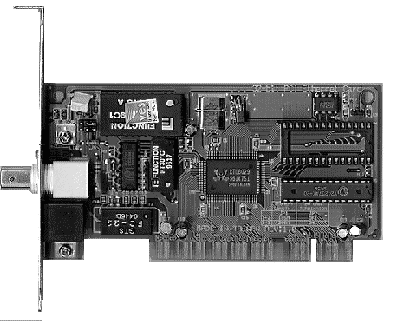
There are four I/O buses in the modern PC architecture and each of them has several functions. They may lead to internal and external ports or they lead to other controlling buses. The four buses are:
The ISA and the PCI bus both end up having to exits:
If you look at this illustration you will see the overview of this architecture:
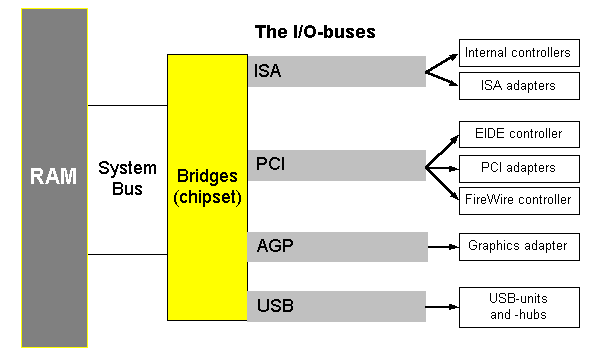
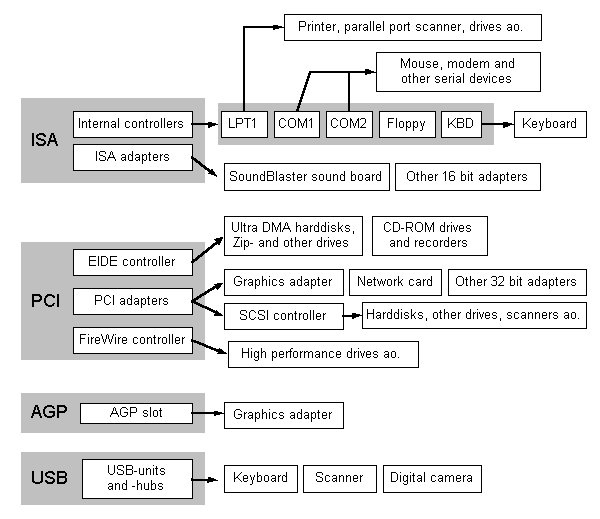
As you see, there is room for a lot of units to be connected to the PC.
The PCI bus is the most loaded of all the buses. It is used for so many purposes that the output for the graphics adapter has been isolated on its own AGP-bus.
But still the PCI bus is heavyly loaded, connecting the system bus to the network controller and the various EIDE- and SCSI drives. Because of the high bandwidth of the FireWire bus, overall throughput of both interfaces would be improved by separating these. We hope to see a separate FireWire interface in future motherboard architectures.
