

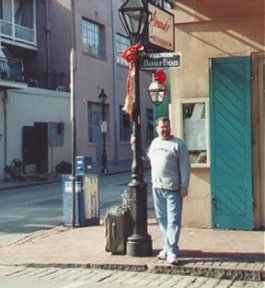
 New Orleans is a seductress - a gracious old beauty, totally comfortable with her years, who knows full well she still has the power to entice and enchant. Situated in the crescent carved by a lazy, outward curve of the Mighty Mississippi, the city, like the river, is passionate yet placid; sociable yet nonchalant; insouciant yet dignified. Less proper than Charleston, less Southern than Savannah, New Orleans shares with these two seasoned belles a love of fine food, good company, and graceful architecture. But where Charleston and Savannah may worry about what the world thinks of them, New Orleans is not afraid to show her petticoats, especially if it means she's having fun. This lighthearted attitude has endowed New Orleans with several soubriquets - The Big Easy, The City That Care Forgot, and of course, the motto "Laissez Les Bon Temps Roulez" (Let the Good Times Roll).
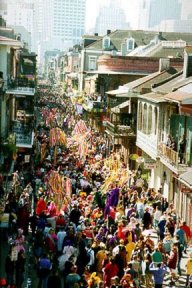 Perhaps nowhere is this joie de vivre more evident than in the oldest part of the city -- The French Quarter, or Vieux Carré, which literally means "old square." Established in 1718 by the French as a military outpost to protect their interests and provide a port for commerce, the mile-square Vieux Carré spent the first half-century of its existence as a decidedly French settlement. Unlike the English colonies, which were often populated by dissidents hoping to distance themselves from their mother country, the original citizens of New Orleans proudly embraced and celebrated their French heritage, often sending their children to school on the continent.
When New Orleans was acquired by the Spanish in 1763, the French settlers accepted their new Spanish cousins with a reasonably minor amount of revolt and bloodshed. It was from this melding of the two cultures, combined with a generous sprinkling of African influences from the slave population, that Creole society and cuisine were born. (The "French" architecture for which the Quarter is famous is actually Spanish, the entire city having burned in 1788 and much of it again in 1794.) France and Spain shared boundaries and social customs, so their citizens lived in relative harmony, but when the United States made the Louisiana purchase in 1803 and New Orleans became American, Mon Dieu! Pas Possible! At that time, a physical and spiritual separation began, with the newly created Canal Street as the boundary, that would last over a century and would further insulate the French Quarter from the bustling city around it.
In time, the Creoles expanded beyond the Quarter as well, across and down Esplanade Avenue, far from the boisterous Americans, but the Vieux Carre remained the heart and soul of New Orleans - a quintessentially European experience that has lost little of its old-world character and appeal despite the ravages of time and the influx of visitors that descend upon it.
Today, the French Quarter is a world of narrow streets and historic houses, where profusions of tropical flowers peek from hidden courtyards, the mingled aromas of garlic, onions, fresh-baked goods and coffee gently scent the breeze, and a vibrant cacophony of music, conversation, and laughter infuses the atmosphere with the promise of excitement.
To fully appreciate the Quarter, one should view it as its Creole inhabitants did (and still do) - through its fine food, elegant architecture, sublime music and mysterious rituals. The French Quarter possesses a proud and magnificent heritage that residents and visitors alike can enjoy; to help you make the most of your time in the Vieux Carré, we offer recommendations in six distinct categories:
Perhaps nowhere is this joie de vivre more evident than in the oldest part of the city -- The French Quarter, or Vieux Carré, which literally means "old square." Established in 1718 by the French as a military outpost to protect their interests and provide a port for commerce, the mile-square Vieux Carré spent the first half-century of its existence as a decidedly French settlement. Unlike the English colonies, which were often populated by dissidents hoping to distance themselves from their mother country, the original citizens of New Orleans proudly embraced and celebrated their French heritage, often sending their children to school on the continent.
When New Orleans was acquired by the Spanish in 1763, the French settlers accepted their new Spanish cousins with a reasonably minor amount of revolt and bloodshed. It was from this melding of the two cultures, combined with a generous sprinkling of African influences from the slave population, that Creole society and cuisine were born. (The "French" architecture for which the Quarter is famous is actually Spanish, the entire city having burned in 1788 and much of it again in 1794.) France and Spain shared boundaries and social customs, so their citizens lived in relative harmony, but when the United States made the Louisiana purchase in 1803 and New Orleans became American, Mon Dieu! Pas Possible! At that time, a physical and spiritual separation began, with the newly created Canal Street as the boundary, that would last over a century and would further insulate the French Quarter from the bustling city around it.
In time, the Creoles expanded beyond the Quarter as well, across and down Esplanade Avenue, far from the boisterous Americans, but the Vieux Carre remained the heart and soul of New Orleans - a quintessentially European experience that has lost little of its old-world character and appeal despite the ravages of time and the influx of visitors that descend upon it.
Today, the French Quarter is a world of narrow streets and historic houses, where profusions of tropical flowers peek from hidden courtyards, the mingled aromas of garlic, onions, fresh-baked goods and coffee gently scent the breeze, and a vibrant cacophony of music, conversation, and laughter infuses the atmosphere with the promise of excitement.
To fully appreciate the Quarter, one should view it as its Creole inhabitants did (and still do) - through its fine food, elegant architecture, sublime music and mysterious rituals. The French Quarter possesses a proud and magnificent heritage that residents and visitors alike can enjoy; to help you make the most of your time in the Vieux Carré, we offer recommendations in six distinct categories:

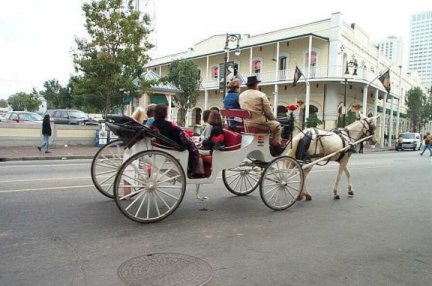
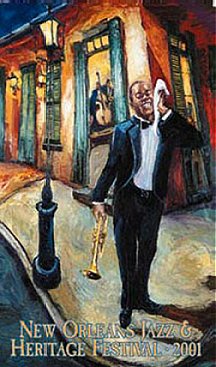 It has been suggested by more than one reviewer that New Orleans is the best place in the world in which to hear live music. Most New Orleanians don't just live life, they rejoice in it, thanks at least in part to a past in which, because of yellow fever and other scourges, one never knew if one would make it from this year to the next. This exuberance is evident in the many musical styles that dwell in the French Quarter. Blues, rockabilly, zydeco, rock, folk, and of course, the city's own contribution to music - jazz - can be heard at a variety of clubs in the old city. Music winds its way around corners in the Vieux Carré; it spills out onto the streets; it rises over rooftops; it maintains the backbeat that defines the Quarter's pulse.
Many die-hard jazz fans lament the decline of the art form, complaining that while jazz used to be played in practically every venue in the French Quarter, it can now be heard in only a handful of places. Others say that the Quarter has simply developed the musical breadth necessary to satisfy a diverse assortment of residents and visitors. Either way, the result is that the Quarter offers a mélange of musical styles - a notational gumbo if you will - to entice the most discerning listener.
It has been suggested by more than one reviewer that New Orleans is the best place in the world in which to hear live music. Most New Orleanians don't just live life, they rejoice in it, thanks at least in part to a past in which, because of yellow fever and other scourges, one never knew if one would make it from this year to the next. This exuberance is evident in the many musical styles that dwell in the French Quarter. Blues, rockabilly, zydeco, rock, folk, and of course, the city's own contribution to music - jazz - can be heard at a variety of clubs in the old city. Music winds its way around corners in the Vieux Carré; it spills out onto the streets; it rises over rooftops; it maintains the backbeat that defines the Quarter's pulse.
Many die-hard jazz fans lament the decline of the art form, complaining that while jazz used to be played in practically every venue in the French Quarter, it can now be heard in only a handful of places. Others say that the Quarter has simply developed the musical breadth necessary to satisfy a diverse assortment of residents and visitors. Either way, the result is that the Quarter offers a mélange of musical styles - a notational gumbo if you will - to entice the most discerning listener.
 The acknowledged guardian of traditional, Dixieland Jazz is the renowned Preservation Hall at 726 St. Peter Street, where both up-and-coming and nationally known jazz musicians play to hordes of rapt listeners. Sets are short here, which is a good thing, because the surroundings are less than accommodating - the audience sits on wooden benches and no drinks or food are sold (you can bring your own). Everyone should shell out the $5 cover charge to experience Preservation Hall at least once, but after the first set, you'll probably be ready to move on.
Just around the corner at 733 Bourbon Street is the unassuming Fritzels European Jazz Pub the venue many locals assert comes closest to maintaining the true spirit of jazz. The music is always good, and the shows often turn into jam sessions as musicians from other venues drop by to play a tune.
Another hot spot for traditional jazz in the Quarter is the Palm Court Jazz Café at 1204 Decatur Street. You can hear great jazz here four nights a week in an atmosphere that is suitably reminiscent of an earlier era. The club also has a complete dinner menu and a gift shop that sells hard-to-find jazz recordings on compact disc. Come early - the last set ends at 11 pm.
The newest and flashiest jazz club in town is The Storyville District located at 125 Bourbon Street. Storyville pays tribute to the long-bulldozed red-light district in New Orleans where the early jazz greats got their starts playing in the district's bordellos. Today's Storyville evokes that ambiance in its red-velvet-draped Jazz Parlor, but the focus is strictly on great music -- jazz, R&B, and blues - and good food. No admission is charged during the week, and the weekend concerts are reasonably priced, so drop in and enjoy!
Even if you're not hip to jazz, a virtual cornucopia of musical options awaits you in the Quarter. Visit the House of Blues at 225 Decatur to enjoy a diverse assortment of blues, rock, folk and gospel, or stop by the smaller, but equally flavorsome Tipitina's at 233 North Peters Street to hear some of the city's best local talent.
If "You Ain't Got a Thing If You Ain't Got Swing," then head for the Shim-Sham Club and Juke Joint at 615 Toulouse Street, a 40's-style dance club featuring big bands, rockabilly groups, torch singers and even an old-time burlesque show with club's own Shim Shamettes.
Other venues in the Quarter feature everything from traditional Irish music -- O'Flaherty's at 514 Toulouse Street -- to Cajun and zydeco - the Cajun Cabin at 503 Bourbon Street. Catch some great local blues musicians at the Funky Pirate (727 Bourbon Street), or savor a spicy mix of jazz, blues, and food at the Funky Butt at Congo Square at 714 North Rampart Street.
To take a hefty serving of these sounds with you when you go, visit Louie's Juke Joint at 1128 Decatur Street for a great selection of CDs and memorabilia or tune in to Louisiana Radio which plays Louisiana music on the Web 24 hours a day.
The acknowledged guardian of traditional, Dixieland Jazz is the renowned Preservation Hall at 726 St. Peter Street, where both up-and-coming and nationally known jazz musicians play to hordes of rapt listeners. Sets are short here, which is a good thing, because the surroundings are less than accommodating - the audience sits on wooden benches and no drinks or food are sold (you can bring your own). Everyone should shell out the $5 cover charge to experience Preservation Hall at least once, but after the first set, you'll probably be ready to move on.
Just around the corner at 733 Bourbon Street is the unassuming Fritzels European Jazz Pub the venue many locals assert comes closest to maintaining the true spirit of jazz. The music is always good, and the shows often turn into jam sessions as musicians from other venues drop by to play a tune.
Another hot spot for traditional jazz in the Quarter is the Palm Court Jazz Café at 1204 Decatur Street. You can hear great jazz here four nights a week in an atmosphere that is suitably reminiscent of an earlier era. The club also has a complete dinner menu and a gift shop that sells hard-to-find jazz recordings on compact disc. Come early - the last set ends at 11 pm.
The newest and flashiest jazz club in town is The Storyville District located at 125 Bourbon Street. Storyville pays tribute to the long-bulldozed red-light district in New Orleans where the early jazz greats got their starts playing in the district's bordellos. Today's Storyville evokes that ambiance in its red-velvet-draped Jazz Parlor, but the focus is strictly on great music -- jazz, R&B, and blues - and good food. No admission is charged during the week, and the weekend concerts are reasonably priced, so drop in and enjoy!
Even if you're not hip to jazz, a virtual cornucopia of musical options awaits you in the Quarter. Visit the House of Blues at 225 Decatur to enjoy a diverse assortment of blues, rock, folk and gospel, or stop by the smaller, but equally flavorsome Tipitina's at 233 North Peters Street to hear some of the city's best local talent.
If "You Ain't Got a Thing If You Ain't Got Swing," then head for the Shim-Sham Club and Juke Joint at 615 Toulouse Street, a 40's-style dance club featuring big bands, rockabilly groups, torch singers and even an old-time burlesque show with club's own Shim Shamettes.
Other venues in the Quarter feature everything from traditional Irish music -- O'Flaherty's at 514 Toulouse Street -- to Cajun and zydeco - the Cajun Cabin at 503 Bourbon Street. Catch some great local blues musicians at the Funky Pirate (727 Bourbon Street), or savor a spicy mix of jazz, blues, and food at the Funky Butt at Congo Square at 714 North Rampart Street.
To take a hefty serving of these sounds with you when you go, visit Louie's Juke Joint at 1128 Decatur Street for a great selection of CDs and memorabilia or tune in to Louisiana Radio which plays Louisiana music on the Web 24 hours a day.

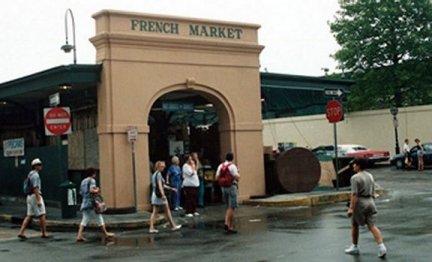
 The Louisiana Office of Tourism has an office here as well, and is an excellent information resource for visitors to the French Quarter. Downriver from Jackson Square on Decatur Street is the historic French Market which began its existence in 1791 as a farmer's market and continues to house vendors selling produce, fresh seafood, and assorted Louisiana delicacies 24 hours a day. The oldest in the U.S., the farmer's market has been expanded and today incorporates a bustling flea market as well. Just past the French Market lies the Old U.S. Mint (1835), which is now part of the Louisiana State Museum and houses interesting exhibits relating to the histories of both Mardi Gras and Jazz.
The French Market and Jackson Square offer a delightful taste of the French Quarter but are merely a prelude to its architectural majesty. For many, the enchantment begins on Rue Royale - Royal Street, the Quarter's most fashionable boulevard throughout much of its past and an absolute must for lovers of history and architecture. Royal runs the length of the Quarter on the other side of the Cathedral from Jackson Square; here, one will find a virtually unbroken string of well-preserved Creole buildings dating to the early 1800's.
Heading upriver (towards Canal Street and the CBD) on Royal Street, one encounters the LaBranche House (700 Royal) with its multi-storied tiers of lacy ironwork balconies, the striking Court of Two Lions (541 Royal), built in 1798, and The Merieult House (533 Royal), the oldest house on Royal Street (1792) and gateway to The Historic New Orleans Collection THNOC is a complex of historic buildings and courtyards that offers visitors a fascinating glimpse into a bygone era.
The Louisiana Office of Tourism has an office here as well, and is an excellent information resource for visitors to the French Quarter. Downriver from Jackson Square on Decatur Street is the historic French Market which began its existence in 1791 as a farmer's market and continues to house vendors selling produce, fresh seafood, and assorted Louisiana delicacies 24 hours a day. The oldest in the U.S., the farmer's market has been expanded and today incorporates a bustling flea market as well. Just past the French Market lies the Old U.S. Mint (1835), which is now part of the Louisiana State Museum and houses interesting exhibits relating to the histories of both Mardi Gras and Jazz.
The French Market and Jackson Square offer a delightful taste of the French Quarter but are merely a prelude to its architectural majesty. For many, the enchantment begins on Rue Royale - Royal Street, the Quarter's most fashionable boulevard throughout much of its past and an absolute must for lovers of history and architecture. Royal runs the length of the Quarter on the other side of the Cathedral from Jackson Square; here, one will find a virtually unbroken string of well-preserved Creole buildings dating to the early 1800's.
Heading upriver (towards Canal Street and the CBD) on Royal Street, one encounters the LaBranche House (700 Royal) with its multi-storied tiers of lacy ironwork balconies, the striking Court of Two Lions (541 Royal), built in 1798, and The Merieult House (533 Royal), the oldest house on Royal Street (1792) and gateway to The Historic New Orleans Collection THNOC is a complex of historic buildings and courtyards that offers visitors a fascinating glimpse into a bygone era.
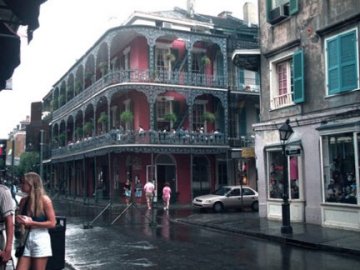 Further down Royal one can view the richly crafted cast-iron balconies of the Coudreau Mansion (427 Royal) and the place where the cocktail was invented (437 Royal) before reaching the imposing Municipal Courts Building at 400 Royal. An entire block of old Creole homes and businesses was razed to built it in 1908, bringing attention to the need for preservation in the French Quarter. Even so, its majestic appearance and fine detailing now make it an architectural beauty in its own right.
Some of the finest wrought iron in the Quarter is found at the old Bank of the United States (343 Royal), which dates to the early 1800's (most of the ironwork in the French Quarter is actually cast iron and dates to the 1850's when this type of adornment became wildly popular). Also of note on this end of Royal is the Bank of Louisiana (1826) at 334 Royal, now home to the Vieux Carre Commission and Police Station.
You've just been on a virtual tour of half of one of the French Quarter's most captivating avenues. Now, we'll traverse its upper end, which in typical, topsy-turvy New Orleans fashion is actually downriver.
Heading to the right after reaching Royal from the Cathedral, one finds the wonderfully Creole Dejan House at 824 Royal, which has changed little since it was constructed in 1813. The magnificent Cornstalk Fence at 915 Royal stands in eternal tribute to the man who in the 1850s commissioned the fence for his homesick Midwesterner wife. Their home burned shortly thereafter and was replaced with the present hotel, which offers a suitable counterpoint to the iron treasure. At 934 Royal stands the home of Civil War General P.G.T. Beauregard, who lived here with his son after the war.
Farther along at 1105-1141 Royal one finds Architect's Row, a series of once-identical row houses built in 1832 and modified individually over time. Across from them, at 1132 Royal, is the Gallier House a fabulous structure built in 1857 that now houses a superb collection of furnishings and decorative accessories from the 1860's. At the very edge of the Quarter on the corner of Esplanade and Royal stands the Gauche Villa, a sumptuous Italianate mansion built in 1856. (When the Quarter became too crowded, the wealthy Creoles built many fine mansions along Esplanade Avenue, which forms the downriver boundary of the French Quarter.)
Our stroll down Royal Street has introduced you to much, but not all, of its glorious history. Even with all its magnificence, however, Royal represents a mere fraction of the grandeur of the Vieux Carre. Architectural jewels are sprinkled about the Quarter like doubloons thrown from a Mardi Gras float - to visit them all would take days, if not weeks.
Of special note is the old Ursuline Convent at 1112 Chartres. Dating to 1727, it is quite possibly the oldest building in the Mississippi Valley. Its challenger is the recently reopened, Louisiana State Museum-run Madame John's Legacy at 632 Dumaine, which was built in 1727 and either rebuilt or repaired after the fire of 1788 (therein lies the controversy).
Among the many structures of note throughout the Quarter are also the Mercier House (1806) at 630 St. Peter Street, the Formento House (1835) at 823 Chartres, and the DeLaronde House (1807) at 1021 Chartres. Arguably the most striking homeplace in the Quarter is the 175-year-old Beauregard-Keyes Houseat 1113 Chartres, which was formerly the home of both General P.G.T. Beauregard and author Frances Parkinson Keyes. Another contender is the Hermann-Grima House at 820 St. Louis Street, an 1831 Federal mansion painstakingly restored to its former glory and now open as a museum depicting Creole life in the mid 1800's. Are you curious as to what we've overlooked? Well, we've intentionally saved a few interesting places for other itineraries - visit our other itineraries to indulge in fine food, enjoy good music, discover the world of art and antiquities, and more.
If you yearn for a lover's intimacy with this most romantic of old cities, then order the Rene Beaujolais' French Quarter Guide. Filled with photographs and descriptions of the Quarter's many exquisite historic buildings, plus a delightful smattering of folklore and legend, the guide represents an extraordinary value.
Further down Royal one can view the richly crafted cast-iron balconies of the Coudreau Mansion (427 Royal) and the place where the cocktail was invented (437 Royal) before reaching the imposing Municipal Courts Building at 400 Royal. An entire block of old Creole homes and businesses was razed to built it in 1908, bringing attention to the need for preservation in the French Quarter. Even so, its majestic appearance and fine detailing now make it an architectural beauty in its own right.
Some of the finest wrought iron in the Quarter is found at the old Bank of the United States (343 Royal), which dates to the early 1800's (most of the ironwork in the French Quarter is actually cast iron and dates to the 1850's when this type of adornment became wildly popular). Also of note on this end of Royal is the Bank of Louisiana (1826) at 334 Royal, now home to the Vieux Carre Commission and Police Station.
You've just been on a virtual tour of half of one of the French Quarter's most captivating avenues. Now, we'll traverse its upper end, which in typical, topsy-turvy New Orleans fashion is actually downriver.
Heading to the right after reaching Royal from the Cathedral, one finds the wonderfully Creole Dejan House at 824 Royal, which has changed little since it was constructed in 1813. The magnificent Cornstalk Fence at 915 Royal stands in eternal tribute to the man who in the 1850s commissioned the fence for his homesick Midwesterner wife. Their home burned shortly thereafter and was replaced with the present hotel, which offers a suitable counterpoint to the iron treasure. At 934 Royal stands the home of Civil War General P.G.T. Beauregard, who lived here with his son after the war.
Farther along at 1105-1141 Royal one finds Architect's Row, a series of once-identical row houses built in 1832 and modified individually over time. Across from them, at 1132 Royal, is the Gallier House a fabulous structure built in 1857 that now houses a superb collection of furnishings and decorative accessories from the 1860's. At the very edge of the Quarter on the corner of Esplanade and Royal stands the Gauche Villa, a sumptuous Italianate mansion built in 1856. (When the Quarter became too crowded, the wealthy Creoles built many fine mansions along Esplanade Avenue, which forms the downriver boundary of the French Quarter.)
Our stroll down Royal Street has introduced you to much, but not all, of its glorious history. Even with all its magnificence, however, Royal represents a mere fraction of the grandeur of the Vieux Carre. Architectural jewels are sprinkled about the Quarter like doubloons thrown from a Mardi Gras float - to visit them all would take days, if not weeks.
Of special note is the old Ursuline Convent at 1112 Chartres. Dating to 1727, it is quite possibly the oldest building in the Mississippi Valley. Its challenger is the recently reopened, Louisiana State Museum-run Madame John's Legacy at 632 Dumaine, which was built in 1727 and either rebuilt or repaired after the fire of 1788 (therein lies the controversy).
Among the many structures of note throughout the Quarter are also the Mercier House (1806) at 630 St. Peter Street, the Formento House (1835) at 823 Chartres, and the DeLaronde House (1807) at 1021 Chartres. Arguably the most striking homeplace in the Quarter is the 175-year-old Beauregard-Keyes Houseat 1113 Chartres, which was formerly the home of both General P.G.T. Beauregard and author Frances Parkinson Keyes. Another contender is the Hermann-Grima House at 820 St. Louis Street, an 1831 Federal mansion painstakingly restored to its former glory and now open as a museum depicting Creole life in the mid 1800's. Are you curious as to what we've overlooked? Well, we've intentionally saved a few interesting places for other itineraries - visit our other itineraries to indulge in fine food, enjoy good music, discover the world of art and antiquities, and more.
If you yearn for a lover's intimacy with this most romantic of old cities, then order the Rene Beaujolais' French Quarter Guide. Filled with photographs and descriptions of the Quarter's many exquisite historic buildings, plus a delightful smattering of folklore and legend, the guide represents an extraordinary value.
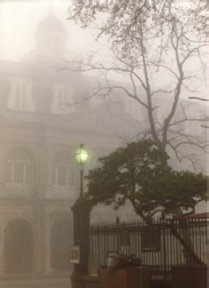 When the mist rises along the Mississippi and moonlight spills across shuttered doorways and ancient cobblestones, it's easy to find mysticism and magic in the French Quarter. The Quarter's narrow streets and hidden courtyards are intriguing by day - by night they can be positively eerie, and even an unexpected peal of laughter from an open doorway can send tingles down the spine of the most stalwart visitor.
If you're the type that embraces the unearthly, who longs to uncover the arcane, then your soul will feel right at home in the French Quarter. The Vieux Carre has proven fertile ground for the birth of both legend and literature -- voodoo priestesses, ghosts, witches and vampires, whether real or imagined, have contributed to the mystical tradition of this ancient ville; with our help you can walk in their footsteps.
When the mist rises along the Mississippi and moonlight spills across shuttered doorways and ancient cobblestones, it's easy to find mysticism and magic in the French Quarter. The Quarter's narrow streets and hidden courtyards are intriguing by day - by night they can be positively eerie, and even an unexpected peal of laughter from an open doorway can send tingles down the spine of the most stalwart visitor.
If you're the type that embraces the unearthly, who longs to uncover the arcane, then your soul will feel right at home in the French Quarter. The Vieux Carre has proven fertile ground for the birth of both legend and literature -- voodoo priestesses, ghosts, witches and vampires, whether real or imagined, have contributed to the mystical tradition of this ancient ville; with our help you can walk in their footsteps.
 Until the past decade or so, the mystical belief most associated with New Orleans, and particularly the French Quarter, was voodoo. Brought to the area over two hundred years ago by West African slaves, voodoo has a rich tradition that dates back some 7,000 years. Perhaps the best known and most revered practitioner of voodoo in the city, and some say the "founder" of New Orleans voodoo, was Marie Laveau, a free woman of color born in 1794 in Haiti. Laveau was also a devout Catholic; it was this unique blending of Voodoo rituals and Catholicism that would differentiate New Orleans voodoo from other forms of the practice. Legend has it that Laveau lived in a house at 1020 St. Ann Street; there is no "Laveau Museum" here as one might expect, but there is a small plaque commemorating her residency.
To view an interesting collection of voodoo artifacts, purchase voodoo accessories, or commission a love potion or customized gris-gris bag filled with magical herbs, head to The New Orleans Historic Voodoo Museum at 724 Dumaine Street. The Museum also offers a variety of otherworldly tours, some of which include a trip to the priestess' much-visited tomb in St. Louis Cemetery #1. Zombie's House of Voodoo at 723 St. Peter Street and the Marie Laveau House of Voodoo at 729 Bourbon Street are rumored to be less authentic but are no less popular with the curious; Zombie's is the departure point for another group of tours.
You can also walk down to 509 Decatur Street and have a drink at the Marie Laveau Voodoo Bar, where the proprietresses offer art and artifacts for your perusal and claim to have the petrified body of Laveau's cat. To complete your indoctrination, visit the New Orleans Pharmacy Museum 514 Chartres Street, in 1823 the shop of one of the country's first licensed pharmacists and now home to an interesting collection of medicinal artifacts including voodoo items and handwritten recipes for potions and cures.
Until the past decade or so, the mystical belief most associated with New Orleans, and particularly the French Quarter, was voodoo. Brought to the area over two hundred years ago by West African slaves, voodoo has a rich tradition that dates back some 7,000 years. Perhaps the best known and most revered practitioner of voodoo in the city, and some say the "founder" of New Orleans voodoo, was Marie Laveau, a free woman of color born in 1794 in Haiti. Laveau was also a devout Catholic; it was this unique blending of Voodoo rituals and Catholicism that would differentiate New Orleans voodoo from other forms of the practice. Legend has it that Laveau lived in a house at 1020 St. Ann Street; there is no "Laveau Museum" here as one might expect, but there is a small plaque commemorating her residency.
To view an interesting collection of voodoo artifacts, purchase voodoo accessories, or commission a love potion or customized gris-gris bag filled with magical herbs, head to The New Orleans Historic Voodoo Museum at 724 Dumaine Street. The Museum also offers a variety of otherworldly tours, some of which include a trip to the priestess' much-visited tomb in St. Louis Cemetery #1. Zombie's House of Voodoo at 723 St. Peter Street and the Marie Laveau House of Voodoo at 729 Bourbon Street are rumored to be less authentic but are no less popular with the curious; Zombie's is the departure point for another group of tours.
You can also walk down to 509 Decatur Street and have a drink at the Marie Laveau Voodoo Bar, where the proprietresses offer art and artifacts for your perusal and claim to have the petrified body of Laveau's cat. To complete your indoctrination, visit the New Orleans Pharmacy Museum 514 Chartres Street, in 1823 the shop of one of the country's first licensed pharmacists and now home to an interesting collection of medicinal artifacts including voodoo items and handwritten recipes for potions and cures.
Apache WWW Page II
Apache WWW Page III
Apache www Page IV
Apache www Page V
Virgin Radion (UK)
Opelousas, Louisiana
Free Domain Redirection



| ||||||


