Eubacteria
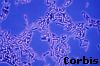
- Unicellular
- Prokaryotic
- Most use oxygen but some are completely anaerobic
- Together with Archaebacteria is the larges group of organisms on Earth
Eubacteria is the second kingdom of life. Eubacteria live in a wide variety of habitats. They also obtain their energy needs in a variety of ways. The main phylum are organized by how they obtain energy.
Heterotrophs: This type of bacteria is found just about everywhere. They need organic molecules as an energy source but are not adapted for trapping the food that contains these molecules. Some live as parasites and absorb nutrients from living organism. Other live as saprobes. These organisms feed and eat organisms or oragnic wastes. Saprobes help recycle the nutrients from decomposing organisms back into the environment, so those nutrients can be used for new or existing life.
Autotrophs: These bacteria are photosynthetic autotrophs. An autotroph is an organism that can make its own food. This is done through photosynthesis, a process that uses the suns energy to make sugar molecules. Most Cyanobacteria are blue-green in color and are called blue-green bacteria. They are found in ponds, lakes, streams and moist areas of land. They are made of chains of bacteria cells. An exception to the rule that Monerans are unicellular. These chains and the existence of Chlorophyll (photosynthetic pigment) help provide evidence for bacteria being the ancestors of plants.
Chemotrophs: The third phylum is the chemosynthetic autotrophs. They get their energy from chemosynthetic breakdown of inorganic substances such as sulfur and nitorgen compounds. Some of these bacteria are important in converting nitrogen in the atmosphere to forms that can be used by plants.
Escherichia coli
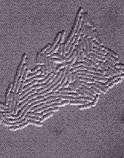
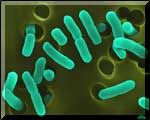
Escherichia coli is an example of Eubacteria and is also known as E. Coli. The genus name is Escherichia coli and the species name is coli. The eubacteria Escherichia coli lives in the lower gut of animals. It can also live on inorganic salt, NH2, and use glucose as a carbon energy source. E. coli can grow in air, using oxygen or without air, by what is called fermentative metabolisman. The ability to grow both aerobically and anaerobically classifies the E. coli bacteria as a facultative anaerobe. Although E. coli has been often in the news as a food borne pathogen, the majority of its strains are harmless. The ones that scientists use in genetics laboratories are also harmless. Despite E. coli being the most studied organism on the planet, we still didn't know about the existence of around half of E. coli's genes or their function. E. coli has been studied extensively in the last fifty years.
More information on Eubacteria
More information on E. Coli
More information on E. Coli
Home Page

