

 The
Navajo Indians of the desert Southwest have a common name for
the peoples who inhabited the region before they, themselves, became the
dominant tribes. These people are called the Anasazi. The word
can be translated into two different meanings. The first translation
reads "Ancient Ones", the second is more foreboding. The "Ancient
Enemy". The Navajo have no history, even an unwritten one, that explains
why the Anasazi came to the area, when they came, or even when they left.
The
Navajo Indians of the desert Southwest have a common name for
the peoples who inhabited the region before they, themselves, became the
dominant tribes. These people are called the Anasazi. The word
can be translated into two different meanings. The first translation
reads "Ancient Ones", the second is more foreboding. The "Ancient
Enemy". The Navajo have no history, even an unwritten one, that explains
why the Anasazi came to the area, when they came, or even when they left.
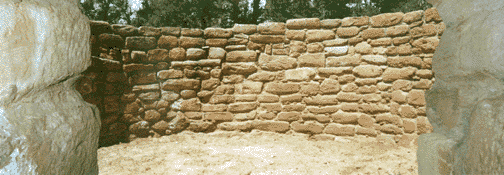
A Kiva
is a large, stone-lined pit with a thatched or wooden-beamed roof. These were used for ceremonial purposes and women were not often admitted. Women would be admitted only when the Kiva served no religious purpose. Often weaving and other activities were done inside the kiva because it was a cool area below ground. These kivas still exist today, although many remain unexcavated. The rooves have long decomposed, so many are now open to the air. This is the view of the inside of a kiva as one descends through the stairway entrance.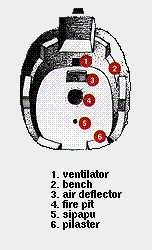 The
Kiva has several different parts. This diagram shows the
different sections of the kiva. The kiva's steps were symbolic of
the descent into the underworld.
The
Kiva has several different parts. This diagram shows the
different sections of the kiva. The kiva's steps were symbolic of
the descent into the underworld.
Cool Anasazi Links
For more on translations
http://www.swcolo.org/Tourism/Archaeology/ANASAZI.html
