
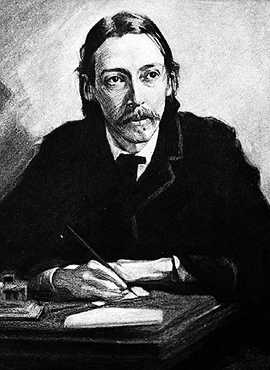
 When one reads the nonfiction work of
Robert Louis Stevenson along with the
novels and short stories, a more
complete portrait emerges of the author
than that of the romantic vagabond one
usually associates with his best-known
fiction. The Stevenson of the nonfiction
prose is a writer involved in the issues
of his craft, his milieu, and his soul.
Moreover, one can see the record of his
maturation in critical essays, political
tracts, biographies, and letters to family
and friends. What Stevenson lacks,
especially for the tastes of this age, is
specificity and expertise: he has not the
depth of such writers as John Ruskin,
Walter Pater, or William Morris. But he
was a shrewd observer of humankind,
and his essays reveal his lively and
perspicacious mind. Though he lacked
originality, he created a rapport with the
reader, who senses his enthusiastic
embrace of life and art. If Stevenson at
first wrote like one who only skimmed
the surface of experience, by the end of
his life he was passionately committed
to his adopted land of Samoa, to his own
history, and to the creation of his fiction.
When one reads the nonfiction work of
Robert Louis Stevenson along with the
novels and short stories, a more
complete portrait emerges of the author
than that of the romantic vagabond one
usually associates with his best-known
fiction. The Stevenson of the nonfiction
prose is a writer involved in the issues
of his craft, his milieu, and his soul.
Moreover, one can see the record of his
maturation in critical essays, political
tracts, biographies, and letters to family
and friends. What Stevenson lacks,
especially for the tastes of this age, is
specificity and expertise: he has not the
depth of such writers as John Ruskin,
Walter Pater, or William Morris. But he
was a shrewd observer of humankind,
and his essays reveal his lively and
perspicacious mind. Though he lacked
originality, he created a rapport with the
reader, who senses his enthusiastic
embrace of life and art. If Stevenson at
first wrote like one who only skimmed
the surface of experience, by the end of
his life he was passionately committed
to his adopted land of Samoa, to his own
history, and to the creation of his fiction.
Robert Louis Stevenson was born to Thomas and Margaret Isabella Balfour Stevenson in Edinburgh on 13 November 1850. From the beginning he was sickly. Through much of his childhood he was attended by his faithful nurse, Alison Cunningham, known as Cummy in the family circle. She told him morbid stories about the Covenanters (the Scots Presbyterian martyrs), read aloud to him Victorian penny-serial novels, Bible stories, and the Psalms, and drilled the catechism into him, all with his parents' approval. Thomas Stevenson was quite a storyteller himself, and his wife doted on their only child, sitting in admiration while her precocious son expounded on religious dogma. Stevenson inevitably reacted to the morbidity of his religious education and to the stiffness of his family's middle-class values, but that rebellion would come only after he entered Edinburgh University.
The juvenilia that survives from his childhood shows an observer who was already sensitive to religious issues and Scottish history. Not surprisingly, the boy who listened to Cummy's religious tales first tried his hand at retelling Bible stories: "A History of Moses" was followed by "The Book of Joseph." When Stevenson was sixteen his family published a pamphlet he had written entitled The Pentland Rising, a recounting of the murder of Nonconformist Scots Presbyterians who rebelled against their royalist persecutors.
(It continued, but this gives a general idea of the man)
