

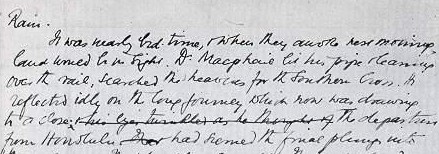
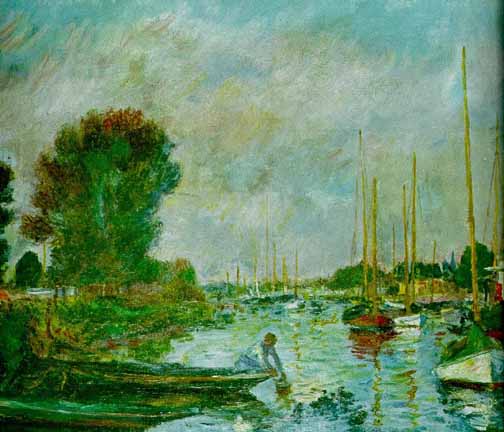
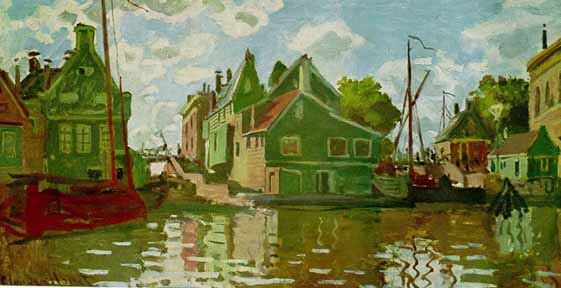
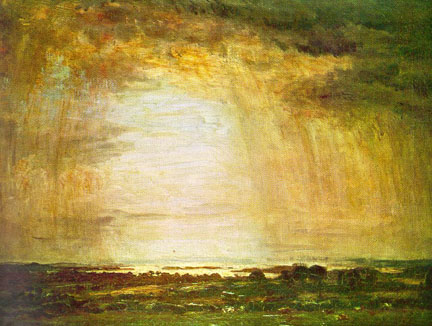
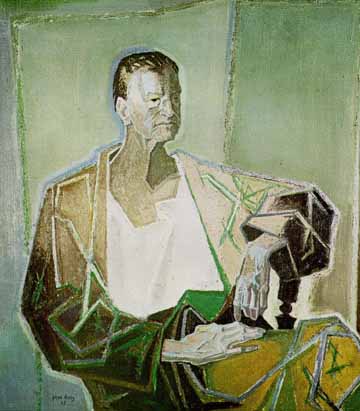
The pictures on this page are out of his collection, except his portrait.
 'I've always been interested in people, but I've never liked them.'
In 1917 Maugham took the first of many long trips to the Pacific Islands and the Far East, which resulted in some of his finest writing. The first of these stories was The Moon and Sixpence (1919), a novel based on the life of Gauguin. He wrote highly readable travel books—On a Chinese Screen (1923) and The Gentleman in the Parlour (1930)—and several collections of short stories. The Trembling of a Leaf (1923) contained his most recognized story, "Rain," and The Casuarina Tree (1926) is one of the "Connolly 100." Maugham continued to write successful plays, at least one, The Letter (1927), with a Far East setting. He returned to social criticism with more success—and more controversy—than earlier in his career with dramas such as The Unknown (1920), The Sacred Flame (1928), and For Services Rendered (1932). His last play Sheppey, was written in 1933. Maugham published Ashenden in 1928, a group of short stories based on his experience as a British espionage agent during World War I. For the first time, a spy was portrayed as gentlemanly, sophisticated, and aloof. Ian Fleming, later a friend of Maugham, said that Ashenden influenced his own writing of spy stories.
'It is dangerous to let the public behind the scenes. They are easily disillusioned and then they are angry with you, for it was the illusion they loved.'
Sometimes Maugham's stories were thinly disguised episodes involving his host or others he had met on his travels—circumstances that occasionally resulted in threats and lawsuits. The Painted Veil(1925) was revised at least twice to eliminate references to people still living in Hong Kong, and the various issues of this book remain of great interest to Maugham collectors. Wilmon Menard, an American writer, followed Maugham's footsteps throughout the Par East, interviewing those who had known and entertained Maugham. Menard's book, The Two Worlds of Somerset Maugham(1965), makes interesting reading.
 In 1927, Maugham left England amid scandal and moved to France, where he spent the rest of his life. Although he had married the popular Syrie Wellcome, Maugham throughout his marriage (and known to his wife) had maintained a relationship with an American man, Gerald Haxton. By 1927, the situation had become intolerable to Syrie, and they were divorced. Maugham bought a villa in Cap Ferat on the French Riviera, and Haxton, who had been deported from England, joined him there. Maugham enjoyed a royal lifestyle at the Villa Mauresque, and an invitation by Maugham to spend a few weeks there was highly prized by the literary and social elite. In spite of his relocation, he continued his disciplined habit of writing several hours every morning and his love of travel.
'I had an elderly friend who used often to ask me to stay with him in the country. He was a religious man and he read prayers to the assembled household every morning. But he had crossed out in pencil all the passages that praised God. He said that there was nothing so vulgar as to praise people to their faces and, himself a gentleman, he could not believe that God was so ungentlemanly as to like it.'
Maugham visited Chicago several times and once gave a lecture at the University of Chicago. His former wife, Syrie, was a very successful interior designer and had a studio on Michigan Avenue in the 1920s. Several of Maugham's stories have Chicago settings, including his last successful novel, The Razors Edge(1944), which continues to appeal to new generations of readers.
During World War II, Maugham lived in the United States and became a popular figure in Hollywood. Many of his stories and plays have been—and continue to be—made into motion pictures. "Rain" was filmed three times with Sadie Thompson first portrayed by Gloria Swanson, then by Joan Crawford, and finally by Rita Hayworth. After the war, Maugham returned to the Villa Mauresque, where he continued to write and entertain the rich and famous. He died in 1965 at the age of 91. The Maugham persona of the sophisticated world traveler and story teller, rather than the social dramatist, is his legacy.
Craig V. Showalter. Editor's Note: Caxtonian Craig Showalter, a medical doctor and Chicago Lakeshore Hospital, has been a Maugham collector since the 1960s.
Maugham First Editions Novels Liza of Lambeth. Unwin, 1897. the Making of a Saint. Page, 1898. The Hero. Hutchinson, 1901. Mrs. Craddock. Heinemann, 1902. The Merry-Go-Round. Heinemann, 1904. the Bishop's Apron. Chapman and Hall, 1906. The Explorer. Heinemann, 1908. The Magician. Heinemann, 1908. Of Human Bondage. Doran, 1915. The Moon and Sixpence. Heinemann, 1919.
Maugham believed that there is a true harmony
in the contradictions of mankind
and that the normal is in reality the abnormal.the Painted Veil. Doran, 1925. Cakes and Ale. Heinemann, 1930. The Narrow Corner. Heinemann, 1932. Theatre. Doubleday, 1937. Christmas Holiday. Heinemann, 1939. Up at the Villa. Doubleday, 1941. The Hour Before the Dawn. Doubleday, 1942. The Razor's Edge. Doubleday, 1944. Then and Now. Heinemann, 1946. Catalina. Heinemann, 1948.
"It may be that in some queer way Short Story Collections Orientations. Unwin, 1899. The Trembling of a Leaf. Doran, 1921. The Casuarina Tree. Heinemann, 1926. Ashenden. Heinemann, 1928. Six Stories Written in the First Person Singular. Doubleday, 1931. Ah King. Heinemann, 1933. Cosmopolitans. Doubleday, 1936. The Mixture as Before. Doubleday, 1940. Creatures of Circumstance. Heinemann, 1947. Quartet. Heinemann, 1948. Trio. Heinemann, 1950. Encore. Heinemann, 1952. Plays A Man of Honour. Chapman and Hall, 1903. Lady Frederick. Heinemann, 1912. Jack Straw. Heinemann, 1912. Mrs. Dot. Heinemann, 1912. Penelope. Heinemann, 1912. The Explorer. Heinemann, 1912. The Tenth Man. Heinemann, 1913. Landed Gentry. Heinemann, 1913. Smith. Heinemann, 1913. The Land of Promise. Bickers & Son, 1913. The Unknown. Heinemann, 1920. The Able. Heinemann, 1921. Caesar's Wife. Heinemann, 1922. East of Suez. Heinemann, 1922. Our Betters. Heinemann, 1923. Home and Beauty. Heinemann, 1923. The Unattainable. Heinemann, 1923. Loaves and Fishes. Heinemann, 1924. The Constant Wife. Doran, 1927. The Letter. Heinemann, 1927. The Sacred Flame. Doubleday, Doran, 1928. The Bread-Winner. Heinemann, 1930. For Services Rendered. Heinemann, 1932. Sheppey. Heinemann, 1933. The Noble Spaniard. Evans Brothers, 1953 (Written 1908) Travel Books The Land of the Blessed Virgin: Sketches and Impressions of Andalusia. Heinemann, 1905. On a Chinese Screen. Doran, 1922. The Gentleman in the Parlour. Heinemann, 1930. Essays, Memoirs Don Fernando: or Variations on Some Spanish Themes. Heinemann, 1935. The Summing Up. Heinemann, 1938. France at War. Heinemann, 1940. Books and You. Heinemann, 1940. Strictly Personal. Doubleday, 1941. Great Novelists and Their Novels. Winston, 1948. A Writer's Notebook. Heinemann, 1949. The Writer's Point of View. Cambridge University, 1951. The Vagrant Mood. Heinemann, 1952. Points of View. Heinemann, 1958.
he identifies himself with the kite flying
so free and so high above him,
and it's as it were an escape from the monotony of life.
It may be that in some dim,
confused way it represents an ideal of freedom and adventure,
And you know,
when a man once gets bitten with the virus of the ideal
not all the King's doctors
and not all the King's surgeons can rid him of it."
