Altitude
 One
of my many hobbies is the launching of model rockets. The manufacturer claims that these rockets, which can be as
simple or complex as the builder wishes, are capable of flight to over one
thousand feet. Of course, this
immediately raised the question: How high did it really go? I had asked this question in middle school,
but at that time, I did not have the knowledge to answer it (although I did
attempt to do so). However, I could not
forget the problem and it remained in the back of my mind. As I became more familiar with trigonometric
functions last year, I determined to derive a theorem to solve the problem. The simplest method is to simply use
(distance to launch pad)*(tan(angle between the ground and the rocket)) =
height of rocket. However, this created
an obvious problem; the rockets do not rise perfectly vertically from the
launch pad. Even if there is negligible
wind on the ground, the wind at five hundred to one thousand feet quickly blows
the rockets a significant distance from the pad. Because of this, people usually point their launchers into the
wind so that they will drift back to the launcher on the descent. Either way, the rocket is an unknown
distance away from the launch pad.
Thus, what I needed was a method of determining the height of the rocket
that would work irrespective of the rocket’s horizontal distance or direction
from the launch pad. Since I was
looking for perpendicular distance above the ground, not the slant height from
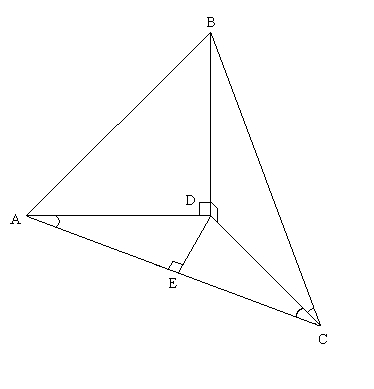
the launch pad, I divided the problem into four right triangles (see figure above or here). Points
A and C represent the two points from which measurements are taken and point B
is the apex of the rocket’s climb (or whatever is being measured). I allowed myself only four known values (one
more than the number of dimensions): the distance from point A to C, the measure
of angle DAE, angle ECD, and DCB. These
four values can all be determined without knowing the horizontal distance to
point B, which was my goal in the project.
Looking at the problem backwards, once the length of side DC is known,
this becomes the simple form mentioned earlier. Hence, the challenge is to determine the length of side DC. My first method for doing this involved substitution
with the tangents of angles DAE and DCE.
This method did succeed in determining the length of side DC, but it took
about two pages to develop. It took the
final form of:
One
of my many hobbies is the launching of model rockets. The manufacturer claims that these rockets, which can be as
simple or complex as the builder wishes, are capable of flight to over one
thousand feet. Of course, this
immediately raised the question: How high did it really go? I had asked this question in middle school,
but at that time, I did not have the knowledge to answer it (although I did
attempt to do so). However, I could not
forget the problem and it remained in the back of my mind. As I became more familiar with trigonometric
functions last year, I determined to derive a theorem to solve the problem. The simplest method is to simply use
(distance to launch pad)*(tan(angle between the ground and the rocket)) =
height of rocket. However, this created
an obvious problem; the rockets do not rise perfectly vertically from the
launch pad. Even if there is negligible
wind on the ground, the wind at five hundred to one thousand feet quickly blows
the rockets a significant distance from the pad. Because of this, people usually point their launchers into the
wind so that they will drift back to the launcher on the descent. Either way, the rocket is an unknown
distance away from the launch pad.
Thus, what I needed was a method of determining the height of the rocket
that would work irrespective of the rocket’s horizontal distance or direction
from the launch pad. Since I was
looking for perpendicular distance above the ground, not the slant height from
the launch pad, I divided the problem into four right triangles (see figure above or here). Points
A and C represent the two points from which measurements are taken and point B
is the apex of the rocket’s climb (or whatever is being measured). I allowed myself only four known values (one
more than the number of dimensions): the distance from point A to C, the measure
of angle DAE, angle ECD, and DCB. These
four values can all be determined without knowing the horizontal distance to
point B, which was my goal in the project.
Looking at the problem backwards, once the length of side DC is known,
this becomes the simple form mentioned earlier. Hence, the challenge is to determine the length of side DC. My first method for doing this involved substitution
with the tangents of angles DAE and DCE.
This method did succeed in determining the length of side DC, but it took
about two pages to develop. It took the
final form of:
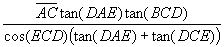
Looking for a more straightforward proof, I used the law of sines to more simply determine the length of side DC with the known data, which took the following form:
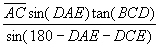
These two methods each resulted in different theorems, but they return identical answers when working with possible measurements (angles that will actually form triangles such as the ones diagramed). Thus, over four years after first posing the question, I was finally able to answer it.
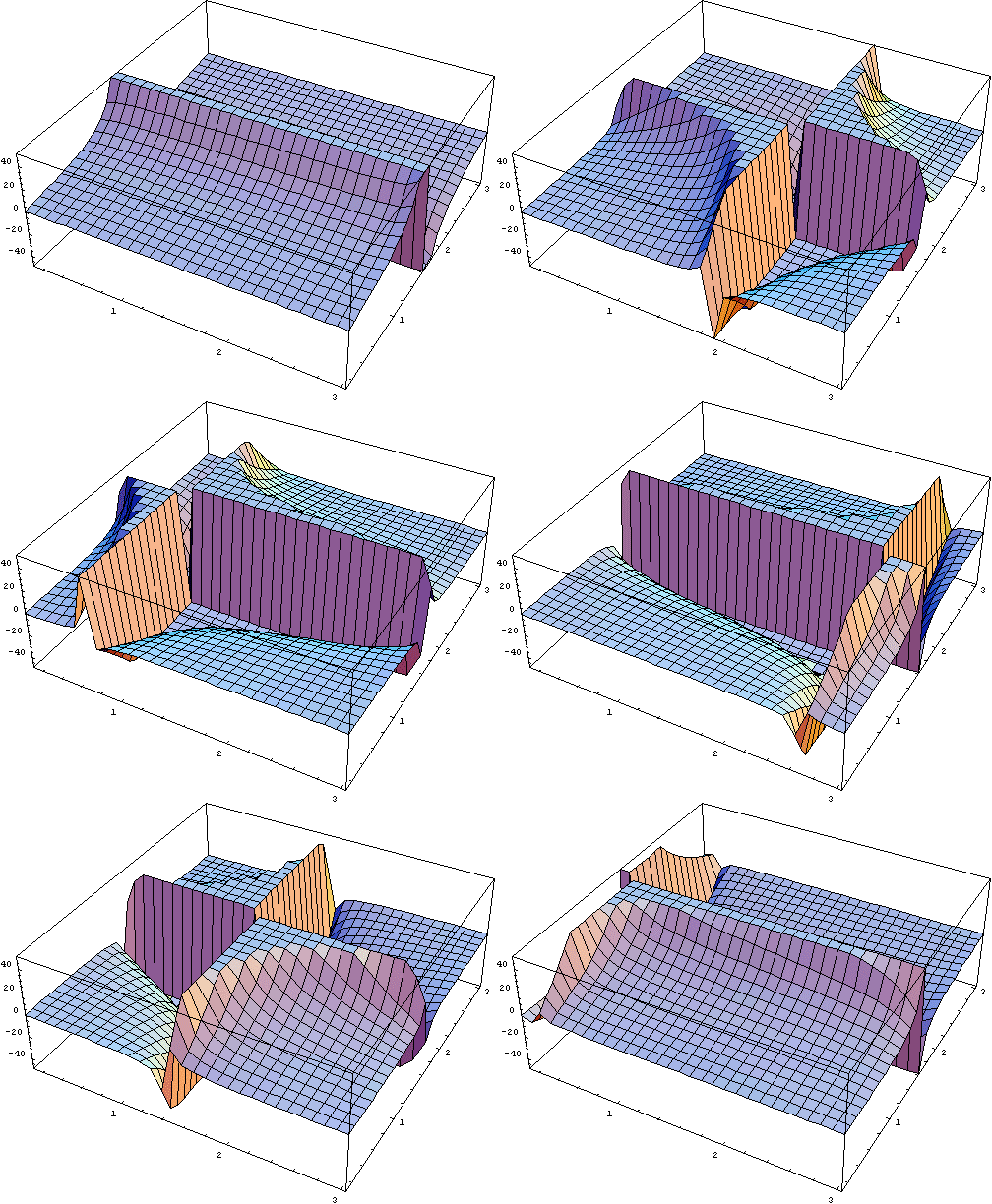
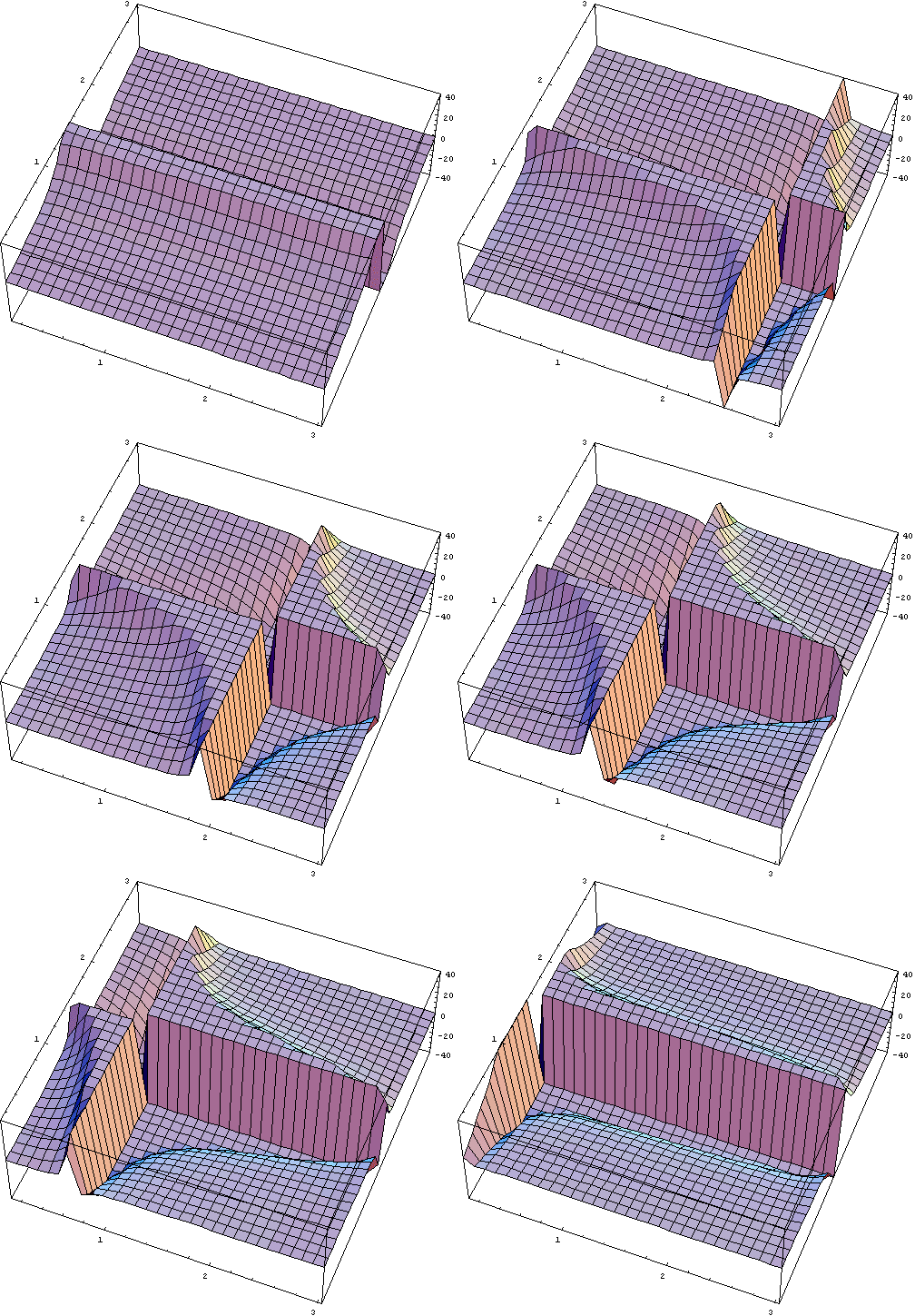
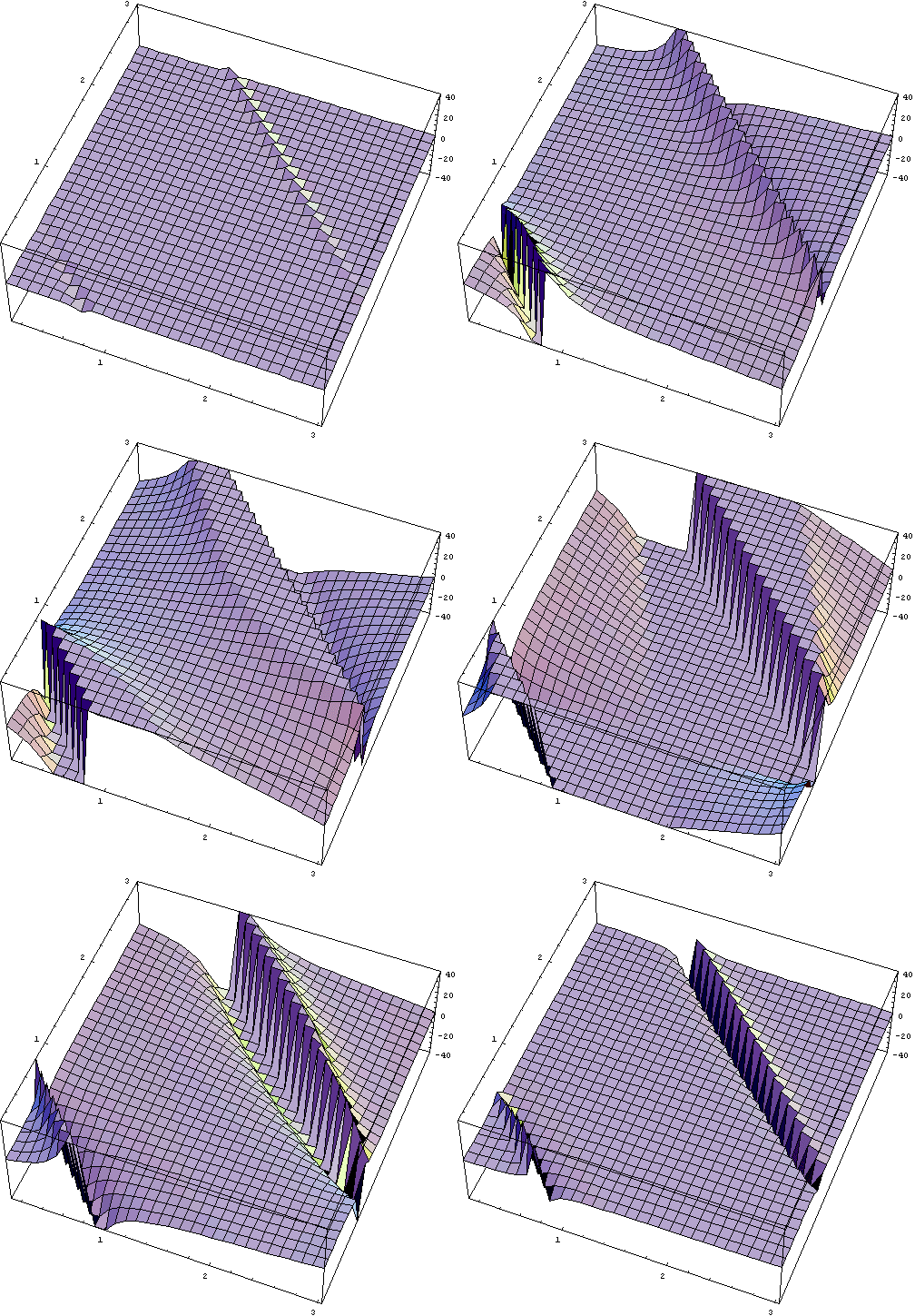
Recently, I have continued this problem by graphing it in three and four dimensions on Mathematica. I was able to visualize where different altitude readings would be obtained through using the first formula, which made some very interesting graphs. You can see a still graph below when the angle up to the item (angle BCD in the diagram above) is around half of Pi.
 The plot
exits both the bottom and top of the graph around the middle (where it is flat,
it is going up beyond the box. To view
the animated version of this image
(with all four dimensions), see the following files:
The plot
exits both the bottom and top of the graph around the middle (where it is flat,
it is going up beyond the box. To view
the animated version of this image
(with all four dimensions), see the following files:
For the tangent theorem:
Standard View with theta rotating from 0 to 2 Pi
A Higher-Resolution View with theta rotating from 0 to Pi
For the law of sines theorem:
Standard View with theta rotating from 0 to Pi
Last Updated: Jan 22, 2003
Copyright 2003 Chris Wellington