|
Not just raw
fish: The truth about sushi
By Ling Ho
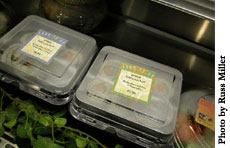 Is
sushi equal to raw fish? No. Raw fish is called sashimi in Japan
and is not the same as sushi. Sushi indicates foods that use rice
seasoned with sweet rice-wine vinegar. Of course, raw fish is the
most popular ingredient in sushi, but the main element of sushi
is Japanese sticky rice. There are many kinds of sushi that don't
include raw fish. Cooked fish, shellfish and various other ingredients
can also be combined in sushi. Is
sushi equal to raw fish? No. Raw fish is called sashimi in Japan
and is not the same as sushi. Sushi indicates foods that use rice
seasoned with sweet rice-wine vinegar. Of course, raw fish is the
most popular ingredient in sushi, but the main element of sushi
is Japanese sticky rice. There are many kinds of sushi that don't
include raw fish. Cooked fish, shellfish and various other ingredients
can also be combined in sushi.
History of Sushi
The origin of sushi is not Japan. It is said that sushi was introduced
into Japan in the seventh century from China. People began making
sushi to preserve fish by fermentation when there were no refrigerators.
Since salt and rice were needed in order to ferment fish, sushi
came to be closely related to rice in Japan. That dish developed
into current sushi, which combines fish and rice.
Sushi Nutrition
Sushi is low in fat and is a very nutritious food. A typical setting
of seven to nine pieces contains about 300 to 450 calories. The
fish in sushi provides protein and can be a good source of Omega-3
fatty acids. Seaweed is rich in iodine, and rice provides complex
carbohydrates.
Kinds of Sushi
Nigiri-zushi (finger roll sushi)-hand-pressed mounds of rice with
a dab of wasabi (Japanese horseradish) and a slice of raw fish/shellfish/other
ingredients on top. Popular nigiri-zushi are Maguro (tuna), Toro
(belly of tuna), Hamachi (yellowtail), Ebi (shrimp), Tamago (omelet),
Anago (grilled sea-eel), Uni (sea urchin), Ikura (salmon roe), Ika
(squid), Tako (boiled octopus) and Hotategai (scallop).
Maki-zushi (sushi)-sushi rolls wrapped in seaweed (nori). This is
also called nori maki. There are many kind of sushi rolls: Tekkamaki
(raw tuna roll), Kappamaki (cucumber) and Futomaki (fat roll sushi-contains
4-8 ingredients, including Kampyo [seasoned gourd strips], Oboro
or Denbu sweet powder, Tamago sweet omelet and shiitake mushrooms).
Inari-zushi (sushi)-deep-fried tofu pouches stuffed with sushi rice.
This sushi is brown and oval-shaped. It has a sweet taste. It is
also one of the more popular sushi for beginners to start with.
Chirashii-zushi (mixed sushi)-different ingredients (including raw
fish, shiitake mushroom, omelet, seaweed and more) spread over seasoned
rice on a dish. Side Elements of Sushi
The important seasonings are soy sauce and wasabi. Soy sauce is
used as dipping sauce. Wasabi is put in nigiri-zushi or is mixed
with soy sauce for dipping.
The most important side ingredient of sushi is ginger. Pickled ginger
is called gari and is served with sushi. Gari is eaten between bites
of sushi to refresh the mouth for each new taste. You can purchase
pickled ginger at Asian markets or you can make it yourself.
Eating Sushi in Japan
In Japanese homes, sushi is often eaten when celebrating a special
occasion. Chirashii-zushi, maki-zushi and inari-zushi are commonly
cooked at home following family recipes. Sushi delivery is also
common.
In real sushi restaurants, sushi is very expensive, since chefs
select the best ingredients. It can cost nearly $100 per person,
depending on what you eat.
However, there are also places called kaiten-zushi, where the sushi
plates circle around the eating area on a conveyor belt. This is
a kind of sushi "fast-food" restaurant in Japan and is inexpensive.
It's very popular in Japan, so you can find kaiten-zushi restaurants
everywhere. When you go to kaiten-zushi, you wait until your favorite
sushi comes near you, then you pick up the plates from the moving
table. If your favorite is not moving on the table, you can order
it. The type of plate the sushi pieces are on will indicate the
price of each sushi. If you want to save money, you can avoid picking
up expensive sushi. It usually costs about $1.50 to 2.50 per plate.
What to Do at Sushi Restaurants
· Clean your hands with an oshibori (hot towel) then order a drink.
· Try green tea (called agari in sushi restaurants); it is the best
drink with sushi.
· You can order a set of sushi with a fixed price or order your
favorite sushi pieces as you eat.
· It's nice to ask the sushi chef for his or her recommendation
of the day.
· If you are not ordering a set of sushi, order a few kinds of sushi
at a time; it's better than ordering a lot.
· Put soy sauce for dipping in the small dish provided.
· To eat sushi, it's common to use your fingers.
· When dipping sushi in the soy sauce, do not dip whole sushi. Just
dip the end of the sushi as you eat, or the sticky rice will come
apart.
· Try not to ask the sushi chef to bring you things like a drink
or your bill-that is the job of the waitress.
· It's nice to offer to buy your sushi chef a drink if he or she
is doing a good job.
Useful Phrases
Domo: Thank you.
Domo arigato: Thank you very much.
Dozo: Please.
Gaijin: Outsiders; Foreigners.
Gochiso-sama [deshita]: Traditional phrase closing a meal.
Hai: Yes.
Itadakimasu: Traditional phrase opening a meal.
Itamae: The sushi (or other Japanese) chef.
Konichiwa: A greeting, roughly, "How are you?" or "Good
afternoon." Omakase: Chef's choice.
Okonomi: The practice of ordering sushi a few pieces at
a time.
Sabinuki: "No wasabi, please."
|









)