
The Holy Sepulchre

The outer courtyard of the Church of the Holy Sepluchre. The door shown is the only entrance and exit to the main part of the church.
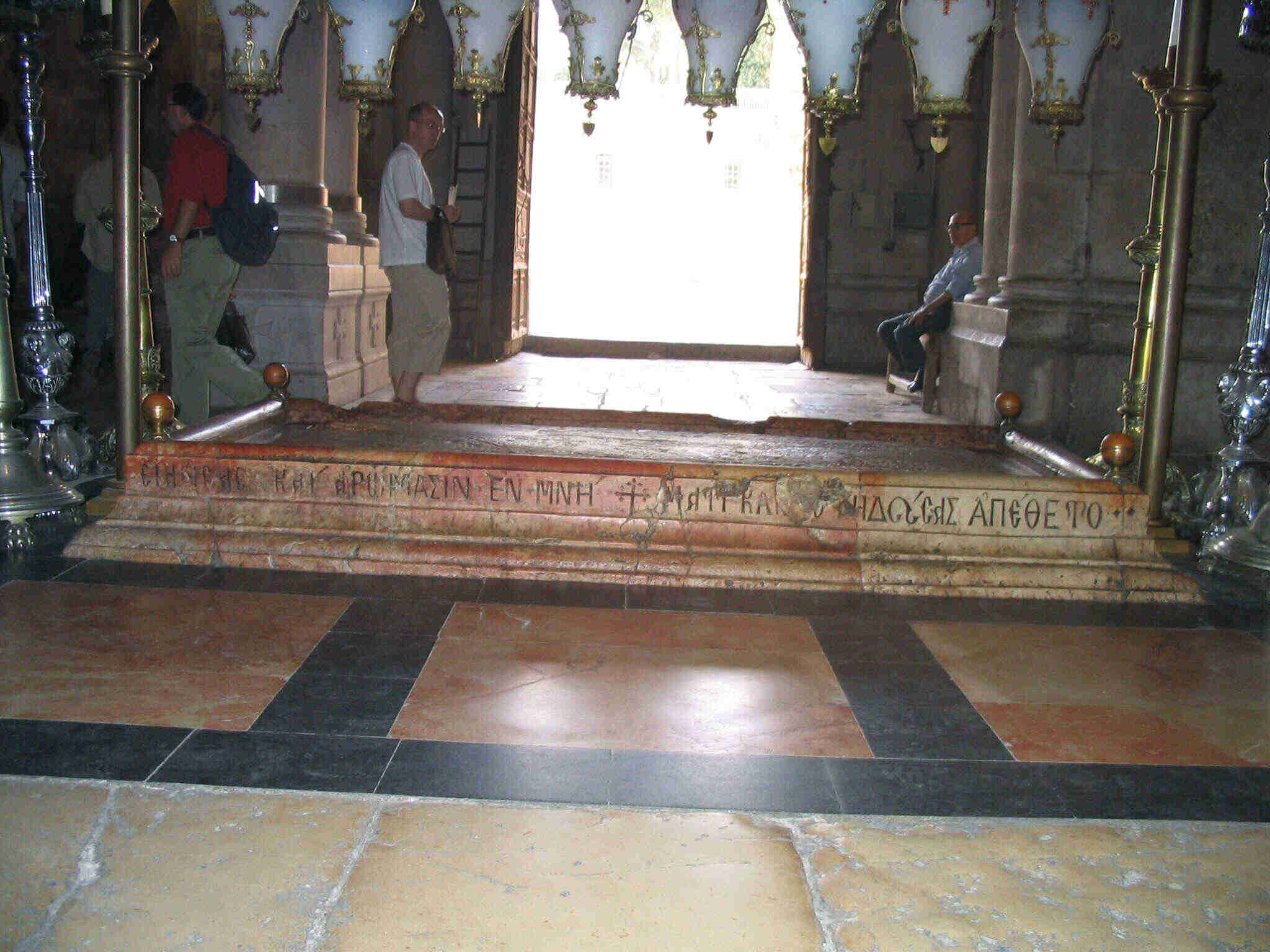
Right inside the door is the stone of unction, commemorating where Jesus’ body was anointed after his crucifixion. The various lamps hanging over the stone symbolize the unity of the various churches that run the Holy Sepluchre.

This is the Latin Chapel commemorating the place where Jesus was nailed on the cross. To the left is the chapel of the crucifixion.
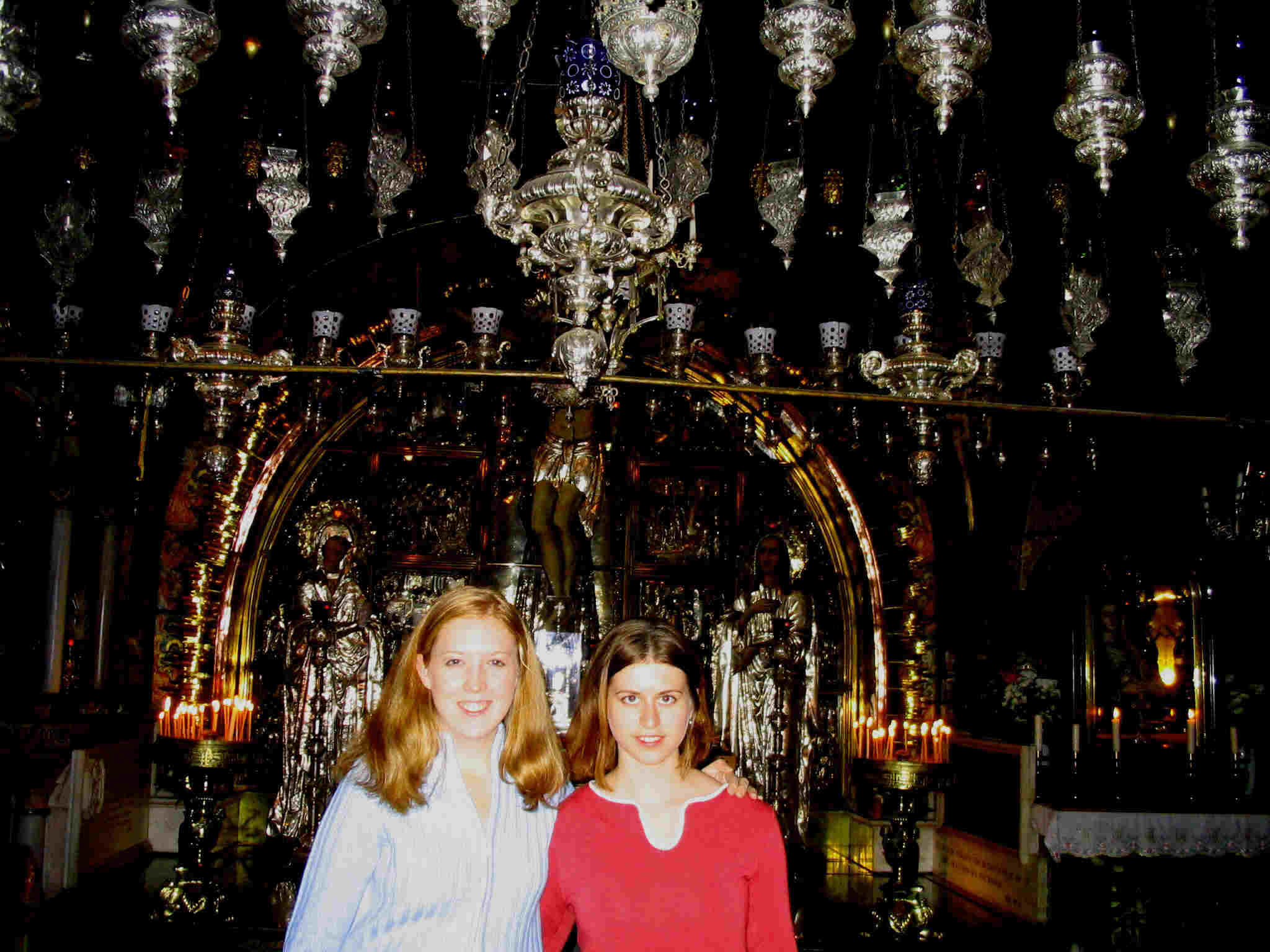
This is the chapel of the crucifixion. One can reach under the altar to touch the rock of Golgotha. This place is run by the Greek Orthodox.

Downstairs is the oldest part of the church, the rotunda over the Aedicule, the place where Jesus was buried. The present Aedicule, a gift of a czar in the 19th century, is falling apart, and has been strapped together since the time of the British Mandate.
On a lower level is the Chapel of St. Helena, the mother of Constantine. This place is run by the Armenian church.
 On
the roof there are many more chapels and quarters for priests. Here is a Coptic
priest talking to my professor, Petra Heldt.
On
the roof there are many more chapels and quarters for priests. Here is a Coptic
priest talking to my professor, Petra Heldt.

Here is an Ethiopian monk. Behind him is the quarters where many people live who want to be near the holy site.
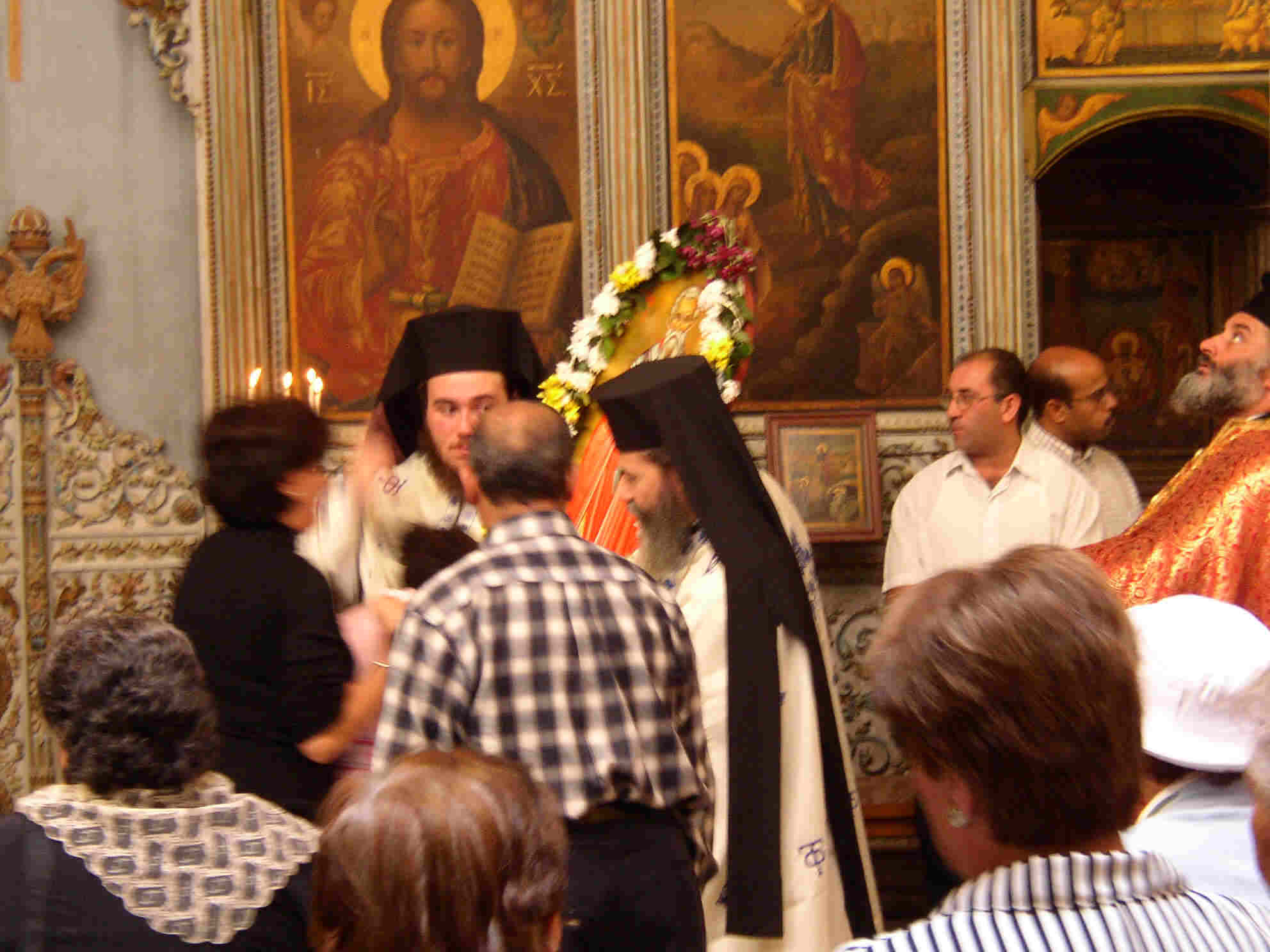 A
Greek Orthodox procession on St. James Day at the Chapel of St. James right off
the courtyard.
A
Greek Orthodox procession on St. James Day at the Chapel of St. James right off
the courtyard.

A Coptic Orthodox service at the Chapel of St. Helena on the roof.
