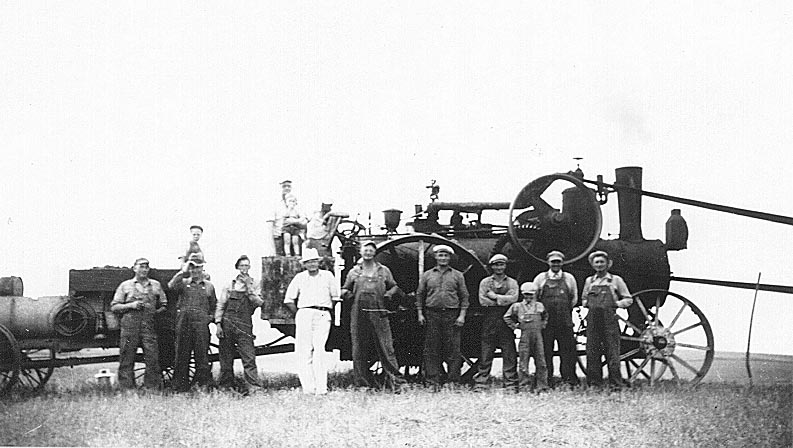


Fourth picture on the right shows Grandfather Oscar standing in the middle.
Fourth picture on the right shows Grandfather Oscar standing in the middle.

 The first image to the left is a bill for threshing that Ole did in 1913 for Christ Pederson. My Grandmother's father. Ten years later she would marry Ole's son Oscar, my Grandfather.

The image to the left is Ole's 2 year license he received on July 11, 1914 from the State Boiler Inspector 49th Senatorial District of Minnesota as a first class engineer qualified in all steam generating equipment.
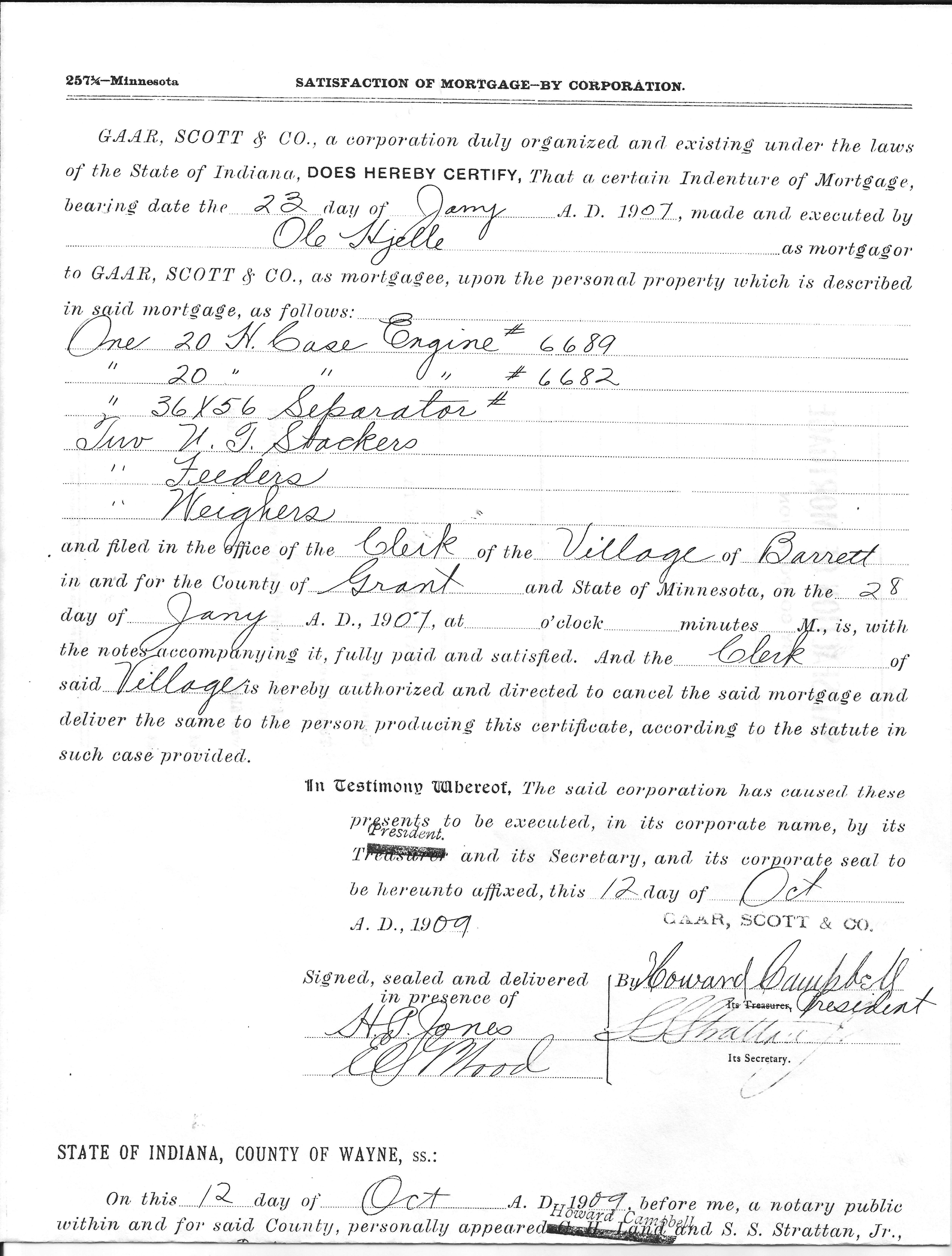
Ten years after starting the ice works. Ole got into the threshing business. He needed something to keep him busy in the summer months. He bought his first rig from Gaar Scott & Co. on June 9, 1904 it consisted of 1-20H Case engine #6682, 1-36x60 Advance Seperator, 1-Advance Feeder, 1-Advance Bagger and 1-Maplebay Stacker. He also purchased machinery in 1907, 1912 and 1914. The business was later taken over by his sons after his death.
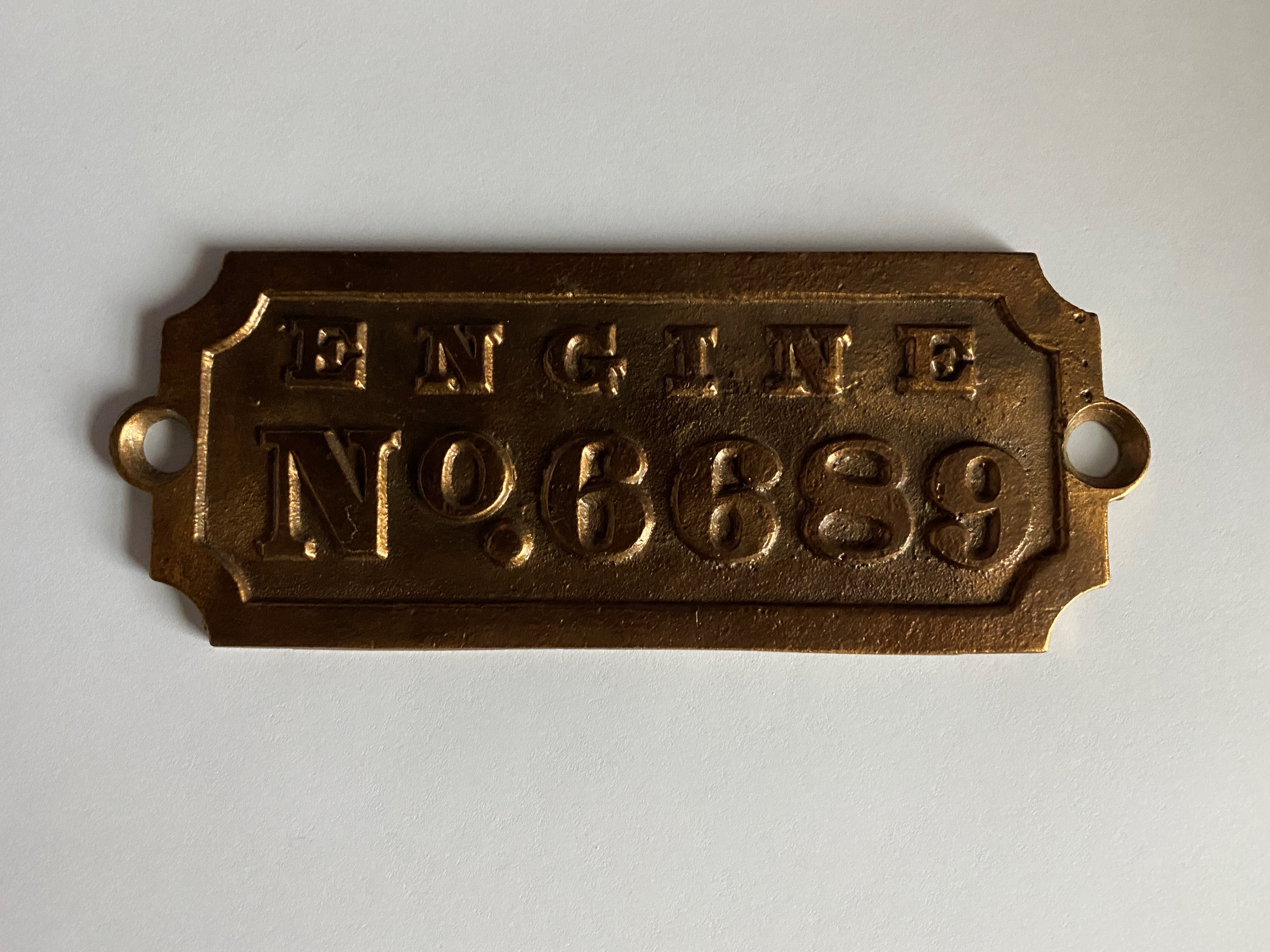
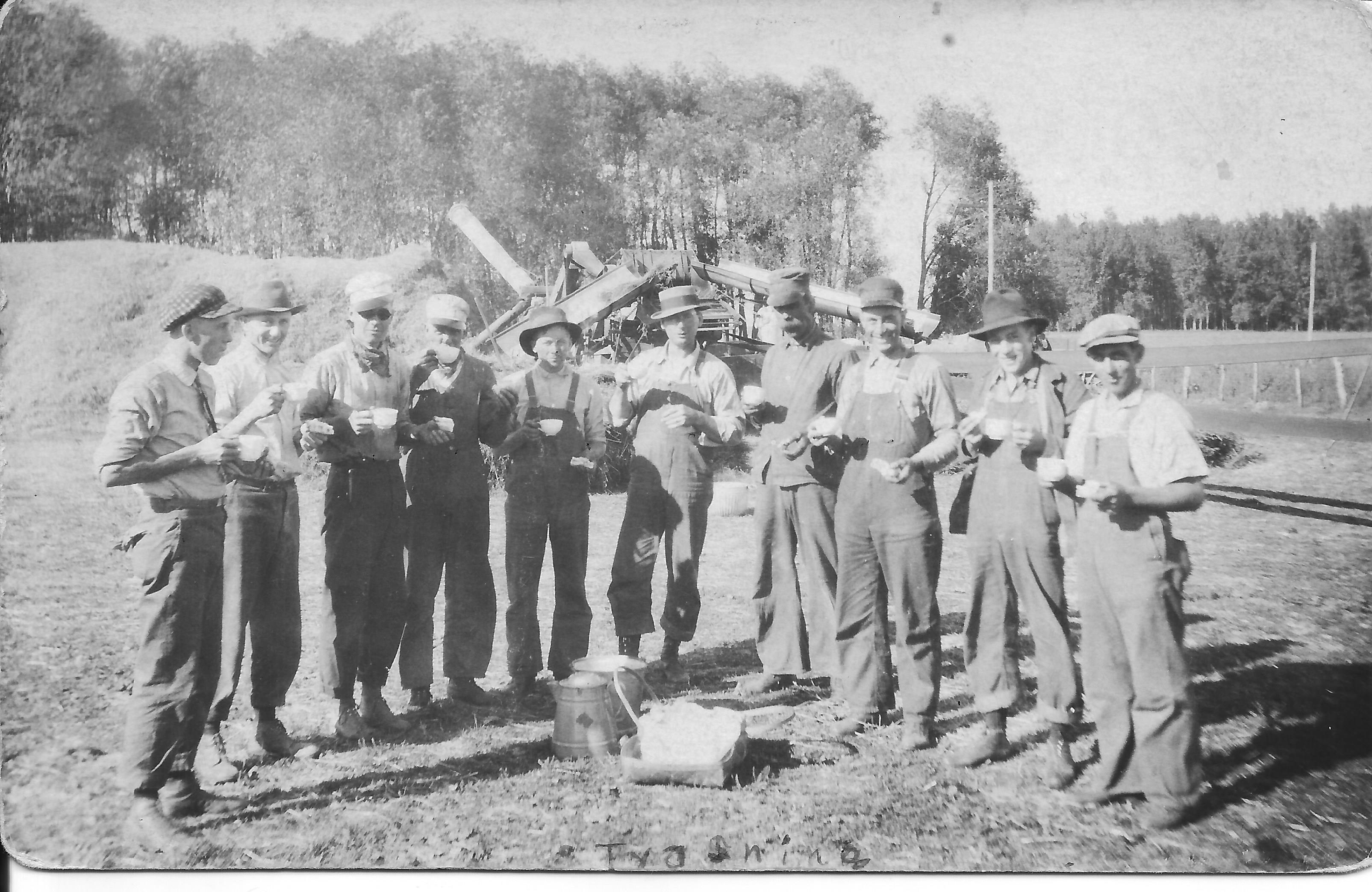
After the grain had ripened sufficiently in the shocks, it was ready to be threshed so that the farmer could sell it. The threshing process, where grain was removed from the stalks, was accomplished through the use of a threshing machine. Large farmers usually owned their own threshing machines, but many times farmers depended on custom thresher men to do the threshing for them. Regardless of machine ownership, however, the threshing process required a huge amount of labor. Each member of the threshing crew had a specific job to accomplish when the threshing rig arrived.
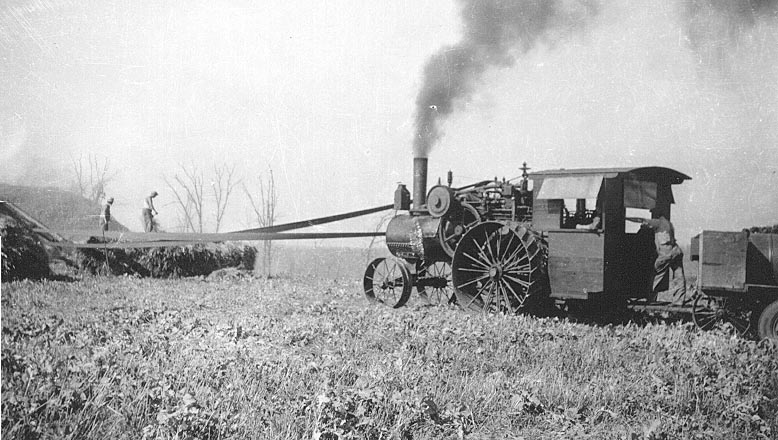
The steam engineer set it up in a location close to the grain field, or where the farmer wished to have the straw blown. Next, the steam engine was belted up to the threshing machine, and all the pre-threshing maintenance was completed on the threshing machine. Concurrently and after the threshing machine was started, a team of workers called "bundle haulers" went out into the field and loaded shocks onto a horse-drawn wagon. After the wagon was filled, the bundle haulers then brought it up to the spot where the threshing machine was set up.
Soon the thrashing machine was started, and men standing on top of the wagon pitched down the grain bundles into the threshing machine's bundle feeder. The conveying chain of the bundle feeder then transported the grain bundles into the threshing machine cylinder where most of the grain was separated from the stalks. The separated grain fell to the bottom of the threshing machine, while chaff and dust was removed by a fan as it descended. An elevator on the threshing machine then transported the loose grain into a grain wagon parked nearby or into individual bags, depending on the method that the farmer preferred. After the straw went through the cylinder, it was continually battered as it progressed along, ensuring that all the grain was removed from the stalks. At the rear of the threshing machine, after the straw had passed over the straw walkers, it was deposited in a fan housing which propelled the straw through the blower and into the straw stack. This series of machine processes was repeated continuously, until all of the farmer's grain was threshed. Overall, while there definitely was an immense amount of labor involved in the use of a threshing machine, it drastically improved the efficiency and capacity of the threshing process over previous methods. And of course after a hard, hot, dusty day of work it was time to have a cold one.
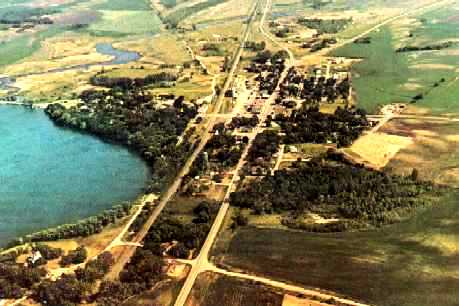
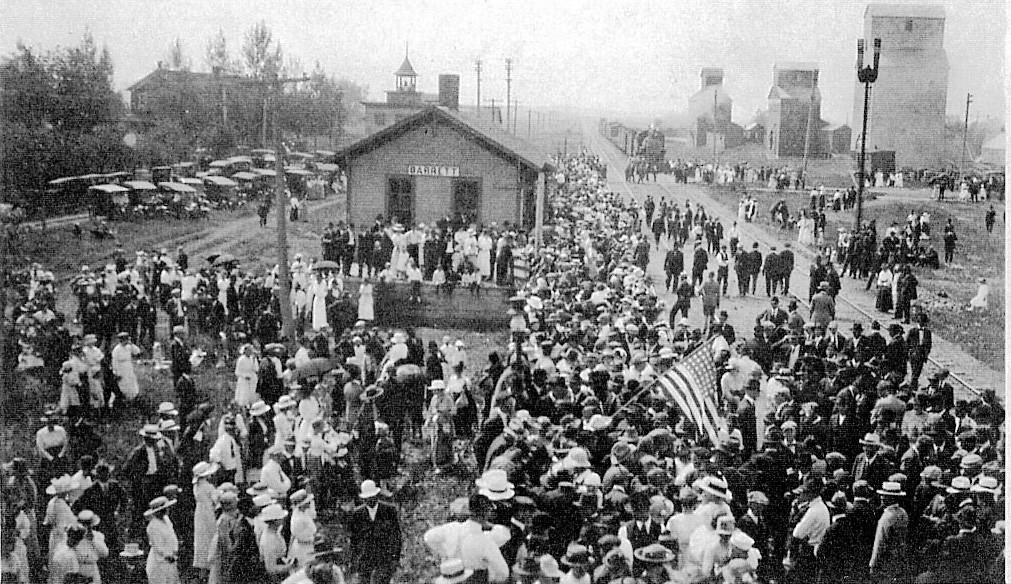
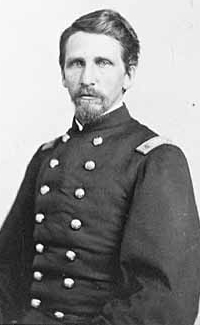
Town was named after General Theodore H. Barrett. He was born in the state of New York on August 27, 1834. The call of the west beckoned, and at the age of nineteen he was already surveying the Indian territory in an area which would later become the city that would bear his name. His life was filled with adventure. Not the least of which might have been his experience as a commander in the last battle of the civil war. What makes this a memorial adventure is that the battle took place a month after the war was supposedly over. Here is his final report from that battle.
During his experience as a surveyor, he had learned to like west central Minnesota, and came back to establish the famous Barrett Ranch near what is now the town of Herman, Minnesota.
In the summer of 1900 he died in a riding accident while traveling at high speed, his horse stepped into a hole and fell causing the death of the General and his beautiful mount.