**continued from previous page**
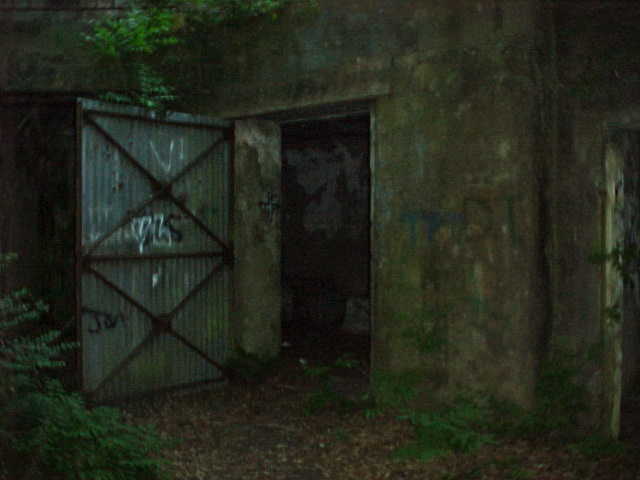
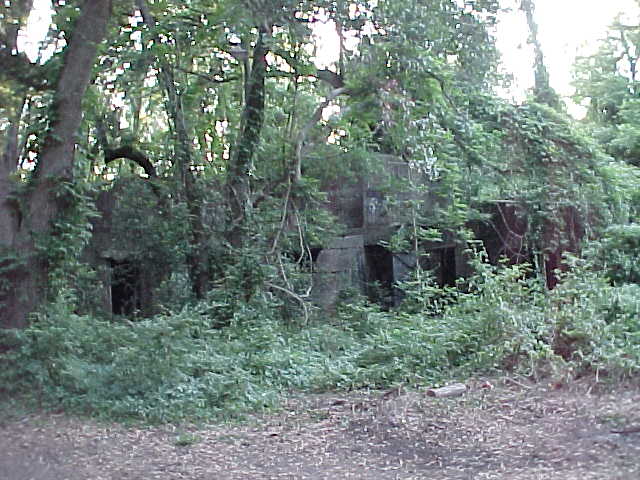
"It is a moldering, concrete skull of a fort, marred by witless scribblings, littered with rusting beer cans and shattered whisky bottles. All the openings are to landward and they show like hollow eyesockets through the tangle of trees and vines.
It's teeth - the mighty, 10-inch disappearing rifles that once sprang up to belch flame and steel from the ramparts - are long since gone and trees grow where the great guns crouched.
THERE IS A DEATHLIKE STILLNESS about the place; a few birds call; the hum of countless mosquitos and clouds of torturing sand flies, nothing more. A lizard blinks sleepily in the sunlight. Nothing else moves here atop the deserted ramparts.
A narrow gap in the surrounding jungle shows the flat, blue water of the sound, the seaward tip of Parris Island and a white yacht that vanishes quickly to the right as it moves up the Beaufort River. That misty, blue-green line at the bottom is Hilton Head Island and the pine forests along the southern bank of the Broad River.
Fort Fremont's guns once commanded all of this: the five mile width of the sound and the mouths of both rivers where they came down on either side of Parris Island. That was why they built the fort here back in 1898, when war with Spain flamed and there were fears a Spanish fleet might some day steam into the Port Royal Sound.

The irony was that Adm. Gervera's fleet was on the bottom off Cuba and the Spanish-American War had ended months before the Army finished building For Fremont.
But finish it they did, in 1899, and it remained a lonely, isolated outpost until its garrison went off to Texas in March, 1911, to take a hand in keeping Pancho Villa from raiding across the Mexican border.
The record of those years between 1899 and 1911 is surprisingly scanty. Beaufort County's two weekly newspapers of that era paid little heed to the fort and the 127th Company, Coast Artillery, that garrisoned it. More than half a century has dimmed the memory of county residents who were here during the fort's brief life
JOHN DEMOSTHENES, retired Beaufort tailor, is one of a handful of persons alive today who saw Ft Fremont in its heyday.
"We went up there often to Fort Scriven," he recalls. "There was a steamer, the Gen Jackson, that delivered supplies to Ft Fremont twice a week and we would make the trip for training and to play their baseball team."
There were two range-finder towers, as he recalls, three sets of wooden officer's quarters, two wooden barracks and a brick hospital in addition to the concrete fort.
"Only the hospital building and the fort are still there," Mr Demosthenes says. "They tore down the other buildings after we went to Texas."
He remembers Ft Fremont as a terribly isolated spot, with baseball and fishing the only off-duty activities.
**continued on next page**