
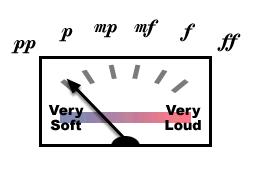
Dynamics refers to how hard or
soft a musician (or musicians) play their instrument(s). Players can play very
forcefully (called forte) or softly (called piano).
These changes in expression are similar to how we vary our voices from soft
whispers to loud yells. Dynamics are found in all styles of music. Classical
music uses dynamics to great effect.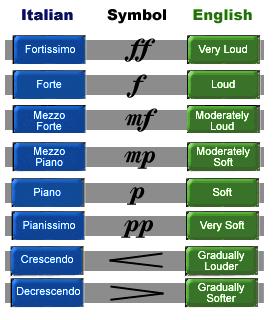
◄ Click on the terms in blue to hear an example of each.
Here are the symbols and names used to refer to various dynamic levels. Notice that the words are in Italian. This is because the first composers to include instructions about dynamics were Italian.
The symbols are included on sheet music to give the musician some idea of how hard or soft to play.
A composer might use several dynamic markers in the same song.
Changing dynamics gives music excitement and flow. After all, if you always
talked at the same level, people would get tired of listening to you!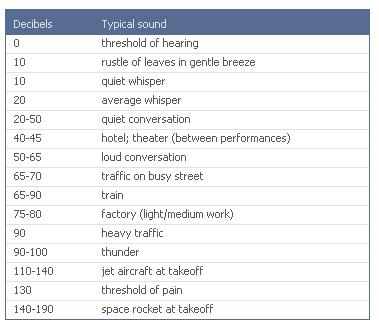
While each of these can affect how loud or quiet the music sounds, the volume of a piece of music is also determined by where we set the controls on our stereos.
Volume, the actual amount of sound energy produced, is measured in decibels (dB) and can range from barely audible sounds to very loud, potentially damaging sounds. The way the table is organized, each 10dB increase represents an increase of 10 times the volume! So, rustling leaves are about 10 times quieter than the average whisper.
The volume of music is one of the few factors the listener controls themselves. That said, be sure to protect your hearing by not overexposing yourself to overly loud music.
