MALARIA
Malaria is disease of human beings
and also birds, monkeys and other primates, lizards and rodents, caused by
infection by protozoans of the genus Plasmodium and
characterized by chills and intermittent fever.
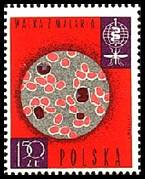
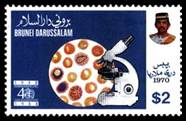
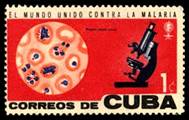
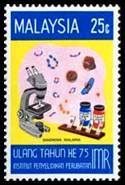
The causative organisms of human
malaria are transmitted by the bite of about 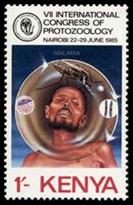 60 species of mosquitoes in the
genus Anopheles. The disease may occur in subtropical and tropical regions in
almost all parts of the world as well as in other areas of differing
temperatures.
60 species of mosquitoes in the
genus Anopheles. The disease may occur in subtropical and tropical regions in
almost all parts of the world as well as in other areas of differing
temperatures.
With the advent of control programs
based on the use of residual insecticides the distribution of malaria changed
rapidly. Since 1950 malaria has been eliminated from almost all of Europe and from large areas in Central and
South
America.
It remains a major problem in parts of Africa and in South-East Asia. About 100 million cases of human
malaria develop each year; about 1% are fatal. Like
many other tropical diseases malaria is a major cause of illness and death in
the developing world. Rapid population growth, migration, poor sanitation and
overcrowding have helped the disease to spread. The opening
up of previously uninhabited areas and urbanization have brought
mosquitoes into contact with people settling these areas.
Malaria in Human Beings
Human malaria occurs in four forms
each caused by a different species of parasite. In each the symptoms are
usually chills, fever and sweating. In untreated cases, these attacks recur
periodically. The mildest form of malaria is benign
tertian malaria caused by Plasmodium vivax, in
which the fever may occur every second day after the initial attack.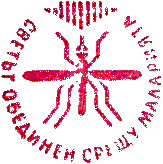
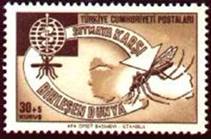
Jungle fever, malignant tertian malaria or aestivo-autumnal
malaria caused by P. falciparum, is responsible for
most of the deaths from malaria. The organisms in this form of the disease
often block the blood vessels of the brain, producing coma, delirium and
finally death. Quartan malaria caused by P. malariae,
has a longer incubation period than either tertian malaria or jungle fever; the
first attack does not appear until 18 to 40 days after infection. The attacks
recur every third day. The fourth and rarest form of the disease, caused by P. ovale, is similar to benign tertian malaria.
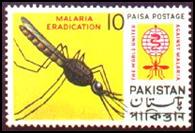
During the incubation period of
malaria, the protozoa grow within cells in the liver; a few days before the
first attack, the organisms invade the red blood cells, which they destroy in
the course of their development, producing the typical febrile attack.

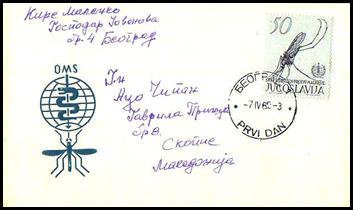
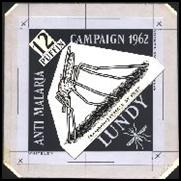
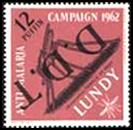
Proof
from Lundy Anopheles mosquito
Prevention with DDT
DDT is colorless chemical pesticide,
dichlorodiphenyltrichloroethane,  used to eradicate disease-carrying
  and crop-eating insects. It was
originally isolated in Germany in 1874, but it was not until 1939
that the Swiss Nobel Prize-winning chemist Paul Müller
recognized it as a potent nerve poison on insects. First used heavily in World
War II for pre-invasion spraying, DDT was disseminated in great quantities
thereafter throughout the world to combat malaria, yellow fever, typhus,
elephantiasis and other insect-carried diseases. In India, DDT reduced malaria from 75
million cases to fewer than 5 million cases in a decade. Crops and livestock
sprayed with DDT sometimes as much as doubled their yields.
and crop-eating insects. It was
originally isolated in Germany in 1874, but it was not until 1939
that the Swiss Nobel Prize-winning chemist Paul Müller
recognized it as a potent nerve poison on insects. First used heavily in World
War II for pre-invasion spraying, DDT was disseminated in great quantities
thereafter throughout the world to combat malaria, yellow fever, typhus,
elephantiasis and other insect-carried diseases. In India, DDT reduced malaria from 75
million cases to fewer than 5 million cases in a decade. Crops and livestock
sprayed with DDT sometimes as much as doubled their yields.
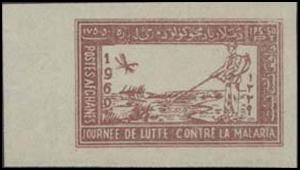
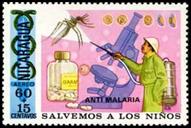
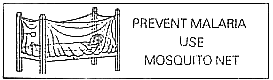
Cancellation of India for prevention method against
malaria
Treatment
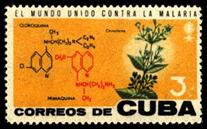
Since 1638 malaria has been treated
with an extract from the bark of the cinchona tree, known as quinine, which is
somewhat toxic and suppresses the growth of protozoa in the bloodstream. In
1930 German  chemists synthesized Atabrine (quinacrine hydrochloride), which was at the
  time more effective than quinine and
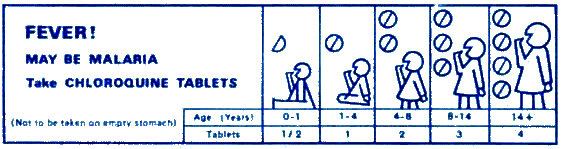
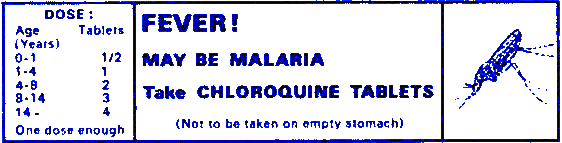
less toxic. Chloroquine,
which became available at the end of World War II, was found capable of preventing
and curing jungle fever completely, and to be much more effective in
suppressing the other forms of malaria than Atabrine
or quinine. It also had a much lower toxicity than any of the earlier drugs and
was effective in less frequent doses.
time more effective than quinine and
less toxic. Chloroquine,
which became available at the end of World War II, was found capable of preventing
and curing jungle fever completely, and to be much more effective in
suppressing the other forms of malaria than Atabrine
or quinine. It also had a much lower toxicity than any of the earlier drugs and
was effective in less frequent doses.
However, recently strains of P. falciparum, the organism causing jungle fever, have shown
resistance to chloroquine and other synthetic antimalarial drugs. These strains are encountered
especially in Vietnam and also in the Malay Peninsula, Africa and South America. Quinine is also becoming less
effective against P. falciparum strains. In addition
to the occurrence of strains of 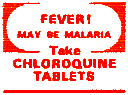 drug-resistant parasites, the fact
that some vector mosquitoes (anophelines) have become
resistant to insecticides such as DDT has led to an upsurge of malaria in
certain tropical countries. As a result malaria has increased among American
and Western European travelers to Asia and Central America and in refugees from these areas.
People traveling to areas where malaria is prevalent or emerging may be
prescribed antimalarial drugs as prophylaxis. Advice
on appropriate therapies, which may change, is available from centers such as
the Communicable Disease Surveillance Centre. Prophylactics are often continued
for several weeks after return. Mefloquine has been shown to be effective against chloroquine-resistant strains of malaria both as treatment
and as a prophylactic. A combination of sulfadoxine and pyrimethamine is used for malaria prophylaxis in chloroquine-resistant areas. Proguanil is used only for
prophylaxis.
drug-resistant parasites, the fact
that some vector mosquitoes (anophelines) have become
resistant to insecticides such as DDT has led to an upsurge of malaria in
certain tropical countries. As a result malaria has increased among American
and Western European travelers to Asia and Central America and in refugees from these areas.
People traveling to areas where malaria is prevalent or emerging may be
prescribed antimalarial drugs as prophylaxis. Advice
on appropriate therapies, which may change, is available from centers such as
the Communicable Disease Surveillance Centre. Prophylactics are often continued
for several weeks after return. Mefloquine has been shown to be effective against chloroquine-resistant strains of malaria both as treatment
and as a prophylactic. A combination of sulfadoxine and pyrimethamine is used for malaria prophylaxis in chloroquine-resistant areas. Proguanil is used only for
prophylaxis.
Currently work is progressing on the
development of a malaria vaccine. Several vaccine candidates are now undergoing
clinical trials for safety and effectiveness in human volunteers and scientists
are now working on a vaccine for general distribution. Research is being
conducted into developing a new series of drugs based on artemisinin,
which is used by Chinese herbalists to treat fever. The compound has proved
effective against the P. falciparum organism but it
is as yet difficult to synthesize.
 Cinchona is genus of tropical evergreen
trees and shrubs of the madder
Cinchona is genus of tropical evergreen
trees and shrubs of the madder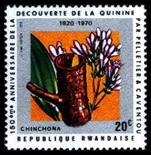 family, yielding the medicinal bark
variously known as Peruvian bark, Jesuits' bark, China bark or cinchona bark, from which
the drug quinine and related substances are obtained. All the cinchonas have
laurel-like, entire, opposite leaves; stipules that soon fall off; and panicles
of flowers that somewhat resemble those of the lilac. The flowers are white,
rose or purplish and very fragrant.
family, yielding the medicinal bark
variously known as Peruvian bark, Jesuits' bark, China bark or cinchona bark, from which
the drug quinine and related substances are obtained. All the cinchonas have
laurel-like, entire, opposite leaves; stipules that soon fall off; and panicles
of flowers that somewhat resemble those of the lilac. The flowers are white,
rose or purplish and very fragrant.
Quinine is alkaloid derived principally
from the bark of the cinchona tree. It is an efficient antipyretic
(fever-reducing agent) and is used to reduce fever in many diseases. It was the
only known remedy for malaria until the development in recent years of
synthetic drugs.
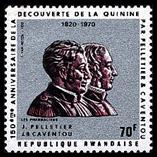 The efficacy of quinine was probably
discovered by Jesuit missionaries in Peru, who introduced the drug into Europe in about 1640. In 1820 J.Pelletler and J.B. Caventou
discovered quinine. Increase in its use through the years
threatened the exhaustion of the South American trees and efforts to cultivate
cinchona trees in other countries finally succeeded in Indonesia in the late 19th
century. Production from the cultivated trees was so far superior in both
quality and quantity to that of the indigenous South American trees that Indonesian
soon had a practical monopoly on the market. At the outbreak of World War II
the Japanese invasion of the Indies cut off more than 90% of the world supply of
quinine. During the war substitutes for quinine were developed and produced in
great quantities for the protection of Allied troops, especially in the Pacific
theatre of war. In 1944 the American chemists Robert Woodward and William Doering succeeded in synthesizing quinine from coal
tar. Natural quinine is still in demand however because some malarial organisms
are resistant to the synthetics !!!
The efficacy of quinine was probably
discovered by Jesuit missionaries in Peru, who introduced the drug into Europe in about 1640. In 1820 J.Pelletler and J.B. Caventou
discovered quinine. Increase in its use through the years
threatened the exhaustion of the South American trees and efforts to cultivate
cinchona trees in other countries finally succeeded in Indonesia in the late 19th
century. Production from the cultivated trees was so far superior in both
quality and quantity to that of the indigenous South American trees that Indonesian
soon had a practical monopoly on the market. At the outbreak of World War II
the Japanese invasion of the Indies cut off more than 90% of the world supply of
quinine. During the war substitutes for quinine were developed and produced in
great quantities for the protection of Allied troops, especially in the Pacific
theatre of war. In 1944 the American chemists Robert Woodward and William Doering succeeded in synthesizing quinine from coal
tar. Natural quinine is still in demand however because some malarial organisms
are resistant to the synthetics !!!

Post
card of United Nations for anti-malaria in 1962
Upper from left to right Élie Metchnikoff, Alphonse Laveran, Patrick Manson
Lower from left to right Ronald Ross, Battista Grassi,
Alexander J. Sinton
Élie Metchnikoff 1845 – 1916
Russian biologist and Nobel
laureate, a founder of the science of immunity. His name in Russian is Ilya Ilich Mechnikov. Metchnikoff was born near Kharkov on May 15, 1845, and educated at the University of Kharkov and, in Germany, at the Universities of Giessen,
Göttingen, and Munich. He lectured in zoology 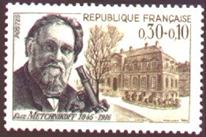 and comparative anatomy at the University of Odessa from 1870 to 1882. In 1904 he became a subdirector of
the PasteurInstitute in Paris. His early studies were devoted to the process of intracellular
digestion in invertebrates. He later established the destructive effect of
certain white blood cells, which he called phagocytes, on harmful materials in
the bloodstream, and in 1884 he announced his theory of phagocytosis, which
formed a basis for the theory of immunity. Metchnikoff
also advocated consumption of lactic acid bacteria for the prevention and
remedy of intestinal putrefaction. For his research on immunity he shared the
1908 Nobel Prize for Physiology or Medicine with the German bacteriologist Paul
Ehrlich
and comparative anatomy at the University of Odessa from 1870 to 1882. In 1904 he became a subdirector of
the PasteurInstitute in Paris. His early studies were devoted to the process of intracellular
digestion in invertebrates. He later established the destructive effect of
certain white blood cells, which he called phagocytes, on harmful materials in
the bloodstream, and in 1884 he announced his theory of phagocytosis, which
formed a basis for the theory of immunity. Metchnikoff
also advocated consumption of lactic acid bacteria for the prevention and
remedy of intestinal putrefaction. For his research on immunity he shared the
1908 Nobel Prize for Physiology or Medicine with the German bacteriologist Paul
Ehrlich
Alphonse Laveran 1842 – 1922
He discovered a malarial parasite in
human red blood cells. In 1907 Laveran founded the
Laboratory of Tropical Diseases at the Pasteur Institute in Paris. For his work on protozoa as causes
of disease he received the 1907 Nobel Prize for Physiology or Medicine.
Patrick Manson 1844 – 1929
He reported in 1879 that filaria sanguims hominis caused intestinal disease. The pathogenic agent schistosoma mansonii was
discovered later by a Brazilian physician P. da
Silva. In 1894 he told that mosquitoes could cause malaria. He was acknowledged
as the father of Tropical Medicine and was awarded the rank of nobility in 1908
for his academic accomplishments.
Battista Grassi 1854 – 1925
Grassi discovered,
that a special kind of mosquito transmitted malaria.
Walter Reed 1851 – 1902
American army surgeon and
bacteriologist, who determined the cause of yellow fever.
Reed was born in Gloucester County, Virginia, on September
13, 1851,
and was educated at the University of Virginia and Bellevue Hospital Medical College. In 1875 he was commissioned in the
United States Army Medical Corps, serving as a military surgeon. In 1893 he was
appointed curator of the Army 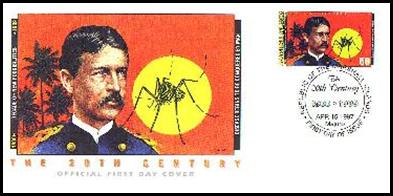 Medical Museum in Washington, D.C. He also served in 1893 as Professor
of Bacteriology and Microscopy at the newly founded Army Medical College in Washington, D.C. and during the next seven years
conducted important investigations of the etiology, control and transmission of
such epidemic diseases as yellow fever and typhoid fever. One of his most
notable investigations was organized by the War Department to examine a typhoid
epidemic among American troops; the results of the findings of the committee
contributed greatly to the subsequent prevention and control of typhoid
epidemics.
Medical Museum in Washington, D.C. He also served in 1893 as Professor
of Bacteriology and Microscopy at the newly founded Army Medical College in Washington, D.C. and during the next seven years
conducted important investigations of the etiology, control and transmission of
such epidemic diseases as yellow fever and typhoid fever. One of his most
notable investigations was organized by the War Department to examine a typhoid
epidemic among American troops; the results of the findings of the committee
contributed greatly to the subsequent prevention and control of typhoid
epidemics.
Reed's greatest contribution to
medical entomology, however, resulted from his work in 1900 as director of a
commission to investigate the cause and transmission of yellow fever in Cuba. Reed conclusively demonstrated
that the yellow fever germ is transmitted by the bite of the mosquito Aëdes aegypti. As a result of
Reed's findings, William Crawford Gorgas was able
virtually to eliminate the disease from Havana, Cuba, within three months by
exterminating the mosquitoes in the area. Since 1901 the incidence of yellow
fever has been reduced drastically throughout the world by the application of
Reed's discovery. Reed died in Washington, D.C., on November
22, 1902, shortly
after his return from Cuba.
Sir Ronald ross 1857 – 1932
British doctor, entomologist and
Nobel laureate, noted for linking malaria to mosquitoes. Ross was born in Almora, India and educated at St Bartholomew's
Hospital, London. He joined the Anglo-Indian army 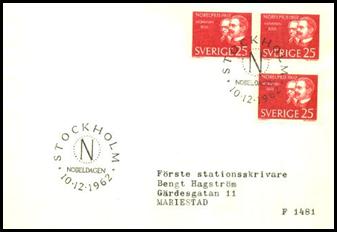 medical services in 1881 and 11
years later began investigations of the transmission and control of malaria.
While directing an expedition in western Africa in 1889, he identified the presence of
malaria-carrying mosquitoes and supervised their large-scale extermination. In
1895 Ross began a series of experiments that proved that malaria is transmitted
by mosquitoes; he also discovered the life cycle of the malarial parasite in
the Anopheles mosquito. For this discovery he was awarded the 1902 Nobel Prize
for Physiology or Medicine. In 1913 he became physician for tropical diseases
at King's College Hospital, London. Shortly thereafter he was
appointed director in chief of the Ross Institute and Hospital for Tropical
Diseases, London. Ross was elected a Fellow of the Royal Society in 1901 and knighted in
1911.
medical services in 1881 and 11
years later began investigations of the transmission and control of malaria.
While directing an expedition in western Africa in 1889, he identified the presence of
malaria-carrying mosquitoes and supervised their large-scale extermination. In
1895 Ross began a series of experiments that proved that malaria is transmitted
by mosquitoes; he also discovered the life cycle of the malarial parasite in
the Anopheles mosquito. For this discovery he was awarded the 1902 Nobel Prize
for Physiology or Medicine. In 1913 he became physician for tropical diseases
at King's College Hospital, London. Shortly thereafter he was
appointed director in chief of the Ross Institute and Hospital for Tropical
Diseases, London. Ross was elected a Fellow of the Royal Society in 1901 and knighted in
1911.
WORLD
AGAINST MALARIA PROOFS
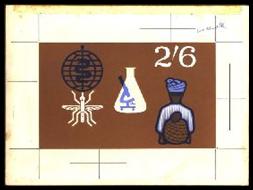
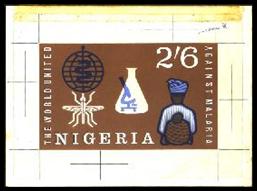
Nigeria
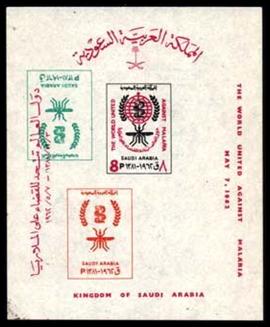
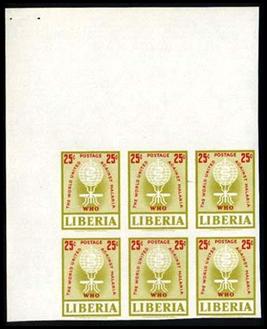
Saudi Arabia error Liberia color trying
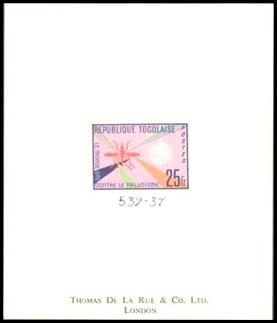
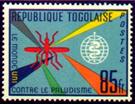

Republic of Togo Stamp Laos with
signature


