
MATERIALS
Arsenic is extremely poisonous semimetallic
element. The atomic number of arsenic is 33. Arsenic is in group 15 (or Va) of the periodic table.
Chemically, arsenic is intermediate
between metals and nonmetals. Its properties lie, in general, in the middle of
the series formed by the family of the elements nitrogen, phosphorus, arsenic,
antimony, and bismuth. Arsenic ranks about 52nd in natural abundance
among the elements in crustal rocks. When arsenic is heated, it sublimes,
passing directly from solid to gaseous form at 613° C. A common form of arsenic
is grey, metallic in appearance, and has a relative density of 5.7. A yellow,
nonmetallic form also exists and has a relative density of 2.0. The atomic
weight of arsenic is 74.92.
Arsenic has been known since ancient
times. The pure element can be easily prepared by heating a common ore called
arsenopyrite (FeAsS). Other common minerals are realgar (As2S2);
orpiment (As2S3); and arsenic trioxide (As2O3);
occasionally the pure element is found in nature. Arsenic occurs frequently in
place of some of the sulphur in the sulphides that are the principal ores of
many of the heavy metals. When these ores are roasted, the
arsenic sublimes and can be collected from the dust in the flues as a
by-product.
Arsenic is used in large quantities
in the manufacture of glass to eliminate a green color caused by impurities of
iron compounds. A typical charge in a glass furnace contains 0.5% of arsenic
trioxide. Arsenic is sometimes added to lead to harden it and is also used in
the manufacture of such military poison gases as lewisite and adamsite. Until
the introduction of penicillin, arsenic was of great importance in the
treatment of syphilis. In other medicinal uses, it has been displaced by sulpha
drugs or antibiotics. It is also used in dentistry in endodontiy. Lead arsenate, calcium arsenate and Paris
green are used extensively as insecticides. Certain arsenic compounds, such as
gallium arsenide (GaAs), are used as semiconductors. GaAs is also used as a laser
material. Arsenic disulphide (As2S2), also known as red
orpiment and ruby arsenic, is used as a pigment in the
manufacture of fireworks and paints.
Arsenic is poisonous in doses
significantly larger than 65 mg (1 grain), and the poisoning can arise from a
single large dose or from repeated small doses, as, for example, inhalation of
arsenical gases or dust. On the other hand, some persons, notably the so-called
arsenic eaters of the mountains of southern
A reliable test that can detect the
presence of minute amounts of arsenic is often important, because arsenic is a
violent poison, yet it is widely used and therefore is a frequent contaminant.
The Marsh test, named after its inventor, the English chemist James Marsh,
supplies a simple method for detecting traces of arsenic so minute that they
would escape discovery in ordinary analysis. The substance to be tested is
placed in a hydrogen generator and any arsenic present is converted to arsine
(AsH3), which mixes with the evolved hydrogen. If the stream of hydrogen is
heated as it passes through a glass tube, the arsine decomposes, and metallic
arsenic is deposited in the tube. Minute amounts cause an appreciable stain; as
little as 0.1 of arsenic or antimony can be detected by using the Marsh test.
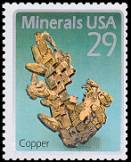
Copper is brownish-red metallic element
that is one of the most widely used of metals. Copper is one of the transition
elements of the periodic table. The atomic number of copper is 29.
Copper was known to prehistoric
people and was probably the first metal from which useful articles were made.
Copper objects have been found among the remains of many ancient civilizations,
including those of
Copper melts at about 1083° C, boils
at about 2567° C and has a relative density of 8.9. The atomic weight of copper
is 63.846. Because of its many desirable properties, such as its conductivity
of electricity and heat, its resistance to corrosion, its malleability and
ductility, and its beauty, copper has long been  used in a wide variety of
applications. The principal uses are electrical, because of copper's extremely
high conductivity, which is second only to that of silver. Because copper is
very ductile, it can be drawn into wires of any diameter from about 0.025 mm
upwards. The tensile strength of drawn copper wire is about 4200 kg/sq; it can
be used in outdoor power lines and cables, as well as in house wiring, lamp
cords, and electrical machinery such as generators, motors, controllers,
signaling devices, electromagnets, and communications equipment.
used in a wide variety of
applications. The principal uses are electrical, because of copper's extremely
high conductivity, which is second only to that of silver. Because copper is
very ductile, it can be drawn into wires of any diameter from about 0.025 mm
upwards. The tensile strength of drawn copper wire is about 4200 kg/sq; it can
be used in outdoor power lines and cables, as well as in house wiring, lamp
cords, and electrical machinery such as generators, motors, controllers,
signaling devices, electromagnets, and communications equipment.
Copper has been used for coins
throughout recorded history and has also been fashioned into cooking utensils,
vats, and ornamental objects. Copper was at one time used extensively for
sheathing the bottom of wooden ships to prevent fouling. Copper can easily be
electroplated, alone or as a base for other metals. Large amounts are used for
this purpose, particularly in making electrotypes, reproductions of type for
printing.
The metallurgy of copper varies with
the composition of the ore. Native copper is crushed, washed, and cast in bars.
Oxides and carbonates are reduced with carbon. The most important ores, the
sulphides, contain not more than 12%, sometimes as little as 1% of copper; they
must first be crushed and concentrated by flotation. The concentrates are smelted
in a reverberatory furnace, which yields crude metallic copper, approximately
98% pure. Crude copper is further purified by electrolysis, yielding bars
exceeding 99.9% purity.
Pure copper is soft but can be
hardened somewhat by being worked. Alloys of copper, which are far harder and
stronger than the pure metal, have higher resistance and so it is used for crown
materials or fillings in dentistry. They do, however, have corrosion resistance
almost as good as that of pure copper and are very easily worked in machine
shops. The two most important alloys are brass, a zinc alloy, and bronze, a tin
alloy. Both tin and zinc are sometimes added to the same alloy, and no sharp
dividing line can be drawn between brass and bronze. Both are used in enormous
quantities. Copper is also alloyed with gold, silver, and nickel, and is an
important constituent of such alloys as Monel metal, gunmetal, and German
silver.
Copper forms two series of chemical
compounds: cuprous, in which the copper has a valence of 1, and cupric, in
which the copper has a valence of 2. Cuprous compounds are easily oxidized to
cupric, in many cases by mere exposure to air, and are of little industrial
importance; cupric compounds are stable. Certain copper solutions have the
power of dissolving cellulose, and large quantities of copper are for this
reason used in the manufacture of rayon. Copper is also used in many pigments
and in such insecticides as Paris green and such fungicides as Bordeaux
mixture, although it is being largely replaced by synthetic organic chemicals
for these purposes.
COTTON
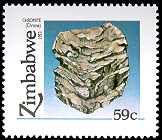

Crom is used by for orthodontic
apparatus, by crowns and by partial prosthesis in dentistry.
Diamond is mineral form of carbon, valued
as a precious stone, and also used for various industrial purposes. Diamonds
occur in various forms, including the diamond proper (a crystalline gemstone),
bort, ballas, and carbonado. Bort is an imperfectly crystallized type of
diamond, extremely hard, and dark in 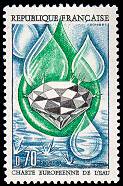 color. The term bort sometimes is
applied also to minute fragments of gem diamonds. Ballas is a compact,
spherical mass of tiny diamond crystals of great hardness and toughness.
Carbonado, sometimes called black diamond or carbon, is an opaque greyish or
black form of diamond with no cleavage. Carbonado, ballas, and bort are all
used industrially in lapidary (cutting and polishing) work and
color. The term bort sometimes is
applied also to minute fragments of gem diamonds. Ballas is a compact,
spherical mass of tiny diamond crystals of great hardness and toughness.
Carbonado, sometimes called black diamond or carbon, is an opaque greyish or
black form of diamond with no cleavage. Carbonado, ballas, and bort are all
used industrially in lapidary (cutting and polishing) work and  for the cutting edges of drills and
other cutting tools. Diamond is used in dentistry for cutting teeth.
for the cutting edges of drills and
other cutting tools. Diamond is used in dentistry for cutting teeth.
The name diamond is derived from the
Greek word adamas (“invincible”), which was probably applied by the Greeks to
any hard stone, such as corundum. The first distinct and undoubted reference to
diamonds occurs in Roman literature of the 1st century AD. The
diamonds known to the Romans undoubtedly came from 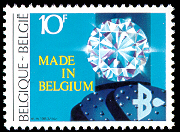
Famous Diamonds
A number of individual diamonds have
become historic, primarily because of their size. The largest of all known
diamonds is the Cullinan, which was discovered in the Premier mine in

The Vargas diamond, found in
The Great Mogul diamond, reputed to
have weighed 240 carats when cut, has disappeared since it was described by the
French traveller Jean-Baptiste Tavernier in
Fluorite is mineral composed of calcium
fluoride CaF2, the principal fluorine-bearing mineral. It occurs  as cubic, isometric crystals and
cleavable masses with a hardness of 4 and sp. gr. of 3-3.3. When pure, fluorite
is colorless and transparent, or translucent with a glassy lustre. It often
occurs with impurities that make it yellow, blue, purple, green, rose, or
brown. Several varieties exhibit fluorescence.
as cubic, isometric crystals and
cleavable masses with a hardness of 4 and sp. gr. of 3-3.3. When pure, fluorite
is colorless and transparent, or translucent with a glassy lustre. It often
occurs with impurities that make it yellow, blue, purple, green, rose, or
brown. Several varieties exhibit fluorescence.
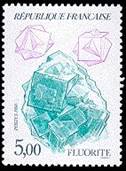 The mineral is usually found either
in pure veins or associated with lead, silver, or zinc ores. It is common in
limestone and dolomites, and is occasionally found as an accessory mineral in
pegmatites and other igneous rocks. Exceptionally clear crystalline fluorite is
mined in
The mineral is usually found either
in pure veins or associated with lead, silver, or zinc ores. It is common in
limestone and dolomites, and is occasionally found as an accessory mineral in
pegmatites and other igneous rocks. Exceptionally clear crystalline fluorite is
mined in
Crystalline varieties, such as the
fine-colored Derbyshire spar or Blue John, are often carved into vases and
other similar ornaments and the variety chlorophane is used as a gem. The
principal use of fluorite has been for the production of hydrofluoric acid, an
essential raw material in the manufacture of synthetic cryolite and aluminium
fluoride for the aluminium industry, and in many other applications in the
chemical industry. Fluorite is also a standard flux used in the making of
steel. Large quantities of fluorite are used in the production of enamel and
opal glass, and perfect crystals are used for the manufacture of apochromatic
lenses. Fluorite is also used in toothpastes and for fluoridation of children’s
teeth. Fluorite helps to harden of enamel.
Gold symbol is Au (from Latin aurum,
“gold”), soft, dense, bright yellow metallic element. Gold is one of the
transition elements of the periodic table; its atomic number is 79. Pure gold
is the most malleable and ductile of all the metals. It can easily be beaten or
hammered to a thickness of 0.000013 cm, and 29 g could be drawn into a wire 100
km long. It is one of the softest metals (hardness, 2.5 to 3) and is a good
conductor of heat and electricity. Gold is bright yellow and has a high lustre.
Finely divided gold, like other metallic powders, is black; colloidally
suspended gold ranges in color from ruby red to purple.

Gold is extremely inactive. It is
unaffected by air, heat, moisture, and most solvents. It will, however,
dissolve in mixtures containing chlorides, bromides, or some iodides. It will
also dissolve in many oxidizing mixtures, in alkali cyanides, and in aqua
regia, a mixture of hydrochloric and nitric acids. The chlorides and cyanides
are important compounds of gold. Gold melts at about 1,064° C, boils at about
2,808° C and has a relative density of 19.3; its atomic weight is 196.967.
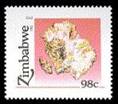
Gold is found in nature in quartz
veins and secondary alluvial deposits as a free metal or in a combined state.
It is widely distributed although it is rare, being 75th in order of
abundance of the elements in the crust of the earth. It is almost always
associated with varying amounts of silver; the naturally occurring gold-silver
alloy is called electrum. Gold occurs, in chemical combination with tellurium,
in the minerals calaverite and sylvanite along with silver, and in the mineral
nagyagite along with lead, antimony, and sulphur. It occurs with mercury as
gold amalgam. It is generally present to a small extent in iron pyrites;
galena, the lead sulphide ore that usually contains silver, sometimes also
contains appreciable amounts of gold. Gold also occurs in sea water to the
extent of 5 to 250 parts by weight to 100 million parts of water. Although the
quantity of gold present in sea water is more than 9 billion metric tons, the
cost of recovering the gold would be far greater than the value of the gold
that could thus be recovered.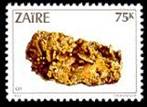
The metal has been known and highly
valued from earliest times, not only because of its beauty and resistance to
corrosion, but also because gold is easier to work than all other metals. In
addition, gold was easier to obtain in pure form than the other metals. Because
of its relative rarity, gold became used as currency and as a basis for
international monetary transactions (Gold Standard). The unit used in weighing
gold is the troy ounce; 1 troy ounce is equivalent to 31.1 grams.
The major portion of the gold
produced is used in coinage and jewellery . For these
purposes it is alloyed with other metals to give it the necessary hardness. The
gold content in alloys is expressed in carats. Coinage gold is composed of 90
parts gold to 10 parts silver. Green gold used in jewellery contains copper and
silver; white gold contains zinc and nickel, or platinum metals.
Gold is also used in the form of
gold leaf in the arts of gilding and lettering. Purple of Cassius, a
precipitate of finely divided gold and stannic hydroxide formed by the
interaction of auric chloride and stannous chloride, is used in colouring ruby
glass. Chlorauric acid is used in photography for toning silver images.
Potassium gold cyanide is used in electrogilding. Gold is also used in
dentistry. Radioisotopes of gold are used in biological research and in the
treatment of cancer.
Gold production dates from the
Etruscan, Minoan, Assyrian, and Egyptian civilizations, when placer gold was
derived from alluvial sands and gravels by simple processes of washing or
panning. Gold was produced in this manner at an early period in 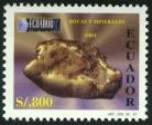
At the time of the discovery of the 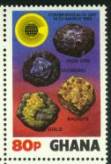 the total gold stock of
Gypsum is common mineral consisting of
hydrated calcium sulphate (CaSO4·2H2O). It is a widely 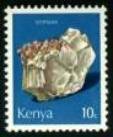
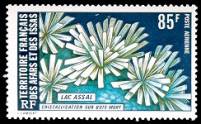 distributed form of sedimentary
rock, formed by the precipitation of calcium sulphate from seawater, and is
frequently associated with other saline deposits, such as halite and anhydrite,
as well as with limestone and shale. Gypsum is produced in volcanic regions by
the action of sulphuric acid on calcium-containing minerals; it is also found
in most clays as a product of the action of sulphuric
acid on limestone. It occurs in all parts of the world; some of the best
workable deposits are in
distributed form of sedimentary
rock, formed by the precipitation of calcium sulphate from seawater, and is
frequently associated with other saline deposits, such as halite and anhydrite,
as well as with limestone and shale. Gypsum is produced in volcanic regions by
the action of sulphuric acid on calcium-containing minerals; it is also found
in most clays as a product of the action of sulphuric
acid on limestone. It occurs in all parts of the world; some of the best
workable deposits are in
Artificial gypsum is obtained as a
by-product in an old method for the manufacture of phosphoric acid. Rock
phosphate, the essential constituent of which is tricalcium phosphate, is
treated with sulphuric acid, producing phosphoric acid and gypsum. The gypsum
is compacted into blocks and used for the construction of non-supporting walls
in buildings. By properly controlling the concentration and temperature of
sulphuric acid added to phosphate rock, a mixture of monocalcium phosphate,
dicalcium phosphate, and gypsum may be obtained. This mixture is a valuable
fertilizer, known as superphosphate.
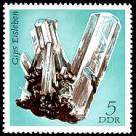
Gypsum crystallizes in the
monoclinic system in white or colorless crystals, which are massive or foliated
in formation. Many specimens are colored green, yellow, or black by impurities.
With a hardness ranging from 1.5 to 2, it is soft
enough to scratch with a fingernail and has a relative density of 2.3. When
heated to 128° C, it loses part of its water of crystallization and is
converted into plaster of Paris, CaSO4 · 1H2O. Finely ground plaster of Paris, when mixed to a paste with water,
sets in a short time into a hard mass of gypsum, the rehydrated crystals
forming and interlocking in such a way as to cause expansion in volume.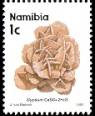
Because of its property of swelling
and filling all small spaces on drying, plaster of Paris is used extensively in
making casts for statuary, ceramics, dental plates, fine metal parts for
precision instruments, and surgical splints. Uncalcined gypsum is used as a
fertilizer for dry, alkaline soil. It is also used as a bed for polishing plate
glass and as a basis for paint pigments. Large amounts of gypsum are used as a
retarder in portland cement.


