
 The Fun Begins Here.
Although we all enjoy building and flying, it's just not fun (or safe) to fly alone. I decided to build a modified Senior Telemaster that is capable of carrying a two meter glider (G.P. Spirit here) to altitude and releasing it. This project is a bit of a novelty, at least at my flying field, and there's always another pilot to help fly this combination.
The glider was built from a kit, with no modifications. I used a (Hi-Tec) Neon 3 channel, single gimble radio with two S-81 servos and a 600Ma square battery pack to keep the weight to a minimum. It is covered in transparent red and yellow with opaque dark red trim. The belly hook in the kit is placed on the balance point and holds the glider on the release mechanism during launch.
|
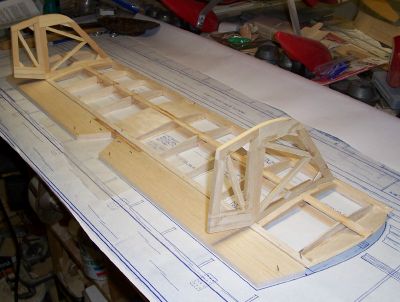 I began the launch plane with a Senior Telemaster kit from Hobby Lobby, and made a few modifications to accomodate the glider. The first one was to make two smaller fins and rudders to replace the single assembly in the kit. To keep the weight down, these are open frame units. Instead of sheeting either side of the fins, I used 1/4" balsa sticks glued to the ribs to teriminate the covering and only sheeted the top and bottom of the center section of the stab. Lightening holes were drilled in the elevators before covering.
|
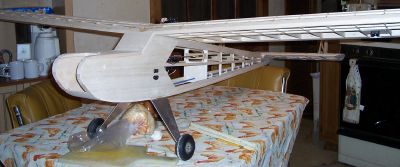 The fuselage was changed just a bit from the plans. I found the plans to be off on the centerlines, and I changed the incidence of the wing saddle to zero degrees and used 1 1/2 degrees positive in the stab saddle. I also added plywood hard points to mount a standard tailwheel bracket and to provide a mounting point for the glider's fuselage cradle on the back of the Telemaster.
When I checked the wing plans with a straightedge, I found the plans to have a 1/4" bow on the spar line, so I used a straightedge to set the spar, and built the wing panels using a square. I made twin aileron servo mounts and installed paper tubes in the ribs to guide the servo leads thru the wing before joining the panels. I also added plywood mounting plates with blind nuts between the ribs for the wing cradles. They went just inside the polyhedral joint of the glider wing.
|
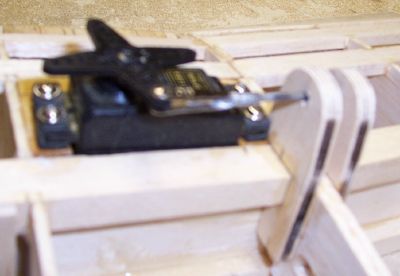 I made a pair of plywood brackets and glued them so they hooked on the spar, and installed a servo in the space between the spar and the turbulator. I used a scrap 2-56 wire and solder link to make the release mechanism. Once that was done, I glued some 3/32" balsa between the center ribs to fill the area of the cabin for a bolt-on configuration. Scrap balsa fillers ahead of the spar with hardwood dowels provided for the mounting bolts, and plywood mounting plates were installed in the fuselage.
|
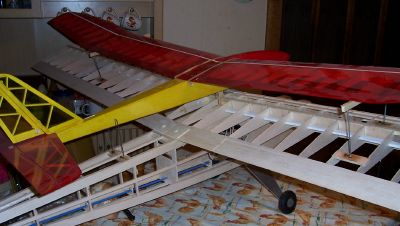 Once the framing was complete on the Telemaster, I jigged the plane to zero incidence on the table and hooked the glider to the release mechanism and jigged it to zero degrees also. Then I bent the fuselage cradle from 1/16" wire and slid it into position to hold the tail of the glider in line with the launch plane. The wing cradles were made with 4-40 wire and 1/4"x1/2" hard balsa and were snugged up to the glider wings to keep them level with the Telemaster wing, then the retainer brackets were soldered in place and all were bolted down. This makes the cradles removeable and the big trainer can be flown with or without them.
|
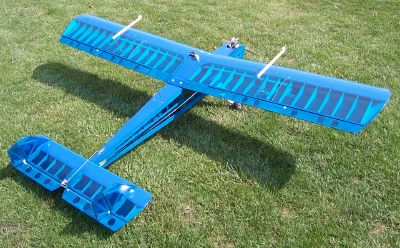 Covered, but lacking the trim, the Telemaster went to the flying field on August 30th for its maiden flights. I used a Saito 80 four cycle motor, and a Futaba PCM radio. After two trim flights (with some adjustments) and a third check flight, the Telemaster was ready to haul the glider.
|
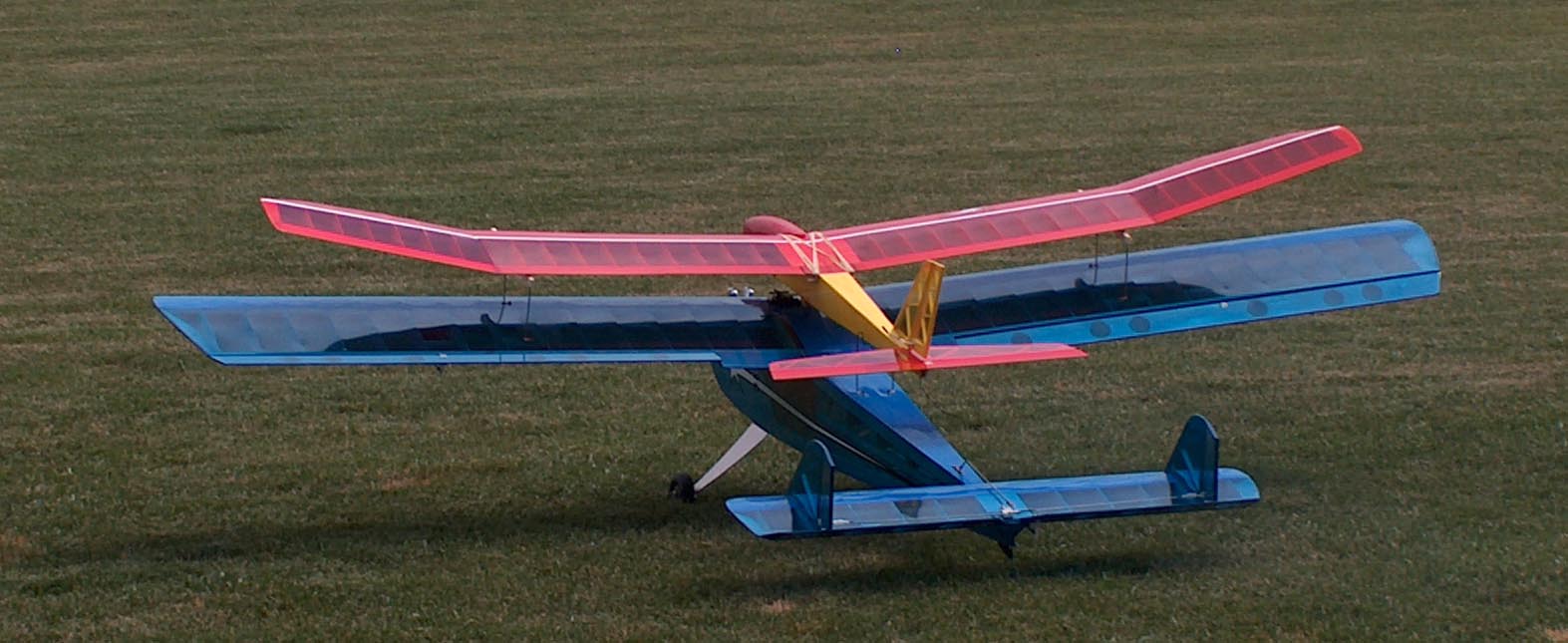 With the glider along for the ride, no control imput is needed on the glider till it is released. With a light breeze (10-12mph), the Telemaster climbs out faster than it flies forward, and only one circuit around the field was needed to get more than 2 mistakes high.
|
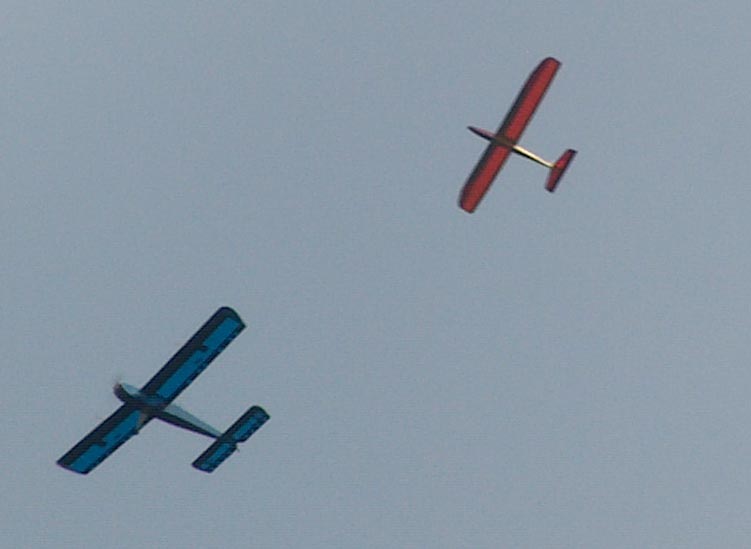 On the fourth flight of the Telemaster, the first piggyback launch of the glider was a success. No need for a Hi-Start or winch launch. All that's needed is another pilot to fly the glider after it's released at altitude. The first glider lauch took place on August 31st.
|
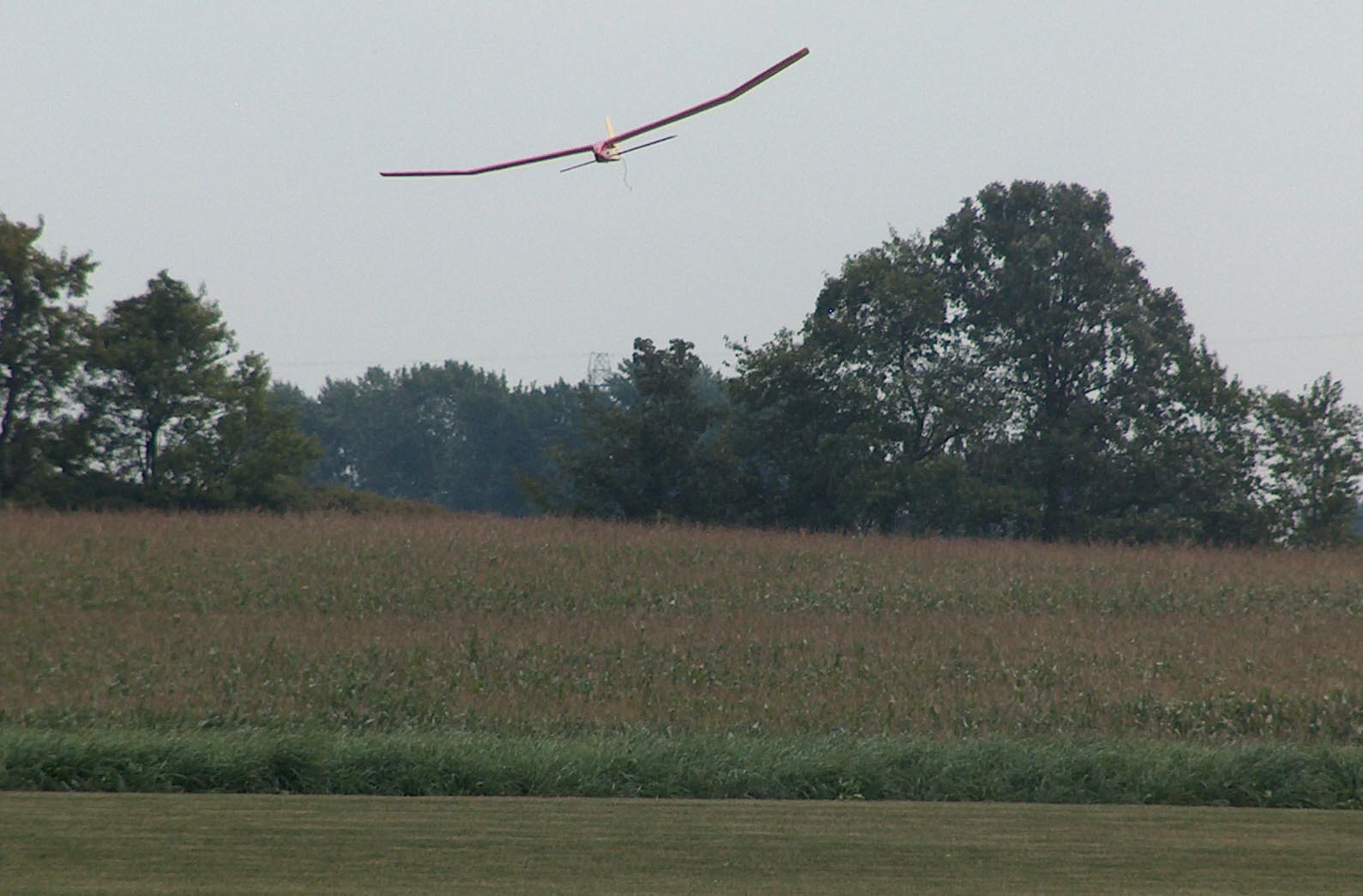 Here's the glider on approach at the end of it's first launch from the Telemaster. I landed the launch plane and watched Leo fly the glider searching for a non-existant thermal. That first flight lasted only about 6 minutes. A second launch later that afternoon lasted nearly 15 minutes.
|
