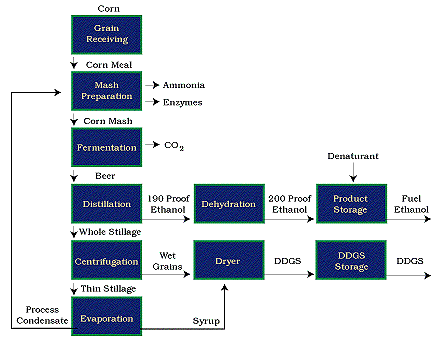
| - Milling: The corn will
first pass through hammer mills, which grind it into a fine powder called meal.
- Liquefaction: The meal will then be mixed with water and
alpha-amylase, and will pass through cookers where the starch is liquefied. Heat will be
applied at this stage to enable liquefaction. Cookers with a high temperature stage
(120-150 degrees Celsius) and a lower temperature holding period (95 degrees Celsius) will
be used. These high temperatures reduce bacteria levels in the mash.
- Saccharification: The mash from the cookers will then be
cooled and the secondary enzyme (gluco-amylase) will be added to convert the liquefied
starch to fermentable sugars (dextrose), a process called saccharification.
- Fermentation: Yeast will then be added to the mash to
ferment the sugars to ethanol and carbon dioxide. Using a continuous process, the
fermenting mash will be allowed to flow, or cascade, through several fermenters until the
mash is fully fermented and then leaves the final tank. In a batch fermentation process,
the mash stays in one fermenter for about 48 hours before the distillation process is
started.
- Distillation: The fermented mash, now called
"beer," will contain about 10% alcohol, as well as all the non-fermentable
solids from the corn and the yeast cells. The mash will then be pumped to the continuous
flow, multi-column distillation system where the alcohol will be removed from the solids
and the water. The alcohol will leave the top of the final column at about 96% strength,
and the residue mash, called stillage, will be transferred from the base of the column to
the co-product processing area.
- Dehydration: The alcohol from the top of the column will
then pass through a dehydration system where the remaining water will be removed. Most
ethanol plants use a molecular sieve to capture the last bit of water in the ethanol. The
alcohol product at this stage is called anhydrous (pure, without water) ethanol and is
approximately 200 proof.
- Denaturing: Ethanol that will be used for fuel is then
denatured with a small amount (2-5%) of some product, like gasoline, to make it unfit for
human consumption.
- Co-Products: There are two main co-products created in the
production of ethanol: carbon dioxide and distillers grain. Carbon dioxide is given off in
great quantities during fermentation and many ethanol plants collect that carbon dioxide,
clean it of any residual alcohol, compress it and sell it for use to carbonate beverages
or in the flash freezing of meat. Distillers grains, wet and dried, are high in protein
and other nutrients and are a highly valued livestock feed ingredient. Some ethanol plants
also create a "syrup" containing some of the solids that can be a separate
production sold in addition to the distillers grain, or combined with it. Ethanol
production is a no-waste process that adds value to the corn by converting it into more
valuable products.
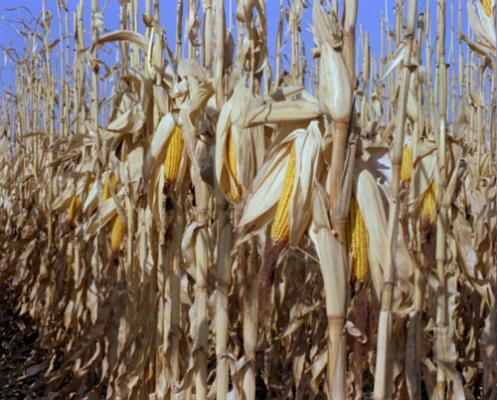
Click on the cob to find out how ethanol is benefiting you.
|