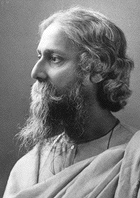
| 7 May 1861 |
| |
Born in Calcutta, India
|
| 1868 |
| |
Wrote his first poem when he was just 7 years |
| 1878 |
| |
Tagore's first book of poetries appeared |
| 1878 |
| |
Went to England for higher studies |
| 1879 |
| |
Came back to India |
| 1883 |
|
|
Got married to Mrinalini Devi |
| 1890 |
| |
Manasi, a collection of Tagore's poems were published |
| 1890 |
|
|
Settled at Shilaidaha in Kushthia (now in Bangladesh) |
| 22 Dec 1901 |
| |
Founded school at Shanti Niketan |
| 1902-1907 |
| |
Rabindranath's wife, father, daughter Renuka and son Samindra died |
| 1905 |
| |
Bengal was partitioned, Rabindranath was gripped by fever of Nationalism |
| 1910 |
| |
He got married his son to a young widow Pratima Devi. He was a staunch supporter of widow remarriage |
| 1910 |
| |
Wrote Gitanjali in Bengali |
| 1911 |
| |
Wrote Jana Gana Mana which later became our National Anthem |
| 1912 |
| |
Gitanjali was published in English |
| 1913 |
| |
Awarded Nobel prize in literature |
| 1915 |
| |
Knighted by the British king George |
| 1919 |
|
| Renounced his knighthood following Jallianwala massacre incident |
| 1924 |
| |
Tagore opened Vishva Bharati University at Shanti Niketan |
| 1929 |
| |
Tagore began painting |
| 1939 |
| |
Tagore asked Gandhiji to lift the ban on Subhash Chandra Bose and have his cooperation cordially invited in the "supreme interest of national unity" |
| 7 Aug 1941 |
| |
Rabindranath Tagore died in Calcutta, India |