
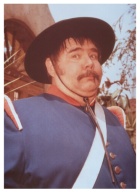
by MaryAnn T. Beverly
“Demetrio!” the woman said for at least the third time. “Hijo, do you hear me?”Finally the moon-faced boy woke from his reverie and looked up at his mother.
“Si, Madre?” he asked.
“What weighty thoughts could such a young boy have?” his mother answered with a laugh that masked her concern. She handed him a plate of freshly made tamales.
“Why did we have to move, Madre?” Demetrio said wistfully as he accepted the plate. “I don’t like it here. Why can’t we go home?”
“This is home now,” the mother said gently. “You know your father was unable to find work in our old village. How could we live if he could not work?” She ruffled his hair with a soft caress. “I know it is difficult for you, hijo. Give this new place some time. It will begin to feel like home to you.”
“Yes, Mama,” Demetrio said as he began to eat. He seemed to be hungry all the time these days. When the other children in the neighborhood didn’t want to play with him, he ate. When he went to school and someone laughed at his wrong answer, he ate. When he thought about how many rides he used to enjoy on his horse and how much he missed the animal his father was forced to sell, he ate. When he felt all alone and lonely in this strange, new place, he ate.
A happy, outgoing child by nature, Demetrio seemed listless and withdrawn. His hovering mother, worried about her son more than she would admit, watched him carefully and fed him well. She truly believed that in time Demetrio would put down roots in the new village, but until that event happened, her mother’s heart grieved for her son.
“Me entristece verla tan afligida, hijo. It make me sad to see you looking so unhappy,” his mother stroked his hair again even as she sighed deeply. “Finish your food and then go out to play,” she forced her most encouraging smile to her lips. “Perhaps today will be the day the other boys will let you play with them.”
“Yes, Mama,” Demetrio began to eat his remaining tamale more slowly to draw out the time he could remain in the safety of the small house. Finally, with the tamale eaten, he had no choice but to go outdoors.
Demetrio could hear the shouts from the boys of the village long before he approached the small square in the center of town. Once he turned the corner, he paused in the shade of an oleander tree and silently watched the game the boys were playing. They appeared to be playing war again, a game for which Demetrio had little skill. His large frame was not designed to quickly and lightly run from place to place all the while pretending to be shooting a gun or welding a sword. Demetrio sighed, squared his shoulders, and marched towards square with all the enthusiasm he could muster.
“Hey, look who’s here,” one of the boys named Javier said to the others. “It’s el gordo. What do you want, fat one?”
“I want to play with you,” Demetrio answered. He smiled and looked hopefully from one boy to the next.
“Ha!” laughed Javier, and the others joined in the raucous sound that hurt Demetrio’s ears as well as his feelings. “You can’t be un soldado. A soldier must be fit and strong. And you,” he poked at Demetrio’s paunch, “you have un globo blando, a soft balloon where your stomach should be. Go away, el gordo. We don’t want you here.”
With as much dignity as he could maintain, Demetrio slowly turned and walked away. He heard the continued laughter, but he refused to look back, and he refused to lower his head or droop his soldiers. I’ll show them, he thought. I’ll show them all. One day I will be the best soldier in the King’s army. They won’t laugh at me then. Demetrio had just reached the turn in the road that would take him home when he felt something touch his hand. He looked down into a pair of wide, blue eyes filled with kind sympathy and compassion.
“They won’t let me play with them either,” the little girl said confidentially as she curled her tiny fingers around Demetrio’s chubby one. “Who needs them?” she waved her other hand with a dismissive air. “You and I can play together.”
Demetrio opened his mouth to say that he most assuredly did not play dolls with little girls, but what came out of his mouth surprised him. “What would you like to play?” He smiled down at the small wisp of a child who danced along beside him.
“Why, soldiers, of course! You can be the sergeant, and I will be the commandante.”
“Are you a good commandante or a bad commandante?” Demetrio suppressed a smile.
“A good one.” the child decided on the spot. “My name is Dora. You may called me Commandante Dora. I will call you Sergeant….what is your name?”
“Demetrio Lopez Garcia,” the boy did smile this time.
“Then I will call you Sergeant Garcia,” Dora explained with all due gravity. “You must obey my every command.”
Demetrio saluted the child that barely came up to his belt buckle. “Si, mi Commandante. What is your first command?”
“That you let me ride on your shoulders the rest of the way to my house, for the day is warm, and your legs are so much longer than mine, I must almost run to keep up.”
Demetrio obliged the young commandante by stooping near an outcropping of rocks from which she could climb onto his broad back.
“Are you ready, mi Commandante?” Demetrio said as he stood upright. In response the girl tugged at his hair.
“Giddy-up!” she cried with glee.
“I see the Commandante wishes Sergeant Garcia to be her noble steed,” Demetrio laughed aloud. It had been a long time since he had so many reasons to laugh. “Very well.” Demetrio gave his best imitation of a horse’s neigh before taking off down the dusty rode as fast as he could run.
The young Commandante Dora could not have found a more loyal sergeant had she scoured the entire country. Demetrio became her devoted companion and playmate. He would sit under a tree for hours on end making her daisy chains from the flowers she gathered and brought to him. On rainy days they would sit in someone’s barn and tells stories about what they one day dreamed to do with their lives. Other days they would play soldiers as Commandante Dora lead and Sergeant Garcia fought their way to glorious victories.
For Demetrio, the innocent love and friendship of this beguiling child began to restore his dignity and hope. Her smiles and laughter, her shrieks of joy when he did something that especially pleased her, were balm to his bruised heart. Her parents trusted him with her care, and the sense of responsibility began to restore his self esteem.
All that year the were near constant companions, the elfin child and the lumbering youth who lumbered less when he was with her. He studied harder at his lessons so that when she would turn to look at him way in the back of the classroom from her seat way in the front, he would be able to give the correct answer. He went for many hours without feeling hungry or even thinking of food, and when he picked her his cap filled with berries, he was content to sit and watch her devour them all.
It was a beautiful, Spring morning that day Demetrio would never forget. There was no school so that the students whose parents had farms could stay home and help with the planting. He and Dora had planned a picnic in a field of wildflowers they had discovered a few days before. Demetrio looked up at the sky. The clouds were billowy and high. The sun shone warmly without being too hot. It was a nearly perfect day. It was a nearly perfect day until he arrived at Dora’s house to find the shutters closed and the door locked.
Demetrio pounded and pounded at the door, the empty echoing that came to him from inside caused his heart to race. No one came to the door, and although he knew no one was within, he continued to pound. Finally a neighbor came out to see what all the noise was about. The old woman looked at Demetrio and frowned.
“They’re gone. There’s no one there.”
“Gone?” Demetrio repeated blankly. “How can they be gone? I saw Dora three days ago? When will they be back?”
“I don’t think they will be back,” the old woman shook her head. “They took all their clothes and furniture and told the landlord to let the house to someone else.”
“Where did they go?” Demetrio asked as he looked skyward again. He thought the sun had passed behind a cloud, but, no, it still shone brightly.
“I don’t know. There was some kind of family emergency, a death in the family, I believe. They packed in a hurry and left at dawn yesterday.”
“And you say they won’t be back?” Demetrio checked the sky one more time just to confirm that the sun was, indeed, still shinning.
“I don’t think so. But wait,” the woman remembered something. She ducked back in her house and emerged a moment later with a slip of paper in her hands.
For a moment Demetrio’s heart leapt with hope. An address! Directions! Someone had thought to leave a message for him on how to find them. The woman handed him the scrap of paper.
Eagerly Demetrio looked down at it. It was a little drawing, a rough, childish sketch hastily made, of a heart with tears falling from a crack in it. Beneath the heart, written in round letters, was a single word: Dora.
Demetrio carefully tucked the paper into his pocket even as he forced back tears that filled his eyes and threatened to embarrass him in front of this woman. “Thank you,” he managed in a strangled voice. “Goodbye.” He turned and hurried away before she could see him cry.
*******
“Sergeant?” the soldier said for at least the third time. “Did you hear me?”
“What?” the moon-faced man woke from his reverie and looked up at Corporal Reyes.
“What are you thinking about? Are you going to stay with him all night?”
Sergeant Garcia looked over at the Chinese man who sat across from him in the small cell. He smiled at the frightened man who only looked at him sorrowfully.
“No, not all night,” Sergeant Garcia said softly to Reyes. “But for a little while longer. I know what it’s like to be a stranger in an unknown place. I know how much comfort a stranger’s smile can give. Go to bed, Corporal. I’m going to sit here just a little while longer. Good night.”
Table of Contents One
Table of Contents Two
