|
The Great Western Railway was created on 31st August 1835,
to provide a double tracked line from London to Bristol for a public
service and freight movement. The man who was going to be employed by the
GWR to oversee the construction of the line, was a man who was going to
write his name into the history books, the man was Isambard Kingdom Brunel.
The
line was constructed in broad gauge,7 feet 0¼ inch (214 cm), instead of
the standard gauge, 4 feet 8½ inches (143.5 cm), which is still being
used now. Brunel thought his gauge was the best for high speed and higher
passenger comfort, but it wasn't to last. On the 23rd May 1892, the last
section of broad gauge track was lifted and the whole UK rail network was
in standard gauge.
By 1900, Brunel had suddenly died from a heart
attack, Daniel Gooch, another intelligent loco designer, had resigned.
Then William Dean became Locomotive Superintendent.
Other engine
designers who joined the GWR were Charles Collett, Frederick
Hawksworth and George Jackson Churchward, all of these
designers, up until the nationalation of the railways in 1948, designed a
huge range of locos, such classes as the Castles, Kings, Halls, Counties
and Manors, more classes will be explained in the Class section.
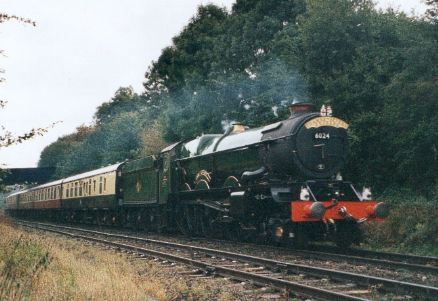
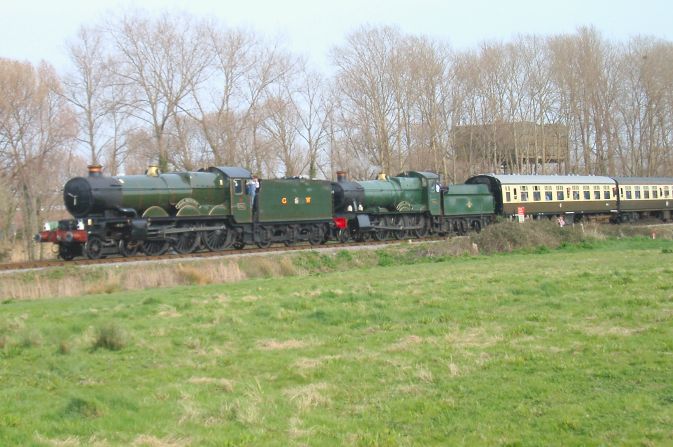
Below are a couple of pictures of some classic GWR locomotives. Click the
image to see it full size.

|

