
|
|
Written by H.G. Wells
Starring
Rod Taylor as George (H.G. Wells)
Alan Young as David Filby/James Filby
Yvette Mimieux as Weena
Sebastian Cabot as Dr. Philip Hillyer
Tom Hellmore as Anthony Bridewell
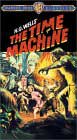 |
The ultimate trip -- into the year 802,701 A.D? H.G. Wells vision of10) Much of the literature of the latter part of the 19th century usually had
the future materializes through the eyes of a young scientist who's amazing
invention permits him to travel through time. Wells presents many thought-
provoking ironies and action in this mysterious and fantastic excursion into
the world of science fiction and the future. He poses several important
questions as did Mary Schelly before him, and the French author, Jules
Verne, about the direction of humankind around the turn of the century.
He makes us think about the industrial revolution, science, and human values
without sanctions and out of control.
THE ANALYSIS:
1) a. What is the historical significance of the time at which the story
opens?b. What was the attitude towards time and humankind then?
2) a. Even Einstein discussed the possibilities of time travel in some of his own
work. What does George mean when he says that we are prisoners of
time?b. The question is asked of him, Can man control his destiny? -- Is the
future irrevocable?3) What are the attitudes of George's friends when he shows, discusses, and
demonstrates his model of the time machine?4) a. Why does George not want his invention in the hands of the scientists or
the government/military? What does Wells have to say about science,
technology, and commercialism at the time?5) a. What is there in common about the three times George stops at in testing
the machine (before fast-forwarding to the time of the Eloi)?b. What is the significant difference in the time of the Eloi and Morlocks
from the first three stops?c. What statement is Wells trying to make here?
6) a. How can George be compared to the humanists in his attitude towards
books?b. Which three books do you think he took, and why would he have
taken them?7) What do you suppose is the message Wells is trying to get across by
having George go back to the Eloi after returning to his own time?8) a. How does H.G. Wells concept of the second industrial revolution, or
science and technology of the latter part of the 19th century compare
to that of another writer of his time, Jules Verne?b. Considering Verne's 20,000 Leagues Under the Sea, how are their
works similar?9) What does Wells mean when David (Filby) says early on in the story, You
have all the time in the world., and again at the end of the film, He has
all the time in the world?
some lesson or moral in mind. If there is a lesson or moral to this story,
what is it?
|
to Home |
 |
 |
|
