
|
|
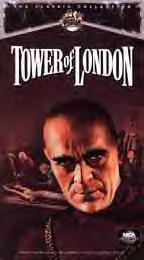 |
Written by Robert N. Lee
Starring
Miles Mondor
as King Henry VI, Plantagenet (of Lancaster)
Ian Hunter
as King Edward V (of York) Br. of Richard and Clarence
Barbara
O’neil as Queen Elyzabeth wife of Edward V
John Sutton
as John Wyatt
Nan
Grey as Lady Alice Burton
Basil Rathbone
as Richard Duke of Gloucester (of York)
Vincent
Price as George, Duke of Clarence (of York)
Leo G.
Carroll as Lord Hastings
Boris Karloff
as Mord
Ralph
Forbes as
Henry VII Tudor, Earl of Richmond
Georgia
Caine as Katherine, widow of Henry V
The Tower of London takes place in late 15th-century England just before
Richard, Duke of Gloucester, seizes control and ascends to the throne, concluding
with his death at the Battle of Bosworth Field in 1485 (roughly a fourteen year
period). Listen to all the reminders of past battles, fallen enemies, and the rise
and fall of previous powerful rulers. Not only Henry VI, but the Duke of Warwick
(Anne's father), Richard of York (Richard III's father), Richard II, all are
brought forth from memory and add to the sense of a larger picture.The medieval attitude toward the natural order of things was highly structured
and quite formal. To the age, nature consisted of a universe in which there was a
well-established hierarchy, with God at the top. Everything on down had a specific
position and status. The king ruled the state; the father was the head of the family;
next came the mother, the children, and so on. At the bottom were the animals; even
they had higher and lower rankings. Snakes, insects and vermin were at the very
bottom. Keep this in mind when you hear the animal images used in the curses
heaped upon Richard. When the natural order was upset, the bottom moved toward
the top. As a result, chaos set in. The symbol of chaos was the monster. Richard is
frequently called a monster and related to "monstrous" acts.The "natural order" dealt with in Tower of London deals with matters of
political inheritance and succession. A king achieved his position by birth, according
to rigidly established rules of inheritance. In the absence of an immediate heir, the
next closest male relative was entitled to the crown. It was not until after the death
of Henry VIII that a woman could become an heir to the throne. To break with the
tradition of royal succession was to defy the natural order of things. The unlawful
and illegitimate seizure of the crown- was a major crime, as serious as regicide, the
killing of a king (which it usually involved). Such an act could end in disorder, chaos,
or even revolution.No fewer than five kings of England appear in The Tower of London - Henry VI,
Edward IV, Edward V, Richard III, and Henry VII (Richmond). Most of the
characters in the film experience the ultimate punishment for their sins: Clarence,
Edward IV, Hastings, Buckingham, Lady Anne, Queen Elyzabeth, and finally Richard
himself suffer the fate (death or severe loss) for their actions . It's hard to find a
character in this play who is content with his or her place in life. The most obvious
example is Richard's all-consuming lust for the crown. This is closely followed by
Buckingham's desire to assist him in hopes of sharing in the spoils. There is inherent
evil in this Ambition.
1) a. In The Tower of London, Richard III's character is developed in some detail.
Wesee many sides of his personality. Identify those characteristics explaining how
they are shown in the video.b. Do any other characters in this story show more than one side? If so, who?
Identify them and the characteristics they reveal in the story.2) Explain Buckingham. Is he better or worse, wiser or more foolish than Richard's
other victims?3) a. Revenge plays an important part in the story line of the Tower of London.
Identify instances of revenge and the importance those instances have in the story.b. The quest for justice dominates the action in The Tower of London. Identify
individual examples and their relevance to this major theme idea.4) a. Do you think that ambition is good or bad? What different types of ambition
are there? Can ambition always be justified? Analyze the two examples given
below:b. Consider the young Prince of Wales' hope of winning back lost English
territory abroad.c. And what about Richmond's goal "to reap the harvest of perpetual peace?"
5) Richard is a brother, a husband, an uncle, and a son to various characters in the
story. How does he behave with each?6) a. Although political executions take place throughout The Tower of London,
there is some concern for due process (proper legal procedures) . Cite examples and
explain their significance to the historical tale.b. Richard III deals with his brother (the Duke of Clarence) in a rather unique
and ingenius way. Describe the execution of Clarence.7) Animal imagery is used repeatedly in the story. What dramatic function does it
fulfill? Explain clearly.
|
to Home |
 |
 |
|
