Marple Newtown Senior High School
Modern European History
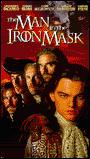
Man in the Iron Mask
Written by Alexandre Dumas
Starring
Leonardo DiCaprio as King Louis XIV / Prince Phillipe
Gabriel Byrne as D'Artagnan
Jeremy Irons as Father Aramis
John Malkovich as Athos
Gerard Depardieu as Porthos
Anne Parillaud as Queen Anne
Judith Godreche as Christine Balfour
Peter Sarsgaard as Raoul (Son of Athos)Written in the 19th century, 'The Man in the Iron Mask" came
into print after 'The Three Musketeers" (also written by Dumas).
There are actually four heroes: Athos, Porthos, Aramis and
D'Artagnan. This tale is the third of the trilogy about the three
musketeers and has allthe elements of a good story--intrigue,
betrayal, loyalty, friendship, and love. This tale centers on the
legend about a man in an iron mask during the time of Louis XIV.
Set in 1662, Louis is a tyrant, watching his people starve while he
lives in luxury, and is a true law unto himself.Dumas portrays the decay of the French social structure in this
novel. The pillars of French society--God, family, pleasure, and king,
were the bonds that maintained the French in their day-to-day
living. But with the rise Louis XIV (known as the "Sun King"),
French society is embodied into the king alone and those pillars of
French society have become less important.Louis XIV was born at the royal chateau in Saint-Germain-en-Laye
in 1638. He was only five when he became king on the death of his
father, Louis XIII. His mother, Anne of Austria, served as regent.
This period was marked by a rebellion known as the Fronde (1648–
1653), led first by the nobility and later by the urban commoners.
The boy-king felt both humiliated by his arrogant nobles and
threatened by the people of Paris, feelings he would never forget.Louis XIV chose the sun as his emblem, an association with Apollo,
god of peace and arts. Apollo was also the heavenly body which gave
life to all things, regulating everything as it rose and set. Like
Apollo, the warrior-king Louis XIV brought peace, was a patron of
the arts. The regularity of his work habits and his ritual risings
and retirings were another point of solar comparison. The Apollo
Salon (of Versailles) is the main room of the Grand Apartment
because it was originally the monarch's state chamber. The path of
the sun can also be traced in the layout of the gardens.As the master of Versailles, the chateau of the king's youth became
the official residence of the court and government of France on
May 6, 1682. By providing enough space to house the courtiers,
they were ever under the king's ever watchful eye. The great lords
no longer plotted, and they stayed with the army or at court, ready
to please and serve his royal majesty. He was intimidating, while
majestic, and was fully informed by his spies. He controlled
everything.As a monarch by divine right, the king was God's representative on
earth. Upon his coronation, he swore to defend the Catholic faith.
Louis XIV launched the struggle against Jansenists at the Port-
Royal monastery, and persecuted Protestants. He forced
conversions and the emigration of 200,000 Protestants ultimately
led him in 1685 to rescind of the Edict of Nantes (in which
Henry IV had granted religious tolerance).Many people found it difficult to believe that Louis XIV was really
the son of Louis XIII and his wife, Anne of Austria for one very
simple reason, Louis XIII and his wife hated each other. It is said
that their marriage remained unconsummated for at least four
years; and it twenty-three years had passed before their first
child, Louis, was born. Rumors ran rampant about Louis, the
"God given" miracle child. Louis XIV's father died when he was
four. For eighteen years Anne of Austria served as her son's
regent, advised by Cardinal Mazarin.Louis XIV reigned for seventy-two years, longer than any other
ruler in European history. Under his leadership France became a
world power and a leader in the arts. He was an absolute monarch,
as expressed in the famous quote attributed to him, "L'Etat c'est
moi" (I am the state). Through a series of deaths in the royal
family meant that by 1715 the heir to the throne was the king's
great-grandson, a five-year-old.Themes to follow while watching the film
A) Concept of Divine Right
1) Thomas Hobbes and Bishop Bossuet
a) the king is ordained by God \ his authority is not to be
questioned.
b) the king's person is sacred
c) the king’s power is absolute
d) the king is accountable to no one on earth
2) European system of government (except for Britain after 1688)
B) Lifestyle of the King and the Nobility in General
1) High standard of Luxury (while the peasants were hungry)
2) Little concern for those that were not their "equals"
3) Continued abuses lead to the eventual destruction of the "old
regime"
C) The Underlying theme of Resistance to Absolutism
1) Challenging the authority of the king
a) Embodied in the philosophies of later thinkers, John Locke and
Jean Jacques Rousseau (Concept: the "Social Contract")
i) The purpose of government is to protect the people,
preserve their “inalienable rights,” and maintain their
happiness.
ii) If the purpose of government is not fulfilled, revolution
is an option (oposite of "divine right" thinking)
b) Seeking Fairness in the system
c) Seeking Equality before the law
2) Leads to the French Revolution of 1789This study asks you to concentrate on the world presented in the film, a
world in which court life, ruled by meticulous etiquette and rigid rules,
had no meaning except to enhance the King’s prestige, both in France and
abroad.In the film you will learn about a political climate in which orders of the
king come directly from God. In exploring the world beyond the court,
you begin to recognize the connections between the social issues hinted at
in the film and the revolution that followed one hundred years after.1) The Man in the Iron Mask illustrates a world in which the reins of
power are entirely in the king’s own hands. Although Louis XIV probably
did not say “L’etat c’est moi,” it is often attributed to him; he might
just as well have said it. James I of England, prior to the Glorious
Revolution (1688) in Britain, had described the monarchy as “the supremest
thing upon earth ... accountable to none but God only.” Although
Louis XIV was astonishingly young to hold the power he did (he assumed
the throne in 1643 before he was five), it is quite clear that anyone
questioning his right to hold that power placed his or her life in great peril.
Keeping in mind the definition of "divine right", create a list of incidents
in the film that demonstrate that both Louis and his subjects accept this
concept.Incident #1:
Incident #2:
Incident #3:
2) The film focuses on the King and his close associates. However,
scenes in the film make reference to social and political issues that affect
the population at large. The city of Paris was a busy population center for
the time, filled with people whose concerns were very different from those
of the aristocracy or the musketeers. List below some scenes from the
film that offer evidence of social problems of 17th century France.Scene #1
Problem:
Scene #2:
Problem:
Scene #3:
Problem:
3) Historians characterize Louis XIV’s reign as his pursuit of glory – he
was attentive to anything that could increase the brilliance of his reign.
In fact, he was known as the "Sun King." It was during Louis' reign that
Les Invalides and Versailles were built and the Louvre completed; he was
a patron of the greatest French writers of the time, the ballet, the visual
arts and the opera.Explain the significance of the French Academy, founded in 1635. What
was its purpose, and what were the cultural contributions that resulted
from its creation? Was this a "good thing" that Louis did?4) One art critic claims, “As a symbol of the power of absolutism,
Versailles is unsurpassed.” In a paragraph of at least 5 sentences, explain
this thought. How does Versailles show Louis' authority?5) The main characters’ actions in the story exemplify particular values or
moral principles we tend to think of as universal. Complete the chart below
by listing a character. Briefly describe an action taken, and then provide
a value the action best illustrates. Follow the given example.
|
|
|
|
|
|
|
|
|
|
|
|
|
|
|
|
|
|
|
|
|
|
|
|
6) Values we generally think of as positive can, under certain circumstances,
produce less than ideal results (a good thought or action resulting in something
bad). Select an incident in the film that illustrates such a set of
circumstances and describe it below. Write a paragraph of 5-7 good sentences
explaining your choice.Aramis puts Philippe into the iron mask in response to a royal
order because he believes it to be his duty.7) The primary characters of the story struggle with their actions in order to
live up to their principles. For example, the loyal D’Artagnan must choose
between his friends and the King. As you view the film, identify three
conflicting elements you find.Action #1:
Result:
Action #2:
Result:
Action #3:
Result:
8) The motto of the musketeers is “One for all. All for one.” Identify
principles on which this motto is based.1)
2)
3)
9) In the film, the word “honor” appears often. Define the term. How
is the word “honor” is used in the film? Who in the film seems to be the
most honorable? Explain clearly why. Who is the most dishonorable?
Explain clearly why.10) In the story, the Jesuits are mentioned often. Do some outside
research and find out what the issues were between the King (Louis XIV
specifically) and the Jesuits. What historical incident(s) occur as a
result of this opposition?11) To find out more about one of the era of Louis XIV, put together list
of 5 newspaper headlines that might have appeared during that time. You
will need to do a little research to ensure historical accuracy, since this is
a fictional story loosely based on history. You might want to include a
headline or two about an important cultural event of the time as well as
"basic" news. (The example given alludes to the young age at which
Louis XIV ascended to the throne of France.)
|
|
LOUIS XIV KING AT AGE 5
"Miracle child" becomes king -- Queen Mother, Anne, to rule as regent till Louis XIV comes of age. |
|
Story Line: |
|
|
Story Line: |
|
|
Story Line: |
|
|
Story Line: |
|
|
Story Line: |
|
to Home |
 |
 |
|