
|
|
Written by
Starring
Kirk
Douglas as Vincent Van Gogh
Anthony
Quinn as Paul Gauguin
James Donald
as
Theo Van Gogh
Pamela
Brown as Christine
Eric Pohlmann
as
Colbert
Henry Daniell
as
Theodorus Van Gogh
Lionel
Jeffries as Dr. Peyron
Niall MacGinnis
as Roulin
Noel Purcell
as
Anton Mauve
Alec Mango
as
Dr. Rey
Anthony
Eustrel as Tersteeg
Anthony
Sydes as Cor
Belle Mitchell
as
Mme. Tanguy
David Bond
as
Seurat
David Horne
as
Reverend Peeters
David Leonard
as
Camille Pissarro
Frank Perls
as
Père Tanguy
Fred Johnson
as
Cordan
Isobel
Elsom as Mrs. Stricker
Jeannette
Sterke as Kay
Jerry Bergen
as
Lautrec
Julie Robinson
as
Rachel
Laurence
Badie as Adeline Ravoux
Laurence
Naismith as Dr. Bosman
Madge Kennedy
as
Anna Cornelia Van Gogh
Marion
Ross as Sister Clothilde
Mickey
Maga as Jan
Mitzi Blake
as
Elizabeth
Noel Howlett
as
Van Den Berghe
 |
Awards & Honors
Academy Award
Actor-Supporting – Anthony Quinn
Golden Globe Award
Actor-Drama – Kirk Douglas
New York Film Critics Award
Actor – Kirk Douglas
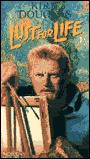
This film is a fictionalized portrayal of the life of Van Gogh, a
magnificent but troubled artist. It explores his character of Vincent Van
Gogh (1853-1890) who was one of the great artists of the Nineteenth
Century. His original intention was to become an evangelist, but he failed
at that, and turned to painting. He had mental difficulties, at one point
cutting off one of his ears. Van Gogh eventually committed suicide. We
see many of Van Gogh's well-known paintings and the actual events which
led to their being painted. The film is a good study of the impressionists
and post impressionists.1) The plots of most films turn on one or more ethical choices which must be
made by the characters in the movie. Consider the characters of Vincent, his
brother, Theo, and Paul Gauguin. Which of The Six Pillars of Character,
apply to these three characters?2) Van Gogh wanted to express how physical objects, scenes and people made
him feel. To do this, he used vivid colors and broad brush strokes to reveal
form and emotion. Using the The Van Gogh Museum Virtual Tour select two of
his paintings and interpret what you see and feel when viewing the picture.3) "Starry Night" is the painting of a night sky over a village in Southern France.
Van Gogh used strong colors and brush strokes so thick that the paint stands
out and becomes a three-dimensional addition to the painting. Van Gogh wrote
to his brother "The sight of stars makes me dream." How would you interpret
his "dream" as illustrated in "Starry Night?" Refer to specific details in the
painting.4) Van Gogh has been classified by art historians as a "post impressionist." The
Impressionists tried to depict scenes naturalistically. The Post Impressionists
painted subjectively, communicating how the scene made them feel. How did
Paul Gauguin, his close friend see Vincent's work?5) Van Gogh sold exactly one painting while he was alive and lived off the charity
of his brother. Now his paintings sell for millions. What did Vincent's brother
get for his efforts to help Vincent? You may need to search the WWW for
help in answering this question.6) What did Vincent's brother, Theo, do for a living in Paris? How was he able
to help Vincent in ways other than finances?7) When Van Gogh was living in the South of France, Paul Gauguin, came to live
with him for a time. How did this arrangement work out for each of the artists?8) What do you think Van Gogh meant when he wrote: "Painting is a faith and it
imposes the duty to disregard public opinion. In painting, one conquers by
perseverance and not by making concessions."9) Why was Van Gogh able to sell only one painting during his lifetime?
10) What do you think Van Gogh meant when he wrote, "One of the most beautiful
things to do is to paint darkness which nevertheless has light in it." Which
paintings do you think he was he referring to? Use the The Van Gogh Museum
Virtual Tour to help you answer this part of the question.11) Van Gogh believed that painting had the power to raise thoughts about life in
people's minds? Do you agree? Explain thoroughly.
|
to Home |
 |
 |
|
