
 |
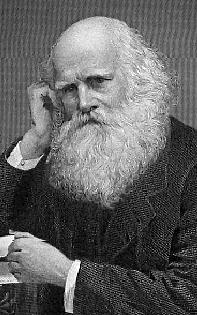
William Cullen Bryant was a young lawyer when his poem "Thanatopsis" first appeared in the North American Review in 1817. Inspired by the romantic lyrics of William Wordsworth, Bryant found his subject in the American landscape, especially that of New England. |  | |
| O Fairest of the Rural Maids | |||
| The Antiquity of Freedom | |||
| The May Sun Sheds an Amber Light | |||
| The Evening Wind |
O FAIREST of the rural maids!
Thy birth was in the forest shades;
Green boughs, and glimpses of the sky,
Were all that met thine infant eye.
Thy sports, thy wanderings, when a child,
Were ever in the sylvan wild;
And all the beauty of the place
Is in thy heart and on thy face.
The twilight of the trees and rocks
Is in the light shade of thy locks;
Thy step is as the wind, that weaves
Its playful way among the leaves.
Thine eyes are springs, in whose serene
And silent waters heaven is seen;
Their lashes are the herbs that look
On their young figures in the brook.
The forest depths, by foot unprest,
Are not more sinless than thy breast;
The holy peace, that fills the air
Of those calm solitudes, is there.
Back To Top
HERE are old trees, tall oaks, and gnarlëd pines,
That stream with gray-green mosses, here the ground
Was never trenched by spade, and flowers spring up
Unsown, and die ungathered. It is sweet
To linger here, among the flitting birds
And leaping squirrels, wandering brooks, and winds
That shake the leaves, and scatter, as they pass,
A fragrance from the cedars, thickly set
With pale blue berries. In these peaceful shades-
Peaceful, unpruned, immeasurably old-
My thoughts go up the long dim path of years,
Back to the earliest days of liberty.
O FREEDOM! thou art not, as poets dream,
A fair young girl, with light and delicate limbs,
And wavy tresses gushing from the cap
With which the Roman master crowned his slave
When he took off the gyves. A bearded man,
Armed to the teeth, art thou; one mailed hand
Grasps the broad shield, and one the sword; thy brow,
Glorious in beauty though it be, is scarred
With tokens of old wars; thy massive limbs
Are strong with struggling. Power at thee has launched
His bolts, and with his lightnings smitten thee;
They could not quench the life thou hast from heaven;
Merciless Power has dug thy dungeon deep,
And his swart armorers, by a thousand fires,
Have forged thy chain; yet, while he deems thee bound,
The links are shivered, and the prison walls
Fall outward; terribly thou springest forth,
As springs the flame above a burning pile,
And shoutest to the nations, who return
Thy shoutings, while the pale oppressor flies.
Thy birthright was not given by human hands:
Thou wert twin-born with man. In pleasant fields,
While yet our race was few, thou sat'st with him,
To tend the quiet flock and watch the stars,
And teach the reed to utter simple airs.
Thou by his side, amid the tangled wood,
Didst war upon the panther and the wolf,
His only foes; and thou with him didst draw
The earliest furrow on the mountain's side,
Soft with the deluge. Tyranny himself,
Thy enemy, although of reverend look,
Hoary with many years, and far obeyed,
Is later born than thou; and as he meets
The grave defiance of thine elder eye,
The usurper trembles in his fastnesses.
Thou shalt wax stronger with the lapse of years,
But he shall fade into a feebler age-
Feebler, yet subtler. He shall weave his snares,
And spring them on thy careless steps, and clap
His withered hands, and from their ambush call
His hordes to fall upon thee. He shall send
Quaint maskers, wearing fair and gallant forms
To catch thy gaze, and uttering graceful words
To charm thy ear; while his sly imps, by stealth,
Twine round thee threads of steel, light thread on thread,
That grow to fetters; or bind down thy arms
With chains concealed in chaplets. Oh! not yet
Mayst thou unbrace thy corselet, nor lay by
Thy sword; nor yet, O Freedom! close thy lids
In slumber; for thine enemy never sleeps,
And thou must watch and combat till the day
Of the new earth and heaven. But wouldst thou rest
A while from tumult and the frauds of men,
These old and friendly solitudes invite
Thy visit. They, while yet the forest trees
Were young upon the unviolated earth,
And yet the moss-stains on the rock were new,
Beheld thy glorious childhood, and rejoiced.
Back To Top
The May Sun Sheds an Amber Light
THE MAY sun sheds an amber light
On new-leaved woods and lawns between;
But she who, with a smile more bright,
Welcomed and watched the springing green,
Is in her grave,
Low in her grave.
The fair white blossoms of the wood
In groups beside the pathway stand;
But one, the gentle and the good,
Who cropped them with a fairer hand,
Is in her grave,
Low in her grave.
Upon the woodland's morning airs
The small birds' mingled notes are flung;
But she, whose voice, more sweet than theirs,
Once bade me listen while they sung,
Is in her grave,
Low in her grave.
That music of the early year
Brings tears of anguish to my eyes;
My heart aches when the flowers appear;
For then I think of her who lies
Within her grave,
Low in her grave.
Back To Top
SPIRIT that breathest through my lattice, thou
That cool'st the twilight of the sultry day,
Gratefully flows thy freshness round my brow;
Thou hast been out upon the deep at play,
Riding all day the wild blue waves till now,
Roughening their crests, and scattering high their spray,
And swelling the white sail. I welcome thee
To the scorched land, thou wanderer of the sea!
Nor I alone; a thousand bosoms round
Inhale thee in the fulness of delight;
And languid forms rise up, and pulses bound
Livelier, at coming of the wind of night;
And, languishing to hear thy grateful sound,
Lies the vast inland stretched beyond the sight.
Go forth into the gathering shade; go forth,
God's blessing breathed upon the fainting earth!
Go, rock the little wood-bird in his nest,
Curl the still waters, bright with stars, and rouse
The wide old wood from his majestic rest,
Summoning from the innumerable boughs
The strange, deep harmonies that haunt his breast;
Pleasant shall be thy way where meekly bows
The shutting flower, and darkling waters pass,
And where the o'ershadowing branches sweep the grass.
The faint old man shall lean his silver head
To feel thee; thou shalt kiss the child asleep,
And dry the moistened curls that over-spread
His temples, while his breathing grows more deep;
And they who stand about the sick man's bed
Shall joy to listen to thy distant sweep,
And softly part his curtains to allow
Thy visit, grateful to his burning brow.
Go-but the circle of eternal change,
Which is the life of Nature, shall re-store,
With sounds and scents from all thy mighty range,
Thee to thy birthplace of the deep once more;
Sweet odors in the sea-air, sweet and strange,
Shall tell the home-sick mariner of the shore;
And, listening to thy murmur, he shall deem
He hears the rustling leaf and running stream.
Back To Top
| Created by Randall Twede | rmtwede@hotmail.com | Last updated 04/09/03 |
| These poems and many others can be found at | http://www.bartleby.com/verse/ |

|
