
Draft Copy
A treatise by Thomas Fitzroy, Master Earth
Based on experimentation and research carried out during the Winter of 1101
Ritual Transport can be undertaken from and to Ritual and Transport Circles.
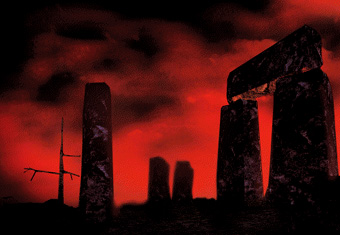
The Ritual Circles are places of great power, gateways to the Void, and can be used for Rituals and for Transport. They can be sealed, and once sealed no one, other than the Ritualist, may Transport in or out. This seal may be broken by a being with great control of circles, as can the warden of the circle. If the Ritualist Transports out, the seal will drop. If someone attempts to Transport in, they will appear at the nearest open Circle. Whilst the seal is in place, the Void gate is open, and the Circle is exposed to the Void.
Transport Circles may only be used for Transport, and may not be sealed.
In order to Transport from a Circle to another, a person must have some power over Circles. They must also know the location they are trying to get to. There are two ways to gain this knowledge. The Mages guild maintains the known ritual and transport Circles and strengthens the links that bind them. By entering a Circle and concentrating, a Ritualist becomes aware of these links. If the name of the destination Circle and its approximate location is known, the Ritualist may select the correct link and transport to that destination even if he has never been there before. There are Circles which are unknown in the Heartlands of Edreja (not maintained by the Guild) or hidden by the guild (the link is concealed and eludes the Ritualists awareness). Such Circles may be reached but only if the Ritualist has been there before (by foot, Transported by another Ritualist, Teleported there when it was the closest unsealed Circle, bounced there when a nearby major Circle was sealed) and has made use of the Circle. In this way the Ritualist adds the link to any other he is aware of. No specific vocal is required, but most Ritualists speak the name or description of the Circle aloud, to aid their concentration, and help orientate those they are Transporting.
A Ritualist may take up to 15 other people with them to their destination. If there are many people in the circle, 15 people are Transported at random. The Ritualist cannot influence who goes or who remains (except for some of great ability so it wise when Transporting small groups to evacuate all others from the circle. The Ritualist must always accompany the travellers, and everyone Transporting will reach a destination. It is not guaranteed, although it is usual, that all persons Transported arrive at the same destination Circle at the same time, nor that they arrive in one piece. Although problems are rare, this tends to limit the number of times Ritualists are willing to Transport. It is possible to undertake a Ritual of Transportation in a Ritual Circle. If successfully performed more people may be transported depending on the competence of the Ritual Group.
The people and any items they carry are Transported, but anything else within the Ritual or Transport Circle is not. This unfortunately reduces the usefulness of Circles for Transporting supplies. In addition, animals are frightened by Circles, and will generally refuse to enter.
The Transport is generally instantaneous, but the ways of magic are seldom bound by human laws and it has been known to can take up to an hour (maybe more). My research has been unable to conclude whether these delays are affecting the particular Transport or the source or destination Circles. Further research might determine whether this means it is possible to overtake another Ritualist in Transport. The delay seems independent of distance or number of Transportees.
Although there is anecdotal evidence that it was possible for a Ritualist to detect where another Ritualist had transported to, if they were quick enough to step into the Circle after their departure, experiment has shown that this is no longer possible, unless the Ritualist has a large degree of Circle control.
I was unable to find evidence that any Ritual Circles have been created in the recent past. I have ascertained that a number of temporary or permanent Transport Circles have been created. These have usually required the use of a Tome of Magic to complete the effect.
This is the extent of my research so far, and I would greatly welcome any clarifications or suggestions that would bring clarity to this subject. This paper should be released in a final form at the Heartland Games of 1101AF.
