
|
Life
of Saint Francis de Sales
|
 |
|
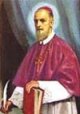
THE EARLY YEARS St Francis de Sales, ‘The Gem of Savoy and Switzerland’, is looked upon as the greatest glory of Annecy, a city famous for its mountains, lakes and countryside, and even more so for the annals of its sacred and civil history. Francis de Sales was born at the Chateau de Sales in Swiss Savoy on August 21, 1567 and at his baptism in the parish church of Thorens was named Francis Bonaventura, for two greatly loved Franciscan saints. The room in which he was born was known as the ‘St Francis room,’ from an old painting on the wall showing the friar of Assisi preaching to the birds; and it was this lover of all living creatures whom Francis de Sales choose as his patron in later years. His father Francois de Sales Boisy, ( on his marriage to the only child of Melchior de Sionnaz, who brought as her dowry the Signory of Boisy, he took the name Boisy) and his mother, Francoise de Sionnaz, belonged to Savoyard aristocratic families. When Francis was born, the eldest of thirteen children, his mother was only fifteen. The boy was frail at birth, but with devoted care he grew to vigorous maturity. Francis mother was his first teacher and after a few years she was aided by the excellent Abbe Deage, who acted as the boy’s tutor and companion. Francis was obedient, truthful and habitually generous to those less fortunate than himself. At the age of eight he was sent to the nearby college of Annecy, and there, in the church of St Dominic ( now called St Maurice), he made his First Communion and received Confirmation. A year later he was permitted to take the tonsure, for he was set even then on consecrating himself to the Church and this was regarded as the first step. From 1583 till 1588 he studied rhetoric and humanities at the college of Clermont, Paris under the care of Jesuits. While there he began a course on theology and scripture. He excelled in all these subjects. To please his father, he took lessons in riding, dancing and fencing but cared for none of these gentlemanly accomplishments. In 1588 he studied law at Padua and at the age of twenty- four he was given the degree of Doctor of Law. SPIRITUAL CRISIS Even while he was at the college of Clermont, Paris Francis underwent a severe spiritual crisis linked to his courses on grace and predestination. He was greatly troubled by discussion of the theologians of the day on the question of predestination. His spiritual crisis was perhaps also linked to the choice he found himself confronted with by the life-style of so many of his contemporaries: was he, like them, going to lead a double life or would he choose to lead one life, the one in total conformity with the Gospel? During this time his heart became more and more fixed on giving himself to God. After a prolonged temptation and despair, he was suddenly freed as he knelt before a miraculous image of Our Lady at St Etienne-des-Gres, he made a vow of chastity and consecrated himself to the Blessed Virgin Mary. He was, nevertheless, not completely free from the trials. While in Padua he once again suffered profound internal struggles similar to the one in Paris. The love of God has always meant more to him than anything else, and now he became prey to the fear that he had lost God’s favour. This obsession haunted him day and night. It was a heroic act of pure love that finally brought him deliverance. “O Lord” he cried, “if I am never to see Thee in Heaven, this at least grant me, that I may never curse or blaspheme Thy holy name. If I may not love Thee in the other world- for in Hell none praise Thee- let me at least every instant of my brief existence here love Thee as much as I can.” Directly afterwards, as he knelt in the church, all fear and despair suddenly left him and he was filled with peace. This experience of his youth taught him to deal understandingly with the spiritual crises of those who, at a latter period, looked to him for guidance. PROVOST OF THE CHAPTER OF GENEVA Since he left Padua, Francis de Sales led, at least outwardly, the life of a conventional young nobleman. That his son should now settle down and marry was Boisy’s desire, and this autocratic father had already chosen for him a charming bride. He soon made it clear that he could not carry out his father’s wishes, as in many other matters. Not long afterwards he again annoyed his father by declining the honour offered him by the prince of Savoy of a seat in the senate, an unusual compliment to one so young. The Catholic bishop of Geneva, Claude de Granier, was living at Annecy, his own diocese now being in Calvinist hands. The bishop, impressed by Francis’ character is reported to have made this prophetic utterance to those around him: “ This young man will be a great personage some day! He will become a pillar of the Church and my successor in this see.” So Francis had confided only to his mother and a few friends his desire for a life in the Church; an explanation to his father now became inevitable. Monsieur de Boisy had been much chagrined by his sons refusal to marry and also by his rejection of the senatorship, but he was not prepared for his new disappointment. He withheld his consent. The unexpected death just then of the provost of the chapter of cathedral canons made Francis’ cousin, Canon Louis de Sales, hope that Francis might be appointed to this honourable post, in which case his father might yield. The post was offered, Francis accepted it, and thus he finally obtained his father’s permission to enter the priesthood. The young man was already so well prepared by his purity of life and by his theological studies that there was no need for the usual delay. On the very day his father gave his consent, Francis put on ecclesiastical dress and three weeks later took minor orders. Six months afterwards, on December 18, 1593, at the age of twenty-six, he was ordained priest by the bishop of Geneva in the parish church of Thorens. MISSION AT THE CHABLAIS From the time of the reformation the seat of the Bishopric of Geneva had been fixed at Annecy. There with apostolic zeal, the new provost devoted himself to preaching, hearing confessions and the other works of his ministry. In the following year (1594) he volunteered to evangelize Le Chablais a section of Savoy on the south shore of Lake Geneva. Protestants from Berne had invaded it about sixty years earlier. Catholic worship was outlawed, the Churches were burned or razed when not appropriated for Protestant use. Religious orders were suppressed and priests expelled. Thirty years later the duke of Savoy through the treaty of Nyon reached an agreement for the reestablishment of Catholic worship in the province. But by the time Francis left on his expedition, it consisted of himself and his cousin Canon Louis de Sales only. His father refused to give him any aid for his crazy plan and the diocese was too poor to support him. They trudged through the countryside on foot. The long walks were heavy tax on their strength and during winter it exposed them to real dangers. Once Francis was set upon by wolves and only escaped by spending a night in a tree. He tied himself to a branch to keep from falling. When daylight came he was discovered by some peasants in such an exhausted and frozen condition that he had to be cut down. Had they not helped him with reach their hut and revived him food and warmth, he would have died. The missionary, had little reward for his labour. He had doors slammed on his face, rocks thrown at him, in bitter winter his feet freeze so badly they bleed as he tramped through the snow. After 3 years his cousin left him and he had not made many converts! Francis did not lose heart but continually sought new ways to reach the minds of the people who would not listen to his sermons. He began to write brief leaflets copied by hang in an attempt to refute the erroneous doctrines. These leaflets were distributed about in great quantities and passed from hand to hand with the object of having them find their way into the possession of heretics. Later they were collected and printed in a volume called Controversies. Copies of the leaflets in the original written form are still preserved in the Convent at Annecy. This work of spreading the leaflets, however, gradually decreased and ceased altogether when the people of these parts began to attend his sermons. Later he confronted the preachers sent by Geneva to oppose him; he converted the syndic and several prominent Calvinist. At the request of Pope Clement VIII, he went to Geneva to interview Theodore Beza, who was called Patriarch of the Reformation and a distinguished Calvinist scholar. latter. The latter received him kindly and seemed for a while shaken , but had not the courage to take the final steps. Francis was not able to bring Beza back into the Church, but many Protestants were convinced that Fancis had the truth on his side. A large part of the inhabitants of Le Chablaise returned to the fold. by 1598 the whole the district was once more predominantly Catholic. ST FRANCIS DE SALES; BISHOP OF GENEVA Claude de Granier the bishop of Geneva then had long been considering Francis as a coadjutor and successor, but Francis declined the honour, thinking himself unworthy. It spite of his refusal he was sent to Rome with Abbe de Chisse who was to handle diocesan matters and arrange for the coadjutorship. In Rome Francis was presented to Pope Clement VIII, who having heard much praise of the young provost, suggested that he be examined in presence. On the appointed day here was an assemblage of learned theologians. They put to Francis 35 questions on points of theology. he answered all of then simply and modestly yet in a way that demonstrated his profound understanding. The Pope himself completely satisfied. “Drink my son,” said the Pope to him. “from cistern, from your living wellspring ; may your waters issue forth, and may they become public fountains where the world may quench it’s thirst.” On the death of Bishop de Grnier in the autumn of 1602, he succeeded to the see of Geneva and took up residency at Annecy, living style appropriate to the office but with a household conducted on lines of strict economy. His personal life was one of evangelical poverty. He fulfilled his Episcopal duties with devotion and along with administrative work continued to preach and serve in the confessional. He instituted the teaching of catechism thought his diocese, and at Annecy gave the instruction himself with such fervour that years after his death the “Bishop’s Catechism” was still remembered. Children loved him and followed him about, eager for his blessing. FRIENDSHIP WITH ST JANE DE CHANTAL It was in 1604 that Francis took one of the most important steps in his life, the step towards holiness and mystical union with God. This is a progress greatly influenced by St Jeanne Francoise Fremyot with whom he became acquainted in 1604 while preaching at Dijon. St Jane was the Baroness of Chantal when her husband died in a hunting accident. When Francis met her she was a widow with 4 children. After their meeting at Dijon she became a friend and spiritual student of St Francis de Sales. Jane was a person on her own, but it was only when they became friends that they began to become saints. Initially when Jane wanted him to take over her spiritual direction Francis wanted to wait, “I had to know fully what God himself wanted. I had to be sure that everything in this should be done as though his hand had done it.” Jane was on a path to mystical union with God and, in directing her, Francis, was compelled to follow her and become a mystic himself. Another one of the beautiful result of their friendship was foundation, in 1610, of the Order of Visitation, to meet the needs of widows and lonely women in poor health, “strong soul with weak bodies,” who were deterred form joining other orders because of their physical condition. St Jane de Chantal oversaw the founding of 69 convents. Visitation nuns today live a contemplative life, work for women with poor health and widows, and sometimes run schools. Some of St Francis best thoughts is to be found in letters he wrote to this great woman, who herself was canonized in 1767. What is perhaps his most famous book, the Introduction to the Devout Life, grew out of series of casual letters written to another woman, a cousin by marriage, Madame de Chamoisy who had placed herself under his guidance. This little collection of short practical lessons on true piety and everyday living was published in 1608. It was soon translated into many languages, and has continued to find readers. THE LAST YEARS In 1610 came the heavy sorrow of Madame de Boisy’s death. Francis was to survive his mother by twelve years- probably the most laborious of his life. His young brother, Jean-Francois de Sales, was consecrated bishop in 1612 and appointed coadjutor in the diocese of Geneva. His help was welcome to Francis, whose health was failing under the ever increasing duties. The following year the Duke of Savoy, traveling in state to meet King Louis XIII in Languedoc, invited the good bishop of Geneva to join him. Anxious to obtain from Louis certain religious privileges for the French part of his diocese, Francis accepted, although the journey promised to be chilly and uncomfortable. Before leaving Annecy he set his affairs in order, as if he had no expectations of returning. On his arrival at Avignon, he avoided the pomp and entertainments of the brilliant court gathered there and tried to lead his customary astute life. But the famous bishop was much sought after, people wanted to see him and hear him preach. He was worn out, therefore, when he stopped at Lyons on his return. The convent of the Visitation provided him with a cottage on their grounds, where he stayed for a month. He spared himself no labour, giving the nuns instruction and advice, and continuing his preaching and ministrations through Christmas. On December 27 he had a paralytic seizure. He recovered speech and consciousness, and after receiving the Last Sacraments, he murmured words of Scripture, expressing all confidence in God’s mercy. On December 28, while those kneeling about his bed recited the litany for the dying, he breathed his last. He was fifty-six in the twentieth year of his episcopacy. In his Treatise on the Love of God, Francis had written, “The measure of love is to love without measure,” a percept which he consistently taught and lived. His body was embalmed and brought, all save the heart, to Annecy. It remained in a tomb near the high alter in the church of the first convent of the Visitation until the French Revolution, when it was removed for fear of desecration. Since then it has been restored to the church of the reconstructed convent at Annecy. Francis was beatified by Alexander VII in 1661, canonized by him in 1665, and proclaimed a Doctor of the Church during the pontificate of Pope Pius IX, in 1877. His heart was preserved in the church of the Visitation at Lyons, in a golden shrine given by Louis XIII. |
