The long journey

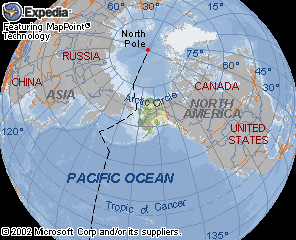
The Arawak Indians are originally from Asia, they followed migrating herds of animals and then crossed Asia via the Bering Land Straight to Alaska and then they went on their journey through the eastern slopes of the Andes. Shortly thereafter they began to spread down the Amazon River and its tributaries, north into the Orinoco Valley, along the coast of Venezuela, Guyana and Suriname.
It is said that a number of Arawak tribes have been extinct for several hundreds of years. What could have happened that would bring a population that once numbered 2 to 3 million down to just a few thousand by the early part of the 16th century? Throughout history the Arawak where subject to many hostile take-overs, diseases, enslavement, damage to food supplies and much more.
Sadly, the Arawak Indians have been greatly reduced in number. Their numbers have been slowly rising, so that today upwards of 30, 000 Arawak currently reside in Suriname, Guyana and French Guiana.


Earlier in history as the Arawak Tribe began to settle down, many of the tribes that spread throughout Suriname, Guyana and French Guiana had an economy based on fishing and the production of corn and cassava. With this simple living, the population could be sustained at around 60,000 grouped in each village. With a great supply of food and a stable population, the development of an elaborate political and social structure was possible.

Although the Arawak people were divided into four separate classes, conflict was minimal within the tribe and culture. The social structure was generally considered a matrilineal (rank inherited through female line) society. This complex system of rank and government was divided into four distinct classes: workers(naborias), artists/warriors(nitaynos), and the King(cacique). The special privileges of being a King were such things as living in special houses, being entitled to special foods, and receiving special treatment from the other classes. In return the King(cacique) was expected to take control over villages, districts and the provinces in their territory.
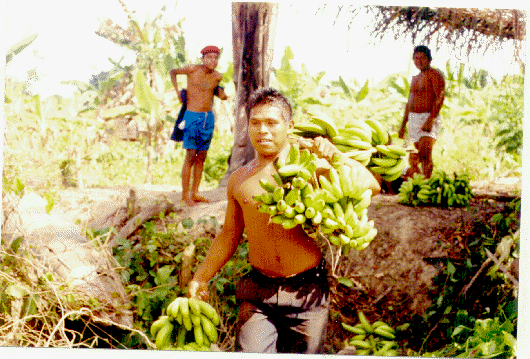
The Arawaks are a peace loving tribe.
The Arawak legacy of hospitality is evident in Suriname today. The Arawaks are extremely polite, respectful and hospital.
- The End -

