
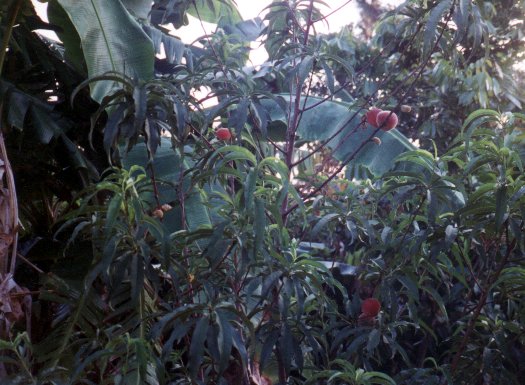
| Hood Pear |
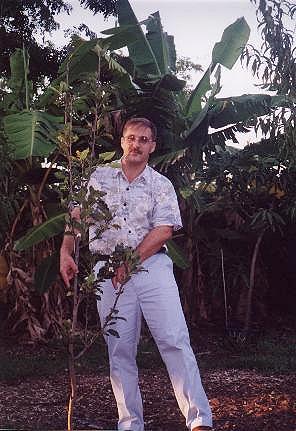
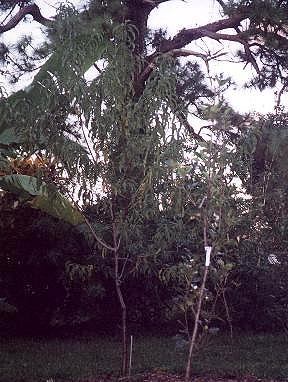
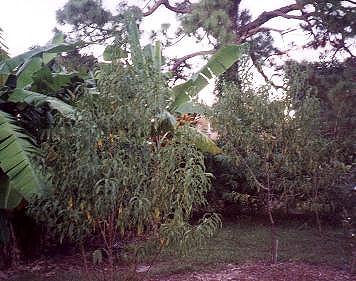
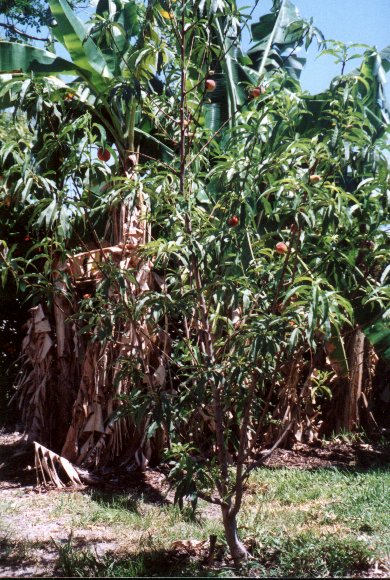
Hood Pear and Tropic Beauty Peach | |
 |
 |
 |
 |
 |
| Robertson Navel Orange |
Ackee Tree | |
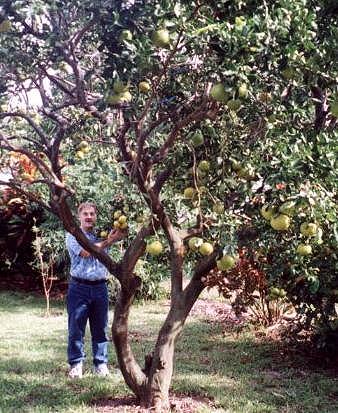 The Robertson is a mutation of the better known Washington. It has a very small navel. |
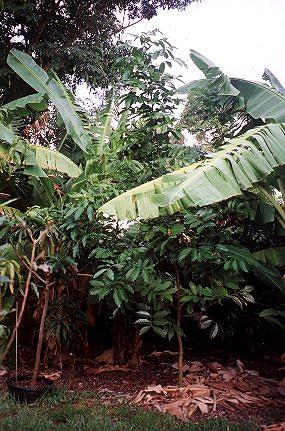 The ackee tree: Blighia sapida was introduced to Jamaica Captain Bligh (of Bounty mutiny fame) as food for the slaves. The seeds and the membrane at the base of the seed mantle are always poisonous. Only when the fruit ripens and opens naturally on the tree may the fruit be eaten. The seed mantle of unripe fruits contains the toxic constituents hypoglycin A and B. Hypoglycin B is a water-soluble liver toxin. The poison limits the availability of various cofactors such as coenzyme A and carnitine. Effects are: disturbed glucose creation, together with accumulation of fat deposits in the liver, disturbed urea/nitrogen cycle and metabolic acidosis. Ackee poisoning produces nausea and acute vomiting without diarrhea, followed by dizziness, slight fever, convulsions, coma and death. Sometime there is extreme hypoglycemia which can be corrected by IV glucose. The symptoms begin 2-3 hours after the meal, although sometimes quicker. The patient has intense thirst, pronounced sweating, heart palpitations and racing, headache, general weakness and extreme muscle weakness. Fatty degeneration of the liver, similar to Reye’s syndrome, is seen. Death may follow within 12 hours. When cooked, Ackee looks and tastes like scrambled eggs! Will reach 36 feet high, 10 -15 ft wide |
