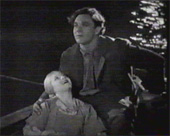
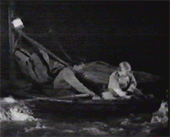
The honor bestowed upon Wings
was called Best Picture, Production. For Sunrise, it was
called Best Picture, Unique and Artistic Production. These
awards were combined in the second year, and Academy history forever
considered Wings to be the Best Picture the first year out, with the
reason being, that is was honored for its overall production, and not just
artistic merit.
This didn't bode well over the
years for Sunrise fans who continually cite this as being a cinematic
masterpiece. In the 1950's, the French magazine, Cahiers du Cinema
was still listing it as their favorite film of all time.
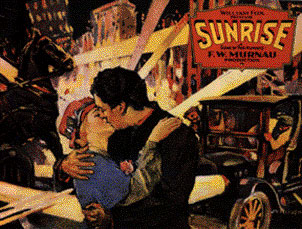 Perhaps
Sunrise represented the times better than any other film of 1927,
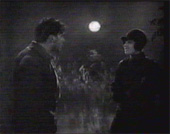
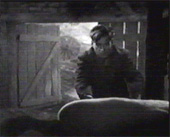
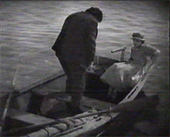
particularly Wings. The story about a man who plots to kill his wife
with his mistress, is symbolic of the changing attitudes about women back
then, as it is of the force that was in place to hold them back.
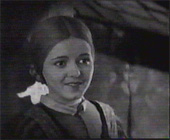
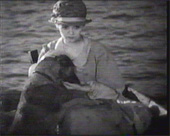
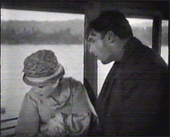
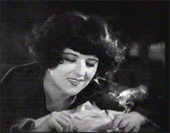
Janet Gaynor played the sweet and innocent country wife, while Margaret
Livingston played the evil vamp from the city. George O'Brian is the
husband, torn between his love and his lust.
Perhaps
Sunrise represented the times better than any other film of 1927,
particularly Wings. The story about a man who plots to kill his wife
with his mistress, is symbolic of the changing attitudes about women back
then, as it is of the force that was in place to hold them back.
Janet Gaynor played the sweet and innocent country wife, while Margaret
Livingston played the evil vamp from the city. George O'Brian is the
husband, torn between his love and his lust.
Janet Gaynor was excellent in the
lead role, playing the wife. At 22 years old, she was a hot
property, playing sweet, virginal characters in a host of popular
films. The films director, F.W. Murnau, was already a well respected
name, particularly for his bizarre creation, Nosferatu in 1924.
For the Academy, Sunrise was a
chance to show - right off the bat - that the awards were not an exclusive
affair.
Mary
Pickford, a founding member of the Academy, referred to the club as a
'league of nations', and the awards were to reflect that. German
born F.W. Murnau was not a member of the Academy, which made him a perfect
candidate for the award. This win would give the Academy an air of
integrity that it dearly needed if it was to get off the ground.
Meanwhile, accusations
ran rampant that Louis B. Mayer had some form of control over the awards
ceremony. MGM's big film that year was The Crowd, and studio boss
Mayer was determined to see it not win! According to the
films director, King Vidor, 'he didn't vote for it because it wasn't a big
money maker'. But Mayer also hated the film, calling it
'unglamorous' and feeling that it didn't represent his studio
well.
Mayer's dictatorial rule hurt
MGM's chances of getting any awards that first year, except for one for
Title Writing for a film called Telling the World., In the end,
Paramount's Wings and Fox's Sunrise earned the biggest awards.
The first ever Best Actress winner
was Janet Gaynor for three films, Street Angel, Seventh Heaven, and
Sunrise.
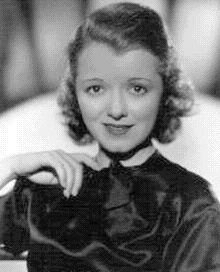 According
to Gaynor, "the first awards was just a small group getting together
for a pat on the back." She went on, "It was more like a
private party than a big public occasion. It wasn't open to anyone
but Academy members and as you danced you saw the most important people in
Hollywood whirling past you."
According
to Gaynor, "the first awards was just a small group getting together
for a pat on the back." She went on, "It was more like a
private party than a big public occasion. It wasn't open to anyone
but Academy members and as you danced you saw the most important people in
Hollywood whirling past you."
Gaynor admitted to film historian,
Robert Osbourne, that the awards show was really no big deal that first
year, saying that 'it naturally doesn't mean what it means now. Had
I known then what it would come to mean in the next few years, I'm sure
I'd have been overwhelmed. At the time, I think I was more thrilled over
meeting Doug Fairbanks."