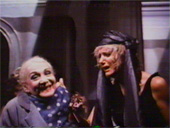
Prior to 1987, she
was well known within Hollywood circles, but even after several bit parts
in big films like The Sting and The Way We Were, Sally Kirkland, a
determined actress with a whole lot of moxy, was unable to make a name for
herself as a big named movie star. It took a big role in a very
small film, followed by a remarkable Oscar campaign, which she spearheaded
and financed, to get Sally Kirkland - the movie star - on the map.
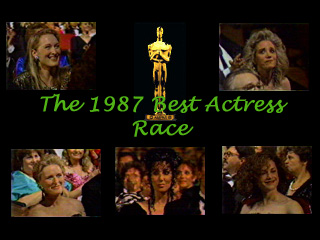
Little did Sally know at the time, she was about to become part of one of
the most exciting Best Actress races ever!
|
Oscar campaigning is almost as old as the Oscar's themselves. As
soon as studio bosses realized that an Oscar win could mean big money for
a film, and once actors and actresses learned that a nomination could mean
increased clout, the true horse race was born. However, while
studios carelessly promoted films that shouldn't have stood a chance, a
campaign for an actor was like walking on glass. Actors paid big
money, and did cartwheels to get a nod, but they couldn't seem too eager,
as that could cost them some serious credibility, not to mention, the
recognition they were seeking.
The 1960 Oscar race offered a
perfect example of an actor who went too far in his campaign. Chill
Wills, the veteran star of westerns, was a surprise nominee for the film
The Alamo, which itself had garnered seven nominations, much to the
surprise of many critics, but in large part, due to a clever campaign by
MGM, and those who wanted to see Oscar recognition for its star, John
Wayne. Wills capitalized on his Best Supporting Actor nod for his
role as Beekeeper, by taking an ad out in Variety Magazine. The
trade magazine is considered a bible to Hollywood insiders, and has always
been a traditional launching pad for any Oscar recognition.
Wills' ad was titled, 'Win, Lose
or Draw', and went on to thank every member of the Academy, with the line,
'You are still my cousins, and I love you all'. The ad failed
miserably, and Wills' blatant push for his own performance was harshly
criticized. Groucho Marx later responded with an ad that read, 'Dear
Mr. Wills., I am delighted to be your cousin, but I am still voting for
Sal Mineo.' The event became an embarrassment for producers of the
Alamo, and even for John Wayne, and they subsequently worked to distance
themselves from Wills. In the end, the film lost its chance at a win
for Best Picture, and Wayne and Wills, lost their chance at the acting
prizes, however remote those chances may have been.
Sally Kirkland's race was a rather
unique one. Up until 1987, the actress was not a household name,
however, she was a well known face in Hollywood circles, having appeared
in a host of big films over the previous twenty years. As well, she
had made a name for herself on the stage, having, among other things, the
distinction of being the first actress to appear nude on
Broadway.
1987 was a good year for Kirkland,
if only because she was given the lead in the independent film,
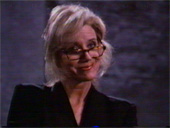
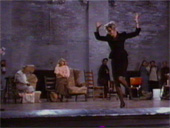
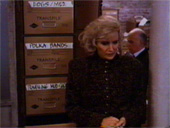
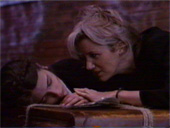
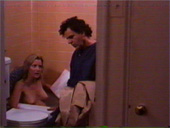
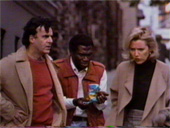
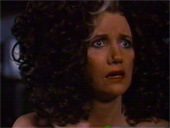
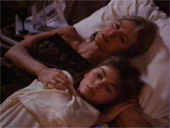
Anna. Playing the title character, Kirkland is a Czech actress who
has been living in New York City for the past several years, after being exiled
from her homeland. Once famous in
Czechoslovakia, she is unable to find any success in America, and is
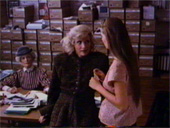
living the life of a starving actor. During the movie she meets a
young Czech girl, fresh off the boat, who she takes under her wing.
While Anna has an All About Eve twist to it, the film was somewhat slow,
and the plot takes a long time to develop. None of that mattered
however, because the film gave Kirkland the opportunity to really chew up
the scenery, and the result was incredible.
Vestron Pictures produced the
film, which was directed with a small budget, by Czech-born Yurek
Bogayveicz. Upon completion, Vestron was barely able to scrape up
the money to provide a limited release for the picture, much less embark
on an extensive Awards campaign. Back in the 80's, independent films
were still a struggle to produce, and indie saviors like Miramax Studios,
were not around to boost this kind of movie. Anna enjoyed a very limited release
in art-house cinemas, and despite excellent notices for Sally Kirkland,
the idea of the film getting any kind of notice from the Academy seemed
impossible.
But Sally Kirkland didn't see it
that way, and she set about defying the odds, giving her own career,
and this film, the boost that it needed.
More
|
|
|
|
|