
|
1930/31 Best Picture:
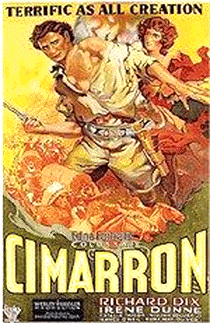
Cimarron
|
Competition: East Lynn, The Front Page, Skippy, Trader Horn
Other
Winners:
Best Actor:
Lionel Barrymore, A Free Soul
Best Actress:
Marie Dressler, Min & Bill
Best Director: Norman Taurog, Skippy
Cimarron
can be purchased on VHS!

|
Cast:
Richard Dix, Irene Dunne, Estelle Taylor, Edna May Oliver, William Collier
Jr., George E. Stone
Storyline:
Yancey
Cravat moves his family out west during the Oklahoma Land rush, with plans
of starting a newspaper in the burgeoning town.
Did it deserve to
win:
After a second look,
maybe! The first time I saw this movie, I hated it. I agreed
with many others who found it to be racist, poorly produced, and horribly
dated. After a second look, and some more research, I think this was
the best picture of its year. The film actually instills some good
values, it's just a little dated.
From today's
perspective, the only real competition came from The Front
Page, only
because it has survived to this day, having been remade on more than a few
occasions. His Girl Friday (1940) and Switching Channels (1988) are
versions of this film.
Not
nominated, but certainly deserving, were two of the best horror films of
all time, Dracula and Frankenstein. These classics were big business
in their day, challenging censors, and terrifying audiences.
Critique:
Richard
Dix is one of the corniest good guys ever to venture into the old west.
He wears the white hat, has a deep cheerful voice, and sports more make up
than Irene Dunne. Eugene Levy did a spoof on SCTV that was very
similar to this character.
Cimarron addresses
a few of the issues of the old west, but taking a stance that would only
be comfortable to the viewers of its day. When a Jewish street
peddler is harassed by some nasty cowboys, Dix as Cravat comes to the
rescue.
Meanwhile, Isaiah,
played by Eugene Jackson, is a black boy who Cravat takes under his
wing. The portrayal is typical of how black characters were played
during this time, as comic relief, and as obedient servants. At the
beginning of the movie, he is the fan boy, hanging from the chandelier,
fanning the folks at the dining table. In the end, of course,
he is killed in battle, trying to save the life of Cravat's son.
During the early
thirties, an over zealous media and and a nation oppressed by the Great
Depression, made heroes of such figures as Bonnie and Clyde. I
believe that it was in keeping with this sentiment that Cimarron contains
a scene in which an outlaw named 'The Kid' (supposedly, Billy the
Kid) meets up with Cravat on his travels. The two turn out to be old
friends, and Cravat (our hero) wishes the Kid good luck!
|
|
Best Scene:
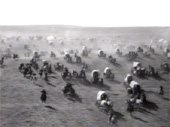
Yee-haw! The opening sequence where hundreds
of settlers rush the Oklahoma border, on horse back and in wagons, is
stunning. Remember, there were no computer generated effects here.
It's all re-created, and filmed to perfection.
|
|

|
Behind the Scenes:
Director, Wesley Ruggles,
filmed the land rush scene by installing several cameras in key areas.
It was a one-shot deal, so he used the various shots to piece together the
final product.
Cimarron was Irene
Dunne's second film. It also marked the first of five Oscar
nominations. She never did win the big prize. She retired from
acting in 1952, with her last film, It Grows on Trees.
Cimarron was
released in February, 1931. The Edna Ferber story is based on actual
events that took place in the 1890's. Plenty of people in 1931, were
around to remember this event, and at the time, the old west was a symbol
of the American spirit. It goes without saying, that the film was a
huge hit.
|
|
 |
Perhaps
the funniest of all the Best Picture winners, only because it takes itself
far too seriously!
|
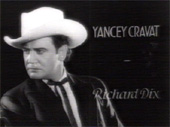 |
And
the award for Best overacting in any motion picture goes to Richard Dix
for Cimarron!
|
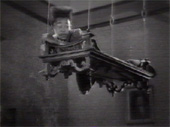 |
Black
actors are relegated to fan duty, as Eugene Jackson keeps a breeze going
above the dining table.
|
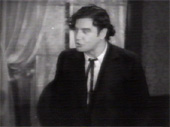 |
Yancy
Cravat sees opportunity and the American dream wating for him in the
Oklahoma territory.
|
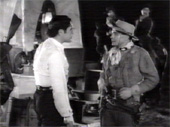 |
The
imfamous outlaw, The Kid, runs into his old friend Yancy in the wild
frontier.
|
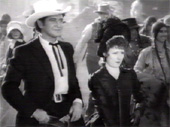 |
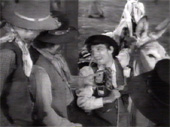
| Irene
Dunne as Sabra wonders why all the townsfolk are staring at her.
Perhaps it is because her husband is wearing more makeup than she is. |
 |
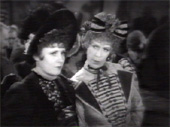
| A
Jewish street peddlar is given a hard time by some good old boys. |
 |
| Miss
Tracey, played by Edna May Oliver, is looking forward to the culture that
the Cravat family will bring to the town. |
|
|
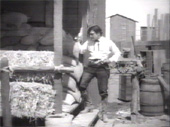
| What
would a western be without a good old fashioned shoot out? |
Cimarron
can be purchased on VHS!
|
Also in 1930/31:
September 14, 1930: The
Nazis are the second largest party in Germany.
December 31, 1930:
The U.S. jobless rate is at 4 million, as the year comes to a hopeless
end.
May 1, 1930: The
Empire State Building celebrates its grand opening, as the tallest
building on earth.
 |
|
Richard Dix was a
hugely popular action star in the twenties and thirties. His
name has been forgotten over the years, and sadly, as film fans
begin to rediscover him, a third of his films no longer survive,
due to decomposition. |
|
|

