On Peer-to-Peer
Media Streaming_
Dongyan Xuy, Mohamed Hefeeda, Susanne Hambrusch, Bharat Bhargava
Department of
Computer Sciences
fdxu, hefeeda, seh, bbg@cs.purdue.edu
Abstract
STUDY peer-to-peer media streaming
system with the following characteristics:
(1) its streaming
capacity grows dynamically;
(2) peers do not exhibit serverlike
behavior;
(3) peers are
heterogeneous in their bandwidth
contribution; and
(4) each streaming
session may
involve multiple supplying peers.
investigate two problems:
(1)
how to assign media
data to multiple supplying peers in one streaming
session
and
1. solution
optimal media data
assignment algorithm OTSp2p
minimum buffering delay in the consequent streaming
session
(2)
how to fast amplify the system’s total streaming
capacity.
2. soln
distributed differentiated admission control protocol DACp2p
differentiating between requesting peers with different
outbound
bandwidth,
DACp2p achieves
- fast system capacity amplification
- benefits all requesting
peers in
- admission rate,
- waiting time, and
- buffering delay;
- incentive for peers to offer their truly
available out-bound bandwidth.
1. Introduction
[10,
11, 12,
15,
14]
research efforts in
peer-to-peer systems during the past two years
ýless attention: the peer-to-peer media streaming system
major difference
data sharing mode among peers:
- general open-after-downloading’
- media stream ‘play-while-downloading
requesting peers
playback and store the media data
during the streaming
session, and
they become supplying peers of the media
file after the streaming session.
assume
- selfgrowing
requesting peers later becoming
supplying
peers
- serverless
- heterogeneous
out-bound bandwidth
contribution
o
different access networks
o
different willingness
o
out-bound bandwidth
less than the
original
playback rate
multiple supplying peers
problems
- media data assignment
multi-supplier peer-to-peer
streaming session.
- fast amplification
service priority à
promise higher out-bound bandwidth
OTSp2pàoptimal media data assignment
minimum buffering delay
experienced by the requesting
peer
DACp2p,à distributed differentiated
admission control protocol
both supplying
and requesting peers
(1) faster amplification
(2) higher admission rate and
fewer
rejections
(3) shorter average buffering
delay
differentiates between requesting peers
with different out-bound bandwidth promises, = incentive
2 Peer-to-Peer Media Streaming Model
(1)
Roles of peers
- requesting peers
requesting peer becomes a
supplying peer
avoid server-like behavior,
supplying
peer at most one peer-to-peer
streaming
session
at any time.
‘seed’ supplying peers,
obtain external source.
(2)
Bandwidth of peers
R0 playback rate
Pr requesting peer
Rin(Pr) = R0 in-bound bandwidth
Ps supplying peer
Rout(Ps) out-bound bandwidth
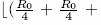
R0 R0 R0
2
4 2N
(3)
Classes of peers
N classes possible values of their
out-bound
bandwidth offer
out-bound bandwidth R0 (1<n<N) (class n peer)
2n
lower the n, higher the
class.
(out BW higher if n low)
(4)
Capacity of the peer-to-peer streaming system
capacity
number streaming sessions simultaneously
multiple supplying peers
Rout(Ps) add up to R0,
capacity of the system at time t

set of supplying peers in the system at t).
(5)
Segments of media data
Assume:
small sequential segments of equal sizes
Constant-Bit-Rate
(CBR)
∂t playback
time each segment is the same
3 Optimal Media Data Assignment
requesting peer Pr
set of supplying peers

R0 = Rin(Pr) =
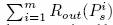
(playback rate = in-bound stream = sum out bound streams)
Determine:
(1) the media
data segments to
be transmitted by 
(2) the playback start time for Pr
goal
- continuous playback,
- minimum buffering delay at Pr.
buffering delay
time interval between
- start of media data segment
transmission
- start of playback at Pr
different media data assignments lead to different
buffering delays.
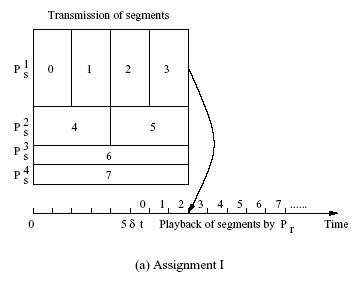
Buffer delay = 5∂t
 Buffer delay = 4∂t
Uses OTSp2p
OTSp2p
optimal media data assignment
minimum
buffering delay
executed by the requesting peer
1. computing
the media data assignment,
2. initiate
the peer-to-peer streaming session
notifying each participating
supplying peer of the corresponding assignment.
pseudo-code

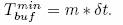
m supplying peers
descending order (m = lowest out bound BW offer)
class-n lowest class
compute assignment of the first 2n
segments;
assignment repeats itself every 2n segments
first ‘while’
second ‘while’
third ‘while’
fourth
P1 7 3 2 0
P2 6 1
P3 5
P4 4
Theorem
1
m supplying
peers
requesting peer Pr
R0 = 
OTSp2p
optimal media data assignment,
minimum buffering delay
4 Fast System Capacity
Amplification
- problem of fast capacity amplification
- how to select a set of supplying peers
for a peer-to-peer streaming session,
peer-to-peer streaming system
capacity
dynamically grows
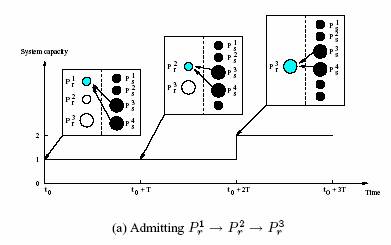
time t0
[four supplying peers
two class-2 peers
PS1 PS2
two class-1 peers
PS3 PS4


system can admit one requesting peer
at t0
[three requesting peers:
two class-2 peers
PR1 PR2
one
class-1
PR3
(hi class = low BW offer)
ýadmit P1 at t0
capacity still 1
þadmit
P2
capacity will grow to 2
at t0 + T,
both PR1 PR2 admitted
at t0 + T.

waiting time
interval between
its first
streaming request
earliest time it can be
admitted
average waiting time
- (0 + T + 2T)=3 = T;
- (T + T + 0)=3 = 2 T
3
differentiated admission policy
[
favors higher-class
requesting peers
faster amplification
requirements
(1) not starve lower-class
requesting peers,
even in the short
term;
(2) enforced in a purely distributed fashion;
(3) differentiating:
higher the outbound bandwidth pledged by a requesting peer,
- the greater the possibility that it will be admitted,
- and the shorter the waiting time and
- buffering delay
incentive
truly available out-bound
distributed admission control protocol DACp2p.
- supplying peer individually decides
whether or not to participate
in a streaming session
[different probability values
applied to different classes of requesting peers
[dynamically adjusted
- reminder:
requesting peer Pr may
send a ‘reminder’ to a busy
supplying peer Ps
Ps not to elevate its admission
preferences to requesting peers
of classes lower
than
that of Pr
(stop
starving???)
4.1 DACp2p Supplying Peers
supplying peer
admission probability vector
<Pr[1], Pr[2]….. Pr[N] > ý Pr[i] (1 < i <N)
applied to class-i requesting
peers:
[class-i requesting peer contacts Ps for
streaming service
not
busy
grant the request with probability Pr[i]
[ Ps itself is a class-k peer
values
in the probability vector of Ps
(a) Ps becomes a supplying peer,
1 <i < k,
initialize Pr[i] = 1
k < i < N,

A) Initially
favor requesting peers
of class-k and higher
always
granting requests.
exponentially decrease the admission probability.
i a favored class Pr[i] = 1
eg. class-2 supplying peer
N = 4
admission probability vector < 1:0; 1:0; 0:5; 0:25 >
initial favored classes 1
and 2.
B) Ps has been idle,
probability vector updated timeout period of Tout
k < i < N
Pr[i] =Pr[i] * 2.
‘elevate’ the admission
probabilities of lower-class requesting
peers,
performed after every period of Tout
C) just finished serving
update its probability vector
- not receive request favored
class,
=elevate
- least one request favored class, busy.
=
‘tightens’
left
a ‘reminder’ to Ps
^
k = highest favored class, left
reminder
then,
1 < i< ^k, Pr[i] = 1

4.2 DACp2p Requesting Peers
requesting peer Pr
1. obtains
a list of M randomly
selected candidate supplying
peers via some peerto-
peer lookup mechanism
eg. Napster centralized directory server
eg.
Chord [12]. distributed lookup service
2. contacts
from high to low
classes:
Pr will be admitted,
- Permissions from enough supplying peers
(1)
neither down nor busy
(2)
they are willing passed the
probabilistic admission test
(3)
their aggregated
out-bound bandwidth offer is Rsum = R0
3. execute Algorithm OTSp2p
-compute the media data
assignment
-triggers
Pr will be rejected,
not able to get permission from
enough supplying peers
leave a ‘reminder’ to a subset W of the busy candidates.
W
high-class to low-class busy candidates
first few that…..
(1) the
candidate currently favors the class of Pr
i.e. at Ps Pr[i] = 1 (i favoured class)
(2) the
aggregated out-bound
bandwidth offer of the candidates in W is
equal to
(R0 - Rsum)
(make up defecit of Ro needed)
W senders keep reminder
Finished, reminder to update its probability vector,
may not in the future serve exactly
the same requesting peer which left the reminder.
reminder
distributed mechanism to realize differentiated and adaptive admission
control
streaming session is over,
become a supplying peer.
[ Pr is rejected,
backoff for at least a period of Tbkf
xth
rejection. 
5
Performance Study
5.1
Simulation Setup
FINISH THIS LATER!!!!!!!!!!!!!!!!!!!
6 Related Work
eg. Napster [3], Gnutella [2],
and Freenet [4]
þde-centralized data exchange
þdynamic growth of system capacity
data lookup/discovery schemes
- Napster centralized directory
servers,
- Gnutella [2] controlled
query flooding.
data sharing mode
- ‘open-afterdownloading’mode,
- ýnot the ‘play-while-downloading’
[11], a detailed measurement
study of Napster and Gnutella is
presented.
- degree of heterogeneity in the peers’bandwidth
availability;
- future: built-in incentive
CAN [8], Chord
[12], and
Pastry [9]
distributed peer-to-peer lookup services
PAST [10] and OceanStore [6]
persistent storage services
ýTHIS PAPER: do not study the problems of peer-to-peer
data
lookup and storage
management;
multi-source media streaming
[7], a distributed video streaming
system
þsession involves multiple replicated video servers
ý
problem of system capacity amplification,
client-server
v P2P
C-star [1]
commercial multi-source streaming service.
ýnot differentiate between suppliers of different
out-bound bandwidth capability
[5] SpreadIt
architecture
streaming live media over a peer-to-peer network
dynamic construction of a multicast tree among peers requesting a live
media.
ýnot
intended for the asynchronousstreaming of stored media data.
7 Conclusion
two key problems
- the assignment of media data to multiple supplying
peers
- fast capacity amplification of the entire peer-to-peer
streaming system
Soln:
- OTSp2p
algorithm
optimal media data assignments for peer-to-peer streaming sessions
- fully distributed DACp2p protocol.
Differentiating
between requesting peers according their classes,
(1)
achieves fast system capacity amplification,
(2)
benefits all requesting peers in
o
admission
rate,
o
waiting
time, and
o
buffering
delay
(3)
creates an incentive truly available out-bound
bandwidth.