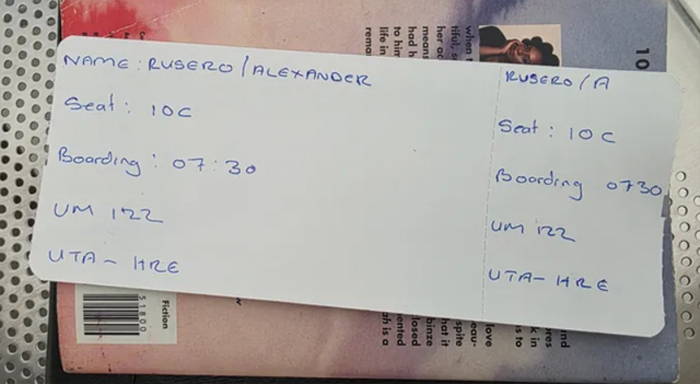
On 9th of September the Renegade Air ATR 42-500 5Y-RNV operated on Harare - Livingstone route as UM122. The page will continue to monitor Air Zimbabwe's ATR 42 flights if they are only occasional flights.
Zimbabwe has thirteen local airports which include International airports. Out of these thirteen airports only three are in service for commercial flight, Robert Gabriel Mugabe International airport in Harare, Joshua Mqabako Nkomo International airport in Bulawayo and Victoria Falls International airport in Livingstone.
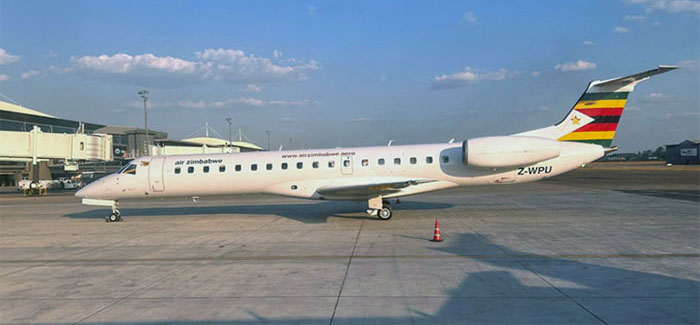 Air Zimbabwe ERJ145 LU Z-WPU
Air Zimbabwe flight operations September 2025
It is only to note that Air Zimbabwe has long been in a state of crisis with its finances and that they cannot operate any flights due to non-payment of salaries to crews and access to fuel.
However, upon closer inspection with Flightradar24, it is noted that one of the aircraft ERJ-145LU Z-WPU is operating flights to Livingstone, Dar es Salaam and Johannesburg.
The ERJ 145 Z-WPQ, the Boeing 737-200 Z-WPA and the Boeing 767-200 Z-WPF (that has been leased to Air Gabaon) are parked at Harare International airport
(Google Earth on 8th September 2025)
The government has invited international bidders of the two stored Boeing 777-200ER, with a submission deadline set for July24, 2025. The bidding period has expired some time ago regarding the sale of the two Boeing 777-200s that were advertised, but no agreement is known at this time
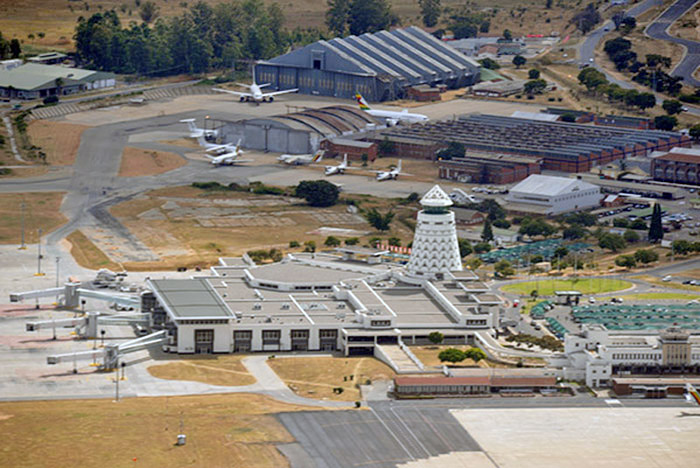
Robert Mugabe International airport (HRE) Zimbabwe
Status fleet: 2025
A320-211 Z-WPN msn 1973 stored HRE
ATR- 42-500 5Y-RVN leased from Renegade Air in service
B737-2NO/ADV Z-WPA msn 23677 in retired/parked HRE
B767-2NO/ER Z-WPF msn 24713 in service/parked HRE
B777-200/ER Z-RGM msn 28421 stored at HRE (for lease or sale)
B777-200/ER Z-NBE msn 28421 stored at HRE (for lease or sale)
Embraer ERJ 145 Z-WPU msn 14559 in service
Embraer ERJ 145 Z-WPQ msn service/stored HRE
The Fleet
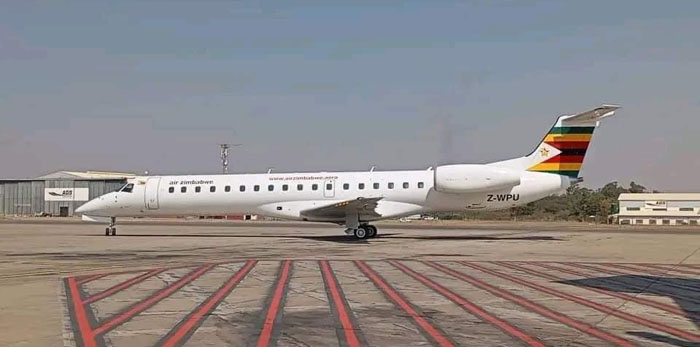
Air Zimbabwe second Embraer ERJ145 LU N214MA msn 145559.

Air Zimbabwe 50-seater Embraer ERJLR 145 Z-WPQ msn 145373.
The Embraer E-145 is short range jet with capacity of 50 passengers and has a range of up to 2.873km.
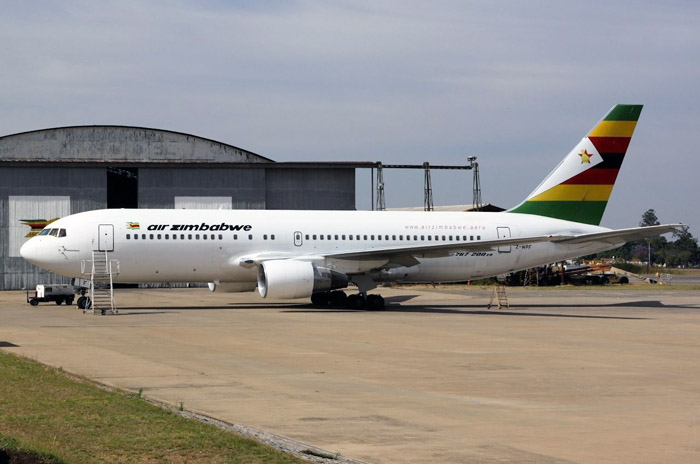
Air Zimbabwe Boeing 767-200 Z-WPF
Air Zimbabwe’s oversized, uneconomical and aged Boeing 767-2NO Z-WPF "Chimanimani´s" destiny is not known but will probably operate on longhaule routes in the future.
It is worth noting that Air Zimbabwe's Boeing 767-200ER was chartered to Eznis Airways, a Mongolian airline, from September 1, 2024, to January 1, 2025. Furthermore, the aircraft was used for a short-term lease by the Malian airline Mont Gabaon Airlines in 2024. These diverse partnerships and the repeated use of the Boeing 767 demonstrate the company's flexibility and adaptability in an ever-changing global market.
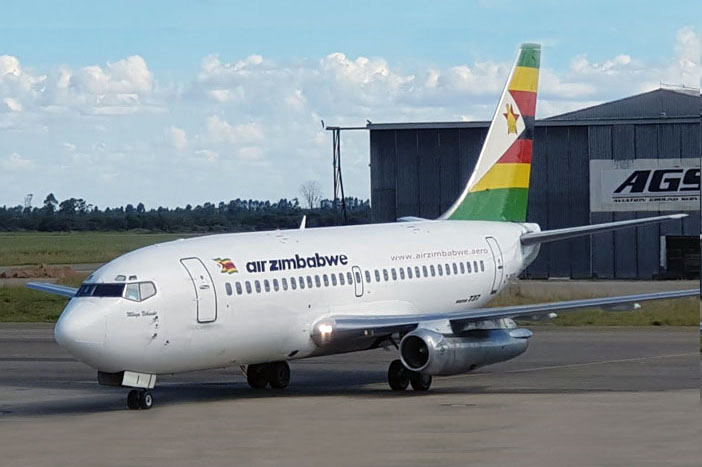
Air Zimbabwe Boeing 737-200 Z-WPA "Mbuya Nehanda".
"The Workhorse "Mbuya Nehanda" the last B737-200 operating passenger service in African skies.
What had Air Zimbabwe to do without its only airworthy 737-200 Z-WPA. From the beginning in 1986/87 "They" were the "Triplets" WPA, Mbuya Nehanda, WPB, Great Zimbabwe and WPC Matojeni . WPB and Z-WPC are stored probably both at Harare even if Z-WPB was logged last VFA/BUQ to Bulawayo.
However, the aircraft that was delivered brand new to Air Zimbabwe in 1986 was slowed down by an expensive and lengthy D-Check. The airline's engineers and mechanics apparently used the corona loockdown phase productively. As local media report, they made the Z-WPA fit again with great effort over months of work.
Then she is said to have taken off in Harare for a three-hour test flight, which put a smile on everyone's lips. Thus, the 34-year-old jet, which bears the name of the national heroine Mbuya Nehanda, could face a whole series of more years of service - just like many other 737-200s around the globe.
The Boeing 737 is and will remain a long-runner. This is especially true for the "original version" 737-200, which with its slim, loud and extremely thirsty JT8D engines doesn’t really fit into the times, but whose services will continue to be in demand in the future.
Even if the number of flyable specimens will continue to decrease, there will be a few oases and for the legendary "thunder pig" for a long time to come. Mbuja Nehanda is equipping its 737-200 with glass cockpits and even wants to expand the sub-fleet. After all, with the right maintenance, 40 years is no age for an aircraft ...
Air Zimbabwe Cabin

Air Zimbabwe Boeing 737-200 Mbuya Nehanda first class cabin.
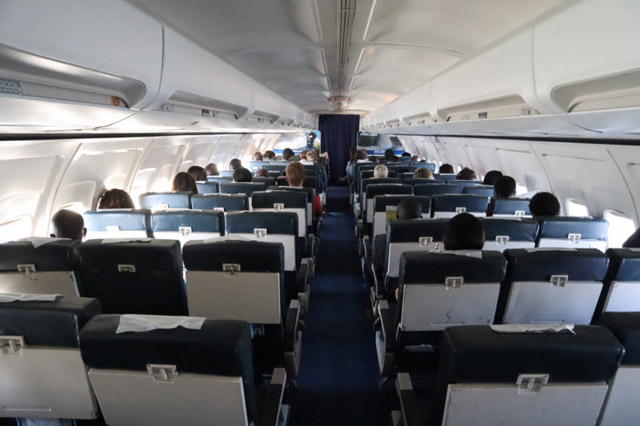
Air Zimbabwe Boeing 737-200 Mbuya Nehanda economy class cabin.
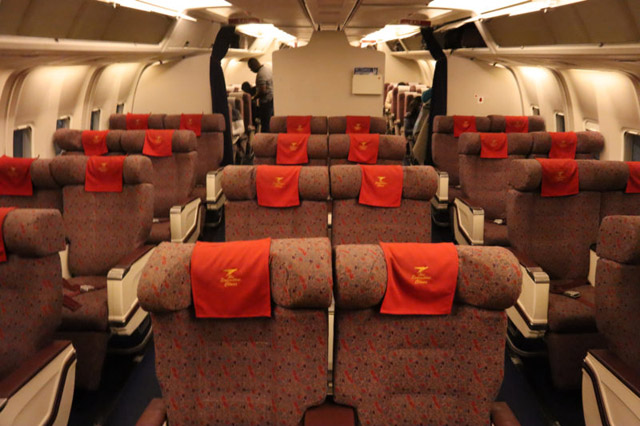
Air Zimbabwe Boeing 767-200 first class cabin.
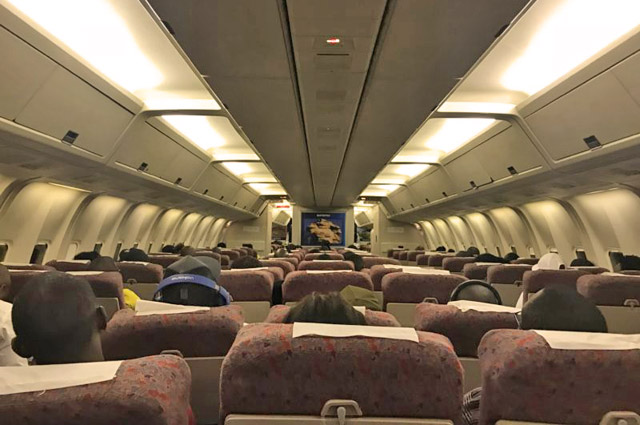
Air Zimbabwe Boeing 767-200 economy class cabin.
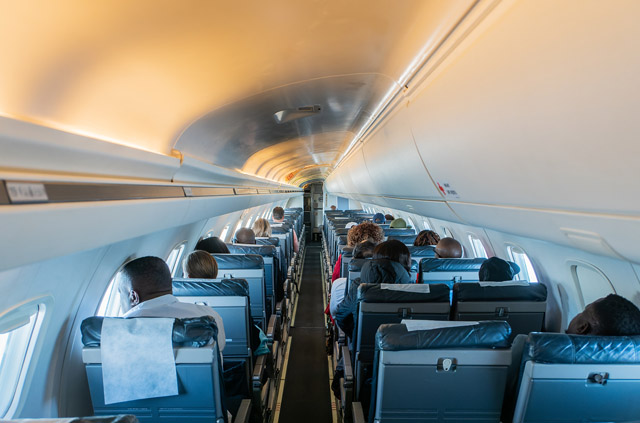
Air Zimbabwe ERJ-145 All class cabin.
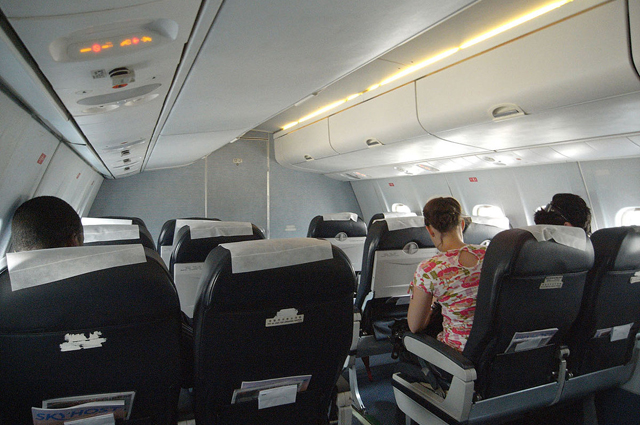
Air Zimbabwe MA60 All class cabin.
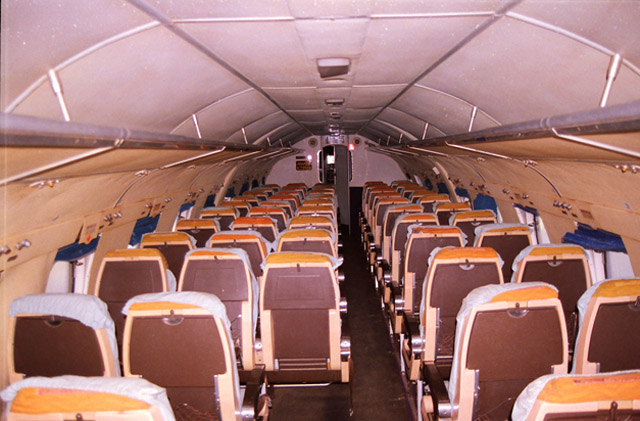
Air Zimbabwe Viscount All class cabin.
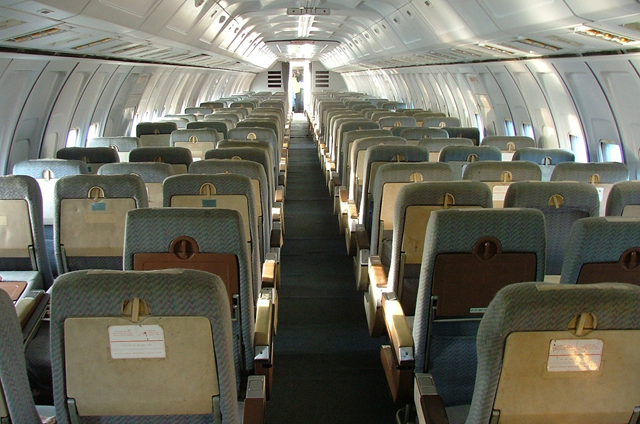
Air Zimbabwe Boeing 707 economy class cabin.
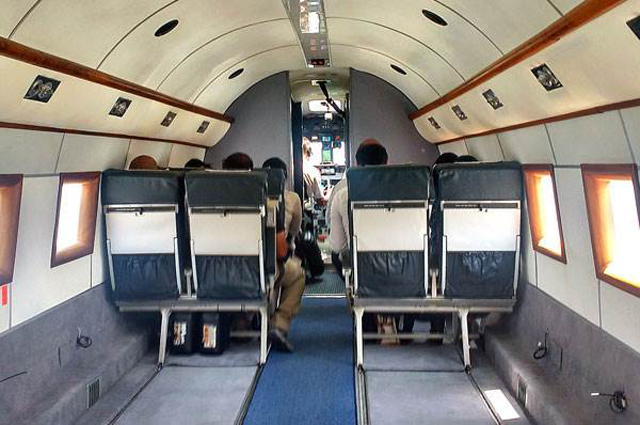
Air Rhodesia DC-3 mixed cargo and passenger class
Grounded Aircrafts
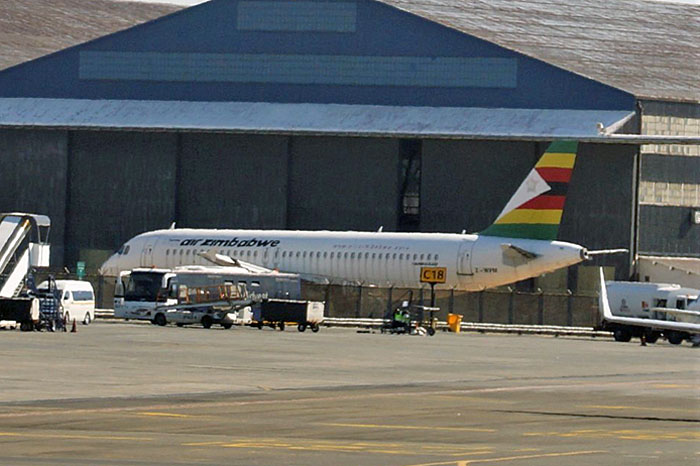
The Airbus A320 Z-WPM in a deplorable condition after the perils are parked because the ownership
conditions are not resolved.
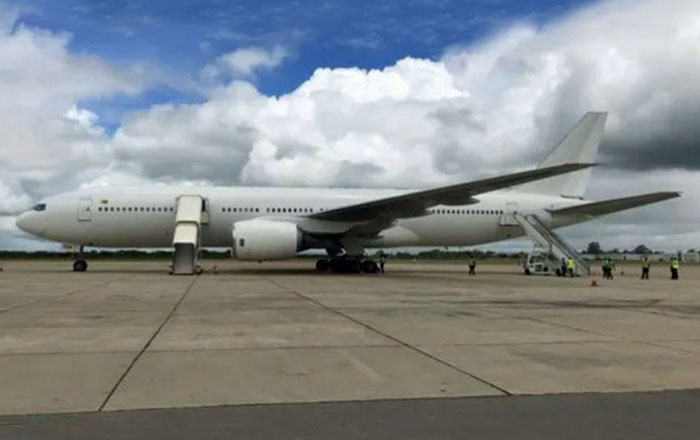
This is the most tragic aircraft deal like Air Zimbabwe to purchase two old Boeing 777-200 without know-
ledge to operate them. They are now for sale to save the poor economic situation within the airline. So fare, no interest from any buyers.
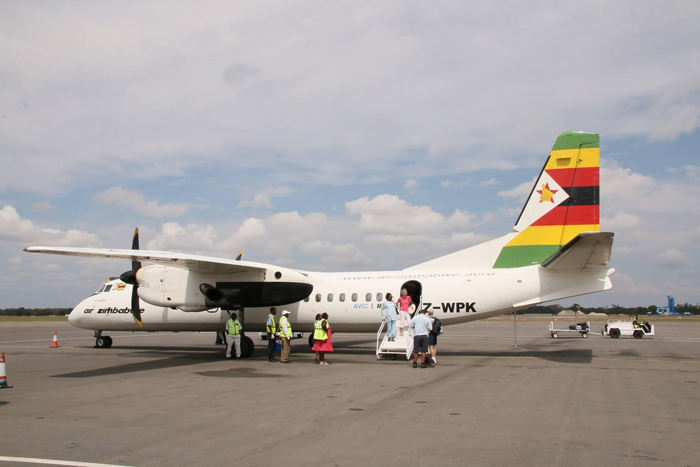
Air Zimbabwe Xian MA 60 Z-WPK msn 2016. Status unknown.
Is there any chance for Air Zimbabwe to solve the owner-problem of the Airbus A320-214 Z-WPM and the three MA-60 aircraft that are stranded behind the airport hangar in Harare regarding owner-problem and with lack of funds to make them serviceable again.
1967
History
Air Zimbabwe
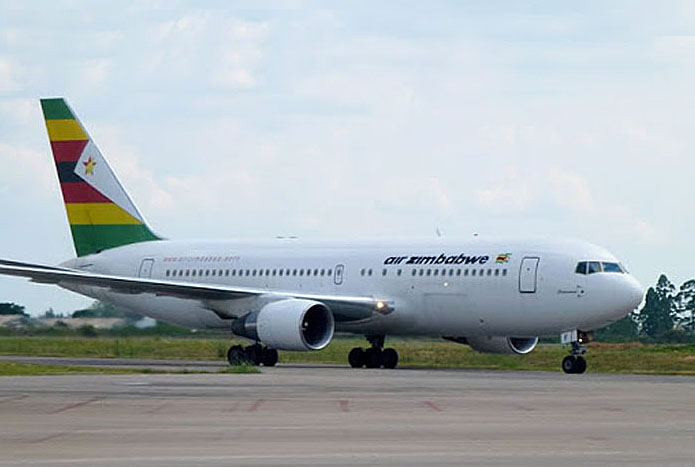
Air Zimbabwe
formally came into being on 1 September 1967, when the Government of Rhodesia created Air Rhodesia Corporation
to succeed Air Rhodesia, a wholly owned subsidiary of Central African Airways Corporation (CAAC) that had
existed since 1951 as a domestic airline within Rhodesia.

Douglas C47 Dakota VP-YKA at Harare (Salisbury) Int airport 1959
Photo: Brian Robbins
1953
Central African Airways (CAA) 1953-1964
Central African Airways (CAA) was a supranational airline corporation serving as flag carrierfor Southern Rhodesia, Northern Rhodesia and Nyasaland (respectively the present day countries of Zimbabwe, Zambia and Malawi), which were organised as the Federation of Rhodesia and Nyasaland, also known as the Central African Federation, from 1953 to 1963. Based in Salisbury, it offered an extensive network of domestic passenger and cargo flights, as well as international services to major cities in Southern and Central Africa, and a route to London. In 1960, CAA owned 15 aircraft and had 1,155 employees.
1964
Air Rhodesia 1964

Boeing 707-025 VP-YNL at Harare (Salisbury) Int. airport 1977
Photo: Wikimedia
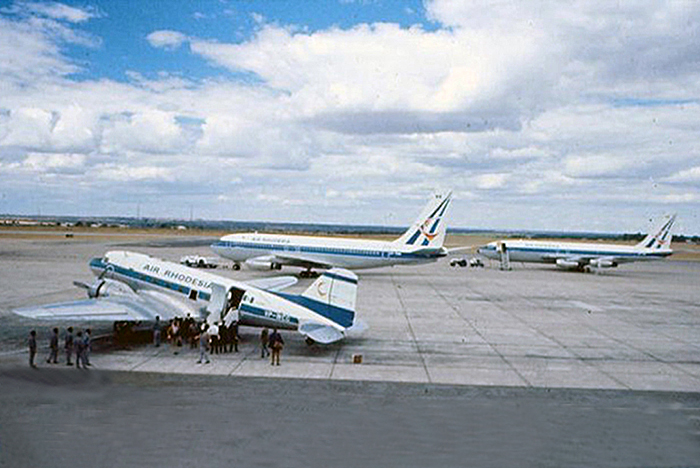
Air Rhodesia fleet at the Salisbury Int. airport 1975
Photo: Robin DW Norton
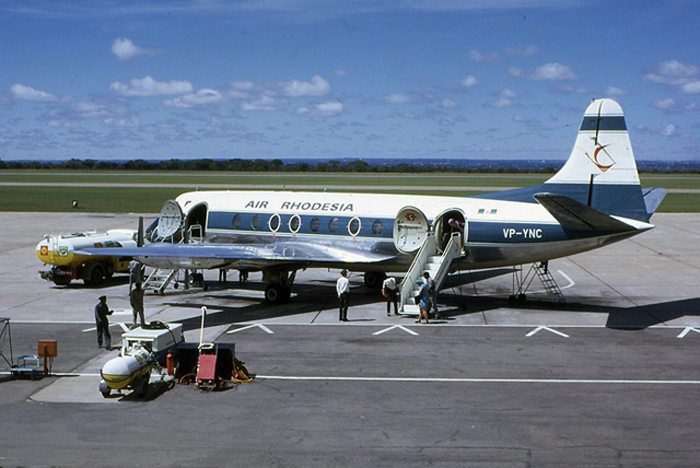
Vickers Viscount 748 VP-YNC at Bulawayo airport, Rhodesia early 1970s.
Photo: John Wheatley
Air Rhodesia was the national airline of Rhodesia. Its head office was located on the property of Salisbury Airport Rhodesia.
The airline was formed as a subsidiary of Central African Airways (CAA) in June 1964, but became an independent corporation on 1 September 1967. It flew internal routes to Buffalo Range, Bulawayo, Fort Victoria, Kariba, and Victoria Falls. During the 1970s, it operated international flights to Johannesburg and Durban in South Africa; Beira, Vilanculos and Lourenço Marques in Mozambique; and Blantyre in Malawi.
Air Rhodesia's mainstay aircraft were Douglas DC-3, Dakotas, Vickers Viscount 700D turboprops and Boeing 720 jetliners, which were successfully purchased in April 1973 despite sanctions against the Rhodesian government. After the country was renamed, the airline became known as Air Zimbabwe Rhodesia in 1979, before reforming as Air Zimbabwe in 1980.
1979
Air Zimbabwe Rhodesia 1979 - 1980
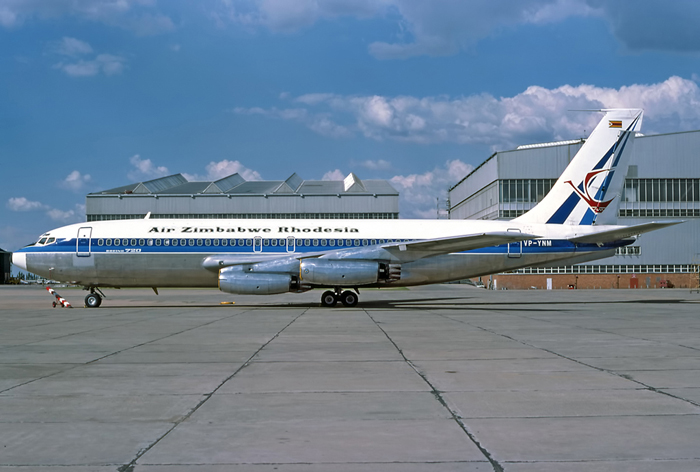
Air Zimbabwe Rhodesia Boeing 720-025 VP-YMN at Salisbury/Harare Int Airport 1973
"Air Zimbabwe Rhodesia" became the short-lived in 1978. Air Zimbabwe Rhodesia ordered construction of a large new hangar in 1979. Thoughts imediately turned to reopening routes to destinations long closed to the airline as a result of sanctions.
1980
Air Zimbabwe 1980 -
Air Zimbabwe was formed in April 1980 when the Republic of Zimbabwe was formed. Thoughts imediately turned to reopening routes to destinations long closed to the airline as a result of sanctions.
In the beginning, Air Zimbabwe operated Air Rhodesias/AirZimbabwe Rhodesia older fleet which was then grounded when the new carrier upgraded the fleet with new modern aircraft.
Services connecting Harare with South Africa (Durban and Johannesburg) had been operated before the country gained its independence. Scheduled services began on 2 April 1980 to London Gatwick with on the inheritated Boeing 720-025.
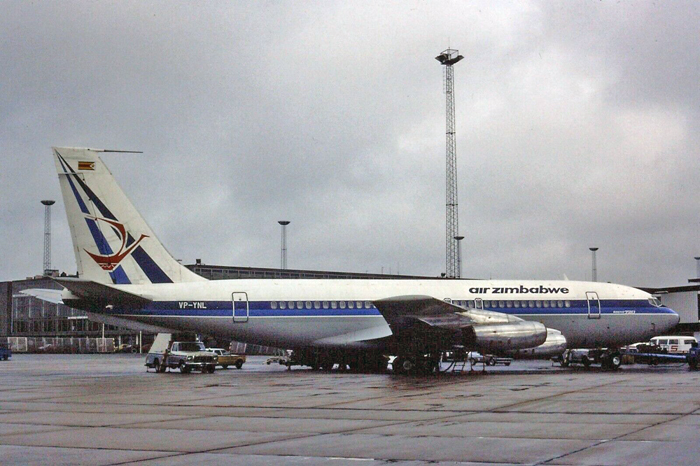 Boeing 720 VP-YNL at London/Gatwick Int airport. 1973
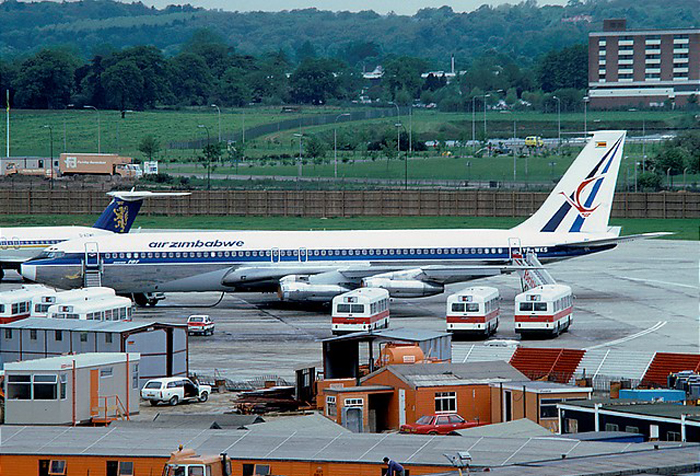 Boeing 707-330B Z-WKS at London Heathrow Int airport 1982. UK
The company leased a Boeing 707-330 from South African Airways until May 1981, when three Boeing 707 were bought from Lufthansa. That year, flights to Frankfurt were inaugurated. The airline recorded a ZWL 330,000 (£220,000) profit for the fiscal year that ended on 30 June 1980. The two (2) last Vickers Viscount 810-serie were purchased by DAN-Air, UK.
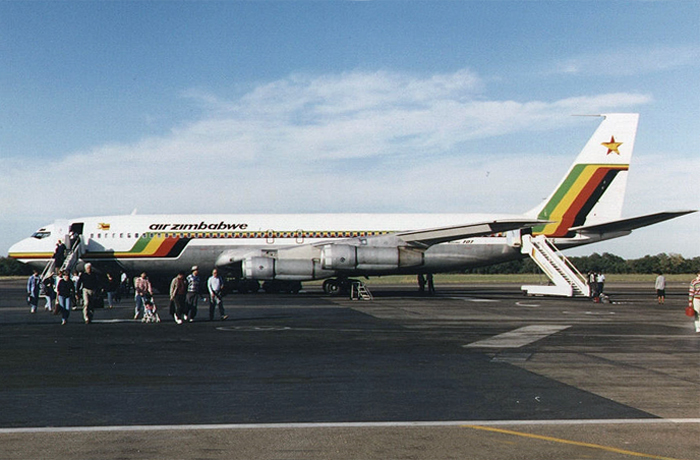 Boeing 707-330B Z-WKS Harare Int airport, Zimbabwe 1981.
Photo: Edward Wasbuton
1982
During 1982, a service to Perth and Sydney commenced; it was run in cooperation with Qantas and flown with Qantas Boeing 747SP aircraft. In May that year, the Government directed Air Zimbabwe and the national freighter airline Affretair to merge their operations. The freighter company was eventually taken over by Air Zimbabwe in July 1983. The cargo carrier continued its operations under the Affretair brand. During 1983, Air Zimbabwe became a member of the International Air Transport Association (IATA) It also extended its regional routes to Gaborone, Lilongwe, Lusaka and Nairobi.
1985
By March 1985, Air Zimbabwe had 1,443 employees and the fleet comprised five Boeing 707-320Bs and seven Viscount 700s. At this time, the airline flew domestic services linking Harare with Buffalo Range, Bulawayo, Gweru, Hwange National Park, Kariba, Masvingo and Victoria Falls, regional services to Blantyre, Durban,Gaborone, Johannesburg,Lusaka and Nairobi, and intercontinental flights to Athens, Frankfurt and London. The Harare–Perth–Sydney route offered using Qantas Boeing 747SP aircraft was flown in association with Air Zimbabwe.
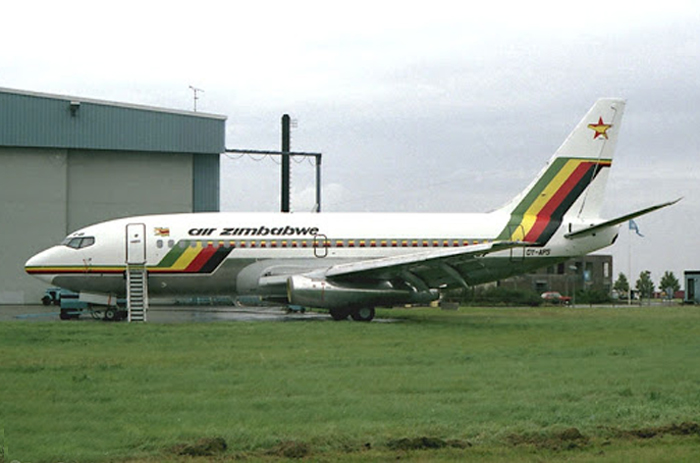
Boeing 737-200 OY-APC prior delivery at Copenhagen Int airport, Denmark 1995
Photo: Peter Schmidt
The airline decided in 1985 to renew the fleet and replace the ageing Boeing 720 aircraft by ordering three factory-new Boeing 737-200 and meanwhile waiting for the new aircraft to arrive, Air Zimbabwe leased a Boeing 737-200 Z-NIL (OY-APS) on a short-term contract from Maersk Air, Denmark
1986
In 1986 and the first of three owned Boeing 737-200s Z-WKA was phased in and put into service in December that year. The leased Boeing 737-200 was returned to the lessor when the contract expired. The second Z-WKB and third aircraft Z-WKS of the type were delivered in June and July 1987. The additional capacity permitted route extensions to Dar es Salaam, Manzini, Maputo and Mauritius.

Here comes Air Zimbabwe´s first Boeing 737-200/ADV, Z-WPA, c/n 23677.
Photo: Hannes Meyer
1987
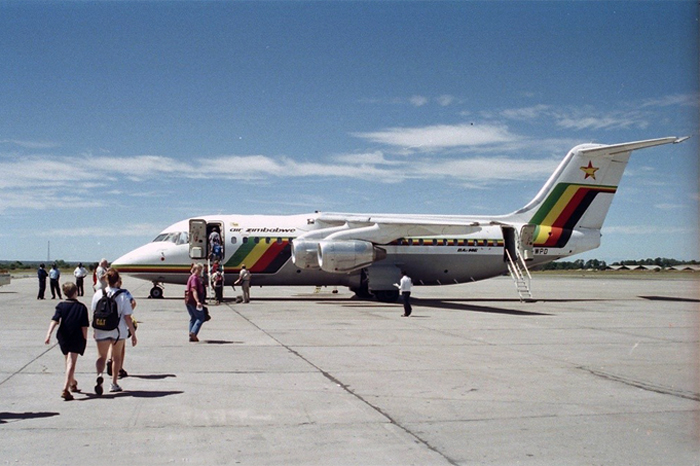
British Aerospace BAE-146 Z-WPD at Harare Int airport 1988, Zimbabwe
Photo:
A BAe 146-200 was bought in 1987 for domestic routes. Also in 1987, the airline announced its intentions to acquire Ilyushin Il-62s and -86s and Yakovlev Yak-42s instead of Western-built aircraft. These plans never materialized and Air Zimbabwe placed an order for two Boeing 767-200s. With registration Z-WPE and named "Victoria Falls", the first Boeing 767-200ER entered the fleet in November 1989.
1989
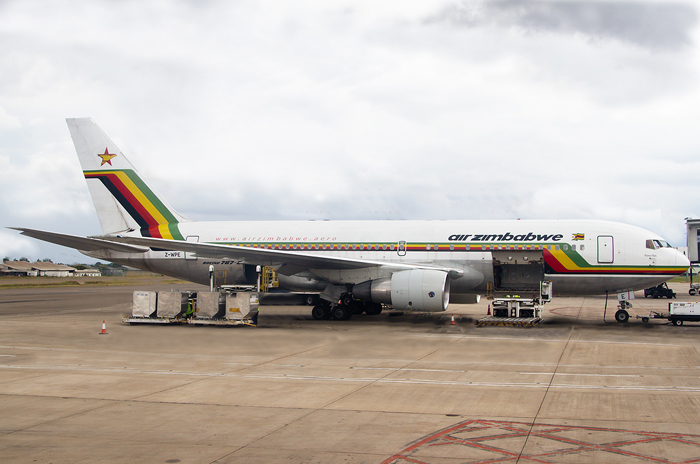
Boeing 767-20N/ER, Z-WPE msn 24713
Photo:
The Boeing 707 was retired from serving long-haul routes shortly afterwards These aircraft were still used to cover regional routes. The Viscount was definitely withdrawn from service in November 1989.
1990
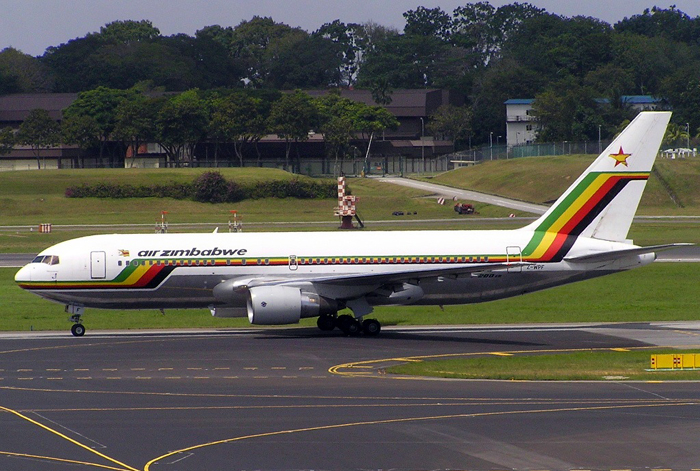
Boeing 767-20N/ER, Z-WPF msn 24867
Photo: HS-TCJ
The airline phased in the second 767-200ER (Z-WPF, named "Chimanimani") in late 1990. Two Fokker 50s were ordered in April 1995; they were delivered a month later.
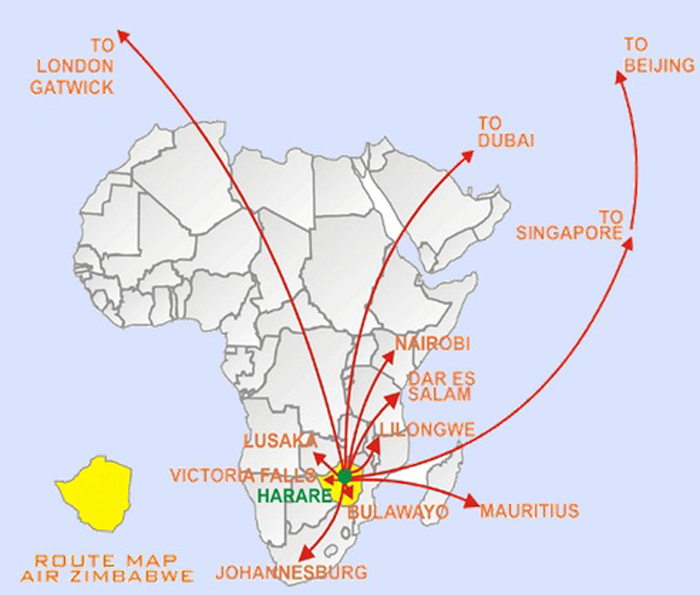
Destination map from when the clouds of unrest were far away
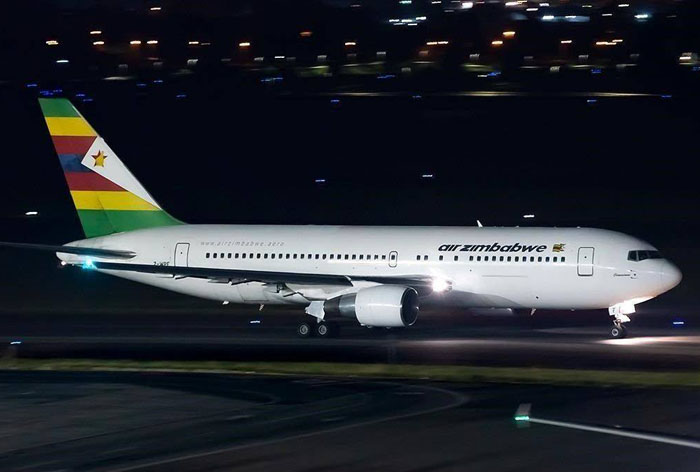
The first Boeing 767_300 Z-WPF in the new livery 1990.
Photo: Björn Düwel
1995
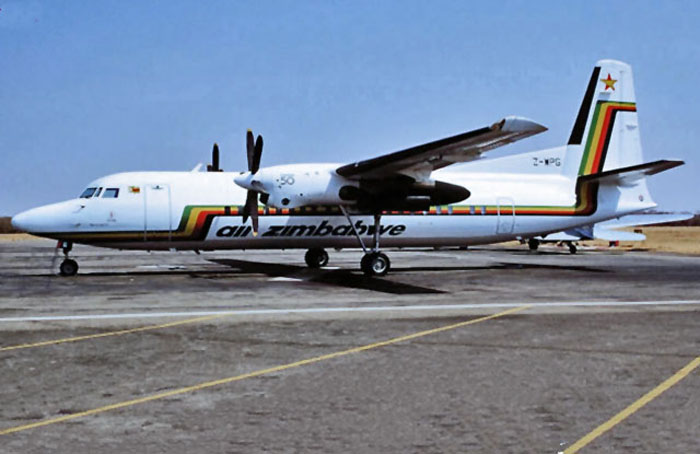
Fokker 50, Z-WPG, c/n 20104
Two Fokker 50s, Z-WPG and Z-WPH were delivered in early 1995 on a 10-years intended lease, but unfortunately these aircraft were incapable of serving the "hot and high-destinations" with adequate payloads and were returned to the lessor.
1999
 Boeing 737-200 Z-WPA returning from Uganda Airlines 1999 after it had been leased for five years.
Photo:Thomas Ingendom
2001
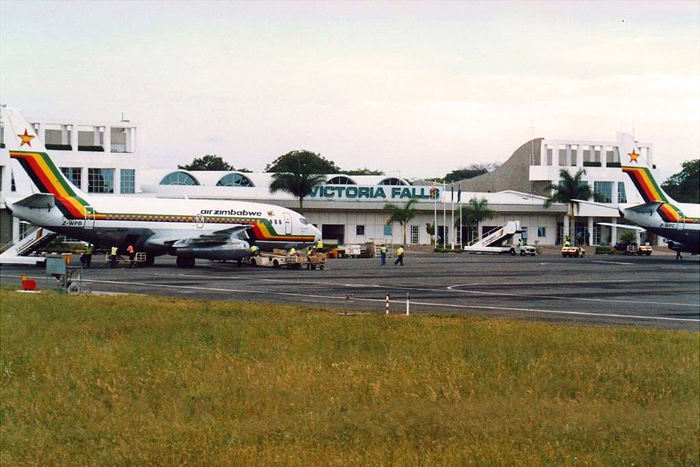
Air Zimbabwe Boeing 737-200, Z-WPB and Z-WPC at Vic Falls Int. airport Zimbabwe 2001
Photo: Eduardo Paz
2004
Financial turmoil and service disruption 2004
In February 2004, it was revealed that the company had been temporarily suspended by the IATA over unpaid debts.
Transportation China has been involved in all aspects of public transportation in Zimbabwe: road, rail and air. In 2004, Air Zimbabwe reached an agreement with the Chinese National Aero-Technology Import and Export Corporation for the acquisition of a long-haul plane (replacing one of their B767?).
At the same time Air Zimbabwe signed an agreement to buy two Xian MA-60 Air Zimbabwe has also benefitted from Chinese generosity through the gift of an MA60 aircraft that the airline has been using on local and regional routes. Apparently China made a ”buy two get one free deal
It was noted at the time that this was aimed at assisting tourism in Zimbabwe. Although there were initial reports of technical difficulties, these were largely unfounded.
2005
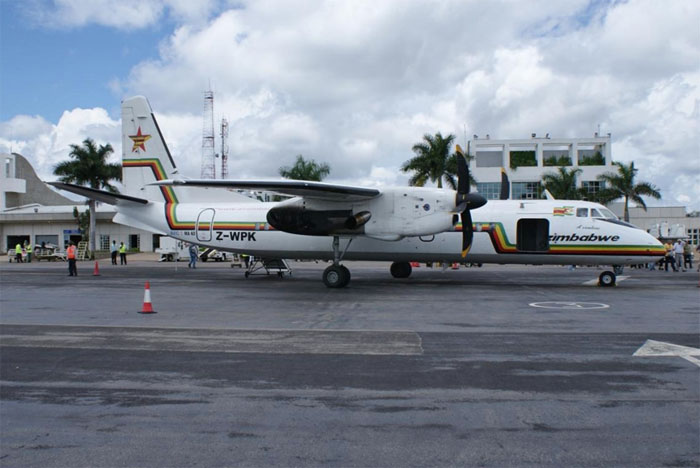
Xian MA60 Z-WPK at Vic Falls Int. airport Zimbabwe
Photo:
Air Zimbabwe, took delivery of two Chinese aircraft, Z-WPJ in August Z-WPK on 27th May, Z-WPJ on 24th August and Z-WPL on 23rd December.
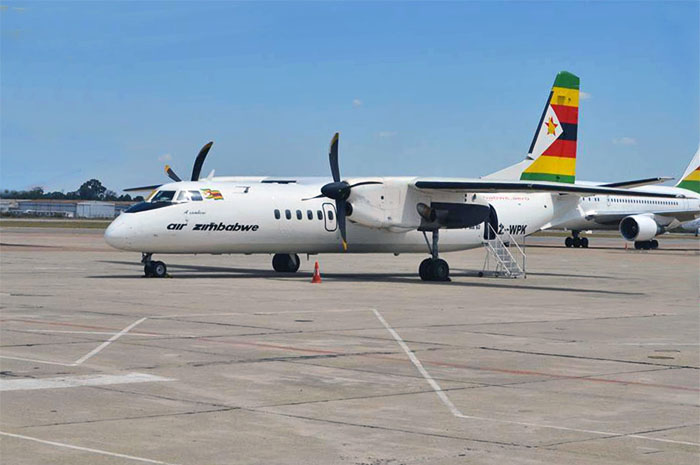
Xian MA60 Z-WPK msn 0303 at Harare Int. airport Zimbabwe 2015.
Photo:African Airliners archive
2006
In October 2006, the prices of Air Zimbabwe tickets increased up to 500%, partly due
to the inflation in the country rising to over 1,000% at that time the Zimbabwean Central Bank stated that it could not continue supporting Air Zimbabwe and other money-losing state companies and partly because the airline was in need of foreign currency to pay for fuel, spare parts, and catering. A foreign exchange crisis in the country led to the cancellation of the carrier's operations in late 2005, following the lack of hard currency to pay for the fuel. In 2006, it was disclosed that passenger numbers had fallen from 1 million in 1999 to 23,000 in 2005.
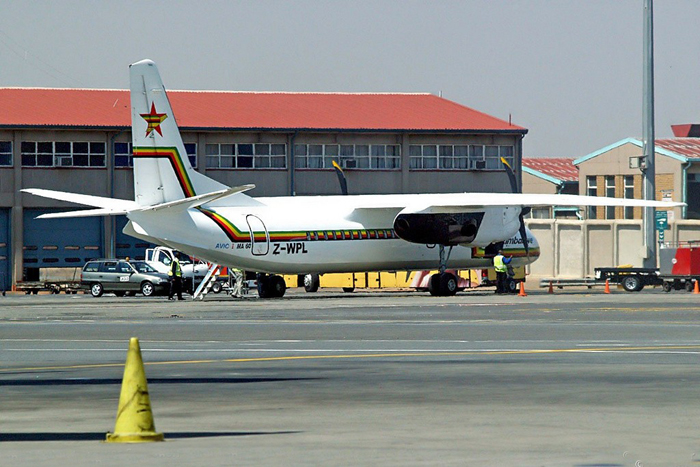
Xian MA60 Z-WPL parked for service at Johannesburg Int.airport, SA 2006.
Photo: Ray Barber
Due to lack of spareparts at the homebase, the Xian MA-60 Z-WPL was flewn to Johannesburg for service in September and returned for operations a month later.
2009
Troubled Zimbabwe’s sole airline, Air Zimbabwe, is completely broke and is being sued by its workers while facing a US$30 million debt.The airline has already cancelled scheduled regional and international flights due to shortage of funds to buy fuel and to pay more than a thousand of its workers.
Air Zimbabwe has long exhausted the good credit rating it inherited from Air Rhodesia in 1980 after the country’s independence. It has, in the past decade, relied on government handouts, mostly from the controversial Reserve Bank of Zimbabwe governor Gideon Gono, to run its ageing fleet after the hostile macro-economic conditions hit hard on its coffers.
In a bid to cut costs the airline has indicated plans to lay off over 700 of its workers, with whom it currently is locked in a bitter labour dispute. The workers are fiercely resisting involuntary leave ranging between three to 12 months.The acrimonious dispute has spilled into the labour court, with court documents revealing the dire state of the airline.
Air Zimbabwes shareholder (government) is out of funds to finance its operations and capitalization. It is on the verge of collapse. Ordering the restoration of the status quo (working without involuntary leave) would send the respondent (AirZim) almost immediately straight into real liquidation and the forced retrenchment of all employees on paltry packages, which may not exceed their present monthly incomes.
The documents show that Air Zimbabwe has a weak balance sheet with creditors in excess of US$28 million. The airline at the moment had been draining US$3 million per week from the fiscus.
The government parastatal has resorted to borrowing to procure fuel and pay allowances.
The company is actually insolvent, an internal document presented by Air Zimbabwe’s chief economist and treasurer on April 22 2009 reads in part.
Cost-cutting measures, which started in January, are projected to save up to US$1 million per month, or US$12 million per year. The measures have saved US$500 000 per month.
This is still inadequate to meet the airline’s operating costs. Cashflow deficits have remained at unsustainably high levels of US$4, 5 million, US$2, 2 million, and US$3, 5 million in January, February and March 2009 respectively. Air Zimbabwe group chief executive Peter Chikumba is pursuing a four-pillar strategy to get the airline off the critical list. In the words of Peter Chikumba, Air Zimbabwe chief executive, the national airline was on life support in the Intensive Care Unit. Although the wholly government-owned flagship air-carrier of Zimbabwe has laid-off 30 percent of its workforce since February 2009 and had significantly reduced service, the airline still operated on a US$1.4 million monthly deficit.
In order to survive, chief executive Peter Chikumba insisted that the airline must further reduce costs and obtain government relief from its US$40 million debt, while the country must ratify a new constitution that provided guarantees to foreign investors. Air Zimbabwe has slashed its Boeing 737-200 operations by 60%, owing to high maintenance costs and fuel consumption. Can or will Air Zimbabwe survive.
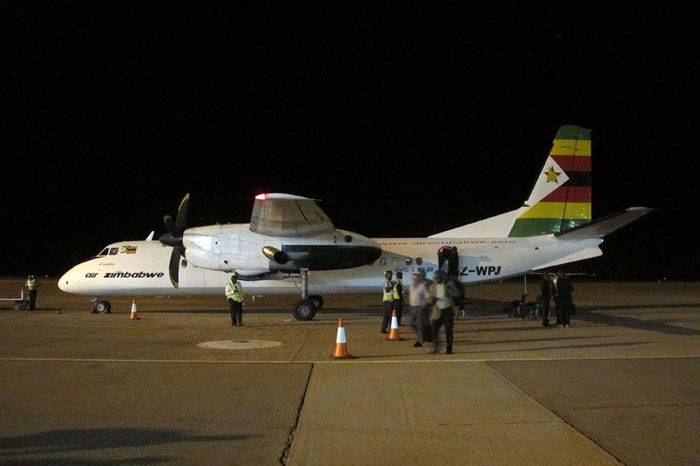 Xian MA60 2009
Photo: African Airliners archive
On 11th March 2009, Harare Int. airport. During the takeoff in night-conditions the Xian MA60 Z-WPJ hit warthogs the on runway and the left main gear collapsed. The plane skidded on runway and veered off. All passengers ceased but the aircraft got extensiv body-damage. The aircraft was extensiv damage to the aircraft. The plane was withdrawn from use (WFU)at Harare Int airport.
2010
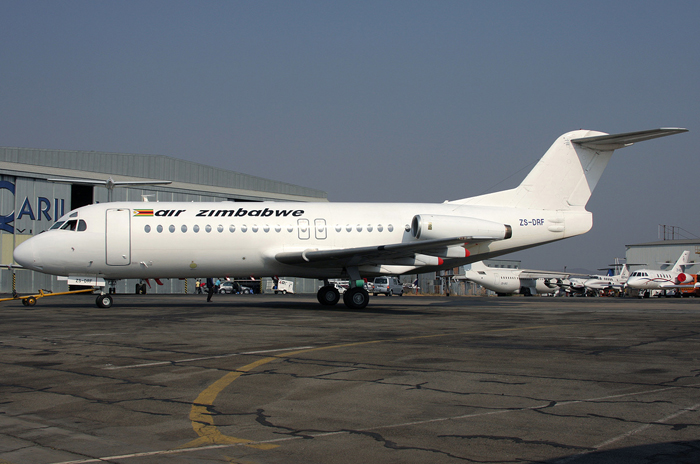
Air Quarius or Foster Aero Int Fokker F28 ZS-DRF msn 11239 at Lanseria 2010, SA
Photo: A J Best
This is interesting a Fokker F28-4000 ZS-DRF in Air Zimbabwe titles that has been seen for some weeks in September 2010 at Lanseria (homebase) and at Jo-burg. It must have been a kind of atempt - a proposal, leased it to AirZim 2010 for awhile or what?
2011
In February 2011, the airline had to cancel all flights to Johannesburg due to unpaid debts to creditors at the airport. Regional and domestic services were suspended for a short period in May, following both the grounding of its Boeing 737-200 fleet by the Civil Aviation Authority of Zimbabwe (CAAZ) over maintenance concerns.
 Boeing 767-200 Z-WKF was the only of the two B767s in this nice livery.
Photo:African Airliners archive
Boeing 767-200 Z-WKF was the only of the two B767s in this nice livery.
Photo:African Airliners archive
Operations resumed in late May 2011 but in late June 2011, Air Zimbabwe was forced to return the leased Boeing 737-500 from Zambezi Airlines as it was unable to afford the leasing costs. The plane was leased to compensate the lack of equipment following the grounding of its Boeing 737-200 fleet. The aircraft was mainly used to operate the Harare–Johannesburg route. It was disclosed the company had to fly the route using one of their Boeing 767s.
 Z-WPA is still flying!
Photo: Sam Chui
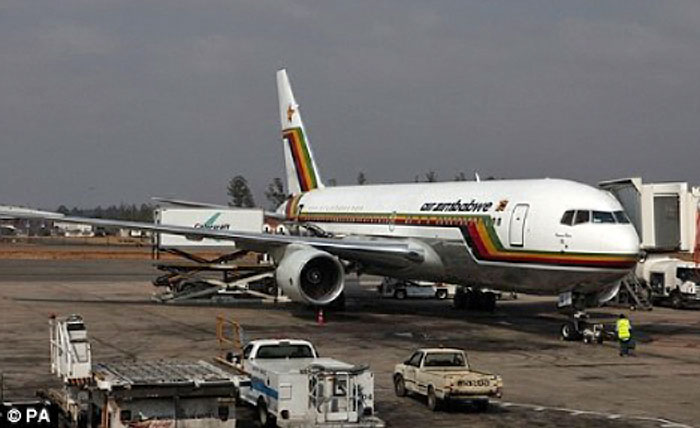
Informed sources told reporters that Air Zimbabwe’s long haul aircraft, a Boeing 767-200 known as Victoria Falls, was seized by American General Supplies upon landing at London’s Gatwick International Airport on Monday morning from Harare International Airport.
American General Suppliers secured a court injunction in the US that gave them the power to impound the aircraft over US$ 1, 2 million debts.
Photo:African Airliners Archive
In mid-June 2011, flights to London and South Africa were temporarily suspended because of a due debt with fuel suppliers. Owing both to the grounding of the 737-200 fleet and to fuel shortages in the country, domestic services were suspended and regional flights were operated on an irregular basis. The airline started regularizing medium- and short-haul operations in July, as it got clearance from the CAAZ to op-
erate one of its three grounded 737-200, the Z-WPA.
Operations were discontinued again in late July 2011, this time due to a pilots' strike, resuming in mid-September after a 50-day-long strike. Once again, overseas and domestic flights were temporarily stopped in early November 2011, this time owing to an unpaid debt with fuel providers Overseas routes resumed on 11 November. However, flights to the United Kingdom and South Africa were suspended in January 2012 over likely impoundments of the airline's aircraft for outstanding debts.
IATA
In May 2011, the airline was suspended from IATA's international financial and booking system over unpaid booking fees. It was announced in early November 2011 that the government would absorb a US$140 million debt in order to make the company more attractive to foreign investors. Already in December 2011, the carrier struggled to provide its regional and overseas services amid aircraft impoundments over unpaid debts.
Despite versions for the acquisition of new aircraft were officially declined in July 2011 owing to a precarious cash position. It was disclosed that the airline bought an Airbus A340-500 and an Airbus A320, both new, in August 2011. As of January 2012, there had been discrepant versions over the acquisition of the new Airbus aircraft, since the secretary of the Zimbabwean Ministry of Transport has denied the transaction.
2012
In January 2012, the airline came under judicial management. Following a failed revival attempt, in which the pilots refused to resume domestic services over US$35 million in unpaid salaries and allowances, it was announced on 24 February 2012 that Air Zimbabwe would be grounded indefinitely. The Xian MA60 Z-WPL aircraft that had been flewn to Johannesburg in July 2006 has returned to Harare for storage and is presumed for sale
Air Zimbabwe Private LTD
In March of the same year, the government of Zimbabwe established Air Zimbabwe Private Limited as the new owner of the carrier after disbanding the airline's former parastatal owner Air Zimbabwe Holdings and absorbing a US$150 million debt. The airline resumed flying on a continuous basis in early May 2012, yet using a singel Boeing 737-200 aircraft and serving only three domestic destinations: Bulawayo, Harare and Victoria Falls and only for a short period of time until the grounding of the aircraft on 2 July 2012.
The airline was reactivated in late November 2012, with a reduced flight scheme serving the Harare–Johannesburg route. Reports indicated the carrier resumed domestic operations connecting Bulawayo, Harare and Victoria Falls, as well as the regional route to Johannesburg, on a daily basis service with the aged Boeing 737-200.
Air Zimbabwe was under pressure to renew and expand its fleet in the face of growing competition. The airline had to lease aircraft on short term grounds to service some of its routes from time to time. To boost the airline´s only Boeing 737-200 that had resumed operation last July 2012, the government was forced to find a lessor which had an aircraft suitable for Air Zimbabwe.
Air Zimbabwe was at this time offered to dry lease two Airbuses A320-214 to a cost of US$ 200.000 each from the aviation broker China Sonangol International (the same company that had caused problem for AirTanzania) with disputed leasing contract of an Airbus A320) through Isle of Man brokers SouthJet. This contract was probably not sanctioned by government, but only signed by the airline's representatives.
Airbus A320-214 Z-WPN msn 630 at Harare Int airport January 2013, Zimbabwe.
Photo: HarareAirportBlogger
The Airbus A320 Z-WPM ( msn 630) (the former Air Tanzania 5H-MWH) and the second Airbus A320 Z-WPN (msn 1973) were part of a 2012 deal between China Sonangol International (Hong Kong Int'l) and the then Mugabe regime to help revive the debt-ridden state-owned airline. The deal was structured via a pair of IOM-based SPVs, SouthJet. The first dry leased Airbus A320-214 Z-WPM entered immediately the important service to Johannesburg, Bulawayo and Victoria Falls routes.
2013

Airbus A320-214 Z-WPN msn 630 at Harare Int airport July2013,Zimbabwe.
Photo:
The second Airbus A320-214 Z-WPN was operating only a short time for Air Zimbabwe but due to a heavy landing at O.R Tambo International Johannesburg the landing gear was damaged. After a thorough investigation, it was found that the aircraft had several serious technical defects in the aircraft frame in addition to the damaged landing gear but sources in the aviation industry said that Air Zimbabwe took the plane to SAA because it did not have technicians trained to service the Airbus.
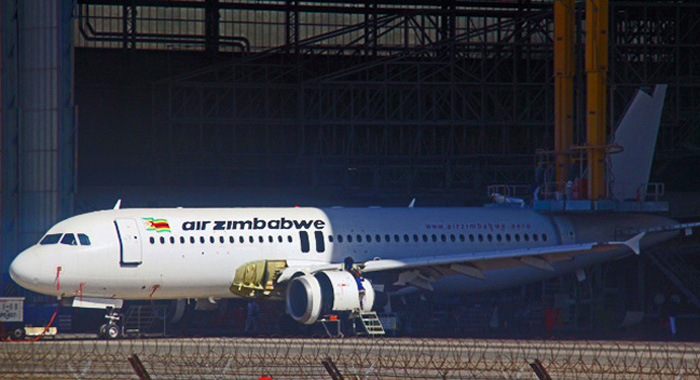 The Airbus A320-214 Z-WPN at the workshop for undergoing investigation of the landing-gear.
The aircraft was towed to a parking place and it never came in service due to lack of funds to repair it. The aircraft was then stored stored at Johannesburg Int airport, South Africa and was written off in January 2018.
Approximately 600 employees out of more than 1,000 had been laid off by late May 2013 as part of cost-cutting measures aimed at recapitalising the airline.The Zimbabwe Tourism Authority revealed in June 2013 that the airline's market share suffered a steep decrease in the year ending 31 December 2012, with a 0.8% participation in this period down from 27% in the same period of 2009.
2014
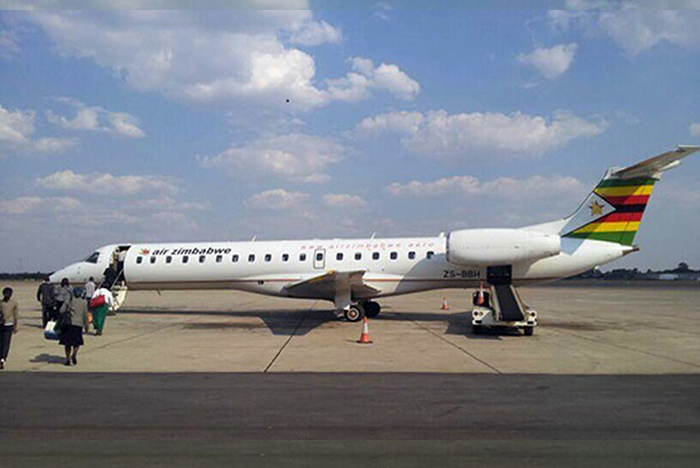
Embraer ERJ145 ZS-BBH at Harare Int airport, 2014, Zimbabwe
In 28 March 2014, Air Zimbabwe decided to wet-lease a fifty seater Embraer E145 jet for an initial period of six month to cover up their aged Boeing 737-200 which was undergoing heavy maintenance. The Embraer 145 was leased from Solenta SA in South Africa to operate the important Harare Bulawayo-Vic Fall-Harare route.
Soon a new scandal hit the Zimbabwean national, when it occurred that the wet-leased ERJ-145 from Solenta, SA was leased for an initial period of six months but had now expired, but Air Zimbabwe continued to operate the aircraft until June 2014. According to carrier, the decision to enter into an agreement with Solenta was made on the basis that it was more economical to operate an ERJ-145 jet on domestic flights primarily instead to operate their much bigger Boeing 767-200 which was costly to run service with a low cabin factor.
The government was probing Air Zimbabwe's leasing deal of a the Embraer 50-seat plane, amid fears the embattled airline has lost millions of dollars through a huge fixed monthly rental of $204 000 for the jet. Sources said that the airline tried in vain to lease directly the planes from their manufacturers because of sanctions against the country. Other sources said the similar jet could be hired for between US$80 000 and $120 000 monthly.
For this tender deal Air Zimbabwe had to paid over $3 million and is still now owing about US $ 800 000, which adds up to about US $4 million. That is enough to cover a quarter of the price of a "new Embraer". The cancellation of the lease with Solenta whose managing director is from Zimbabwe - hit Air Zimbabwe hard and forced the struggling airline to dramatically increase its fares because of using their bigger aircraft, the Boeing 767 and 737, which was more expensive to run and maintain. They also guzzled fuel.

Air Zimbabwe has decided to reactivate on of the two Boeing 737-200 which has been stored into a moth bag for a long time and plans also to put in one of its MA60 turboprop aircraft with service in the short term
In an interview with Routes Online, Air Zimbabwe's General Manager - Passengers & Cargo, Peter Mukarkate, said the struggling carrier had also completed a market and capacity analysis which revealed that Air Zimbabwe requires 70-seater aircraft to cover its domestic routes: Harare International, Victoria Falls, and Bulawayo - and a 90- to 100-seater for regional operations to Johannesburg O.R. Tambo.
“The problem we have is the 737-200 offers too much capacity in our domestic market linking Bulawayo and Victoria Falls with Harare. It is the same story with our daily international flight from Harare to Johannesburg with the B767-200ER too large for this route,” he said.
Among the manufacturers the Zimbabweans have considered are Bombardier Aerospace (BBA, Montréal Trudeau) and Embraer (EMB, São José dos Campos U.E. Stumpf International) with the Brazilians said to be front-runners. Air Zimbabwe had leased two E145s from South African ACMI firm, Solenta Aviation (SET, Johannesburg O.R. Tambo), until the contract's conclusion in March this year. The airline subsequently issued its own RFP (Request For Proposals) for aircraft of the same type in April.
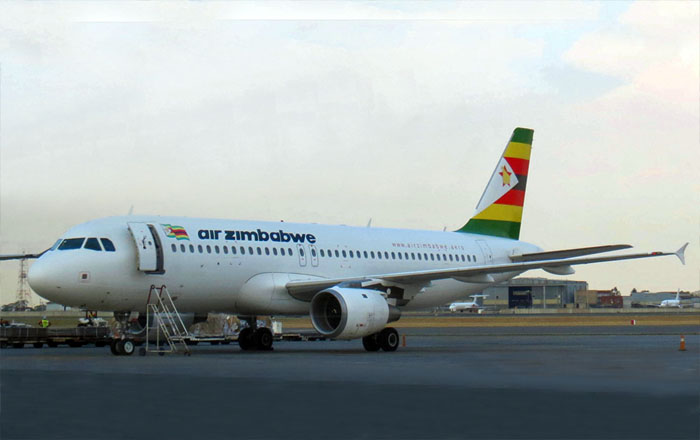
Air Zimbabwe's two A320-200s, whose lease agreements have been a source of much speculation in the Zimbabwean press given their unclear ownership, are still grounded in Johannesburg O.R. Tambo awaiting critical maintenance and repair. The two Airbus (AIB, Toulouse Blagnac) machines were touted as replacements for the airline's fleet of B737s.
While the carrier has stated its first international longhaul destination would be London Gatwick, it is understood various outstanding debts - owed to, among others, ground-handling companies and air traffic control entities - would first have to be settled before flights there can resume.
Air Zimbabwe's two A320-200s, whose lease agreements have been a source of much speculation in the Zimbabwean press given their unclear ownership, are still grounded in Johannesburg O.R. Tambo awaiting critical maintenance and repair. The two Airbus (AIB, Toulouse Blagnac) machines were touted as replacements for the airline's fleet of B737s.
On the international front, Air Zimbabwe has yet to set an exact date as to when it will resume longhaul operations.
While the carrier has stated its first international longhaul destination would be London Gatwick, it is understood various outstanding debts - owed to, among others, ground-handling companies and air traffic control entities - would first have to be settled before flights there can resume.
Big African AirShow held in Harare at Charles Prince Airport
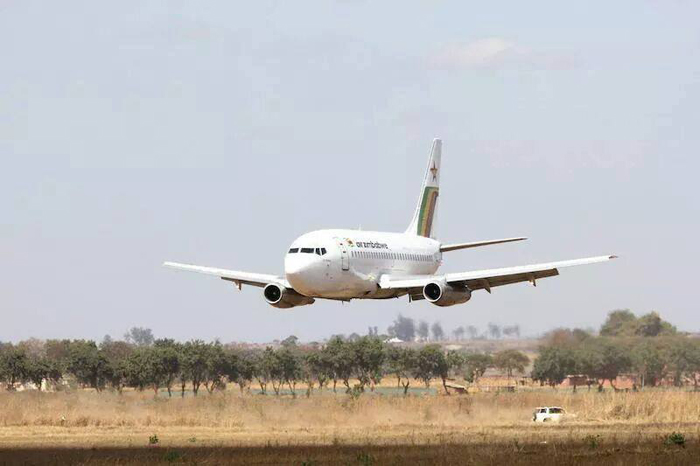 Stunning -Captain Joe Mpauri flys Air Zimbabwe B737-200 Z-WKB "Great Zimbabwe" just 10 feet over the ground,
2016
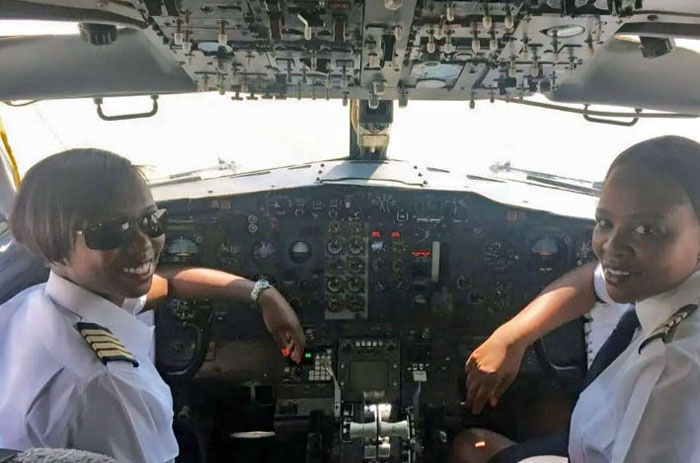
Air Zimbabwe made aviation history with its first all-women flight crew on Saturday. Captain Chipo M. Matimba and Captain Elizabeth Simbi Petros safely flew Flight 737 from Harare To Victoria Falls.
In 2016, ministers secretly created a debt-free new national airline – Zimbabwe Airways – in the hope that it would be capacitated with airplanes and eventually rise from Air Zimbabwe’s ashes.
At that time Air Malaysia had decided to withdraw all their Boeing 777-200 after the losses of two their Boeing 777-200. The first flight M370 after departing from Kuala Lumpur for Beijing and the second B777-200 MH17 crashed and burned in Ukraine after being stuck by a missile three month later on July 17, leading to the airline retiring its entire Boeing 777fleet.
Zimbabwe, seeking to build a debt-free airline under the pretence that it was privately-owned to avoid inheriting Air Zimbabwe’s $300 million debt, negotiated to buy the four planes for a discounted $70 million, decided to negotiate with Air Malaysia for the purchase of four Boeing 777-200. The president Robert Mugabe personally negotiated the acquisition of the four of Air Malaysias withdrawn Boeing 777-200 that was stored in Kuala Lumpur.
According to a reliable source, Zimbabwe's transport minister had reached an agreement with Zimbabwe Airways to purchase four Boeing 777-200s for a sum of $18.5 million for the first two aircraft and then $16.5 million for the other two. The truth will probably never come out.
The government also demanded to seek delivery of Embraer aircraft from the United States.
Once the Zimbabwe government made a payment for two planes and made a commitment for the other two, they were then removed from the sales portal.
The new airline collapsed after the plan was exposed, leaving Air Zimbabwe to take over negotiations to fulfill the payment to acquire two Boeing 777 aircraft. The Embraer 145 aircraft is purchased from a private owner under The Jet Net Work.
The Embraer ERJ 145 should be delivered from the United States in the beginning of April 2018- Before deliverance of the Embraer ERJ145 and the Boeing 777-200s they had to undergo maintenance, repainting and test-flying. The Boeing 777 remained in Malaysia until the end of 2017 and the ERJ 145 in the beginning of April 2018.
2017
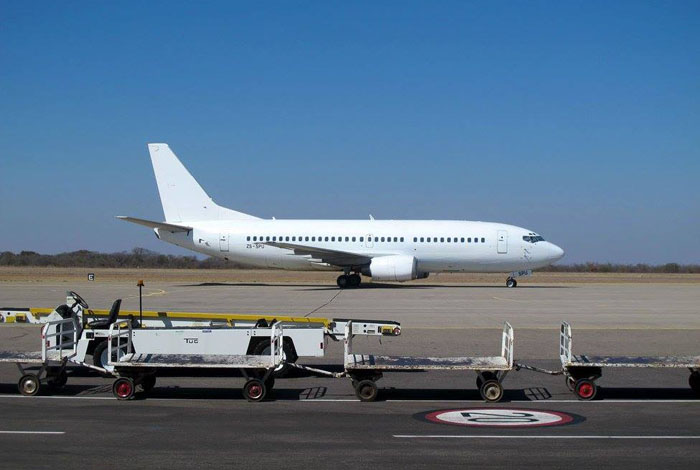
Air Zimbabwe had to lease on short contracts i.e Boeing 737s from Starair Cargo (here seen ai.e Boeing 737-500 ZS-SPU) when their own aircraft are grounded.
After takeoff from Bulawayo Int. airport the Xian MA60 Z-WPK lost the preassure and the gasmasks were released. The plane returned to Bulawayo and all survived. The plane was later flow to Harare Int. airport and it is reported that the aircraft is for sale.
In early 2017 Air Zimbabwe forced to hire planes to serve its routes as foreign currency shortages are delaying the acquisition of spare parts for its grounded fleet. This has resulted in long flight delays and cancellations in the past week.
The military took control of the country in November 2017 and placed President Mugabe under house arrest. Opposition leader Morgan Tsvangirai also returned to Zimbabwe and called for Mugabe's resignation. Mugabe was removed from power as leader of Zanu-PF on 19 November 2017 and replaced as party leader by Emmerson Mnangagwa.
After Mugabe was ousted, there are no reliable sources on what happened when it was decided to to postpone the delivery of the two ex-Malaysian B777s until further notice. The government seemed to want to enhance the company’s reputation and give it access to new markets. The claim was that the new airline had nothing to do with dictator Robert Mugabe and his family, but was independently run.
At the end of December, it was announced on 24News that the aircraft would be delivered and that the first aircraft would arrive at Harare International Airport on 20 January 2018. Aircraft number two would join in April.
2018
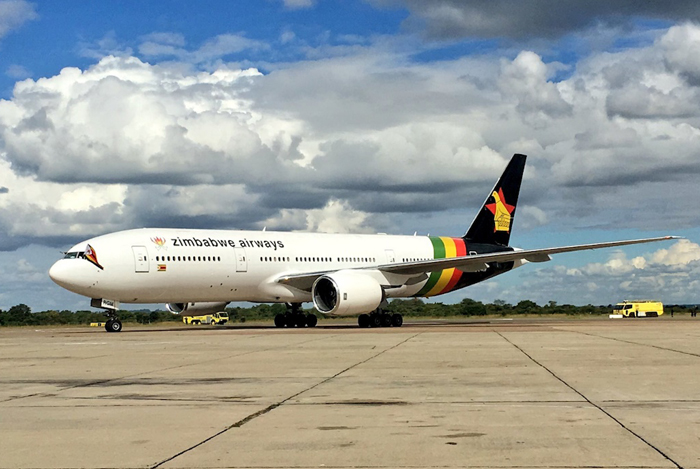

Punctually at 12.30 on January 20 2018, Z-RGM landed at Harare International Airport the ex Malaysia Airlines Boeing 777-200 but there was a surprise: it was "coincidentally» registered as Z-RGM, the exact initials of Robert Gabriel Mugabe, even his son-in-law triumphantly exited the plane wearing a captain’s uniform, although it is not known if he is actually a pilot. The plane was in the livery of "Zimbabwe Airways".
However, by the time the plane arrived in the country, Air Zimbabwe had deteriorated to such an extent, that it could not present a "credible business plan to run the plane on a sustainable, profitable basis". The government registered Zimbabwe Airways, which developed a credible business plan. The government created "Zimbabwe Aviation Leasing Company", which owns the planes and leases them to Zimbabwe Airways. As of April 2018, Zimbabwe Airways is yet to receive an Air operator's certificate (AOC), from the Zimbabwe Civil Aviation Authority. The second B777 was never delivered.
The situation would be strange enough on its own, until in May of that same year, a company spokesman issued a statement regretting that the company could not fly the plane. The reason: hiring pilots cost too much money and there were not enough passengers to justify the investment.
The government realized that Zimbabwe Air did not have the conditions to operate the new airline because the Civil Aviation Authority's requirements can be met. The airline did not have pilots, crews and technically trained personnel for service and maintenance.
The government now faced with the fact that they have completely failed to create a new airline and realized that they must abandon the project. The first difficult decision the government made was to return the aircraft to its owner.
On May 15 the B777 Z-RGM was shipped back to Malaysia on 25 May before a new deal was confirmed by the Zimbabwean authorities and what to do. It was noted on 24flightradar that the plane left Harare for a nine hour flight to Kuala Lumpur. The government later told the "ZimLive" that the plane was sent back for A-check and further maintenance.
By now the government decided that there was only one way out, to save the nation's airline, Air Zimbabwe.
Under reconstruction of the national carrier, representatives negotiated in May with Malaysia Airlines the terms for release the first of the two B777-200s for the flag carrier.
On 8 June 2018, it was reported that Air Zimbabwe has debts of more than $300 million and can no longer fly to most destinations due to threats by debtors to impound its aircraft. With mounting debt and only three of its aircraft operational, the airline was put under administration on 6 October 2018.
In November 2018, it became known that Zimbabwe Airways lost one of the planes as, reportedly, the government never payed for it. An unnamed official from the Ministry of Transport confirmed to "ZimLive" "The original plan was to buy four of the seven retired aircraft, but that they had so far managed to pay for two fully of them, and a third should be secured. The Malaysians sold off all the remaining planes since the payment dragged on".
Initially soaring the skies as 9M-MRM for Malaysia Airlines from 2001 to 2016, this aircraft faced an unforeseen detour in its destiny.
 Zimbabwe Airways 3rd Boeing 777-200 9M-MRM (never accepted) here as "imbad airways" N661W T at a USA scrapyard.
After being retired by Malaysia Airlines in 2016, the Boeing 777-200 9M-MRM was parked in Kuala Lumpur until 2018. Air Zimbabwe had made an option for this aircraft. Instead it was sold to Wilming-Trust-Company and then was ferried to the United States, where it was painted in the distinctive colors of Air Zimbabwe and finally scrapped as Imbab Airways N661WT, signifying a new chapter that was unfortunately never realized.
2019
 Zimbabwe Airways Embraer ERJ145 X-WPQ.
The aircraft was not secured and on December 10, Malaysia Airlines delivered it to Wilmington Trust Company (U.S.) to be stored ans scrapped. The second B777 aircraft remained stored in Kuala Lumpur, presumably awaiting delivery to Harare.
Zimbabwe government took delivery of an Embraer ERJ145 N812HK msn 145373 at Harare
Int'l on Tuesday, April 30 2019 in the livery of the controversial start-up carrier Zimbabwe Airways.
The plane touched down at Robert Gabriel Mugabe International Airport in Harare at 1.30PM on Tuesday, just 48 hours after Air Zimbabwe grounded its Boeing 767-200 ER for an engine change following a fire incident on take-off from Johannesburg on April 28.
The Embraer ERJ145, with a capacity of 50 passengers and a range of up to 2,873km, flew out of Kansas City International Airport last Friday and made several stops on its ferry flight before final landing in Harare
The former Trans States Airlines twin-jet was ferried to Southern Africa from Kansas City Int'l via Gander, Reykjavik Keflavik, Belfast International airport, North Ireland , Malta Int'l, and Aswan, Egypt. The acquisition of this aircraft plane was a part of efforts to revive the national airline, Air Zimbabwe".
In July, Air Zimbabwe also is up in court to fight for ownership of two A320s. The two Airbus planes arrived at the carrier over seven years ago, but have barely been used yet. While the leasing company, South Jet, says Air Zimbabwe needs to pay for the planes, the carrier maintains that they were a donation and that South Jet need to release the paperwork to allow them to repair the planes.

Air Zimbabwe Boeing 737-200 Z-WPA one of the last flying Boeing 737-200 passenger aircraft in the world.
Despite the current flight ban in Europe, Air Zimbabwe continued to operate flights to Bulawayo, Victoria falls, Johannesburg and Dar es Salaam with their remaining aging aircraft, a Boeing B737-200 and a Boeing B767-200. At the end of the year, the Boeing 737-200 was taken out of service for heavy duty services.
In July 2019, Air Zimbabwe "came under fire" when news emerged that the financially struggling airline is "missing” three aircraft, were "stolen or lost".
The ruomour emerged after the Auditor-General of Zimbabwe issued a disclaimer of opinion on June 20, 2019. In it, the auditor outlines that in 2011-2014 the airline operated three MA60 aircraft, but none of them were accounted for in the company’s financial statements. There were no documents or agreements regarding if the aircraft were sold or leased.
In response to the backlash, one of the airline’s spokesperson told the local media that Air Zimbabwe did not purchase the three MA60s but continued - “For state enterprises, government comes in from time to time to offer shareholder support”. Thus, it is the government that should have the missing documents. Meanwhile, the aircraft are not missing and “anyone is free to come and see them”.
This statement from the airline's spokesman is contradictory with reference to the 2004 agreement between the Chinese National Aero-Technology Import and Export Corporation and Air Zimbabwe that the airline bought two MA-60s and then receives as an generous gift from the seller another aircraft.
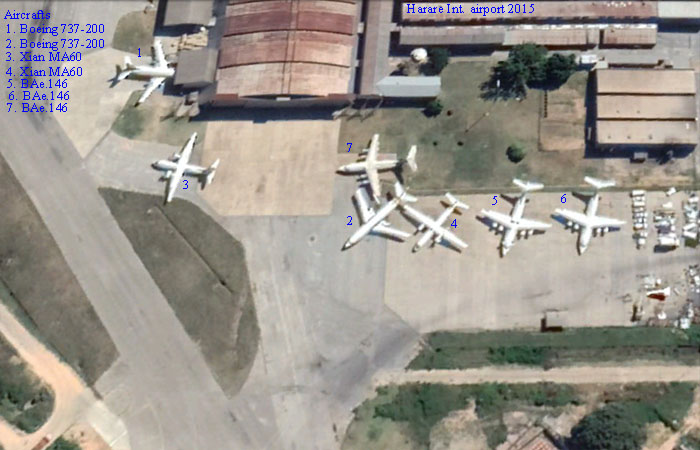 Harare Int. airport location of parked aircraft
A late shot from "Google Earth" shows "dusty" aircraft parked in the backyard closed to the maintenance area.
In a purchase agreement between Malaysia Airlines and the Zimbabwean government for the two Boeing 777-200s, an audit performed in July 2019 found that approximately $51 million dollars was paid in unapproved transactions.
Further, reports revealed that an additional $140 million dollars could not be accounted for.
However, the national carrier hopes to leave behind the notoriety of its legacy issues and reinvent its domestic and regional flag carrier operations. It also aims to form strategic partnerships to benefit its connectivity as an airline as well as its training and maintenance services.
The flag carrier was now under reconstruction. Ch-Aviation reported that the deal of the delivery of the two nearly 14 years old B777-200(ER)s had been choked by administrative challenges but that a team from Transport and Infrastructure. A team had been sent to Malaysia to negotiate the terms for the release of the planes. It was then reported to the daily Herald that the planes should be release as soon as possible.
2020
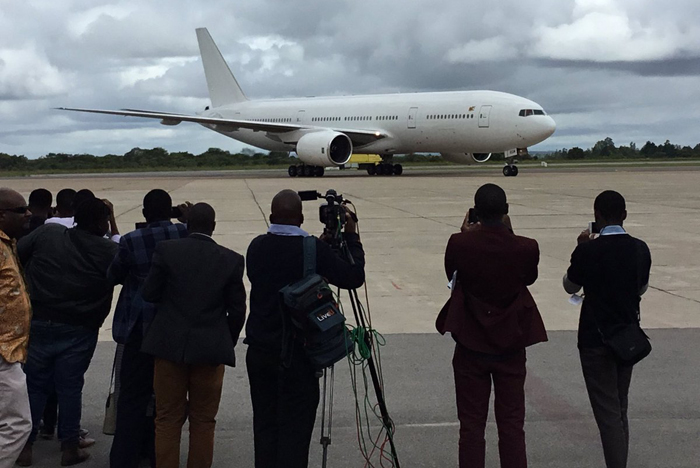 Air Zimbabwe B777-200ER Z-RGM without any livery on arrival for the second time to Harare Int. airport.

The Boeing 777-200ER Z-RGM was received on 20th January 2020 at the Robert Gabriel Mugabe International Airport by Vice President Constantino Chiwenga and the high Government delegation.