Bilby
Description:
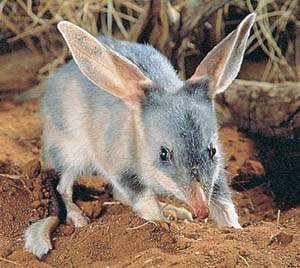
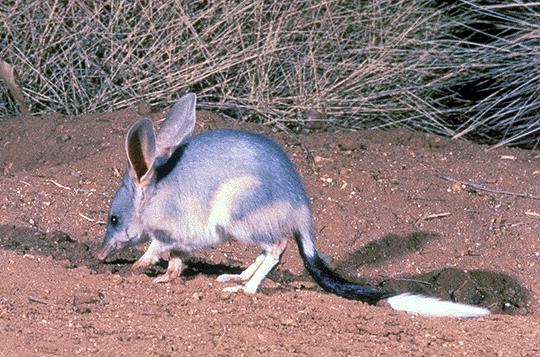
The Bilby is 30-45cm in length (including about 25 cm tail) and weighs 1-2kg. It is a small marsupial and is one of two types of rabbit-bandicoot. The bilby's fur is a bluish grey colour with it's tail being white and black with a distinct raw of hair that the bilby raises high in the air like a flag. It's ears are like rabbits. The bilby doesn't drink very much water because it gets it water from the food it eats. It's diet consists of termites, insects, small animals, roots and is able to obtain its food using its sharp claws, searching for food at dusk. The bilby has very good hearing and sense of smell but has poor eye sight. The only form of camouflage is to hide in its burrow and venture out at night time for food. Its colouring blends into the Australia bush and desert.
Environment:
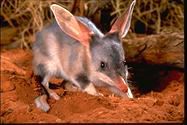
A bilby's shelter can consist of 2 different types of burrows which can either be a series of tunnels with several entrances or a spiral or circular type of burrow. It generally spends all day in its burrow. The burrows can be up to 1.5m underground. Part of a bilby's burrow is used for toileting purposes. Bilbys can be found in the arid regions of Central Australia.
Problems:
Predation is the main cause of the bilby's endangerment and to a certain extent it has to compete for food and living area with rabbits. As mentioned before it has been hunted extensively, but the cause for the bilby's disappearance is not quite known.
Solutions:
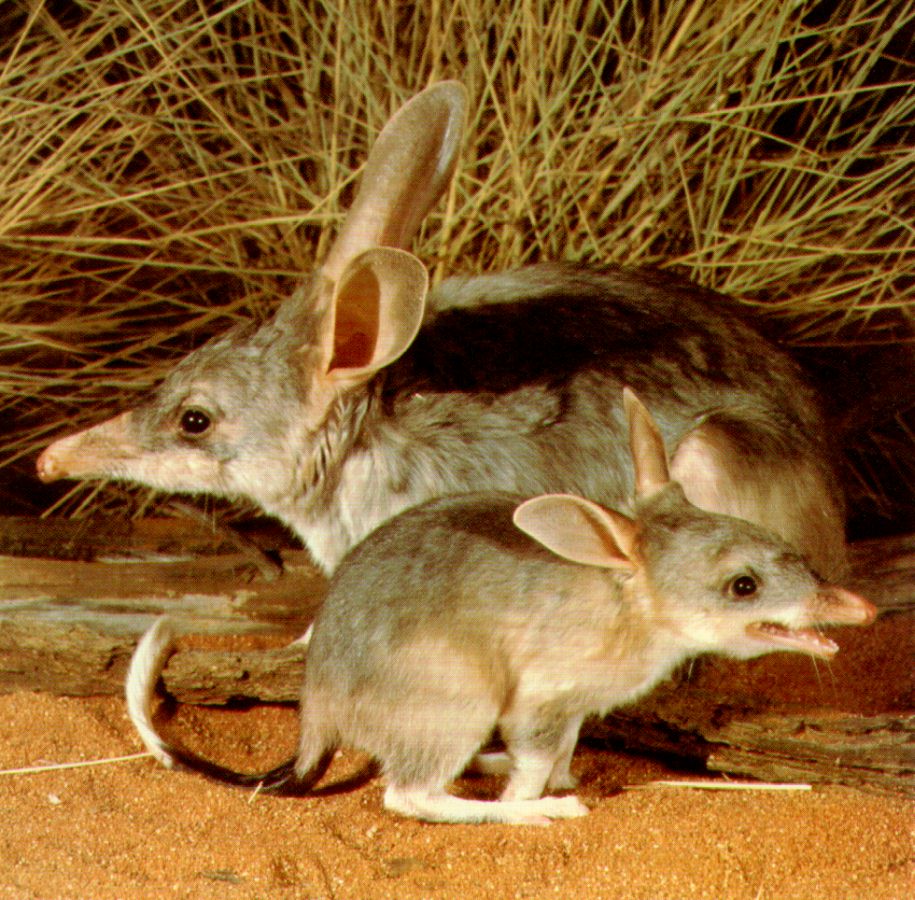
Some efforts have been made to prevent the bilby from becoming extinct. Breeding programs have been introduced into captivity to increase the bilby's population and then be re-introduced back into its natural environment. However this would involve many resources including money, labour, and knowledge. Already moves are underway to give the bilby a higher profile in Australian culture with the introduction of chocolate bilbies at Easter time to replace the traditional Easter Bunny. To extend this awareness, bilby merchandise such as, souvenirs and confectionery could be available for purchase all year round. Part of the proceeds from the sale of these goods could be utilised in establishing a Save the BilbFund.