

Video Cables
To send from a source to a processor, or directly to a display.
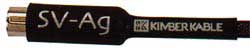
 S-Video.
Usually on the front of TV's & AV amps like the Yamaha A1. Also more round
the back of AV Amps/processors. Better picture than composite (single RCA) Does
not carry audio (like SCART)
S-Video.
Usually on the front of TV's & AV amps like the Yamaha A1. Also more round
the back of AV Amps/processors. Better picture than composite (single RCA) Does
not carry audio (like SCART)
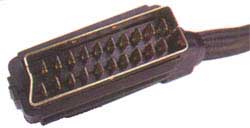
 SCART
lead. For the UK, these connectors send/receive audio & video- ideal for
VHS/Sat to TV. Upgrade from the RF to TV for better picture & sound quality.
Also used for the best connection between DVD & TV (set to RGB, into AV1 input),
bar progressive scanning component.
SCART
lead. For the UK, these connectors send/receive audio & video- ideal for
VHS/Sat to TV. Upgrade from the RF to TV for better picture & sound quality.
Also used for the best connection between DVD & TV (set to RGB, into AV1 input),
bar progressive scanning component.
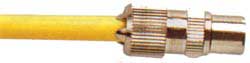 RF coaxial - from
VCR to TV link. OK for a second input for your TV (ability to record one, whilst
watching another)
RF coaxial - from
VCR to TV link. OK for a second input for your TV (ability to record one, whilst
watching another)
Composite- a single RCA which carries the video signal. Not the best method to connect high-quality devices such as DVD. Pictures have fuzzy edges with this type of connetion.
Component- The best method of connecting from DVD or Laserdisc to a compatible display. Three Single RCA's or Three Single BNC (better)
Progressive Scanning- A new technology which results in a more clearer image. Again either three RCA or three BNC's 75Ohm digital coaxial cables. A normal TV draws each line one by one, 50 times a second (or 100 for a 100hz set). Progressive scanning completes the whole image in one 'blast'.
RGB- usually reserved on AV1 on the SCART input on the TV for game consoles, which results in a much purer picture than the RF input. Also can be used with Sky Digibox's and DVD players
