|
The Bolsheviks were now in a strong position. Lenin and Trotsky were seen as effective and dynamic who had defended the country at its most vunerable period. The provisional government was dominated by Kerensky's party, as the Liberal members walked out after the Kornilov affair. As the war continued, the people grew in their hatred for the countrys involvement and as the Bolsheviks were the only party against war, Lenin grew in support. Therefore when the party decided that the time was right; the weak provisional government had been deserted by all but Kerensky's loyalist supporters. The army too, the key to the February Revolution, were returning from war, disillusioned and joining the side of the Soviet trade unions. Kerensky was isolated and when the Russian Forces collapsed on the Eastern Front, Lenin and the Bolsheviks stormed the Winter Palace in a bloodless coup.
Russian History [Continue]
|
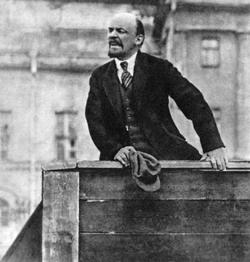 Kerensky attemped to fight the Bolsheviks and some of the members were rounded up and the Party newspaper was closed but Lenin had planned an insurrection. The desertions of the workers and the soldiers left many of the Russian areas exposed; the Bolsheviks were able to simply overtake the key areas. The provisional government simply internally collapsed, the infrastructure was not strong enough to survive the growing troubles. When the Bolsheviks took power, the other political parties, including the Mensheviks, walked out of the Duma in protest. These groups saw the February revolution as the legitimate revolution and were not supportive of Lenin or his principles. Despite this the Bolsheviks began to lay the foundations for their administration. Following the revolution, Lenin said a towering edifice of Socialist Society would be constructed. However once in government, Lenin and the Bolshevik party realised that the same Tsarist problems remained. And if the party were to survive then they needed to deal with the problems more efficiently than the Tsar and Provisional Government had done.
|

