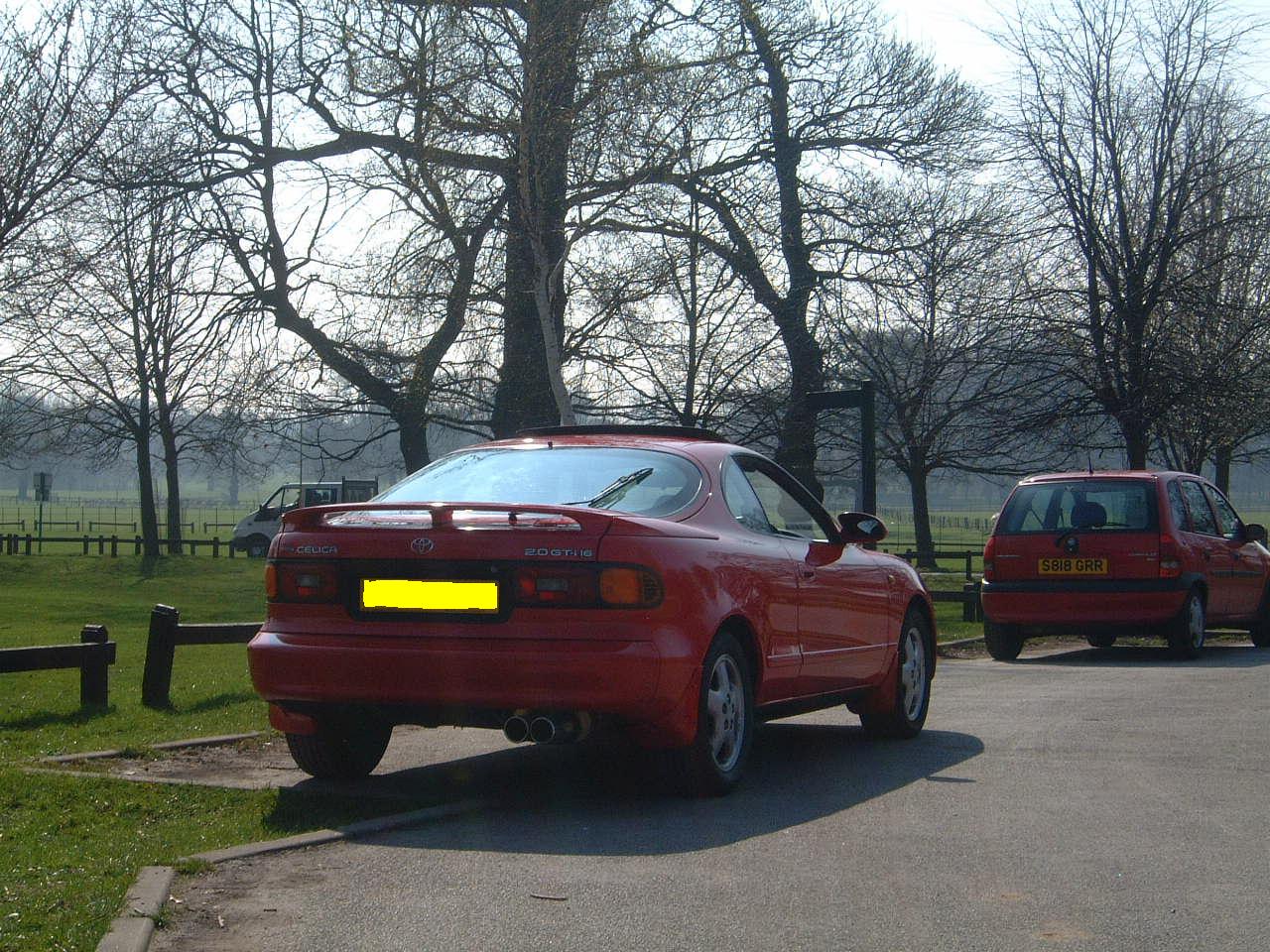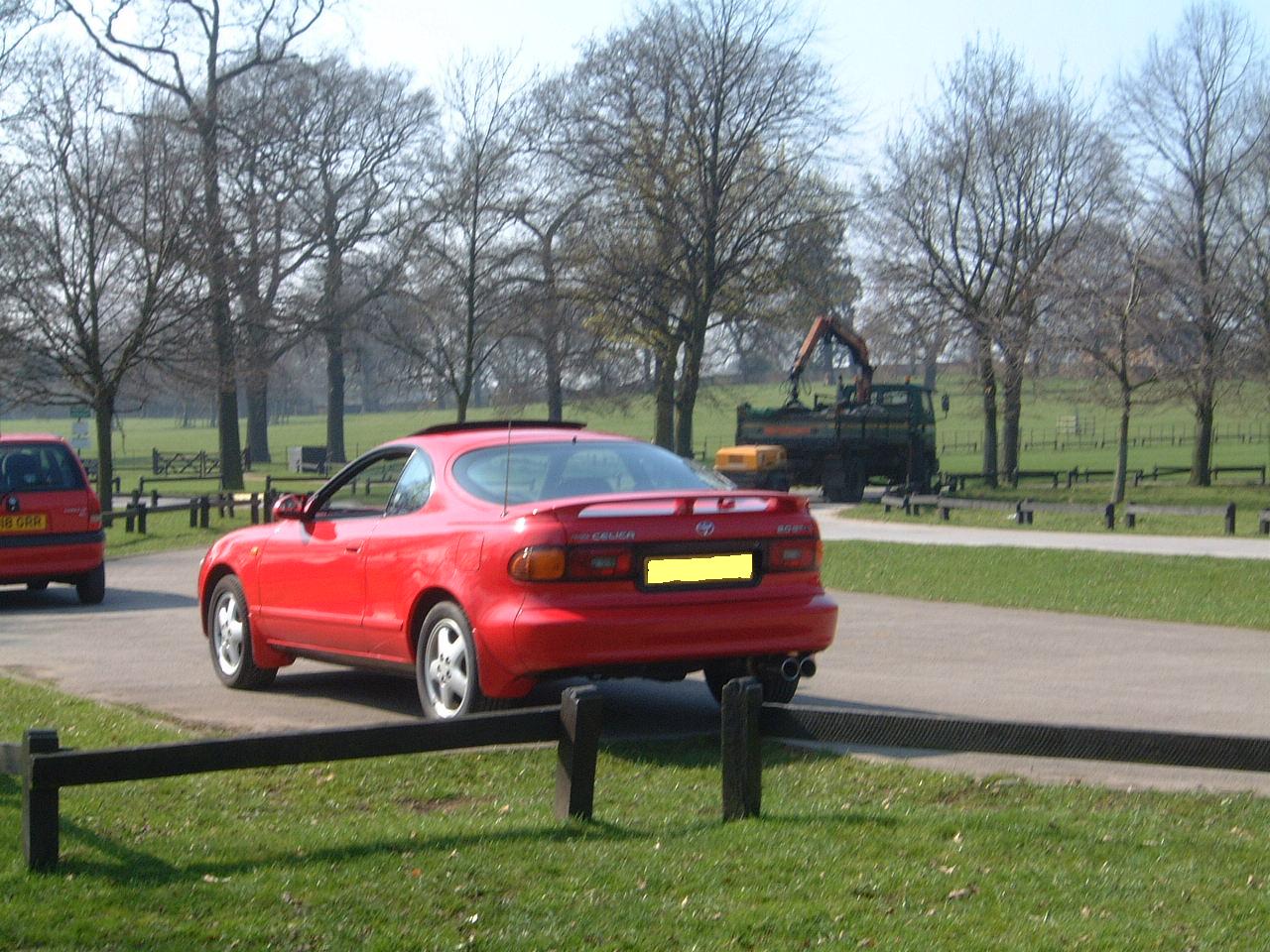
2.0 GT-I 16 (ST182)
OVERVIEW
The Celica ST182 (1990-1994) was revised for the 1992 and 1993 models (refer to pictures below). The modifications were subtle consisting of a re-styled front bumper, revised suspension, up-rated brakes, revised 5 spoke alloy wheels and catalytic converter dropping the power output from 158bhp for the early cars to 154bhp for the 92/93 models. Slide into the spacious cabin and you will be able to fully adjust the drivers seat and adjust the steering column to suit you. The controls all fall to hand easily ensuring a focused and driver orientated environment. The rear seats are mainly for children but I am 6ft and can sit reasonably comfortably in the back with the front seats pushed all the way back, however you will need to split your legs. Flip the tailgate and the boot is surprisingly large ensuring that you shouldn't have any problems when it comes to storing suitcases and weekend luggage. Should further luggage space be required the rear seats can be unlocked from their normal seating position and folded down. The Celica takes any long distance journeys in its stride and its very pleasing to see that the Celica is well behaved and composed at speeds around 140mph as it is at half that pace due to the Celica's aerodynamic body construction and carefully designed chassis.
The Toyota Celica is surprisingly comfortable considering its nature. Some say that the Celica has a slightly harsh ride but as its a sports cars that is to be expected. The handling is sharp but composed and the standard front strut-brace does a good job keeping any body flex to an absolute minimum. To maximise the cars handling abilities, its essential to fit quality sports orientated tyres as the wheels do spin a little if you are eager to get back onto the power after the apex.
The engine performance is surprisingly impressive considering it is a high revving twin can 16 V engine. This ensures that in gear performance is better than what you would expect from a typical Japanese high revving 16V engine ensuring that you always have enough performance to accelerate through a gear without needing to drop to a lower gear or keep the revs at the far end of the rev counter in order to ensure you have adequate overtaking performance. The twin-cam comes into play at 5,200rpm along with a subtle kick of urgency. The gear ratios on the Celica are quite tall and need to be shorter to exploit the Celica's full potential on the race track. On the road the tall gearing works reasonably well thanks to the engines lively performance and on motorways high speed cruising will become second nature whilst helping to retain fuel. At an indicated 140mph my Celica shows 6,200rpm leaving a 1,000rpm gap before the rev limiter is awakened.
The brakes on the Celica, are fine and capable of stopping the 140mph beautifully sculpted bullet without any dramas. Some owners will also fit 'fast road' orientated brake pads and stainless steel braided brake hoses to enhance the braking feel and the performance of the brakes which is a safe yet beneficial modification.
RELIABILITY
As you can guess its pretty much bomb proof regardless of the mileage with it being Toyota. However, over the years bad examples will become obvious due to lack of correct maintenance and these are best avoided to protect against potentially expensive repairs. Brakes can wear quickly with enthusiastic use so ensure that the brake pads and brake discs are healthy and judder free. However, to retain this level of performance from the brakes requires the brake callipers to be stripped and cleaned once in a while to ensure that the pistons inside inside move freely and are not slowly seizing from usual dirt and grime from everyday use and winter weather. Like wise the suspension dampers can wear with enthusiastic use and this will be noticeable mainly by a supple ride and insufficient damping from the rear shock absorbers and due to the Celica's sporty nature they are rarely picked up by MOT tests. Track Rod ends are usually on their last legs with high mileage Celica's so it's best to replace those which is cheap to do so and will bring back a lot of feel in the steering. When inspecting a used Celica, its also wise to just get on your hands and knee's and look for ay rust on the sills, brake pipes and the exhaust system.
HINTS & TIPS
Check that the brake and clutch fluid is reasonably new (should be replaced every 2 years). Ensure that the coolant reservoir has anti freeze in it or its best if its a red coloured pre-mixed coolant by Toyota. The engine oil shouldn't be very thick and if it needs replacing (every 6,000miles maximum) it will be a dark colour but ensure it doesn't appear to be old. The fuel filter can be ignored so either check the invoices to check when it was last replaced or ensure that you have it replaced at the next service. Listen for sounds of ageing belts and check the condition of any visible belts for any signs of age, cracks or splits. Tyres that are different at each corner may indicate steering/suspension problems. Its best if all 4 tyres are the same but if not its perfectly adequate if the pair of tyres at each end are the same, which some drivers will use to alter the cars handling characteristics to suit their individual driving style. Lastly, gearbox synchros can wear due to poor driving skills so ensure that the gearbox allows for quick, reliable and crunch free gear shifts. Whilst on the subject of gearboxes, many cars regardless of Make & Model often have the gearbox and differential oil ignored at service intervals and there are cars about that have never had it changed since it left the factory after production. The Toyota Celica ST182 5pd Manual takes ATF (automatic transmission fluid) DEXRON II (manufacturer specification). Its best to change this every 12,000mls but I personally change it every 6,000miles. This ensures that the gearbox will be performing at its best as well as being protected against long term damage. There may be some cars about that have the wrong grade oil in the gearbox, after a clutch change for example, so its best to ensure you know its has the right grade of oil in it to avoid any gearbox problems.
TECHNICAL INFORMATION
ENGINE
(3S-GE)
|
TYPE |
4 cylinder in line, 4 cycle, gasoline |
|
BORE x STROKE, mm (in.) |
86.0 x 86.0 (3.39 x 3.39) |
|
DISPLACEMENT cm3 (cu. in.) |
1998 (121.9) |
SERVICE SPECIFICATIONS
(3S-GE Engines)
VALVE CLEARANCES, mm (in.)
|
Intake |
0.15 - 0.25 (0.006 - 0.010) |
|
Exhaust |
0.28 - 0.38 (0.011 - 0.015) |
SPARK PLUG TYPE
|
Without Catalytic Converter |
NIPPONDENSO |
K20R-U |
|
Without Catalytic Converter |
NGK |
BKR6EYA |
|
With Catalytic Converter |
NIPPONDENSO |
PK20R8 |
|
With Catalytic Converter |
NGK |
BKR6EP8 |
SPARK PLUG GAP, mm (in.)
|
1.1 (0.043) |
ENGINE LUBRICATION
(3S-GE) Oil Capacity, L
|
Dry Fill |
4.3 L |
|
Drain & Refill with Filter |
3.9 L |
|
Drain & Refill without Filter |
3.6 L |
RECOMMENDED OIL VISCOSITY (SAE)
|
15w 40 20w50 |
|
10w30 |
|
5w30 |
COOLING SYSTEM
Total Capacity, L
|
With Heater |
6.5 L |
|
Without Heater |
6.0 L |
COOLANT TYPE
|
With ethylene-glycol antifreeze or anticorrosive (Toyota ‘Radiator Conditioner’ anticorrosive or equivalent) . Do NOT use alcohol type antifreeze. |
CLUTCH
Pedal Freeplay, mm (in.)
|
5 -15 (0.2 – 0.6 |
Fluid Type: SAE 01703 or FMVSS No. 116 DOT 3
MANUAL TRANSAXLE
Oil Capacity, L
|
2.6 L |
Oil Type
Multipurpose Gear Oil API GL-3, API GL-4, or Automatic Transmission Fluid (ATF) DEXRON II.
Recommended Viscosity
SAE 75W-90
BRAKES
(Right Hand Drive vehicles)
Minimum Pedal Clearance when depressed, mm (in.)
|
80 (3.1) |
Parking Brake Adjustment: 4 – 7 clicks
Fluid Type
SAE J1703 or FMVSS No. 116 DOT3
STEERING
Wheel Freeplay: Less than 30mm (1.2 in.)
Power Steering Fluid Type: Automatic Transmission Fluid DEXRON II
TYRES
(3S-GE Engine)
|
CONVERTIBLE |
COUPE / LIFTBACK |
|
205 / 60 R 14 88V |
205 / 55 R 15 87 V |
|
|
205 / 50 R 15 88V |
205 / 55 R 15 87V
For Driving 160km/h (100mph) or over
Front 2.9 bar / 41 psi
Rear 2.9 bar / 41 psi
For Driving Under 160km/h (100mph)
Front 2.3 bar / 33 psi
Rear 2.2 bar / 32 psi
MODIFICATIONS
PICTURES