Site hosted by Angelfire.com: Build your free website today!

Ice Skating

Background by Lovena Harwood


I have been, and always will be a huge figure skating fan! I use to jump around my room when I was a kid trying to do double axels and toeloops...but now I will just watch on tv (most of the time ::giggle::)


Kyoko Ina and John Zimmerman
Profile
Photos
Official Site

Jamie Sale and David Pelletier
Profile
Photos
Official Site

Renee Roca and Gorsha Sur
Profile
Photos


We will always Remember...
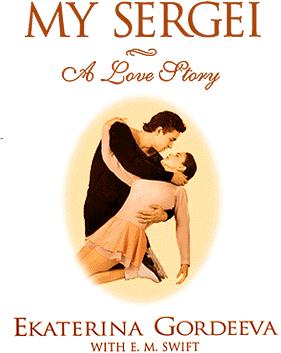
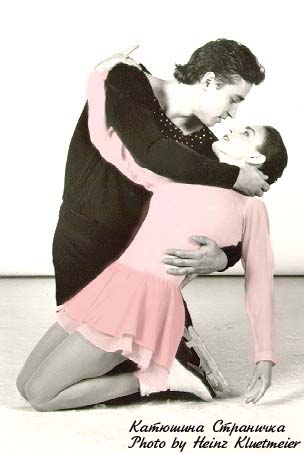
Ekaterina Gordeeva and Sergei Grinkov
G&G Corner


PAIRS:
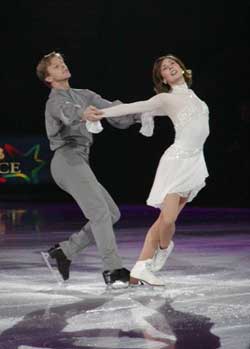
Pair skating is essentially free skating performed in unison by partners, with the addition of daring and often dangerous overhead lifts, throws and special spins. The key to pair skating is exact timing and unison. Whether the partners are together or apart, their movements should be synchronized with matching body lines, gestures and footwork. Nothing matches the excitement generated on the ice by pair skating, nothing is as dangerous nor requires technical expertise, grace, split-second timing and impeccable execution and imagination.

The Pair competition, like singles, has a Short Program that counts for 33.3% and a Free Skating Program that counts for 66.7%. The judges award two sets of marks similar to single events. The Pairs Short Program must include eight required elements that include overhead lifts, side-by-side solo jumps and solo spins done in unison, footwork, pair spins and a death spiral. The music, choreography and arrangement of the moves is up to the skaters. The Free Skating Program consists of technical and artistic moves choreographed to best display the skaters individual strengths and skills and ability to perform as a team. Difficult double and triple solo and throw jumps will be seen, along with different overhead lifts and spins, variations on standard moves as well as original moves. Shadow skating, in which partners perform identical maneuvers some distance apart, and mirror skating, where the pair's moves are in opposite directions and mirror each other, are challenging aspects of pair skating. A well-conceived and faultlessly executed pair program is breath-taking and exciting to the audience and the ultimate challenge for performers.

ICE DANCING:
The newest Olympic figure skating event (introduced in 1976), Ice Dancing was first seen at a World Championship in 1952, but had been a popular recreational sport since the turn of the century. Unlike Pair skating with overhead lifts and jumps, Ice Dancing is as its name implies, based on different aspects of dance, with the emphasis on rhythm, interpretation of the music and precise steps. Its beauty lies in its limitless creativity, choreography and the theatrical and innovative aspect of the sport of figure skating.

An Ice Dancing competition is made up of three parts: Compulsory Dances, a two-minute Original Dance and a four-minute Free Dance. In the Compulsory Dances, which count 20% of the total score, all skaters perform the same two selected dances that have prescribed rhythms and specific steps that must be done in an exact manner with precise placement on the ice. The skaters receive one score for each dance with counts 10% each. Compulsory Dances include the waltz, tango, blues, quickstep, polka and others. For the Original Dance, which counts 30%, skaters are given a prescribed rhythm (such as a tango or rhumba) and must create a completely original version of the dance. The full ice surface must be used and rhythm, dance steps and interpretation are the most important aspects as the judges determine how well an appropriate dance has been created. Two marks are given: one for composition, which includes originality and difficulty of steps and one for presentation, which reflects timing and interpretation. The Free Dance, which reflects 50% of the final score, allows skaters to display their full range of technical skill, interpretation and inventiveness to music and choreography of their own choice. Any tempo or mood can be used as long as it is danceable. Everything must be done within strict rules of moves and demands precise timing. Two sets of marks are given, for technical merit and presentation and style. The popularity of ice dancing continues to grow and offers the greatest variety of programs and opportunities for creativity.

AXEL: The most difficult jump in figure skating is named for its inventor, Axel Paulsen, a Norwegian speed skating champion who became famous as an exhibition and trick skater. Executing the Axel jump, a skater takes off from an inside edge while skating forward, turns one-and-a-half times in the air (540 degrees), and lands on the back outside edge of the other skate. A double Axel has 900 degrees revolution and a triple has 1,260 degrees revolution.

SPLIT JUMP: A flashy move in which the skater jumps into the air and performs a split in mid-air with the hand touching the ankles or toe. It is also sometimes called a "Russian Split". When a half-revolution is added after touching the toes, it is referred to as a "Split Flip".

THROW JUMP: A pair move in which the male partner assists the lady into the air where she executes 1, 2 or 3 revolutions and lands skating backwards.

TOE LOOP: Also called the "Cherry flip", the toe loop is the easiest jump to master. The skater takes off from a back outside edge, picks the toe of his/her other skate into the ice to achieve height and does one 360 degree turn, or move, in the air and lands on the back inside edge of the takeoff skate.

LOOP JUMP: This jump is performed without a toe pick assist and is an edge jump in which the skater completes a loop in the air (or two or three), taking off from a backward outside edge and landing on the same back outside edge.

LUTZ JUMP: The Lutz jump is named for its inventor Alois Lutz. Moving backwards on an outside edge, the skater picks in the toe of the opposite skate to assist the lift, makes one or more 360 degree rotations in a counter-rotational direction. The required counter-rotation means that the revolution is against the normal rotation direction, i.e. taking off on the right foot normal rotation would be counter-clockwise. In the Lutz, rotation would be clockwise. The jump can be anticipated by viewers as the skater gathers speed and slides backward in a large arc glancing over his/her shoulder.

SALCHOW JUMP: A move developed by and named for the Swedish champion, Ulrich Salchow, the jump involves one or more complete mid-air turns from a back inside edge of one skate to the back outside edge of the other skate. If it is done with a toe assist, the jump is called a toe Salchow or a flip jump. Salchow was the winner of the first Olympic figure skating competition and holder of ten World and European medals.

SPIN: A freestyle technique in which the skater revolves rapidly on his/her own axis, in one spot on one foot. In competition all spins must include at least six rotations. Spins may be performed in many positions with some named for body positions during the spin, such as sit spin, layback spin or cross-foot spin.

CAMEL SPIN: Also known as a "parallel spin", the Camel is performed by the skater in an arabesque position with one leg lifted parallel to the ice. The name reflects the humped position often displayed by novices when learning the move.

DEATH SPIRAL: A popular skating move with the man in a pivot position, one toe anchored in the ice. Holding his hand, the woman circles her partner, leaning backwards, her body parallel to the ice.

LIFTS: A group of moves used in pair skating and in dance in which the man lifts his partner off of the ice. The lifts in pairs are athletic and usually overhead, while the lifts in dance must be done within limitations and are smaller and more controlled.

TOE PICKS: The pointed teeth on the front of the skate blade, used primarily for jumping and spinning.


Looking for More?


Good Quality Skating Photos

Well Balanced Program for Pairs

Pairs on Ice

Ice Champions

Figure Skater's Website

Kristi Yamaguchi's Official Site

Scott Hamilton's Fan Page

Stars On Ice Official Site

USFSA

ISU


Back