Products
Quad Cantilever Impact Energy Recovery System (QCIERS)
This system (pictured above) uses acrylic beams in a quadruple cantilever setup to absorb the impact energy of the falling steel ball. The ratchet system (pictured below) holds the beams in their deformed/bent shape. The energy of the impact can then be harnessed by releasing the ratchet. This causes the cantilevers to recover, and the recovery process can be completed with an attached weight. This allows the energy of the impact to be converted into usable work as the cantilevers lift the weight. Thus, not only does the system safely stop the falling steel ball, but also, the energy of the impact is conserved and can be converted for other use! The system is reasonably simple, and of very small size in comparison to competitors. Thus, costs of repairs will be quite low, and the device will not be too cumbersome for most use. Weather effects (i. e. high winds) will not disrupt the system since the solid vertical acrylic beams are tightly bolted to the system’s base, and are extremely rigid.. Furthermore, the movement of the recovery tray (where the steel ball is "caught") is constrained along 4 vertical rods, so that the effects of any horizontal force on the tray is minimized. The QCIERS is one of a kind. Its design was optimized for weight and simplicity in order to keep he cantilever system small and manageable.
Fast Deploying Steel Ball Parachute System (FDSBPS)
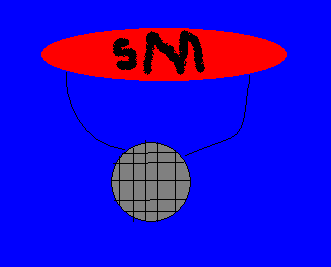
This highly experimental system is still in the planning stages but is expected to be released by February 2009. The Fast Deploying Steel Ball Parachute System (pictured above) uses an accelerometer, nylon fiber net, and CO2 canisters to capture a misplaced steel ball, assess whether or not it is falling, and deploy an emergency parachute. This system does not permit the recovery of the steel ball's energy; however, it does allow an unexpected falling steel ball to be slowed before impact with the floor (which can often lead to damage of the ball and the floor).
Back to Home

