 Hello and welcome to the unofficial Brian De Palma website. Here is the latest news: |
|---|
E-mail
Geoffsongs@aol.com
-------------
Recent Headlines
a la Mod:
Listen to
Donaggio's full score
for Domino online
De Palma/Lehman
rapport at work
in Snakes
De Palma/Lehman
next novel is Terry
De Palma developing
Catch And Kill,
"a horror movie
based on real things
that have happened
in the news"
Supercut video
of De Palma's films
edited by Carl Rodrigue
Washington Post
review of Keesey book
-------------
Exclusive Passion
Interviews:
Brian De Palma
Karoline Herfurth
Leila Rozario
------------

------------
| « | September 2025 | » | ||||
 |
||||||
| S | M | T | W | T | F | S |
| 1 | 2 | 3 | 4 | 5 | 6 | |
| 7 | 8 | 9 | 10 | 11 | 12 | 13 |
| 14 | 15 | 16 | 17 | 18 | 19 | 20 |
| 21 | 22 | 23 | 24 | 25 | 26 | 27 |
| 28 | 29 | 30 | ||||
De Palma interviewed
in Paris 2002
De Palma discusses
The Black Dahlia 2006

Enthusiasms...
Alfred Hitchcock
The Master Of Suspense
Sergio Leone
and the Infield
Fly Rule
The Filmmaker Who
Came In From The Cold
Jim Emerson on
Greetings & Hi, Mom!
Scarface: Make Way
For The Bad Guy
Deborah Shelton
Official Web Site
Welcome to the
Offices of Death Records
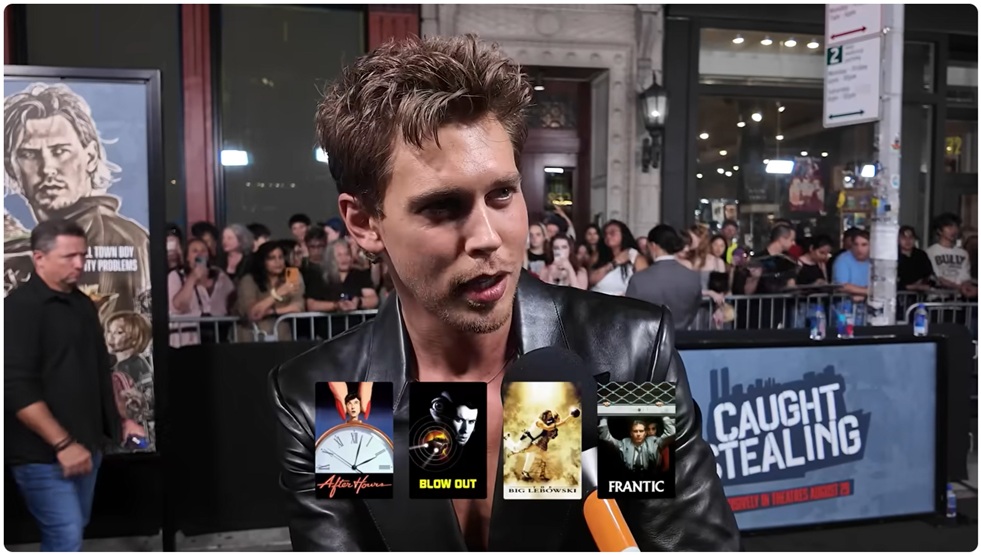
Blow Out is one of my favorite films. Zoë and I actually went and saw that movie while we were preparing. It’s just such a wonderful movie. It has one of the best ending lines of any film. And John Travolta’s such a stud in that movie. “It’s a good scream.”


DEADLINE: Will you be acquiring IP to develop projects around, alongside your work on originals?
CULLIVER: Funny you should ask. One of the larger pieces of IP that we’re adapting at the minute is Scarface. Obviously, Danny will play Scarface. We want to modernize it, adapting the original novel. [Editor’s Note: Universal Pictures released the most famous Scarface movie — 1983’s from Brian De Palma— and has flirted with reimagining the property, attaching Luca Guadagnino to direct in 2020. But the source material, a 1930 novel by Armitage Trail, is in the public domain.]
We’re independently developing it; we have some development financing in place. Obviously, there’s the Pacino legacy of it from the ’80s and then the original 1932 movie, but I think it’s ripe for modernizing, and to have someone like Danny in the lead is really exciting.
RAMIREZ: [We’ll be] developing our own IP, but also then going out and finding partners that have interesting IP that want to partner with us as creatives. But there’s also some that we’re just, with our little bit of funds, developing ourselves.
CULLIVER: I think importantly on the IP thing, we’re not going to engage on something if we don’t have a totally unique, fresh way into it. You don’t want to do stuff where you’re just remaking stuff for remakes’ sake. We’re not going to do this cravenly; we have something to say with the material. There’s been too much of that in the last 20 years to just go around making remakes because you can latch onto some audience built into the IP. You’ve got to have a new story to tell within it.
RAMIREZ: Scarface, to us, is the one that it’s been a dream role to play, but also to develop it in a way that I understand it. I think in 2025, it’s more relevant now than ever. So that’s where we’re excited to take this on.

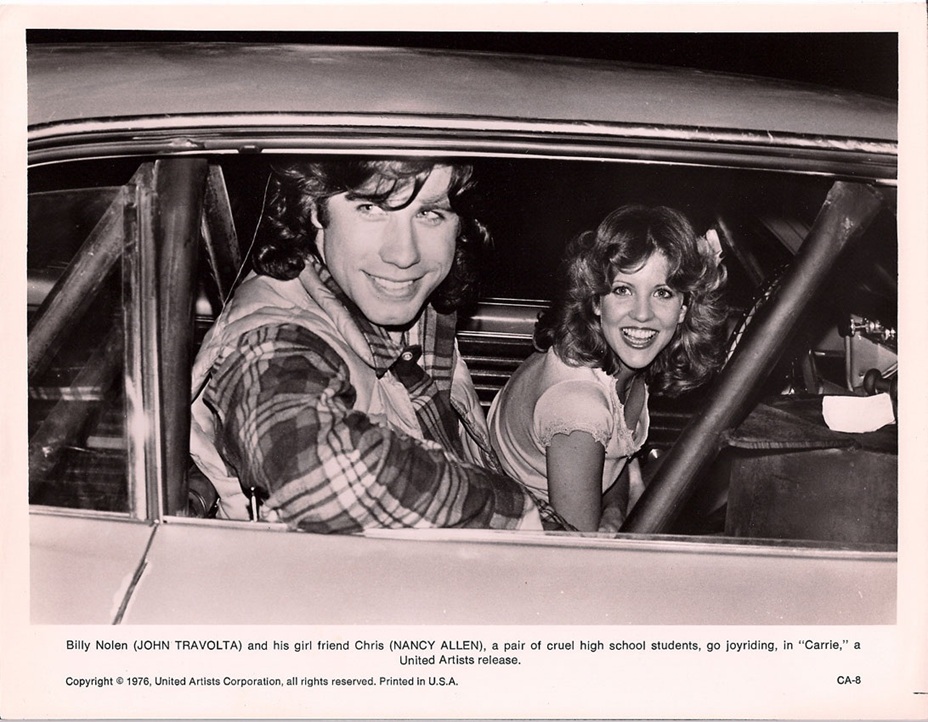
“The low bird is not picked tenderly out of the dust by its fellows; rather, it is dispatched quickly and without mercy.” ⭐️🔥🩸- Stephen King, Carrie💃
My newest offering available TONIGHT at The Summer of King exhibition, 7pm @outpost512 🖤



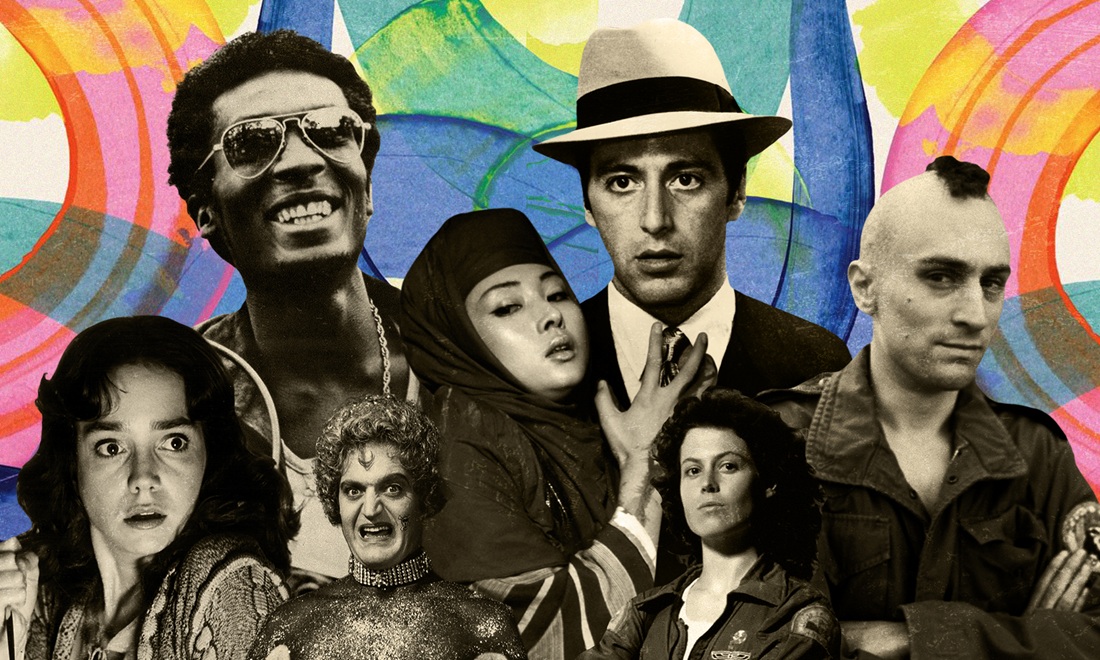
32 “Phantom of the Paradise” (dir. Brian De Palma, 1974)The fate of the midnight movie is still pretty much at the mercy of kids who can’t decide if they should cancel each other for liking “The Rocky Horror Picture Show.” But Brian de Palma’s “Phantom of the Paradise” reigns supreme as the definitive best piece of flashy genre cinema from the 1970s — a glorious ode to a rocker punished for his passion that was itself tortured on its rocky road to theaters.
Thanks to a nonsensical legal challenge from Led Zeppelin, moviegoers have to be pretty lucky to catch De Palma’s extraordinary 1974 glam opera as it was meant to be seen. Censorship plagues all publicly available versions of the film, and a particularly egregious restoration from a physical media release a few years ago left many fans disturbed by the intricate production details lost to its poorly updated color.
Still, whichever version you watch, the tragic tale of musical genius Winslow Leach (William Finley) shines through as a timeless testament to the power of talented freaks with a song to sing. Paul Williams scored “Phantom of the Paradise,” which also casts the Grammy-winning composer as the villainous namesake executive for Swan Records. Swan destroys what could be a quick rise to fame for Winslow and his band, The Juicy Fruits, when he steals the basis for their first hit song.
Enter Beef (Gerrit Graham), a competitive diva whose effort to help Swan screw over Winslow ends explosively. The glittery terror that surrounds that reveal commingles bejeweled platforms and fishnets (with some of the more disturbing elements of the Gypsy Rose Blanchard story?) in a singular “Phantom of the Opera” homage. It also sees “Suspiria” final girl Jessica Harper centerstage as its fresh-faced Angel of Music in a performance that could almost make you forget the movies’ later attempts at creating their own Christine. —AF
41 “Suspiria” (dir. Dario Argento, 1977)Shudder’s “Dario Argento Panico” is an essential documentary primer for any cinephile just getting into the complex, supersaturated legacy of Italy’s most notorious genre filmmaker. Understanding the dark psychology of a man who conjured up unfathomable suspense and horror — then repeatedly cast his real wife and kids as exquisite centerpieces in those artful nightmares — is, how do you say, “tutta una cosa.” That’s Italian for “a whole thing,” and basically the entire point for dedicated fans of the director.
Effectively standing in for a decade of brilliant giallo on this list, “Suspiria” is more than up to the task. The eerie magic Argento first conjured up in 1977 is best remembered for its illustrious use of color, even with “Deep Red” right there in the director’s filmography. The crimson splatters and jewel-colored glass that adorn the German ballet school where “Suspiria” takes place make it a crowning achievement in the pantheon of visual horror. That masterful dreamscape is reflected in the eyes of a young American dancer, Suzy Bannion (Jessica Harper), whose serpentine descent into supernatural madness plays out like a lethal recital on psychedelics.
Loosely translated, “Suspiria” means “breathing” or “to take a deep breath.” That quietly sensual undercurrent might explain why “Challengers” director Luca Guadagnino and “50 Shades” muse Dakota Johnson teamed up to revive Argento’s classic as a high-concept art film with a well-disguised Tilda Swinton in the critically-acclaimed remake from 2018. The original can’t evoke quite the same visceral response as that film’s updated effects, but anyone whose seen the atrium-hanging sequence should be able to convince you to watch both versions. Trite but true, there’s more than one way for a witch to step on your neck. —AF

Fifty years after its initial release, Rocky Horror has amassed global adoration, particularly on the midnight movie circuit. And no cinema in the world is more steeped in Rocky Horror’s rituals and traditions than the Clinton Street Theater in Portland, Oregon, which has shown the film every week without fail since 1978. “We’re certainly not a standard movie theatre,” co-owner Aaron Colter tells me.Currently managed by a collective of six co-owners, including Colter, the 300-capacity Clinton Street Theater stands as one of the oldest continually operating cinemas in the United States. Since its opening in 1915, it has flirted with being a cinema block-booked by specific film studios and, later, an adults-only cinema. It was in 1975 that it began operating through shared ownership, with five free-spirited and like-minded film fans buying the space together, one of whom was Lenny Dee. “I thought people needed a model of a different kind of business to the one we currently had, and the ideas and passions media contains can be an important thing to present to people,” he remembers. “Those were my two driving forces.”
Dee was the original booker of Rocky Horror, and thus technically the originator of the tradition. He first watched it as part of a programmed double bill with Phantom of the Paradise, Brian De Palma’s 1974 comedy-horror musical. “I actually liked that better than Rocky Horror, but I couldn’t get Phantom and wound up with Rocky Horror,” he remembers. “Then the fans kept coming.” That’s not to say Dee isn’t a fan of the movie; he estimates he’s seen it more than 300 times during his eight years of projecting it throughout the Seventies and Eighties.
It took time for Rocky Horror to take hold. The film initially sank like a stone upon release in 1975, with the critic Roger Ebert noting that “it was pretty much ignored by everyone”. Less than a year later, however, New York’s Waverly Theater decided to programme the film as a “midnight movie”, and it was there that schoolteachers Louis Farese Jr, Theresa Krakauskas and Amy Lazarus originated the props and audience interaction that would come to define the Rocky Horror cinema experience.