


MOST SHOCKING SCENE TO HIM IS WHEN MARGARET THROWS TEA INTO CARRIE'S FACE
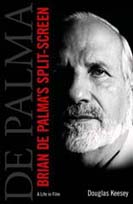
 Neil Mitchell has written a new book about Brian De Palma's Carrie, as part of the "Devil's Advocates" series from Auteur Publishing. The book was released in the U.K. last month, and should be available in the U.S. early next year. BN1's Chris Sadler posted an interview with Mitchell last week. Here are some excerpts:
Sadler: For you, what makes Carrie such a powerful film?
Mitchell: I think it’s the fact that nobody is left unscarred by what unfolds; they are either killed or, in Sue Snell’s case, left psychologically disturbed. That’s pretty unforgiving – young and old, intimately involved or a bystander, antagonistic or well meaning, they all pay a heavy price for the cruelty dished out to Carrie White.
Sadler: In the introduction to your book you touch upon your overriding sense of sadness for the character’s isolation. It’s a key element of the film, which I totally understand. Carrie, played brilliantly by Sissy Spacek, is a character that we have a lot of sympathy for, isn’t she?
Mitchell: We do, it’s a canny trick De Palma and Spacek pulled off. In the novel, King makes her a lot less sympathetic. In the movie, however, most of us will either relate to or empathise with Carrie. We all have either been Carrie at some point or known a Carrie – male or female – the runt of the class, always the punchline, forever the outsider. If we’re honest, most of us will also have probably joined in with ridiculing those figures as well. Of course, the most complex part of our relating to or sympathising with Carrie is that she goes on to massacre everyone, leaving us repulsed by her as well...
Sadler: How would you describe the director, Brian De Palma’s style, particularly for Carrie? Of course, he’s known for a split-screen technique, which was used rather effectively in this film.
Mitchell: It’s funny, I think the split-screen sequence in Carrie is effective too, De Palma, on the other hand, has since called it a ‘great mistake’, believing it takes the viewer out of what is happening. He’s a grandiose film-maker, very operatic. Slow motion, split-dioptre shots, canted angles, 360 degree camera movements – he draws attention to the film-making, but always in a way that complements the story in question. He really is a master of creating suspense and tension – visually and aurally – which he does so well in the prom sequence in Carrie. In fact, just about everything you would mark down as being anachronistic about De Palma’s directing style can be seen in that sequence...
Sadler: Describe the process of writing the book. Was it enjoyable and how much of a challenge was it, if at all?
Mitchell: It was hugely enjoyable, and a challenging too. I’ve edited a few film-books but this was my first solo authored project. Research is key, I spent a long time preparing – re-reading the novel, watching the film again, devouring everything I could find that had been written about both and De Palma’s career (there’s a lot), and then amalgamating that into what I personally thought about the film, about what it means to me. John Atkinson, the head honcho of Auteur Publishing, wanted the Devil’s Advocates series to be a mix of the personal and the academic – the format works well in my opinion. Some days I wrote for hours, sometimes I’d stare at the page blankly, I guess that happens to most writers. I’m itching to write another and have a few projects on the horizon.
Sadler: What would you say is the film’s most shocking scene?
Mitchell: It’s a film full of shocking scenes – the ‘plug-it-up’ sequence at the beginning, the prom night massacre and the hand-out-of-the-grave scene at the end – but the one that always gets me is, in comparison, relatively tame, but I find it horrid. It’s when Margaret throws her tea into Carrie’s face, it’s so contemptuous, disrespectful and abrupt. It’s obviously symbolic too: Margaret is literally pouring scorn on her daughter’s desire to go to the prom and be ‘normal’ like the other kids. It’s the banal, pitiful reality of it, who’d want to live a life like that?
For more of the interview, go to BN1.


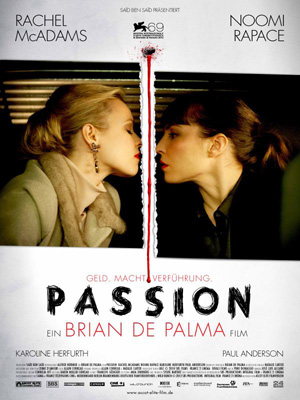 Brian De Palma's Passion will screen three times as part of the 27th edition of the
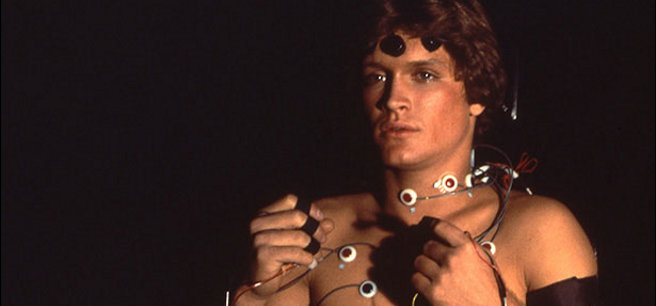
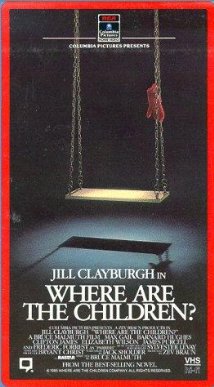 Near the beginning of the interview, while telling Dumas how The Fury came together as a film project, Farris mentions another adaptation he and De Palma had been working on together. While working on the screenplay for The Fury between 1975 and 1976, Farris says, agent Bob Bookman "put me together with another client, Brian De Palma, to work on an adaptation of the Mary Higgins Clark best-seller Where Are The Children? which Brian was attached to direct. I spent a couple of months on a screenplay that would work. By then Brian was bored with the project. Carrie had been released and was a big success and he wanted something more challenging than a fairly mild mystery. 'What are you working on?' he asked me.
 The
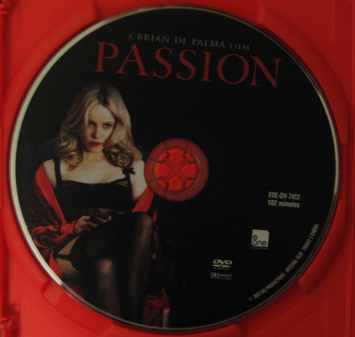
The 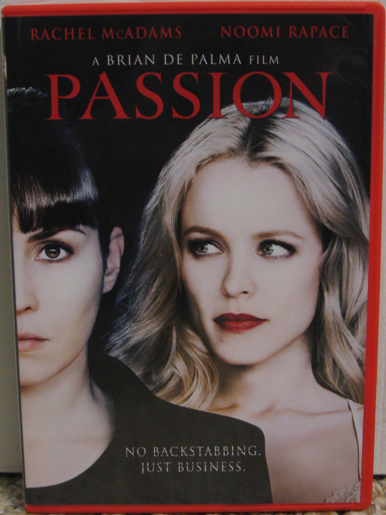 If you went DVD shopping today, Brian De Palma's Passion probably stood out amongst the other new releases, as the cover art was framed by its red plastic shell. Even the Blu-Ray edition is red instead of the usual blue. And to accentuate the lipstick color, the robe worn by Rachel McAdams in the film has been altered for the back cover (and the disc label-- see below) from green to red. Well, that's one way to help the product stand out amongst its competition.