

INTERVIEWED BY KURT SAYENGA
Under the headline, "Brian De Palma vs. The Audience," The Horror Xpress' Kurt Sayenga interviews Howard S. Berger about Brian De Palma. Here's an excerpt from the discussion:
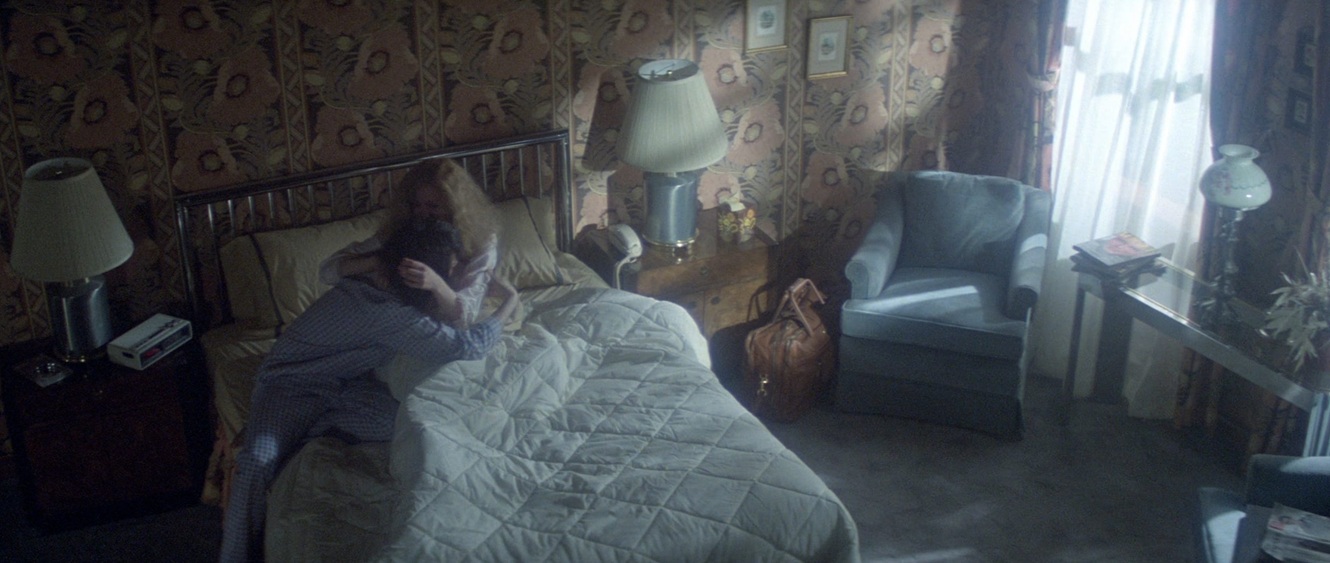
KURT: After The Fury comes the ultimate De Palma film: Dressed to Kill.HOWARD: Dressed to Kill is important because thematically De Palma is at the height of his focus with ideas of femininity, masculinity, religion – in other words, things that in modern society have been made to cripple individuality and dwarf identity and sometimes remove identity, things that just shouldn’t belong in society for a successful society or for successful mental and physical health. And Dressed to Kill in 1980, we’re going out of the ‘70s now into a new era. And he just takes all this along with a slightly more self conscious wink to his own work. So in Dressed to Kill, sure, he’s making some very sophisticated jokes about psychology – obviously jokes, again, but look where he came from. He’s a satirist. He’s not going to let you forget this. So even though there’s this wonderful tricky story about who performed this horrible vivisection with a razor blade in an elevator, he starts to stack up the thought process of the mainstream commercial critics and the audience at the time. The whole point of Carrie was to provoke, provoke, provoke, then explode when your audience and your studio is just not getting it. This is going a little bit farther now. There are scenes in Dressed to Kill where he shows that. You could call it a wink or a spoof – I hate using that word, but it’s just to make you laugh: the very last scene is this dream that Michael Caine is coming for revenge on the woman who put him away, the prostitute played by Nancy Allen. It looks like Halloween! – this subjective camera moving outside the house. In the very next film that he made, Blow Out, he spoofs the spoof. He’s taking that and he’s making it obvious: “This is how you make that scene.” And he replicates the scene that he staged and shot as the dream in the climax of Dressed to Kill, and now he’s using that as an example of how a low-budget director makes a film. So the success of Dressed to Kill as a thriller, because it was shot so elegantly and poetically by Ralf Bode, when he moves on to Blow Out just a year later, it’s all self examination, self reflection, and everything is out in the open. “This is what I have to think about when I make something like this. I need a good scream. I need a good scream. How do I get that scream?” Of course that’s a play on Vertigo with Jimmy Stewart trying to figure out he’s going to get rid of his vertigo, and he has this whole contrived psychological horror thriller he has to put himself through just for the punch line – “Okay, I don’t have vertigo anymore.” And the end of Blow Out, it’s, “Okay, I got my scream.”
It's all connected. The language is all connected. I hate to say they’re jokes, but they are. They’re amusements to him, because this is why you do it. Dressed to Kill is important because once again, like Carrie, his ability to hone emotional capital from these characters was profound for that time. Movies that made you care about horror movies, that made you care about women – not putting them in distress porn horror, that’s not what he’s doing. He’s creating characters that you, the audience, are to identify with. Are you identifying with aspects of someone with transgender passion and an inability to break through that? Michael Caine’s character ultimately is quite a poignant character, especially the use of mirrors in that movie. Mirrors from the very opening scene are very important. What’s obscured? What’s hazed over by condensation? What’s visible? Michael Caine looking at himself in a mirror is so much more indicative of a pain that his character is dealing with which causes a schizophrenia, a violent combination of parts of your mind working against each other, ultimately trying to reconcile. But like Carrie’s mother did to Carrie, your upbringing is dwarfing your ability to process life naturally.
The end of that movie once again reiterates that the nightmare will stay with you if you’re someone who has compassion and who understands why you’re a human being, how you interrelate with other people, how you look at yourself and how you can be healthy or how you can be aberrant. This is not just a moral director but a voice of honest humanitarian concern. People overlook that completely. And Dressed to Kill is a phenomenally emotional film if you look at it even on the superficial level and you don’t look at the Hitchcock winks and jokes and nods.
Read the full discussion at The Horror Xpress.