


Flowers on The Roadside and Flathead From The
Sea
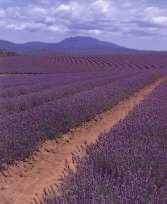 The pioneer
of all Tasmanian natural plant extract industries was launched in 1921
when a few grams of lavender seed were brought from high in the French
Alps and planted in Tasmania. Every January, fields of lavender paint
the landscape of the Bridestowe Lavender Farm near Lilydale, the only
commercial lavender farm in the southern hemisphere. Wander waist-deep
in rows of lavender and carry the scent of your holiday home with you.
Take the time to browse around the area’s wonderful craft outlets.
Head north to the coast, to the sheltered beaches of the resort town of
Bridport. Camp or caravan in nooks and crannies close to the sea;
ski and swim or drop a line for a free feed to fish. Take a boat
journey to beautiful Flinders Island, just six hours away. Drive
inland through the north-east’s rich agricultural land to the mining hamlet
of Derby which drew hundreds of Chinese seeking their fortunes in the boom
days of 1870s-1920s. Immerse yourself in their daily toil at the
tin mine centre - a recreated shanty town with a schoolhouse and mine workings.
To see Tasmanian native animals in the wild, travel to the far north-eastern
corner of the coast, where the eucalypt forests of Mount William National
Park are habitat to over half of Tasmania’s native species, including the
Forester kangaroo. Choose a secluded camping spot and scan the skies
for pelicans and other sea birds which sweep the coast throughout the year.
Top
The pioneer
of all Tasmanian natural plant extract industries was launched in 1921
when a few grams of lavender seed were brought from high in the French
Alps and planted in Tasmania. Every January, fields of lavender paint
the landscape of the Bridestowe Lavender Farm near Lilydale, the only
commercial lavender farm in the southern hemisphere. Wander waist-deep
in rows of lavender and carry the scent of your holiday home with you.
Take the time to browse around the area’s wonderful craft outlets.
Head north to the coast, to the sheltered beaches of the resort town of
Bridport. Camp or caravan in nooks and crannies close to the sea;
ski and swim or drop a line for a free feed to fish. Take a boat
journey to beautiful Flinders Island, just six hours away. Drive
inland through the north-east’s rich agricultural land to the mining hamlet
of Derby which drew hundreds of Chinese seeking their fortunes in the boom
days of 1870s-1920s. Immerse yourself in their daily toil at the
tin mine centre - a recreated shanty town with a schoolhouse and mine workings.
To see Tasmanian native animals in the wild, travel to the far north-eastern
corner of the coast, where the eucalypt forests of Mount William National
Park are habitat to over half of Tasmania’s native species, including the
Forester kangaroo. Choose a secluded camping spot and scan the skies
for pelicans and other sea birds which sweep the coast throughout the year.
Top
The Scent of The Forests and The Spray of Falls
Just half an hour’s drive from Launceston, Hollybank’s 40-minute ‘walk
of change’ passes through a forest of Tasmania’s major timber species.
Follow the interpretive signs to see how each forest type is harvested
and regenerated and stroll beneath exotic deciduous trees and rows of
English ash trees, planted early this century for the manufacture of tennis
racquets. Stay on for a barbecue. Turn off the sealed road
to make your way to the isolated, spectacular reserves of the Blue Tier,
Mount Victoria, Mathinna Falls and the Evercreech Forest. Take a
guided eco-walk along the original pack trails to abandoned mine workings
on the Tier. Walk to forest trails, swim at the base of the Mathinna
Falls in summer and take in the stark beauty of the gunbarrel trunks of
the tallest flowering plants in the world - Tasmania’s forest white fums
- in the Evercreech Reserve. Buy a block of delicious local cheese
from Pyengana then picnic in the fern glades below the spectacular St Columba
Falls, spilling 110 metres into the St Georges River. Enjoy a cold
beer at the ‘Pub in the Paddock’. Top
The East Coast
At the first sight of the coast your spirits rise and the need to stay
in contact with the world begins to slip away. 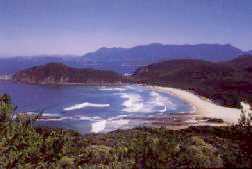 This
is all you have been seeking - the surf, the beach and the freedom of time...
Bury your toes in the sand and feel the tingle of the sea on Tasmania’s
stunning, secluded eastern coastline. Pack your boogie board, fishing
tackle, fins and snorkel or just wallow in the pleasure of an east coast
holiday. Leave the Heritage Highway to drive through the open plains
of the Fingal Valley and follow the course of the beautiful South Esk River
through the villages of Avoca, Fingal and St Marys, until you reach the
sea. From its northern headland at Eddystone Point is Binalong Bay,
the Bay of Fires is dotted with holiday shacks, camping grounds and is
blooming with wildflowers in summer. Walk the beaches at dusk past
surf rods anchored in the sand, or sift through the shells at the high
tide mark or find minuscule marvels of nature. Top
This
is all you have been seeking - the surf, the beach and the freedom of time...
Bury your toes in the sand and feel the tingle of the sea on Tasmania’s
stunning, secluded eastern coastline. Pack your boogie board, fishing
tackle, fins and snorkel or just wallow in the pleasure of an east coast
holiday. Leave the Heritage Highway to drive through the open plains
of the Fingal Valley and follow the course of the beautiful South Esk River
through the villages of Avoca, Fingal and St Marys, until you reach the
sea. From its northern headland at Eddystone Point is Binalong Bay,
the Bay of Fires is dotted with holiday shacks, camping grounds and is
blooming with wildflowers in summer. Walk the beaches at dusk past
surf rods anchored in the sand, or sift through the shells at the high
tide mark or find minuscule marvels of nature. Top
Scallops, Sand Dunes and Life Beneath The
Sea
All that glitters in St Helens is the reflected light of Georges Bay
- a resort town without the glitz, where life has slowed to a saunter.
Walk to the edge of town and watch the fishing boats unload their catch
- rock lobster, scallops and deep water scale fish from the Continental
Shelf - served in season at restaurants along the coast. Complement
your meal with a bottle of high quality wine from an east coast vineyard.  From
the sand dunes of St Helens Point through the Chain of
Lagoons and Bicheno, the east coast is a ribbon of breathtaking beaches,
granite outcrops and deserted coves - sometimes peopled, never crowded
- edged by an underwater wilderness. Take a guided dive tour of the
marine habitats of the coast with their unparalleled visibility and fish
and plant diversity. Bicheno’s Governor Island Reserve has some of
the best temperate shore and boat diving in Australia. Charter a
boat or hire a dinghy from one of the coastal towns or simply choose your
spot and drop a line. Take your seat for the nightly penguin parade
near Bicheno’s Diamond Island. Top
From
the sand dunes of St Helens Point through the Chain of
Lagoons and Bicheno, the east coast is a ribbon of breathtaking beaches,
granite outcrops and deserted coves - sometimes peopled, never crowded
- edged by an underwater wilderness. Take a guided dive tour of the
marine habitats of the coast with their unparalleled visibility and fish
and plant diversity. Bicheno’s Governor Island Reserve has some of
the best temperate shore and boat diving in Australia. Charter a
boat or hire a dinghy from one of the coastal towns or simply choose your
spot and drop a line. Take your seat for the nightly penguin parade
near Bicheno’s Diamond Island. Top
Walk in The Forest
North of Bicheno, the Douglas and Apsley rivers spill through the Douglas
Apsley National Park, the largest area of undisturbed dry sclerophyll forest
in Tasmania. Follow the easy and accessible 10-minute trail to the
Apsley Waterhole, or walk to the lookout for a wonderful view of the river.
Top
Camp By The Sea
The pink granite monoliths of the Freycinet National Park beckons travellers
to explore the peninsula - fringed with white beaches, crystal water and
some of the most spectacular coastal headlands in Tasmania. Climb
to the saddle of The Hazards and take in stunning Wineglass Bay - an easy
day-walk from beautiful Coles Bay. Or spend the night under stars
and push on to Mount Graham and Cooks Beach, where cruising yachts lie
at anchor. Nestling in sheltered Great Oyster Bay the placid waters
of the resort town of Swansea are popular for boating, fishing and swimming.
Wander through the historic streets to the East Coast Museum and to the
only bark museum in Australia. Top
...or in a Penitentiary
Spend your days on the beach or take day trips along the magnificent
coastline to Triabunna and stop to enjoy Tasmanian seafood along the way.
Continue on to Orford and take a ferry to Maria Island National Park and
the ruins of the historic penitentiary which pre-dates Port Arthur. Top
