<>
A
Cold War Tragedy
The
crash of B-36D 44-92071
A sad fact of military service is the ever
present possibility of death, even during
peacetime. This can occur during training, or
during an exercise. In the case of this B-36
it happened during a simple ferry flight from
Carswell Air Force Base to Biggs AFB. What
should have been a very routine flight ended in the
death of nine servicemen.
44-92071 had been built as a
B-36B-5-CF, leaving the Convair factory at Fort
Worth in 1949. She was later converted to
B-36D standard with the addition of jet pods and
other details. For several years she served
with the 7th Bombardment Wing based at Carswell
AFB. On the morning of December 11, 1953
she left Carswell for a little over a three
hour ferry flight to Biggs AFB and a transfer to the
95th Bomb Wing. Unfortunately that
appointment would not be kept. That flight
ended approximately four and a half miles southwest
of Biggs at the 5,200 foot elevation on the west
side of the Franklin Mountains.
That flight had departed Carswell
at 12:15 CST (1815 GMT) and crashed at 14:37 MST
(2137 GMT). Those times are drawn from the
USAF crash report. While the takeoff was
established from logs at Carswell, the crash time
was based on loss of contact with the aircraft at
2137 Zulu. The flight had been uneventful
until placed in a holding pattern of Salt Flats,
Texas for fifteen minutes due to weather conditions
at El Paso, Texas. From that point on weather
would play a determining factor. Rather than
restate the evidence a copy of the crash
report provides the best sequence of
events and postmortem of the accident.
The wreck site today.
I first visited the wreck site in 1976
and returned maybe three to four times in the next six
years. For the next twenty something years work and
family took priority and it was not until May 27, 2008 that
I was able to make a return visit. During those
intervening years I discovered that the mountains had become
steeper and there was less air then there had been
before. There were also a lot more rocks and gravity
had become stronger.
Wives are not interested in this sort of
adventure, so a friend and I had agreed to make the
climb. As afternoon temperatures can already approach
100 F we met at Village Inn (does that make us Village
idiots?) for breakfast at 0600 and started our climb.
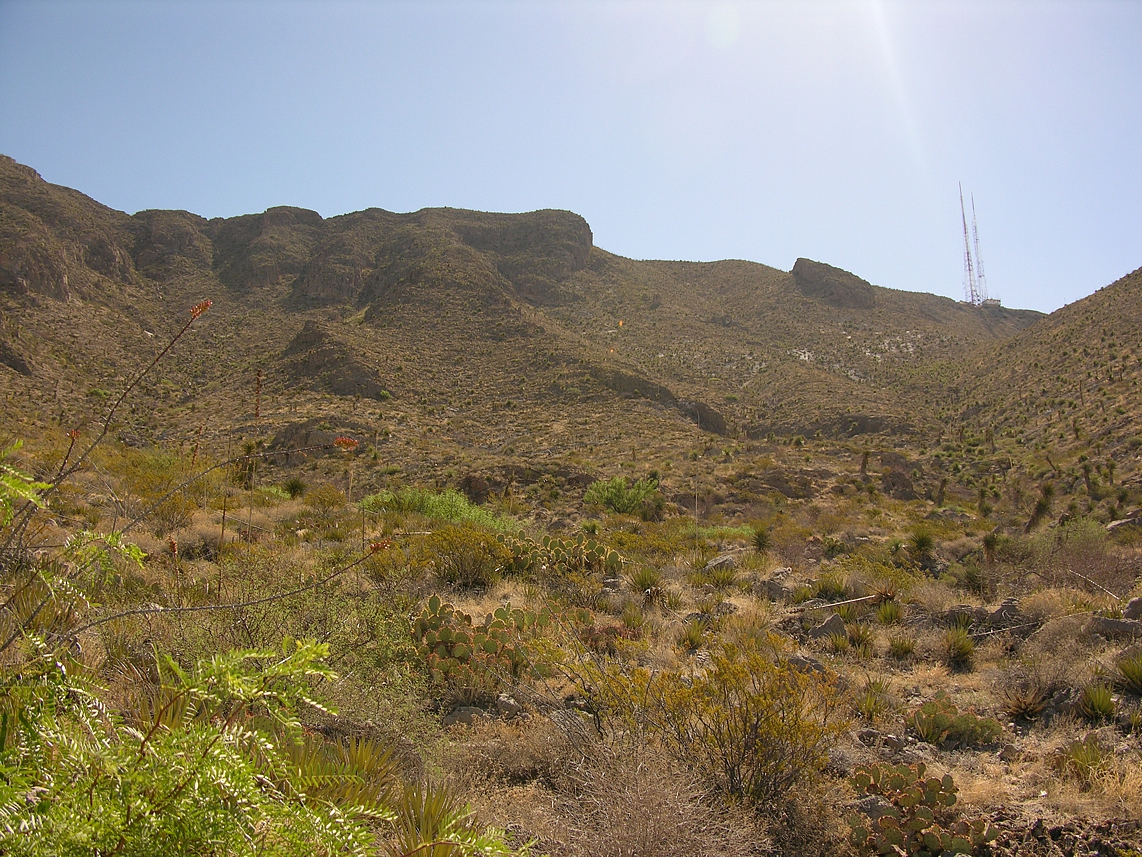
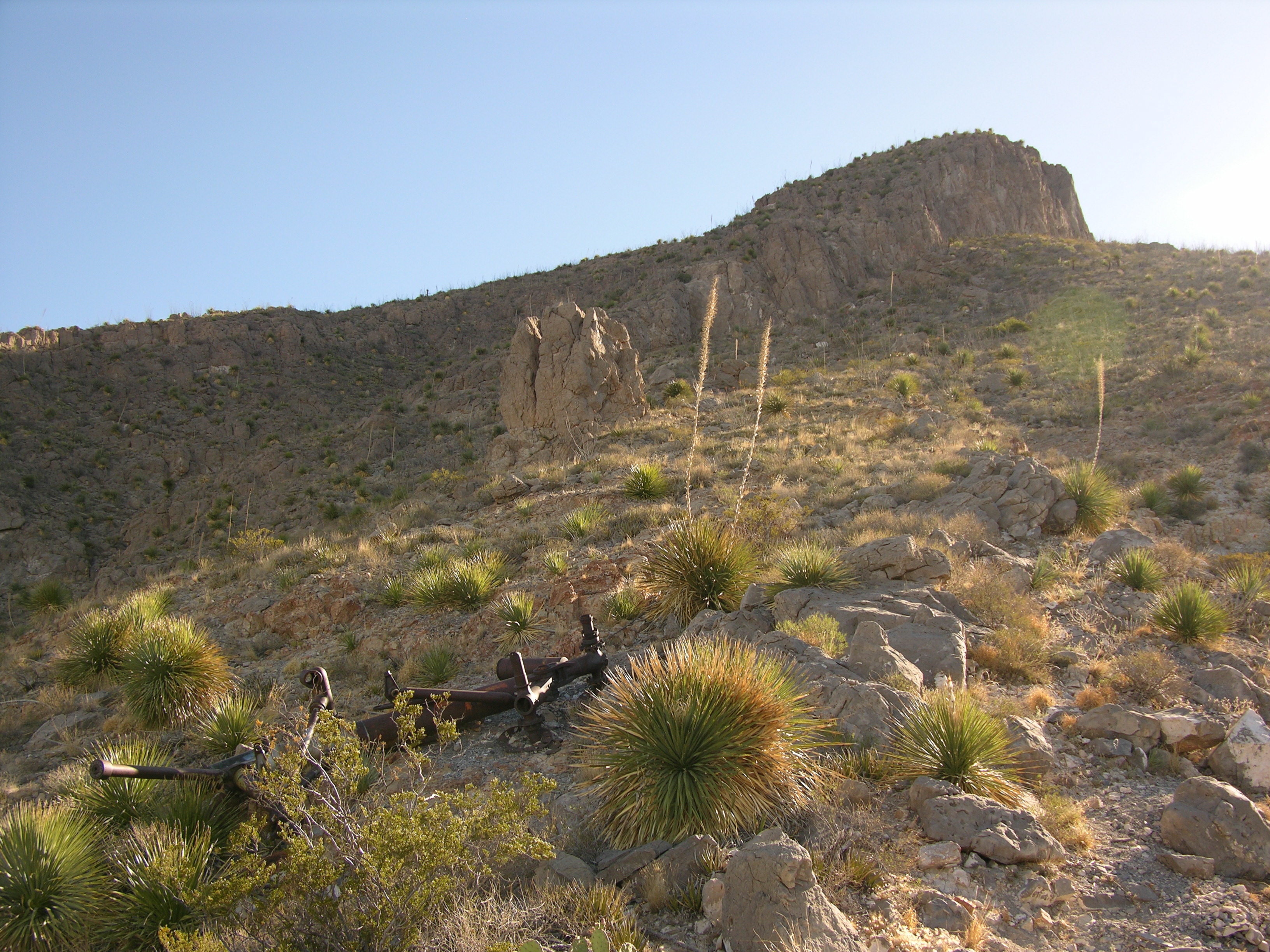
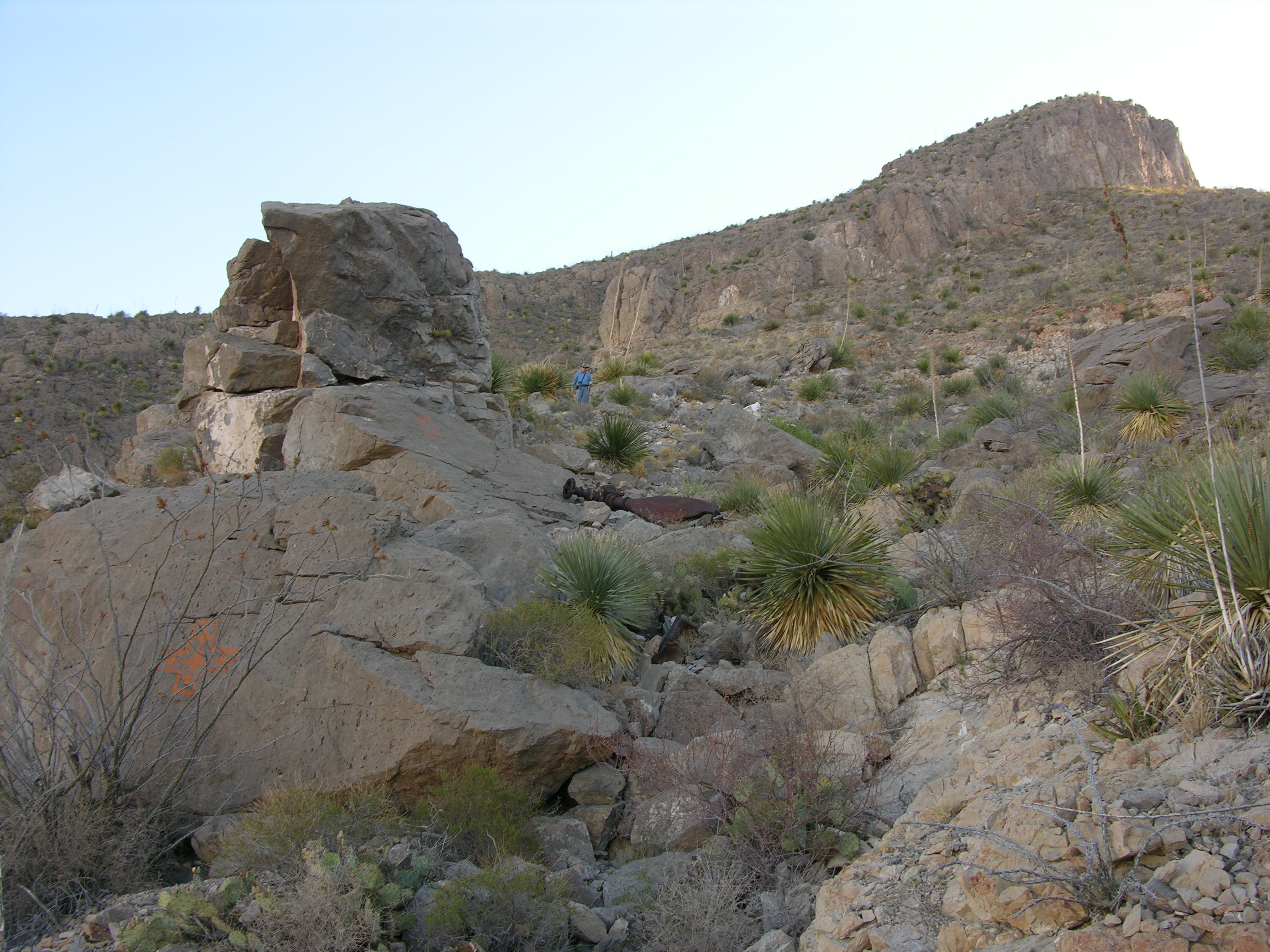
The wreck is located about a quarter of a mile North of
Ranger Peak and a couple of landmarks make it rather easy to
find, the easiest to locate is a rock that looks like a
thumb. This is just above the site and with a pair of
binoculars one of the main gear can be seen.
The starting point is roughly 4,200 feet
in altitude and the final site is about 5,200 feet.
That is "only" a thousand foot change in elevation. It
is also a difficult climb and not one for someone in poor
physical shape. It is hard enough for someone in
mediocre shape. Arduous would be an overstatement, but
it is a trying climb. A winding dirt road leads to the
base of a gully that runs directly up to crash site.
From there up it is just plain old fashioned work.
From this point up we started finding bits and pieces,
eventually becoming bigger pieces. We reached
the wreck about an hour, or so after starting the climb and
discovered that not much had changed in the three decades
since my first visit in 1976. There is still a good
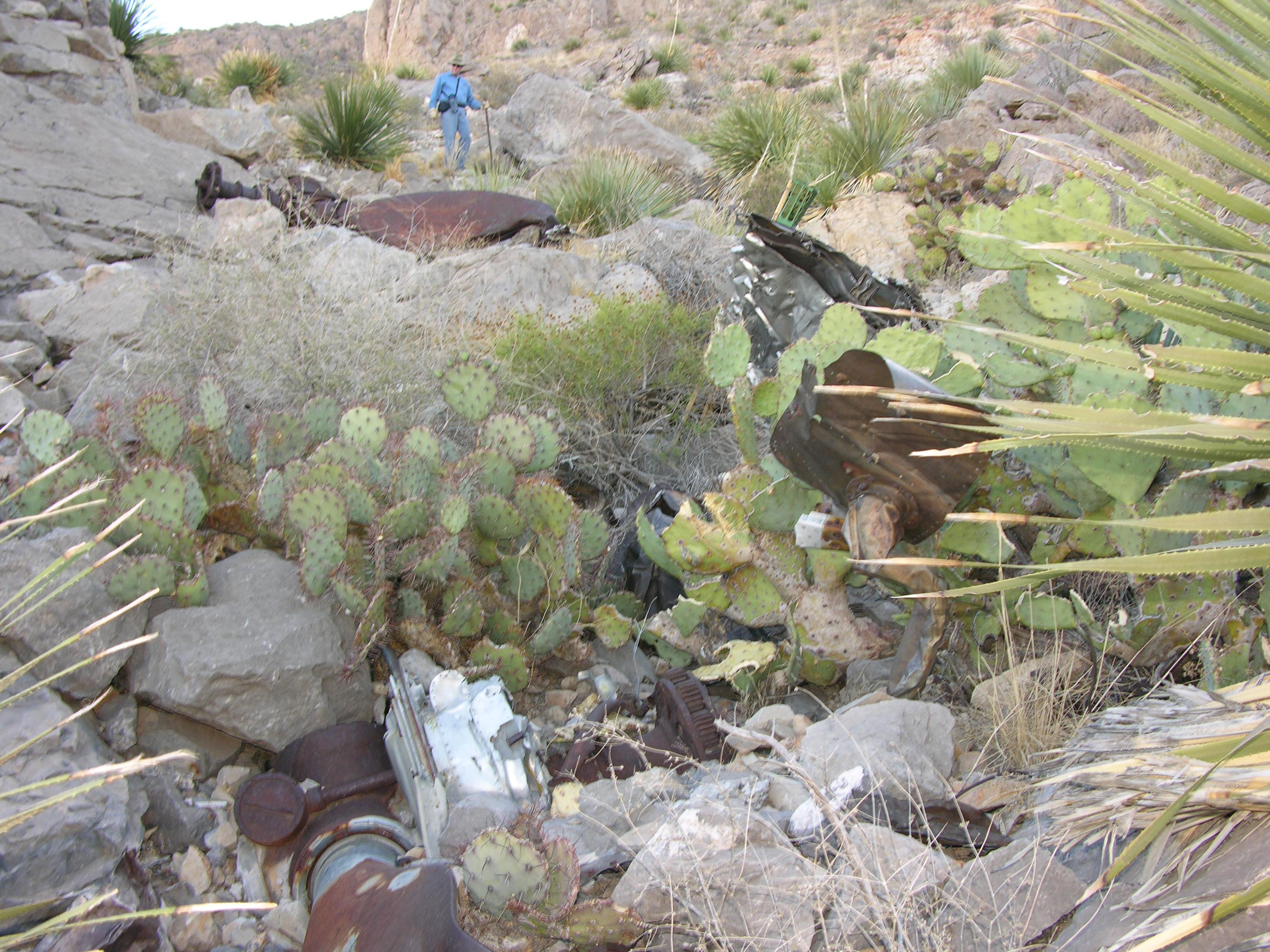
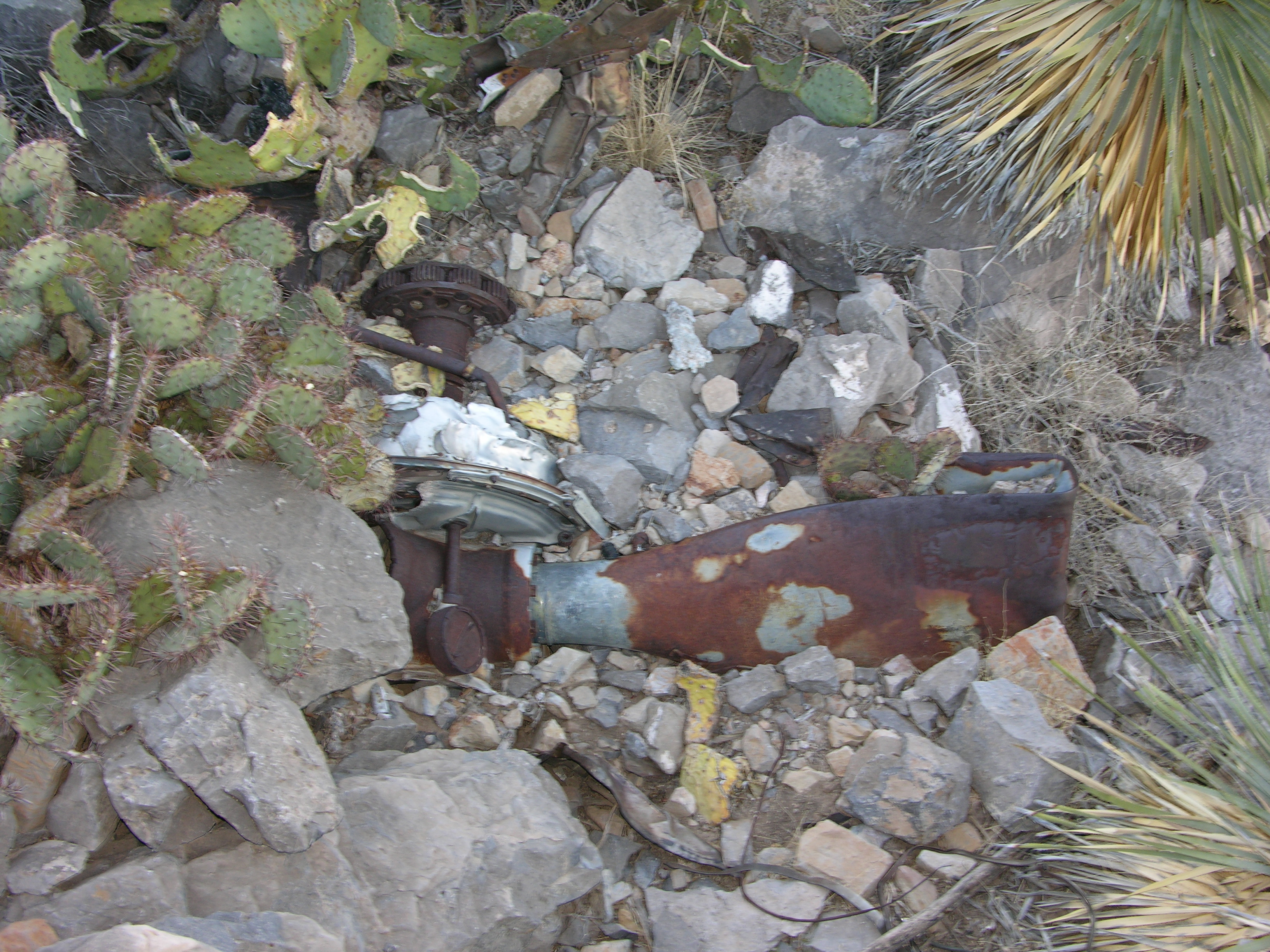
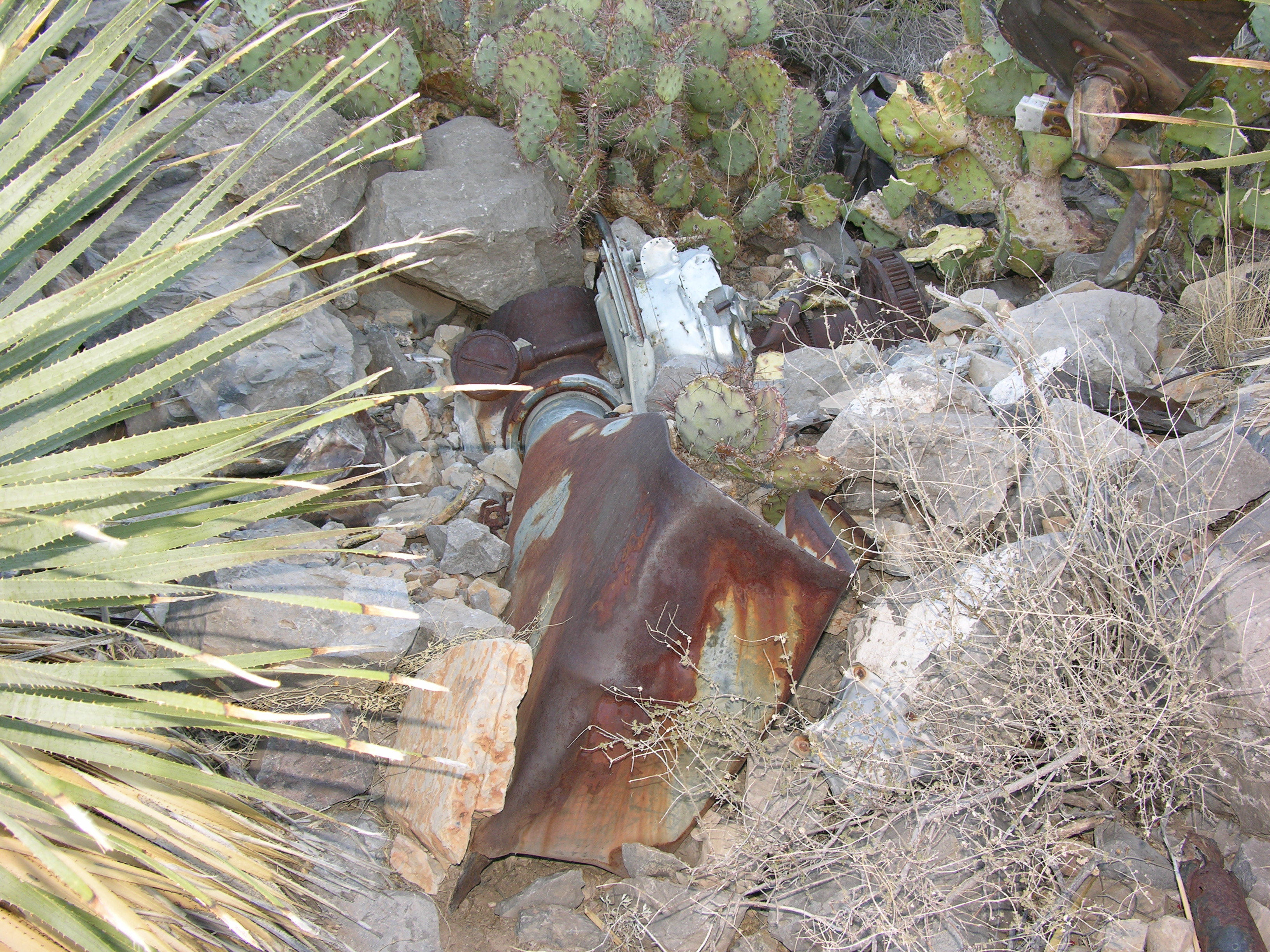
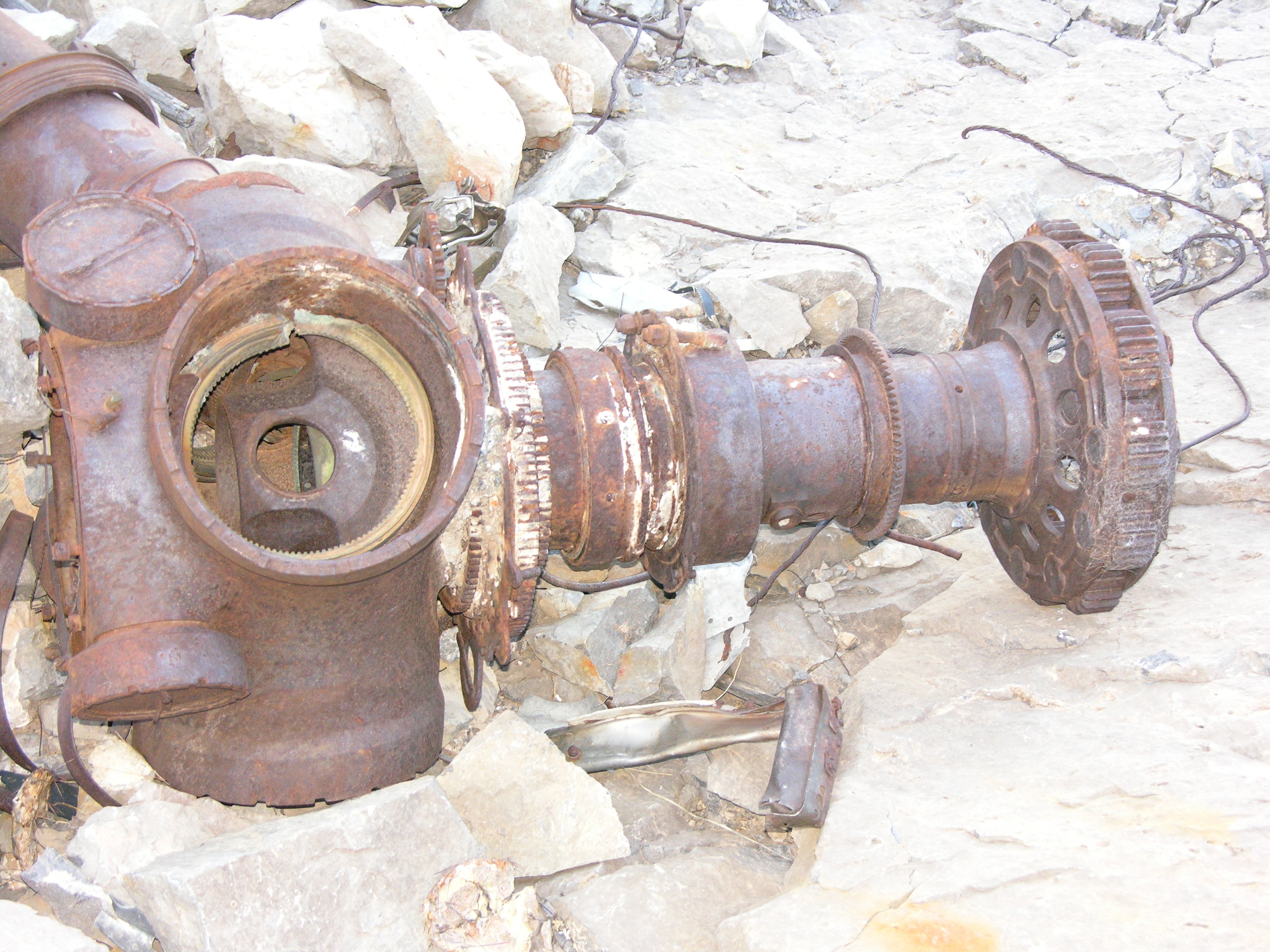
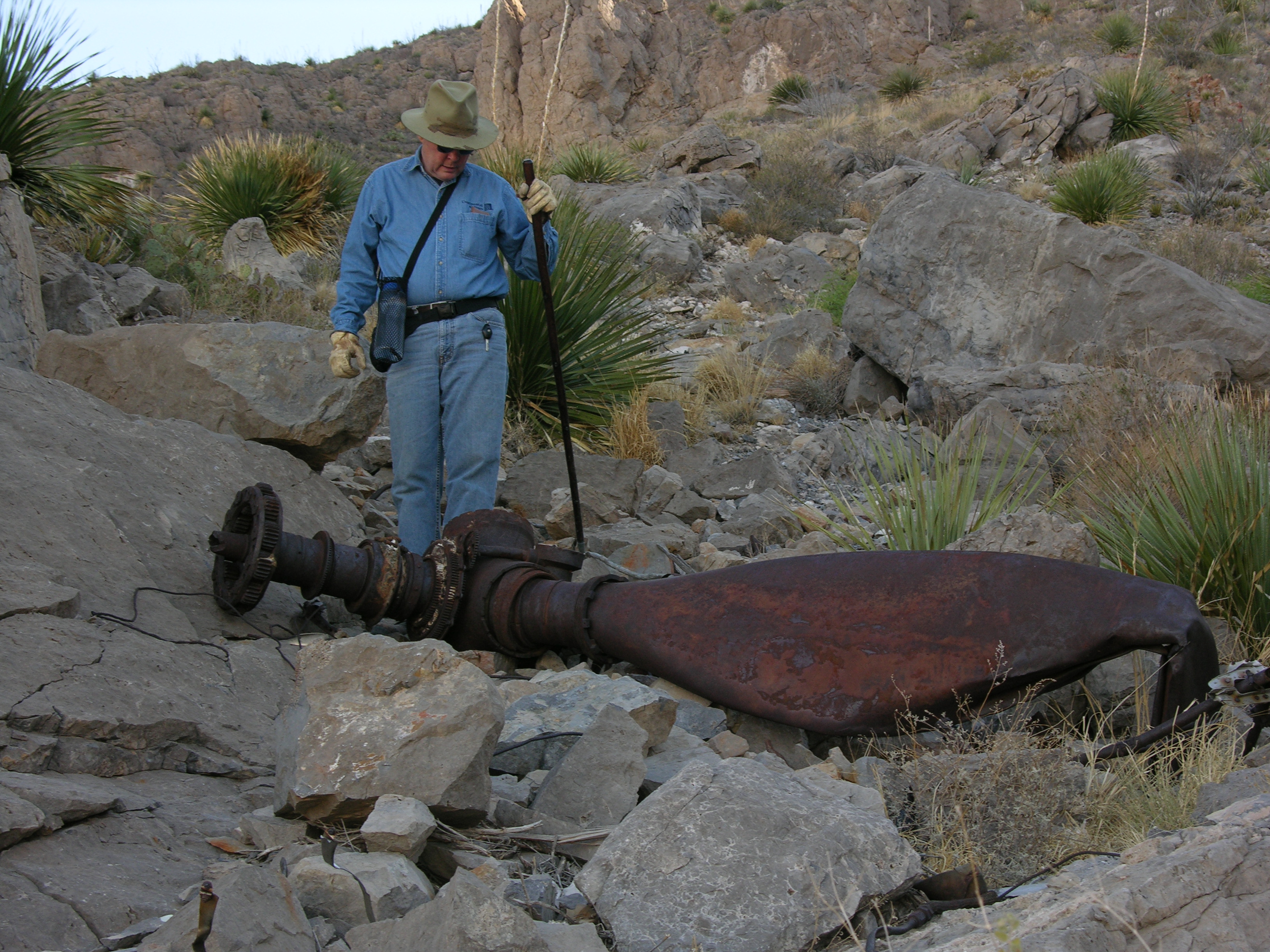
deal of debris scattered about: Landing gear, prop blades, a
J47 engine and many small pieces. Still evident are
areas of slag left from burned aluminum and magnesium.
After the crash the only intact portions of the B-36
were the outer wing panels outboard of the engines and
the tail. Those portions were destroyed by the Air
Force in early 1954, but a great deal still remains.
We had planned the hike so as to allow
most of the climb to be shaded by the mountain and that plan
worked fairly well, the sun only striking us well after we
reached the wreck. As the sun climbed over the
mountain the temperature rose rapidly, so we started our
decent. While not quite as desperate as Riddick's race
against the dawn across the surface of Crematoria, there was
a natural urge to get out of the (now) hot sun. Even
the snakes stayed inside their burrows that day.
Managing to avoid the yucca, Spanish dagger and prickly pear
and most importantly not taking a tumble, we were back at
the car by 1000.
The crash occurred on an cold overcast
day when the mountain tops were covered by clouds, morbidly
referred to as cumulogranite by many in aviation.
There were snow flurries recorded by the weather service and
undoubtedly the wind was blowing. As the accident
happened in mid afternoon and the sun would set around 1630
MST the first personnel most likely arrived after
dark. On a day like that helicopters would not have
been practical which meant a long cold climb in the dark,
though witnesses reported that the fire from the crash
burned off the overcast directly over the crash. The
climb might have been partially lit by the fires that burned
for hours.
Those men killed in the
service of their country that day were:
Lt. Col. Hermen Gerick
Aircraft Commander
Major George C. Morford Pilot
Major Douglas A. Miner
Navigator
1st Lt. Gary B. Fent
Flight Engineer
M Sgt Royal Freeman
Radio Operator
A/1c Edwin D. Howe
Gunner
A/2c Frank Silvestri
Gunner
1st Lt James M. Harvey
492nd Bomb Squadron Staff Flight Engineer
1st Sgt Dewey Taliaferro
Passenger
2071 is shown just moments before
the crash. The right wing is dipped as the airplane
turns more towards the north east. By this point the
B-36 is below the overcast with the terrain rising rapidly
ahead of it. (I have seen this picture in the past
but have never seen credit as to the individual that took
it. While researching the crash reported in
contemporary newspaper accounts I discovered the same
photo on the front page of the El Paso Times from 12
December, 1953. The photo was taken by John Vernon.)
This image gives a clue as to the
terrain the site is located in. The orange lens flare in
the right center of the photo is just slightly to the left
(north) of the impact area.
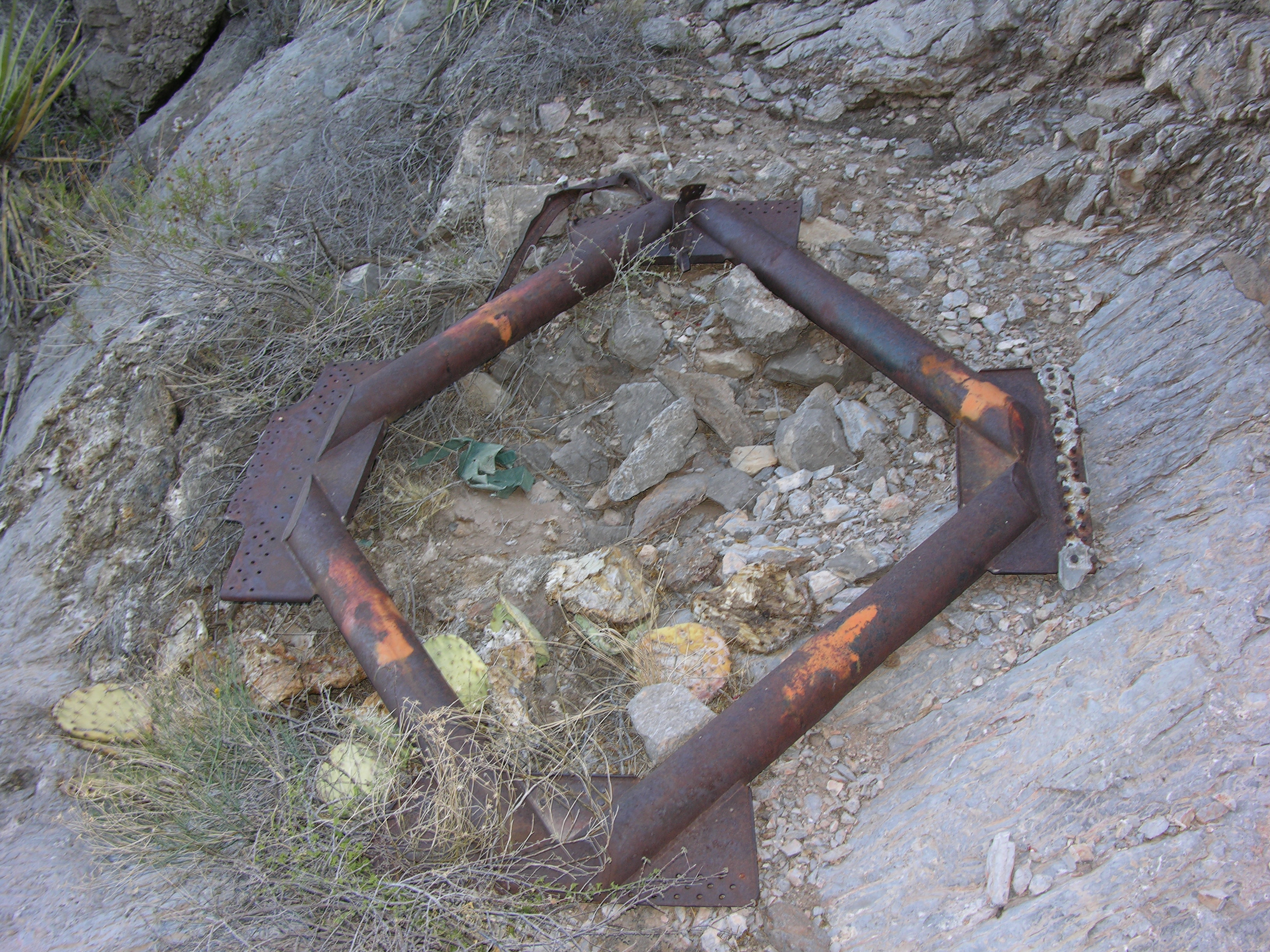
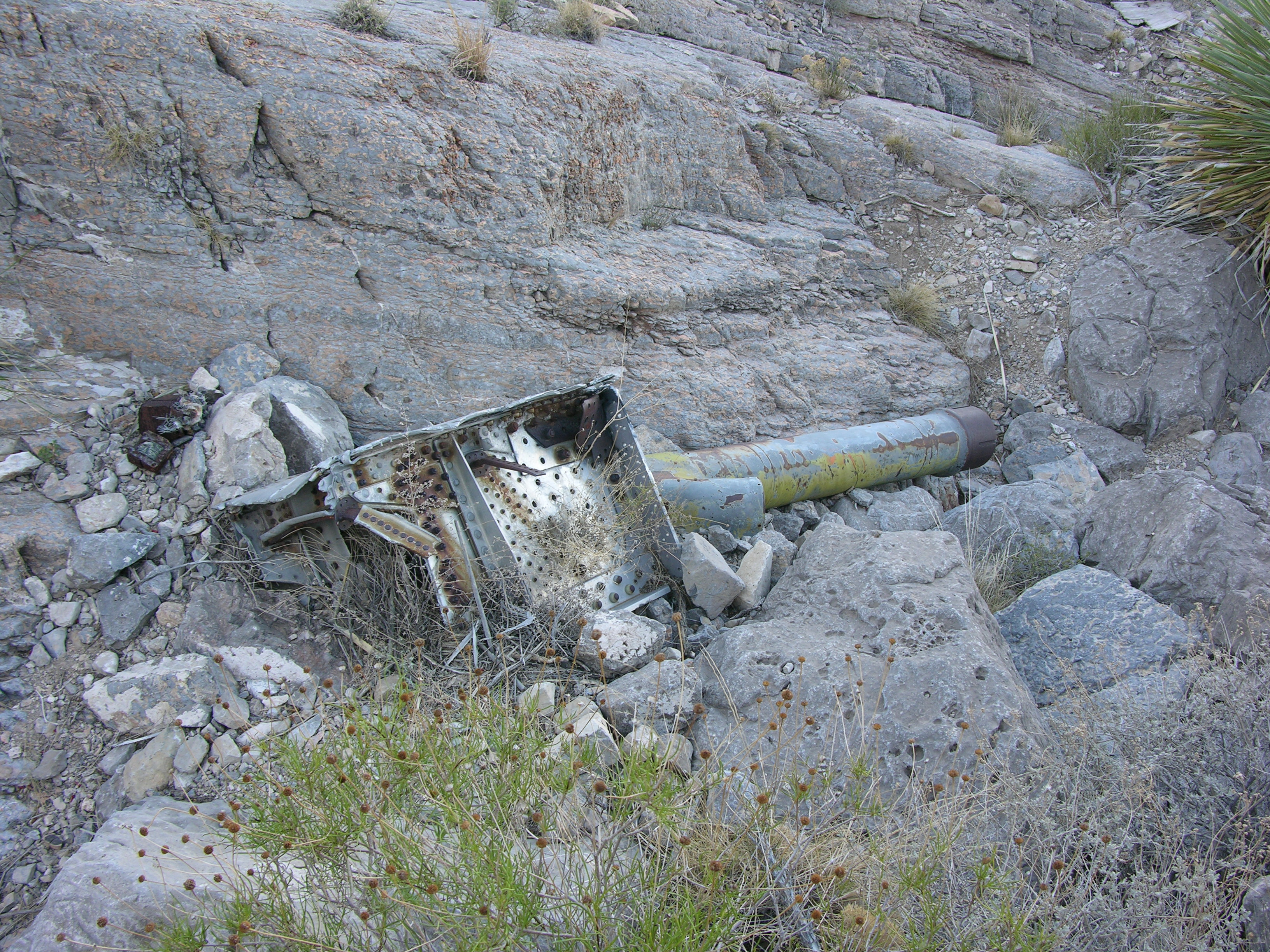
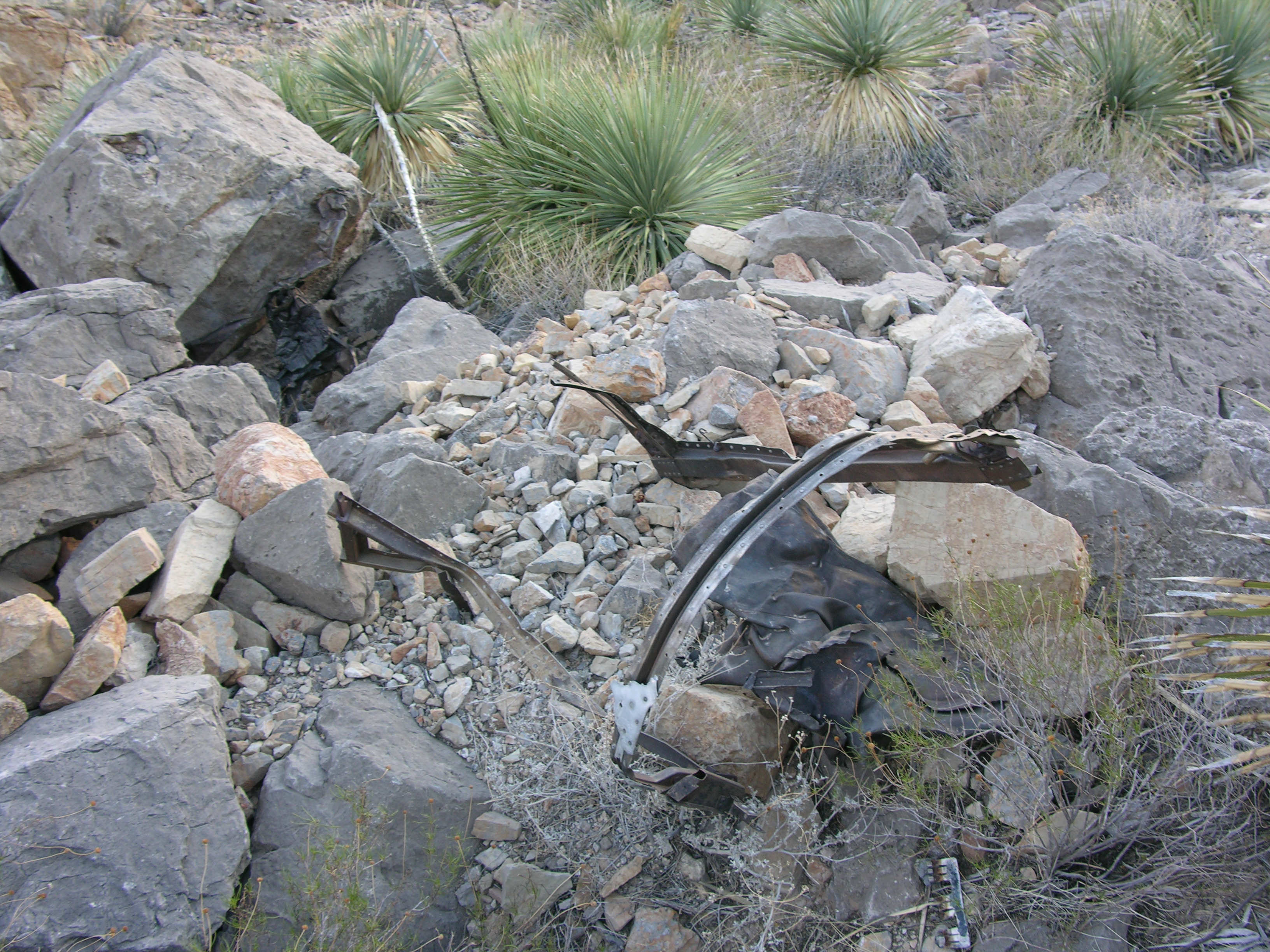
This is a support inside the wing for
the cooling duct for one of the R-4360s.
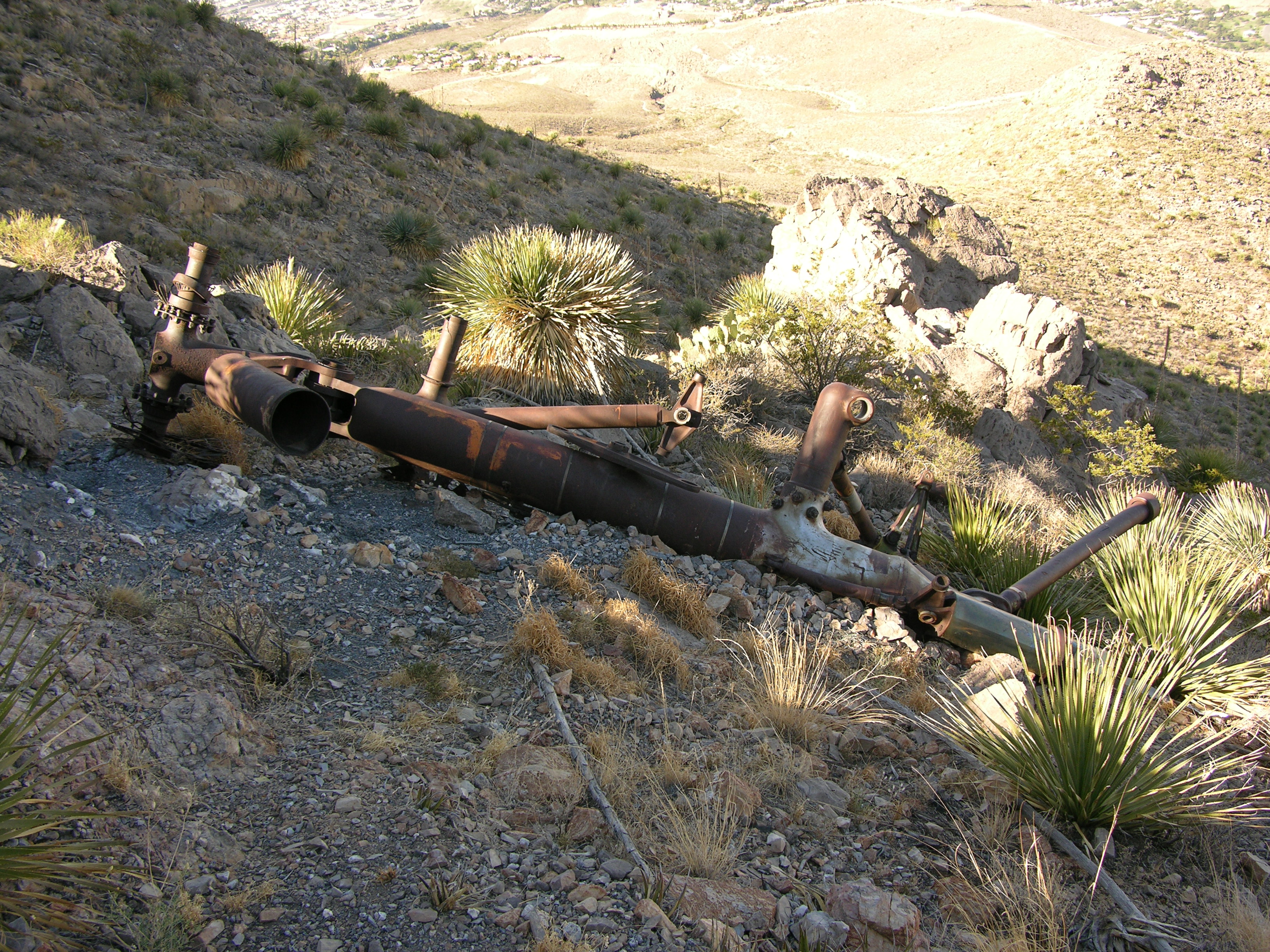
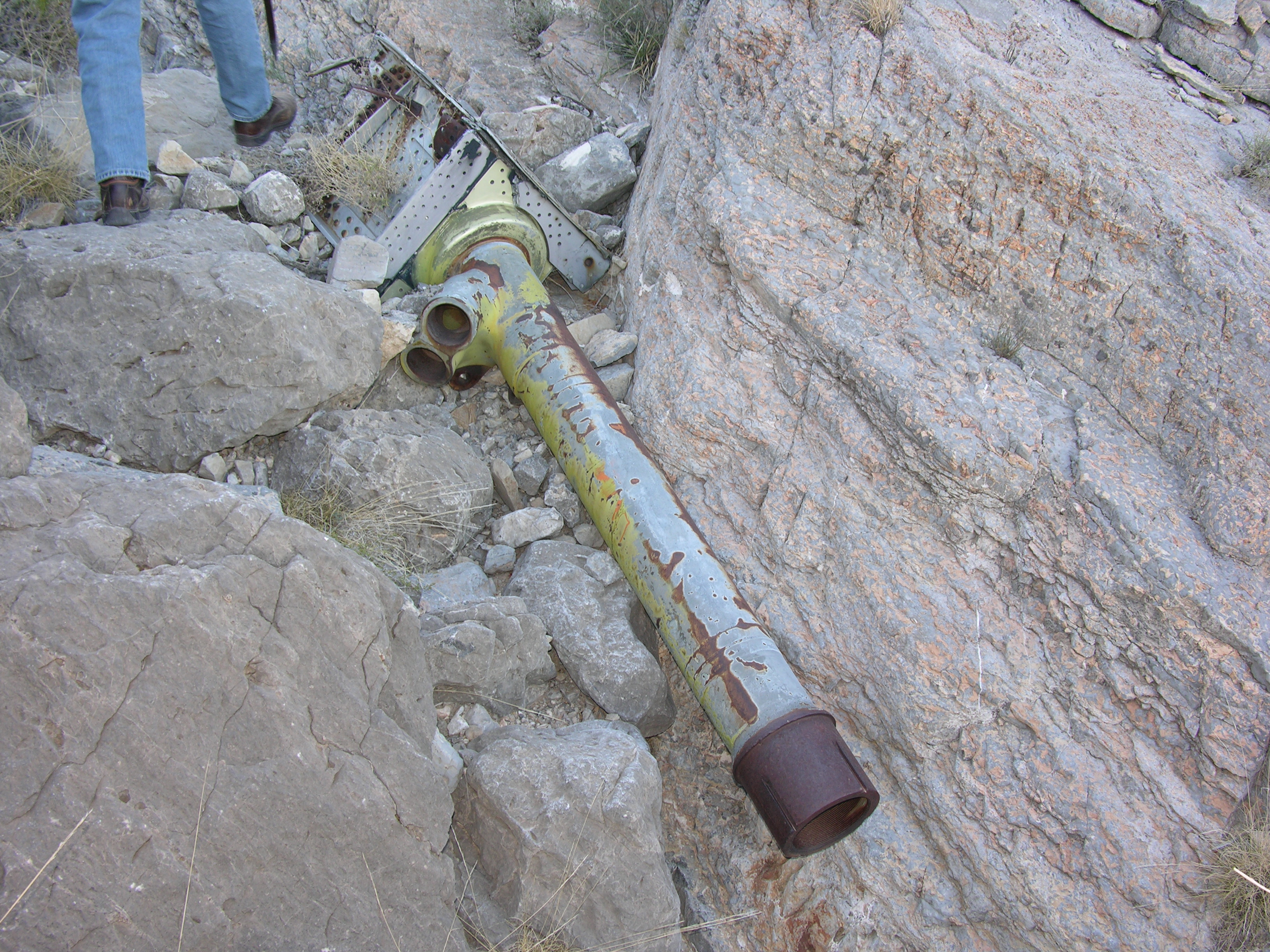
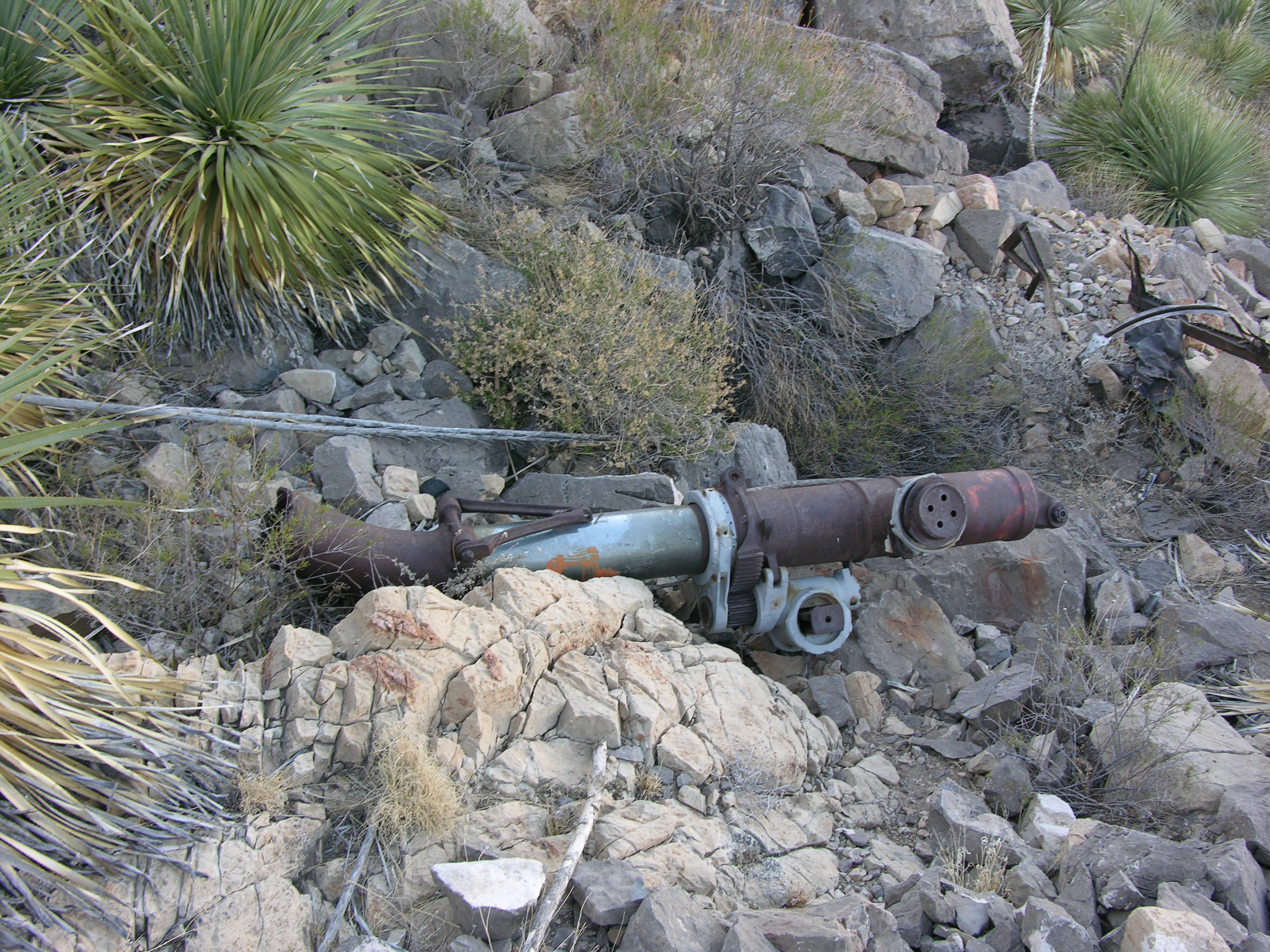
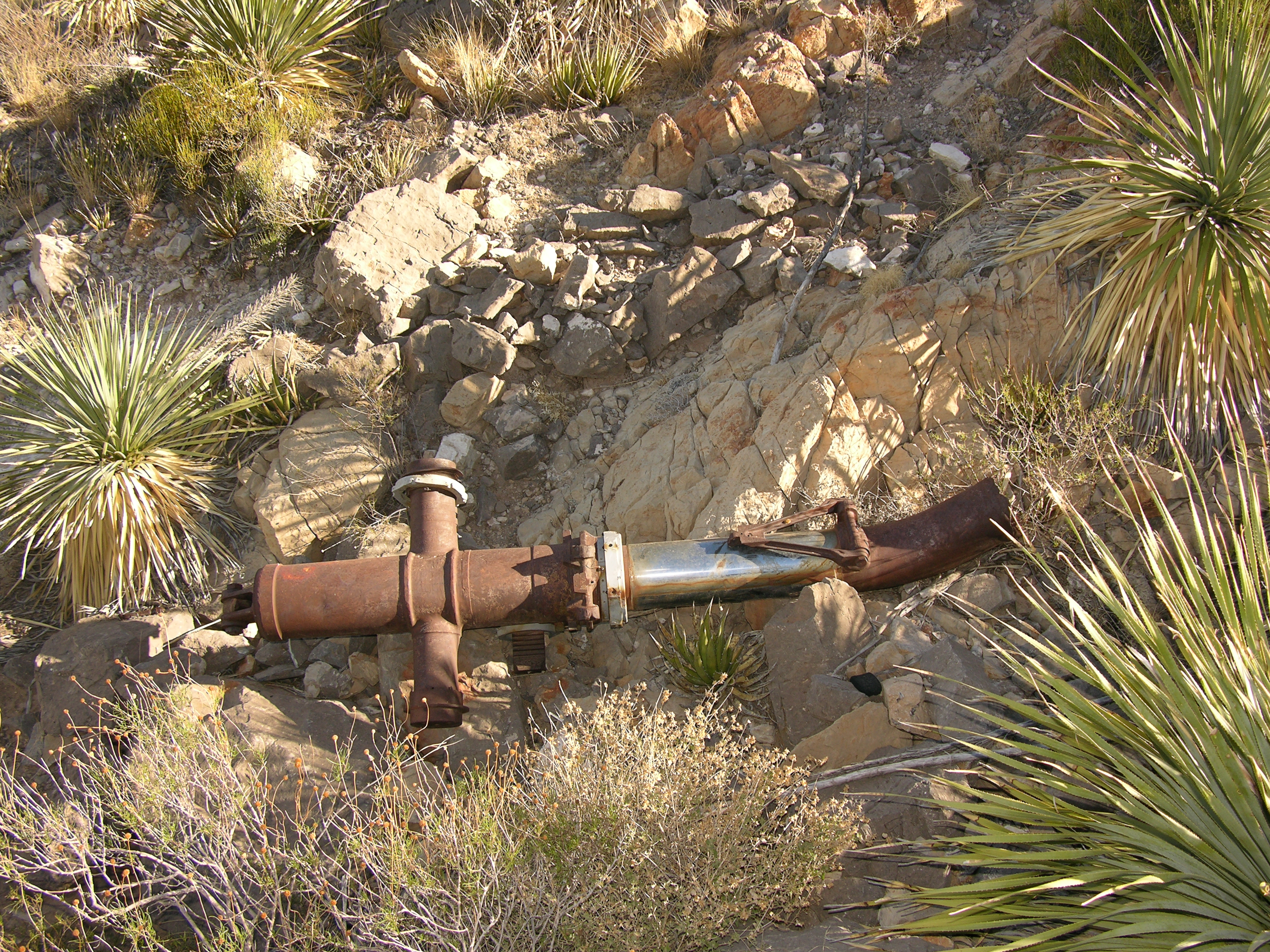
The piece most easily identified from
the ground is one of the main landing gear. From a
distance I saw the shine off of the chrome portion of the
Oleo strut and thought that it still appeared
pristine. However, when I actually climbed up to the
gear it was apparent that the fire had discolored the metal.
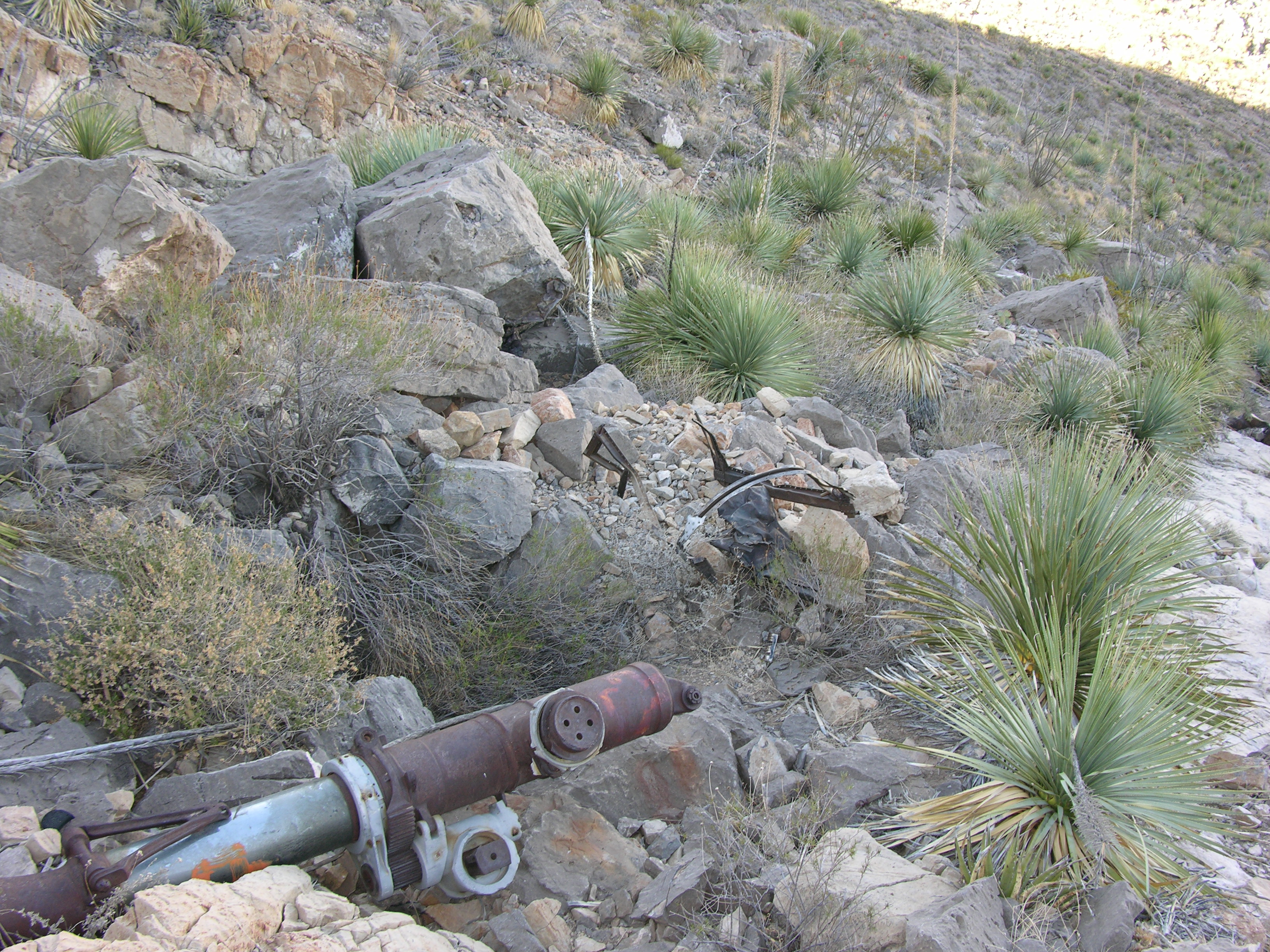
I believe that these are all components
of the main gear(s).
The nose gear was tossed down into one of
the ravines in the area. The mount for the nose wheels
is sheared off giving a good indication of the force of
impact.
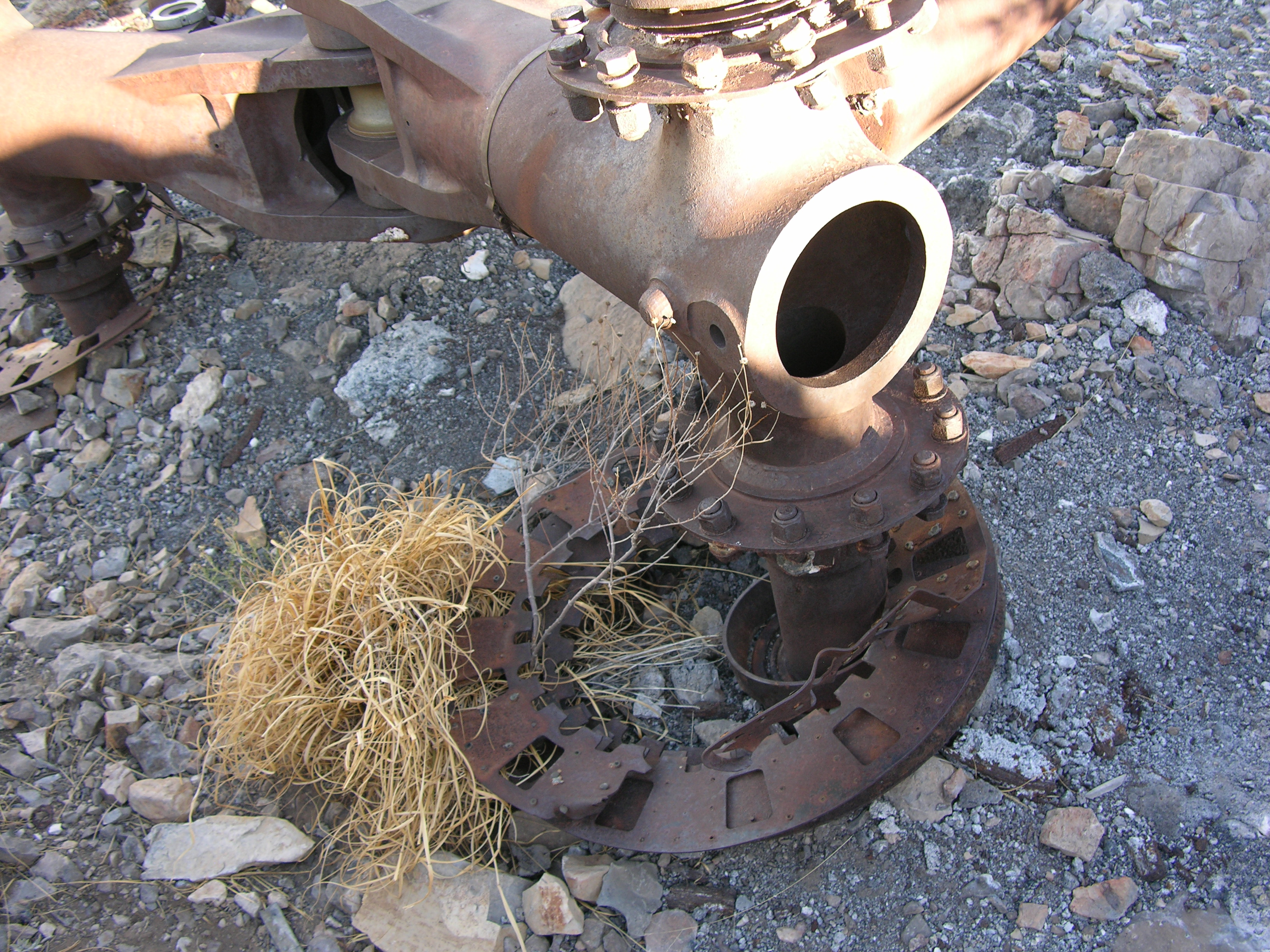
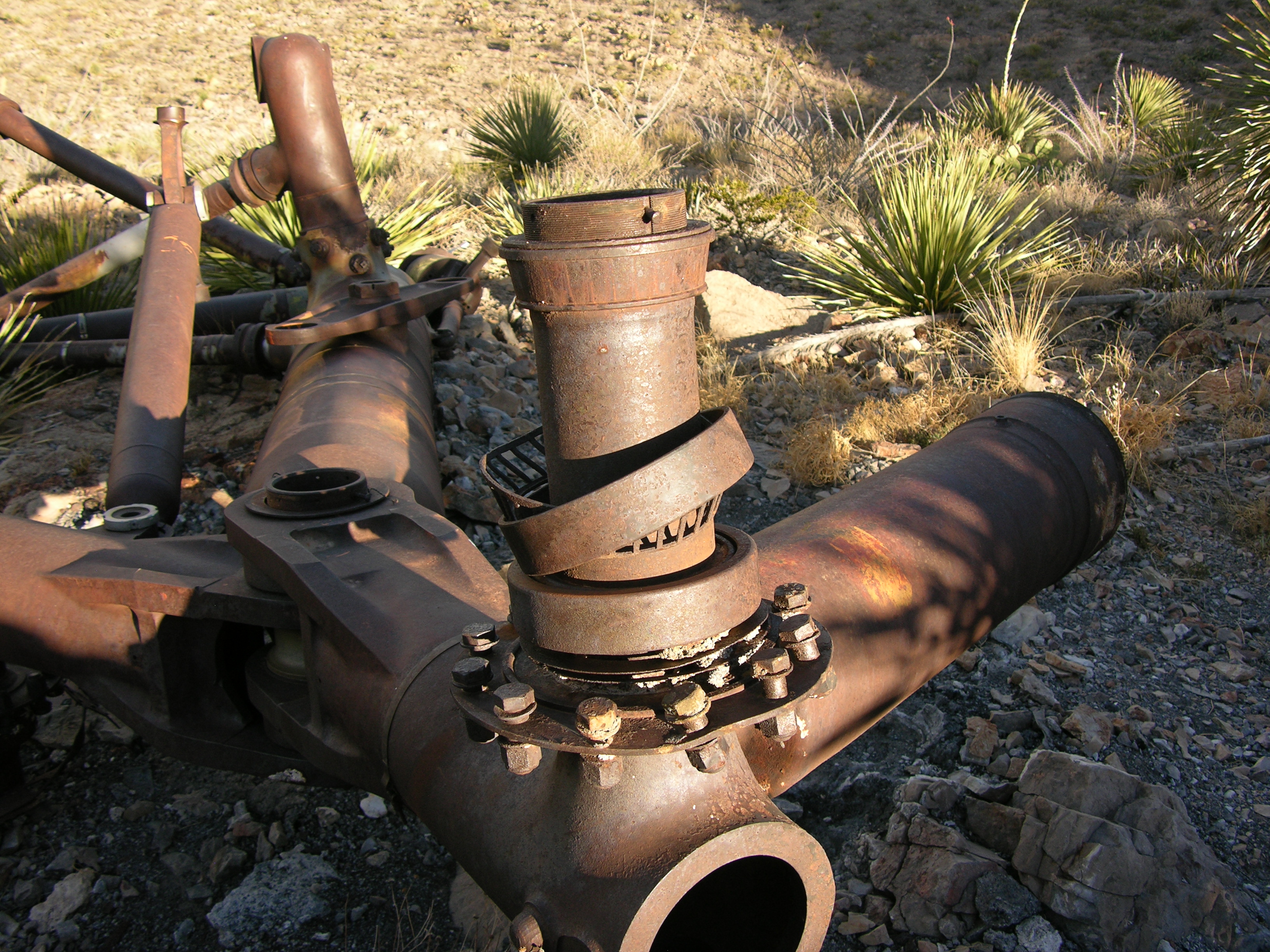
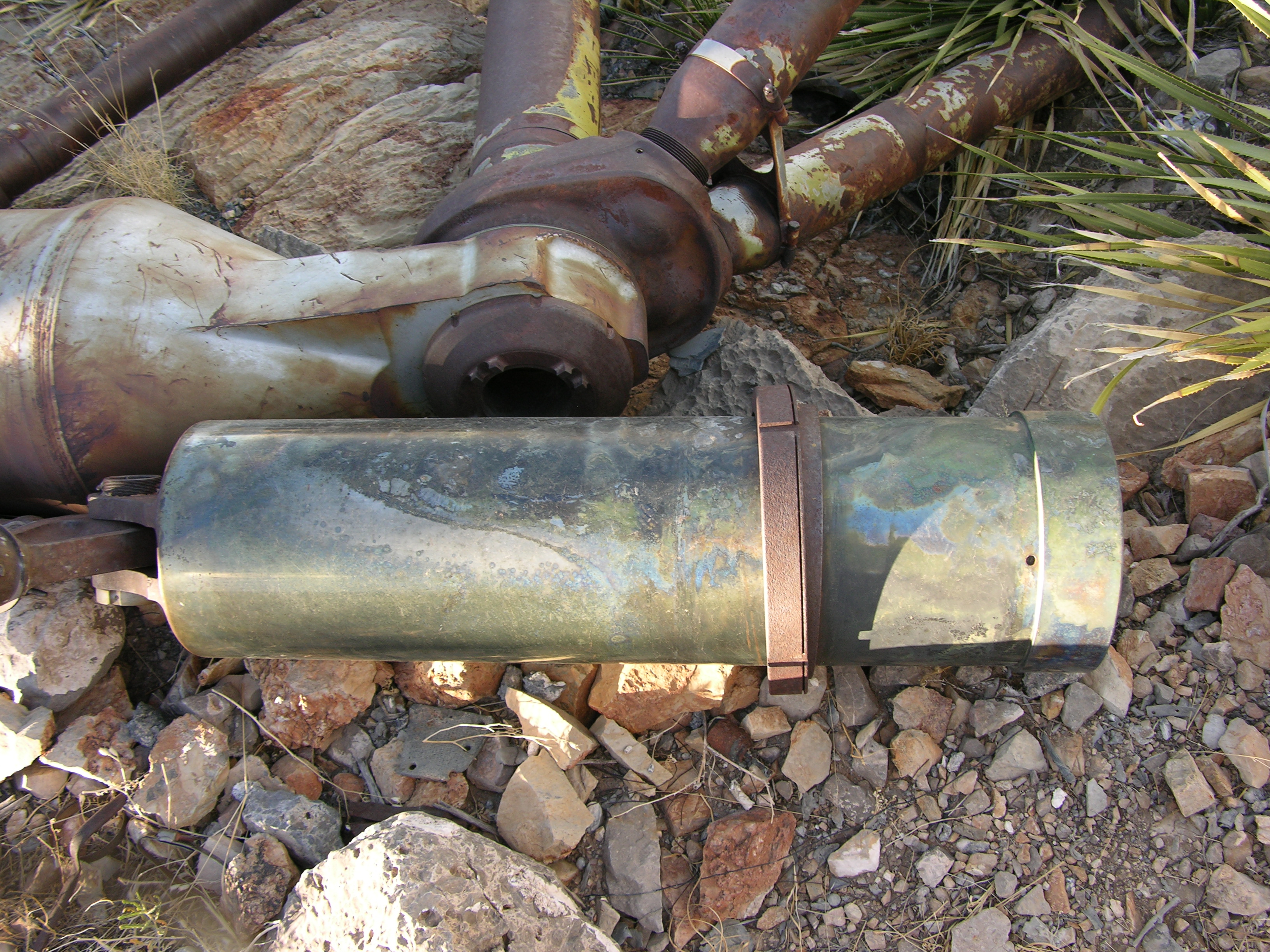
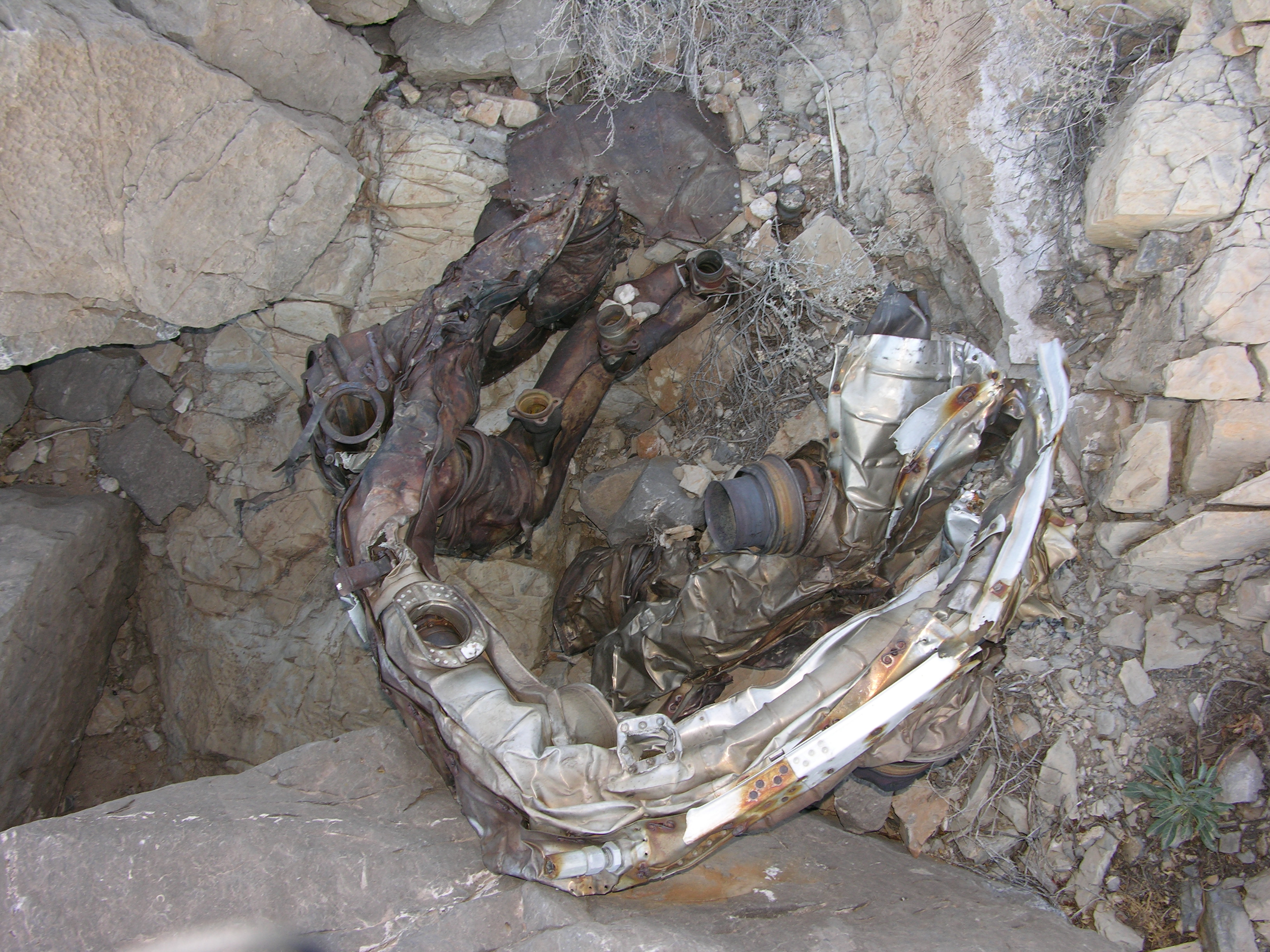
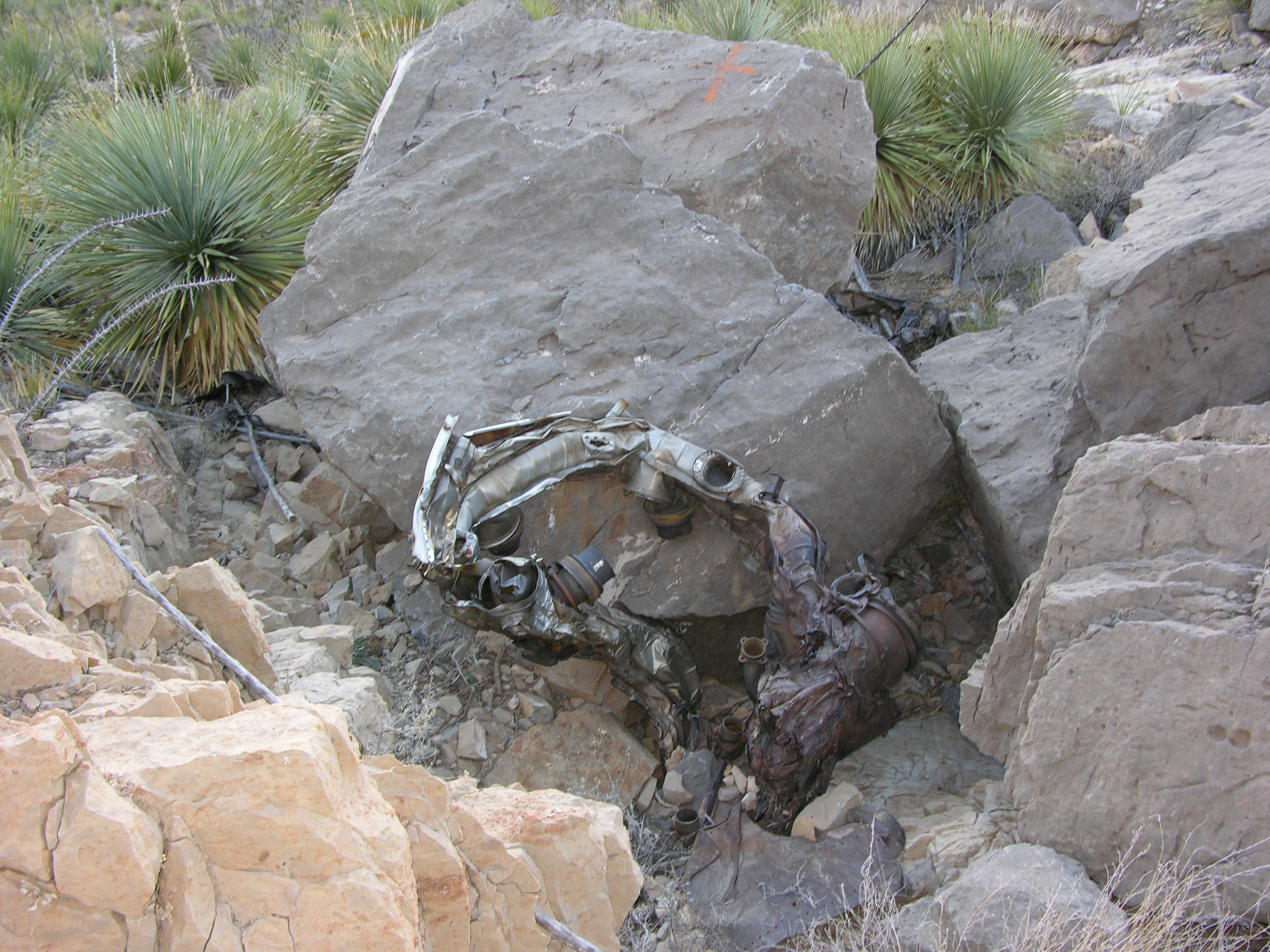
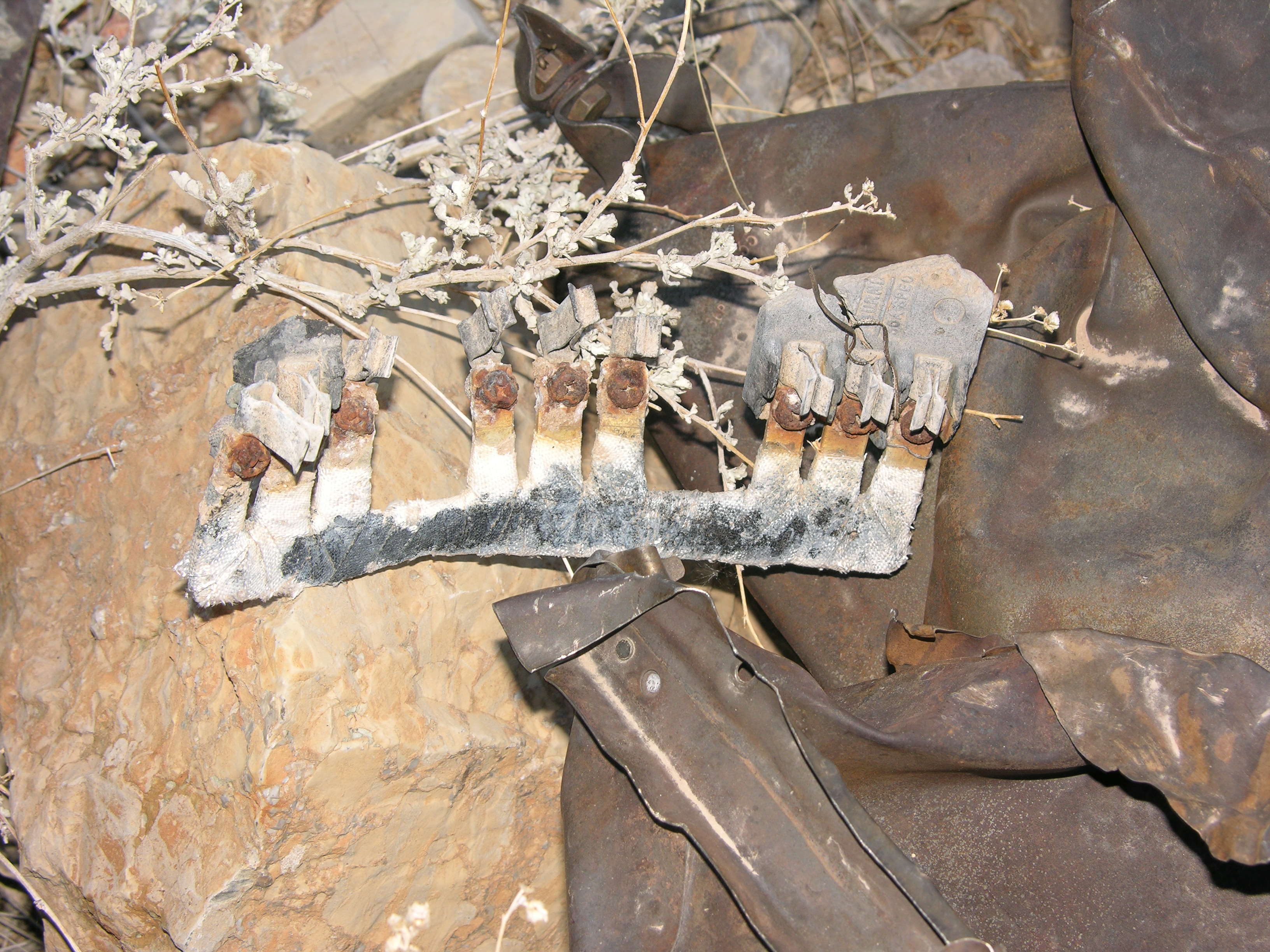
Many steel and stainless steel parts are
still present including exhaust collectors and shrouds for
the R-4360s. There are also numerous small parts like
the fuse panel in the last photo.
Most of the propellor blades are still present, a few still
attached to their hubs. These were the earlier round
tipped prop blades.
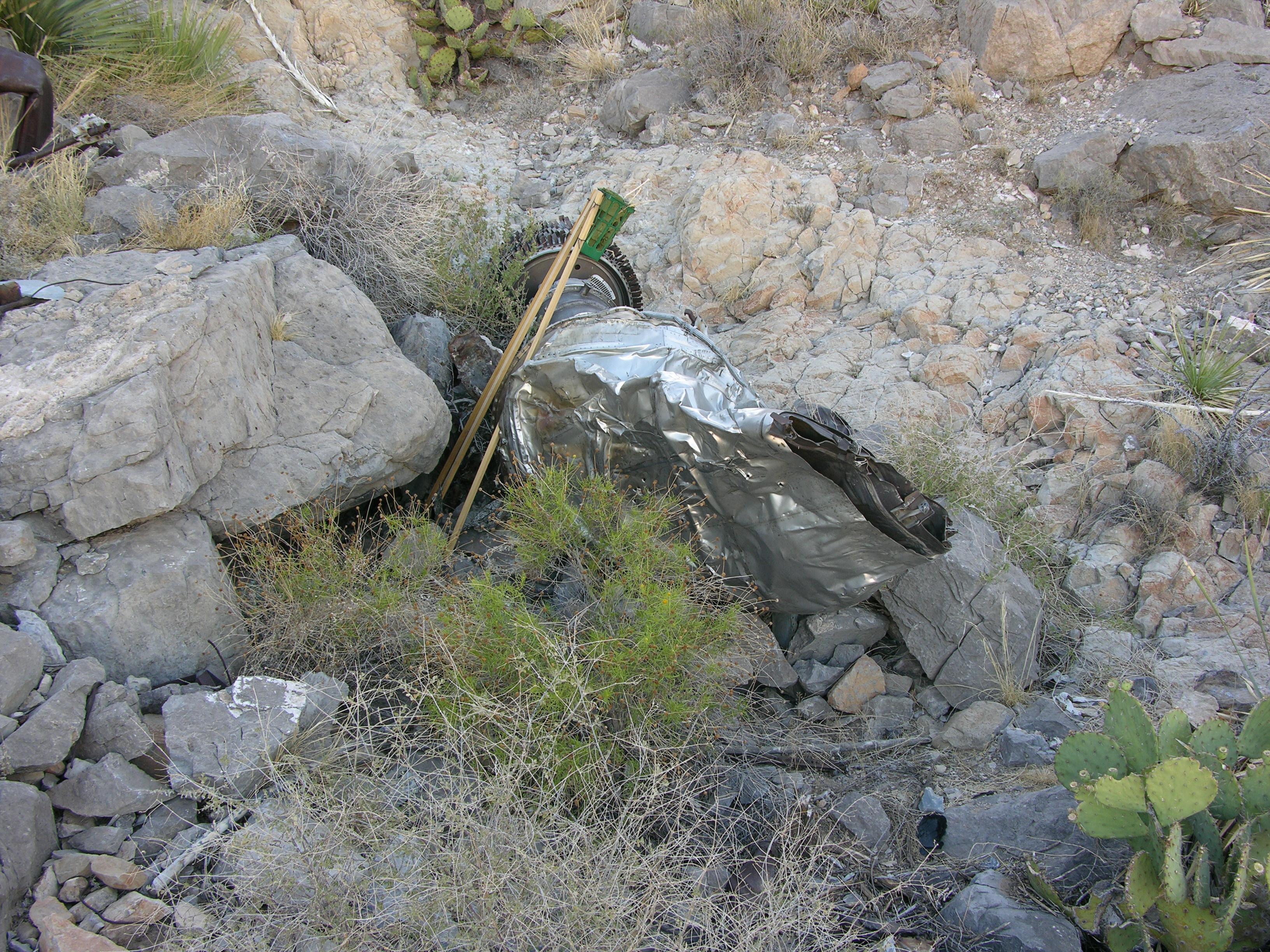
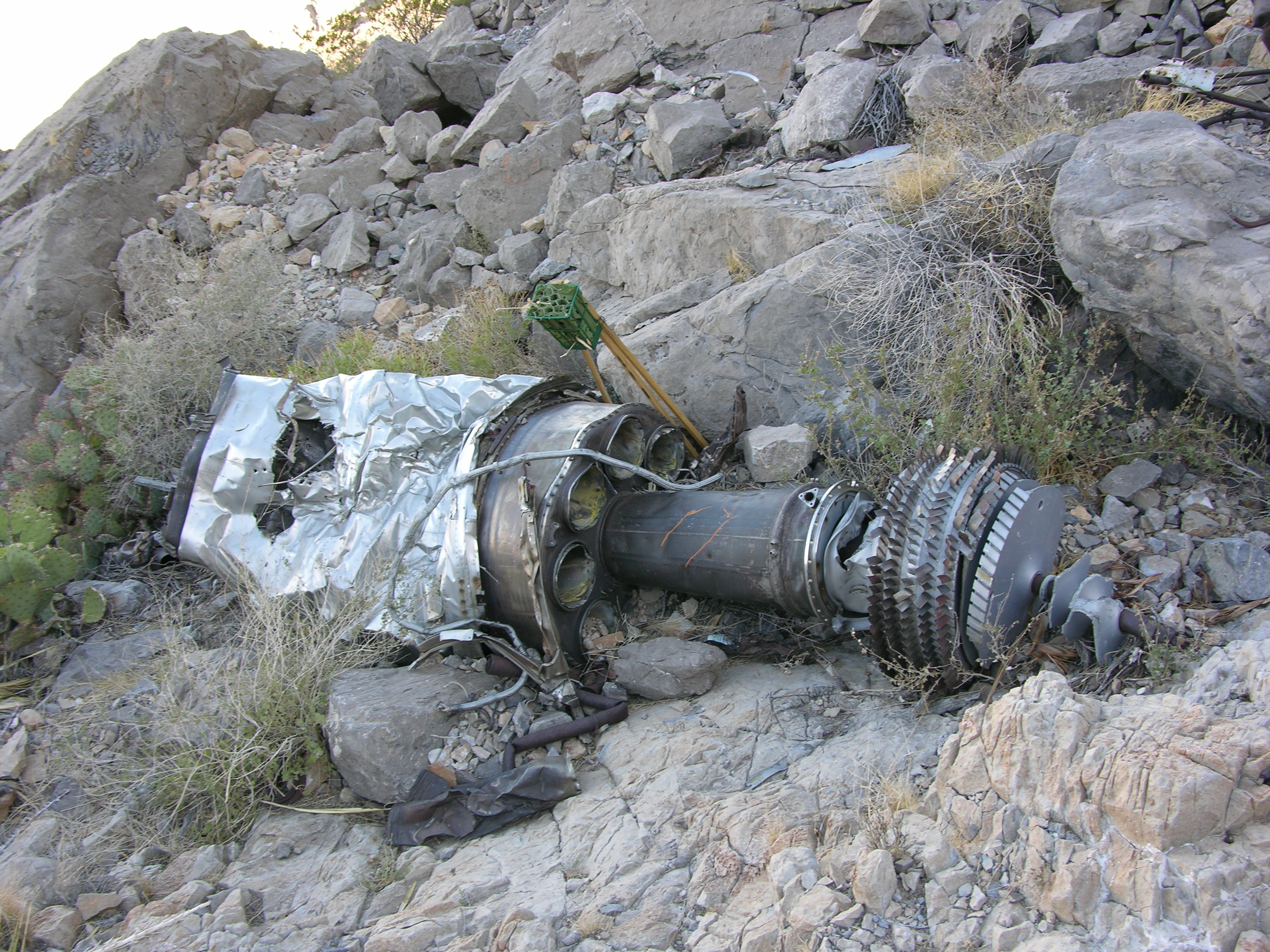
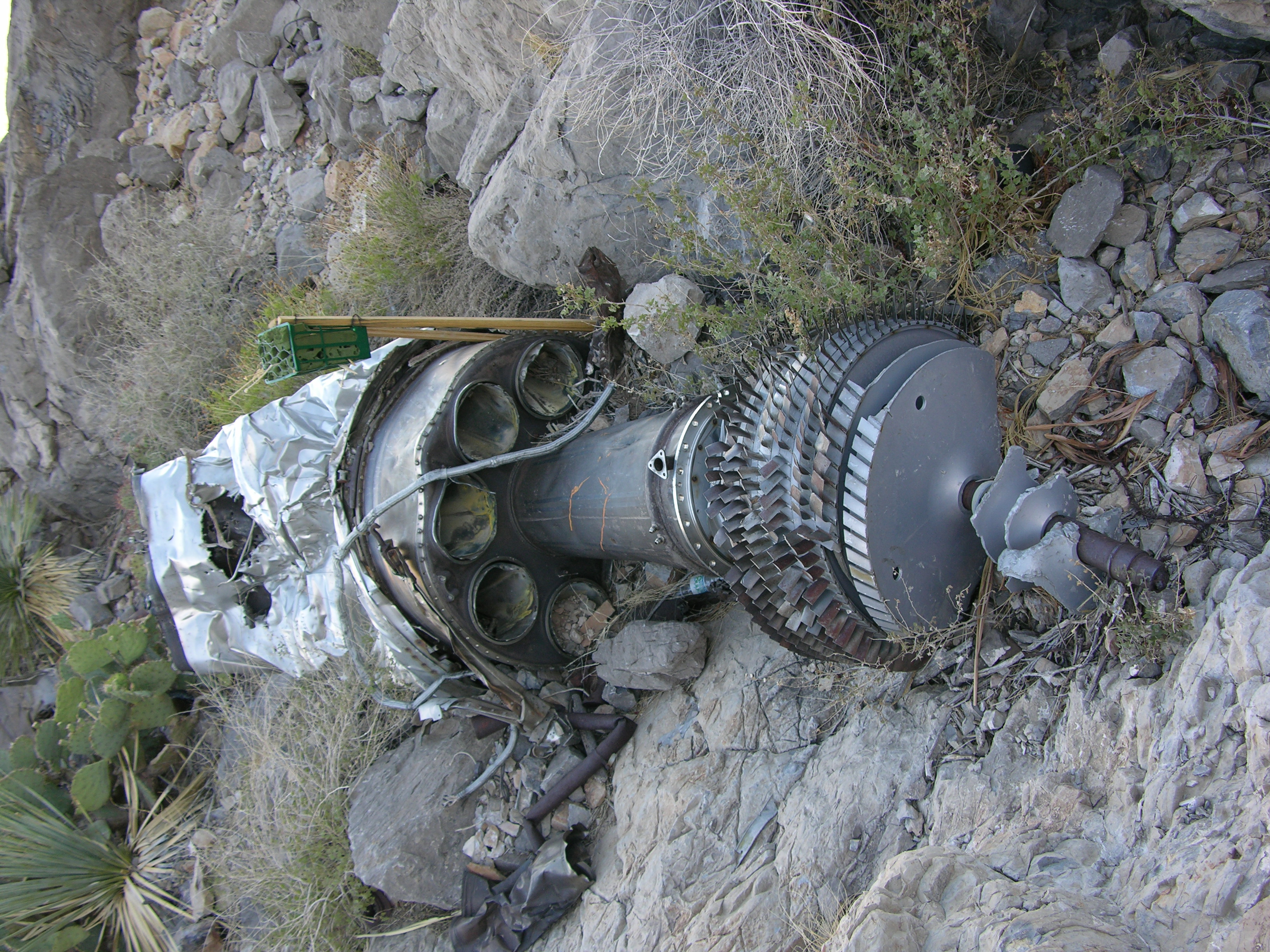
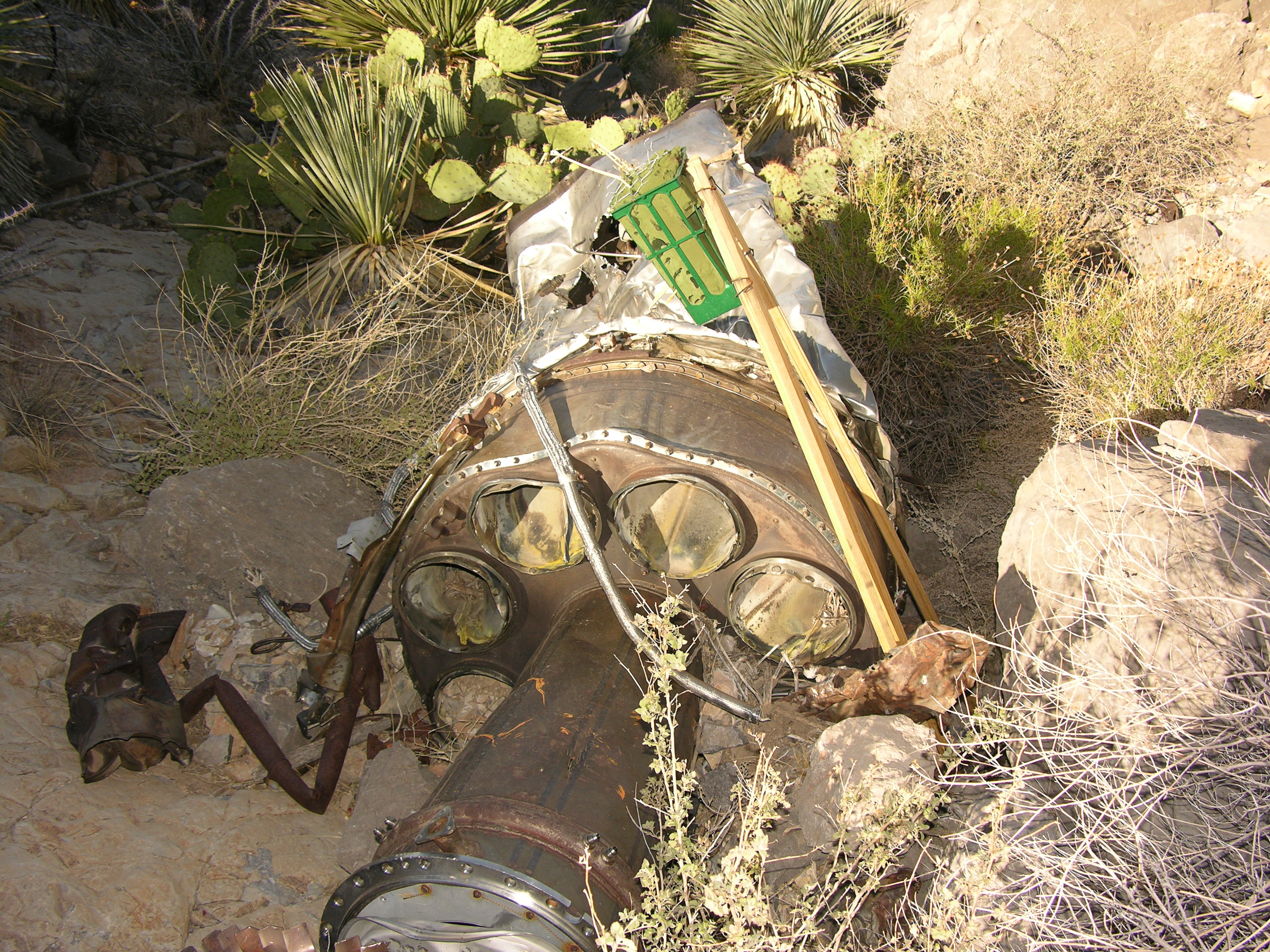
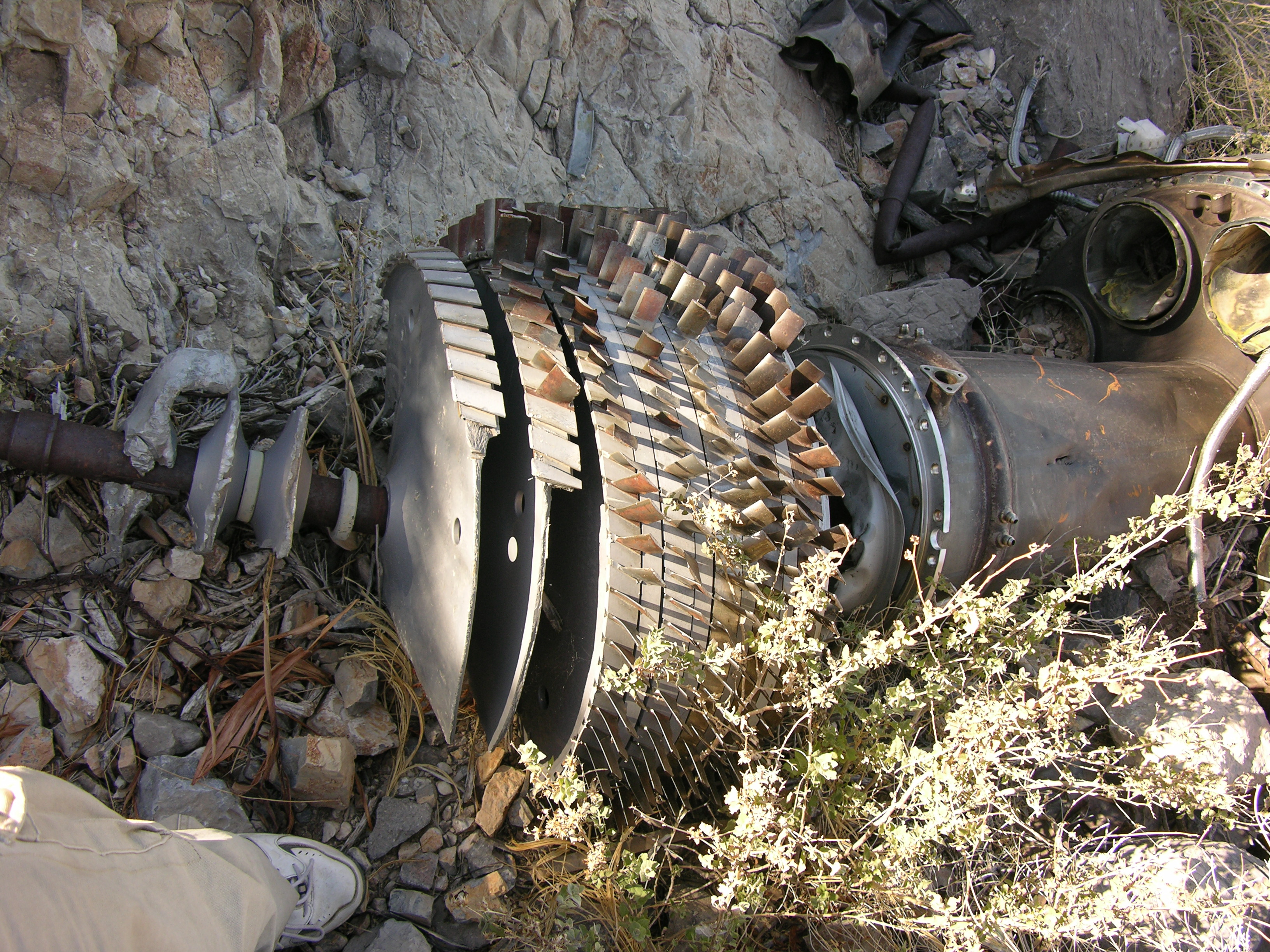
One of the J47s is easily found. It
is a good question as to where the other three went.
Anyway, the jets were not operating at the time of the
crash, all damage being caused by impact. The thing
that looks like a Tiki Torch is an insect trap.
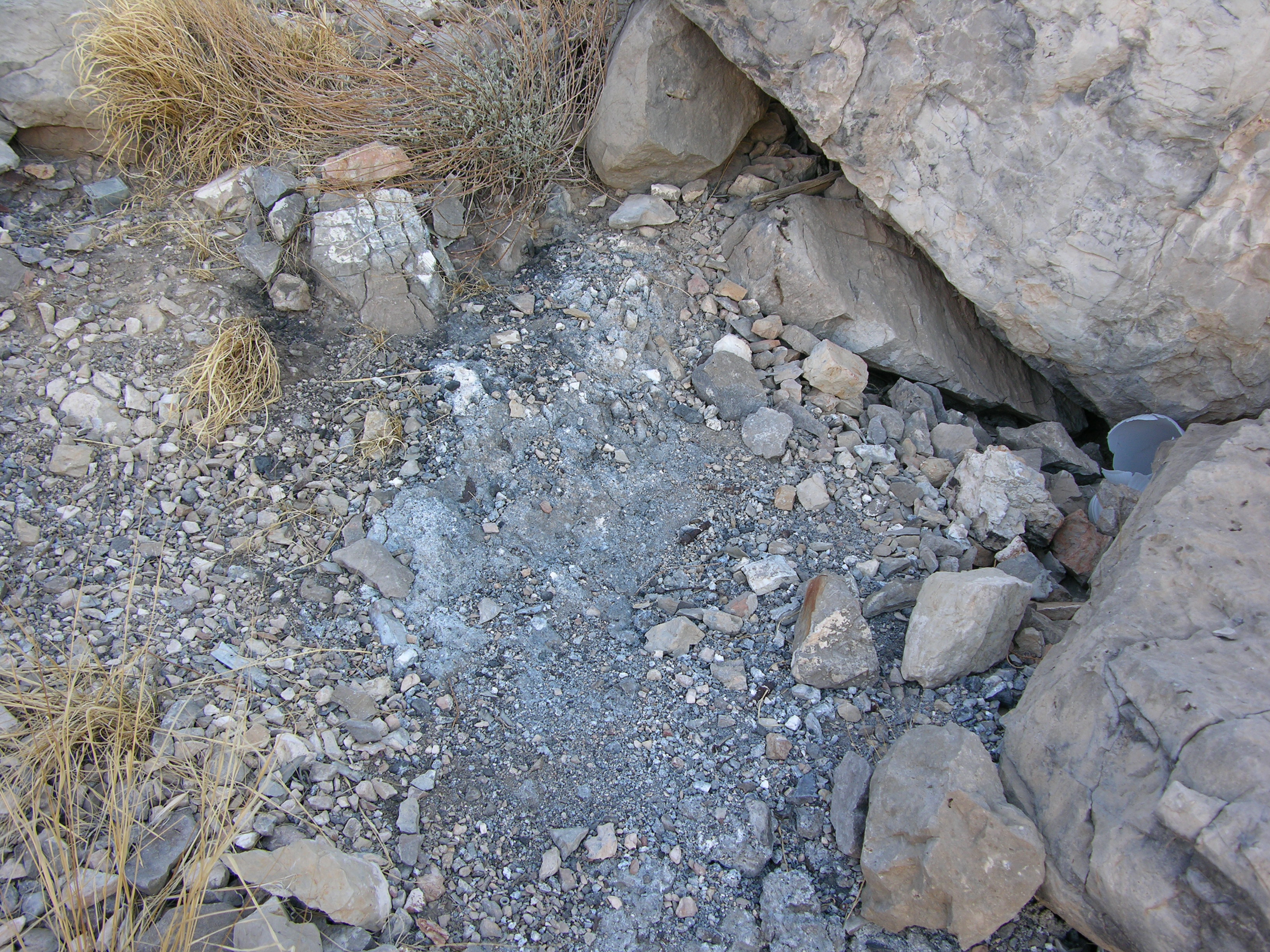
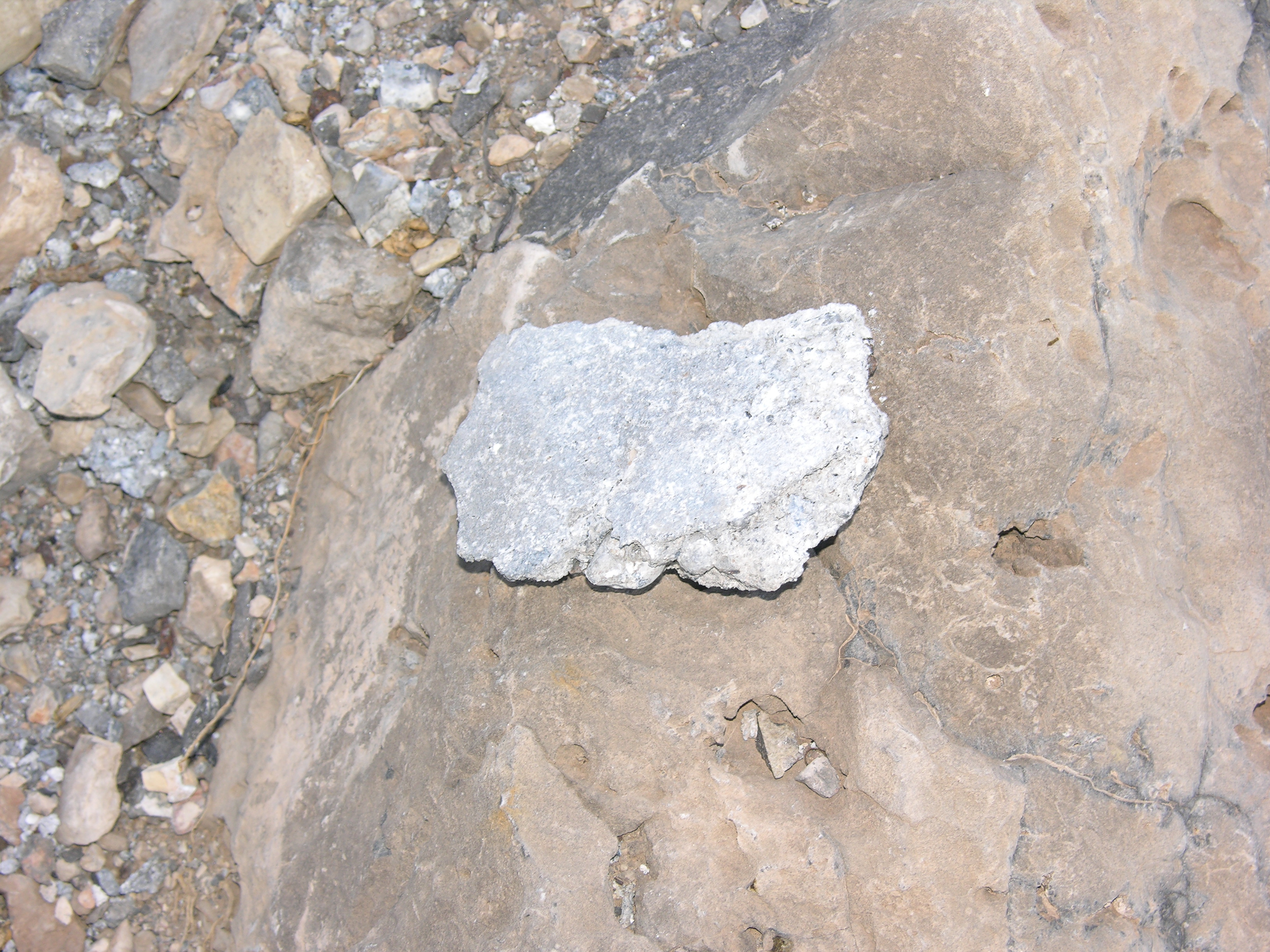
The areas of burned aluminum/magnesium
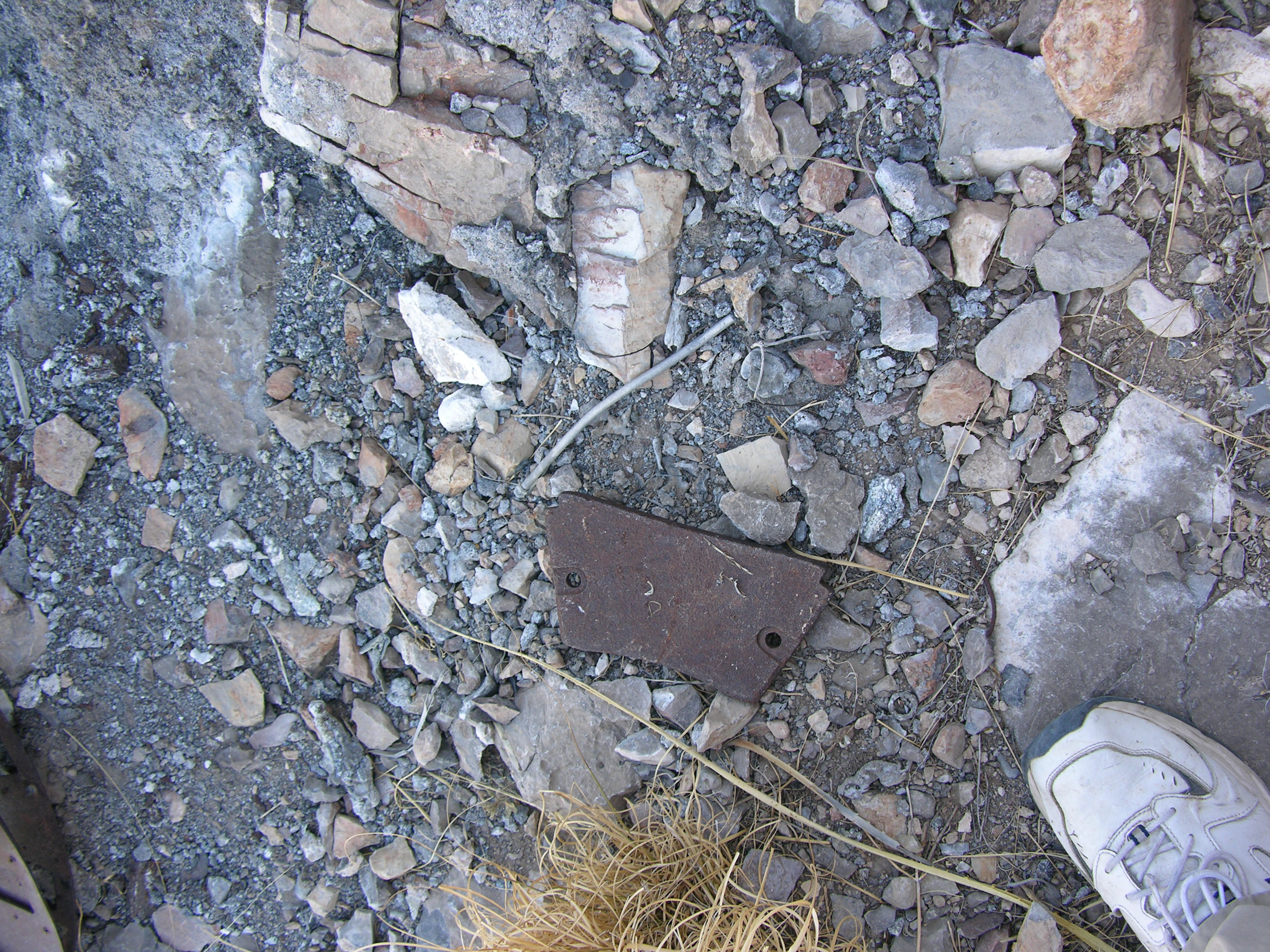
were mentioned above. The lump is a chunk of melted
aluminum and the rusty piece in front of my shoe is a brake
pad.
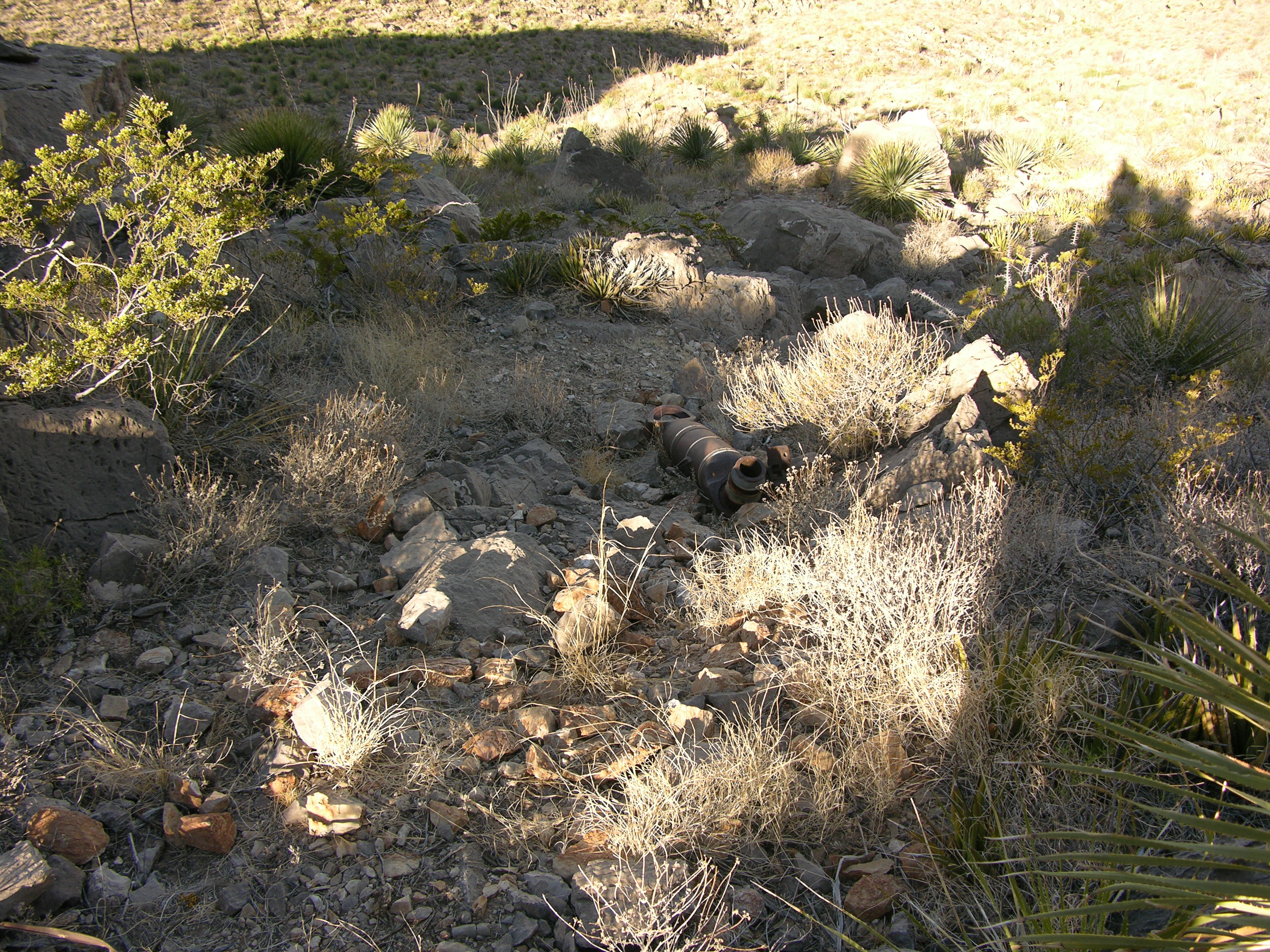
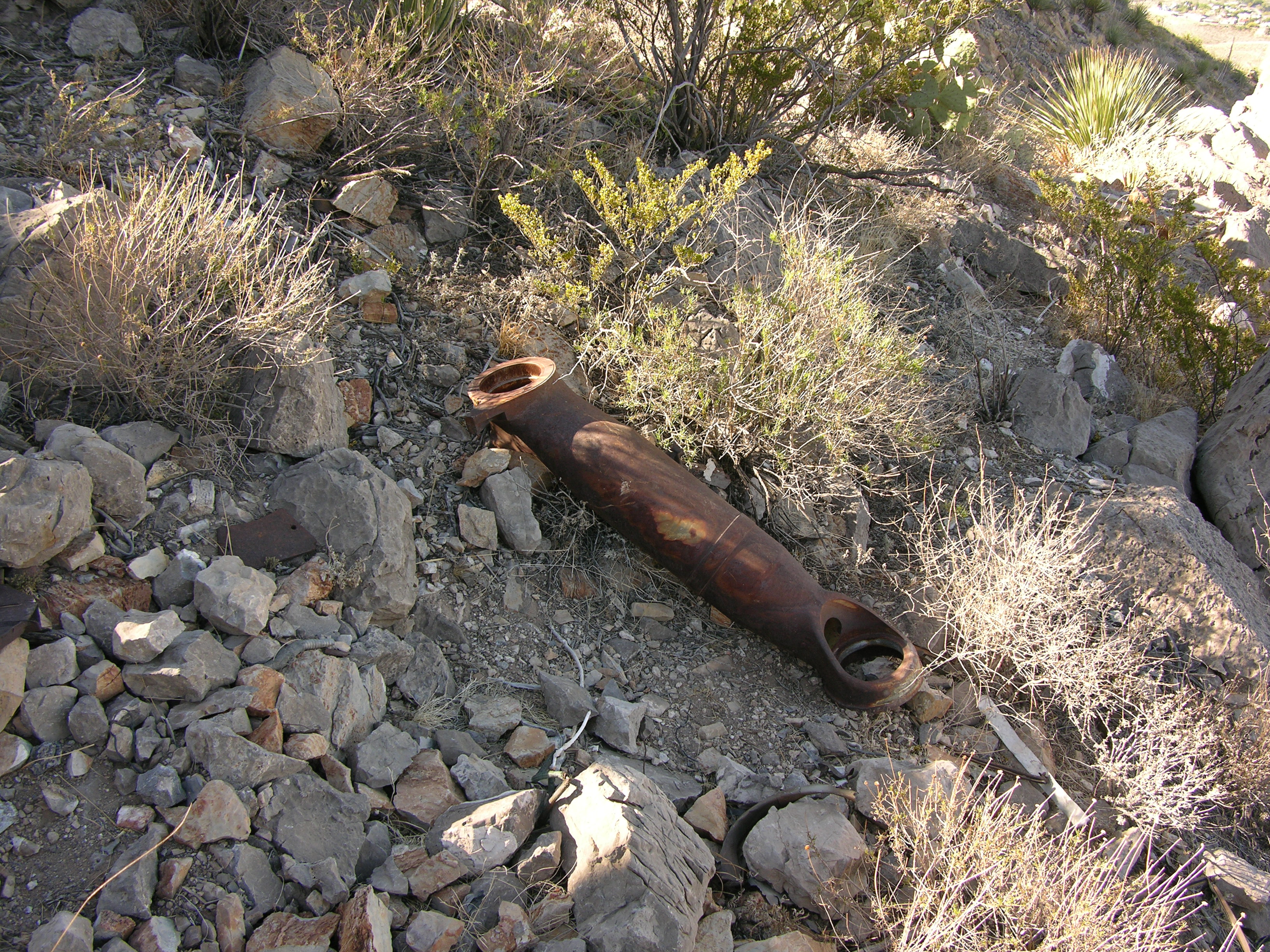
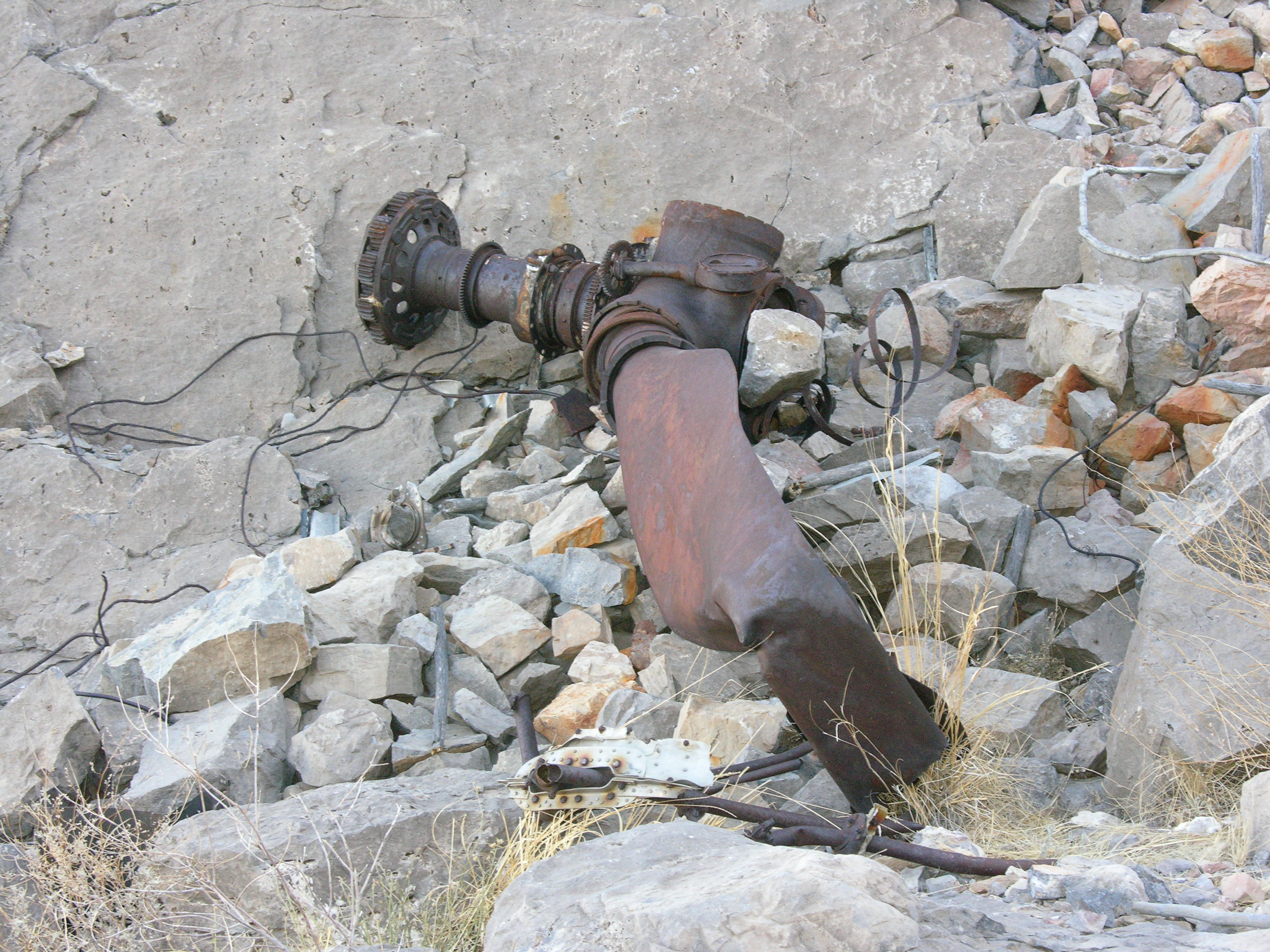
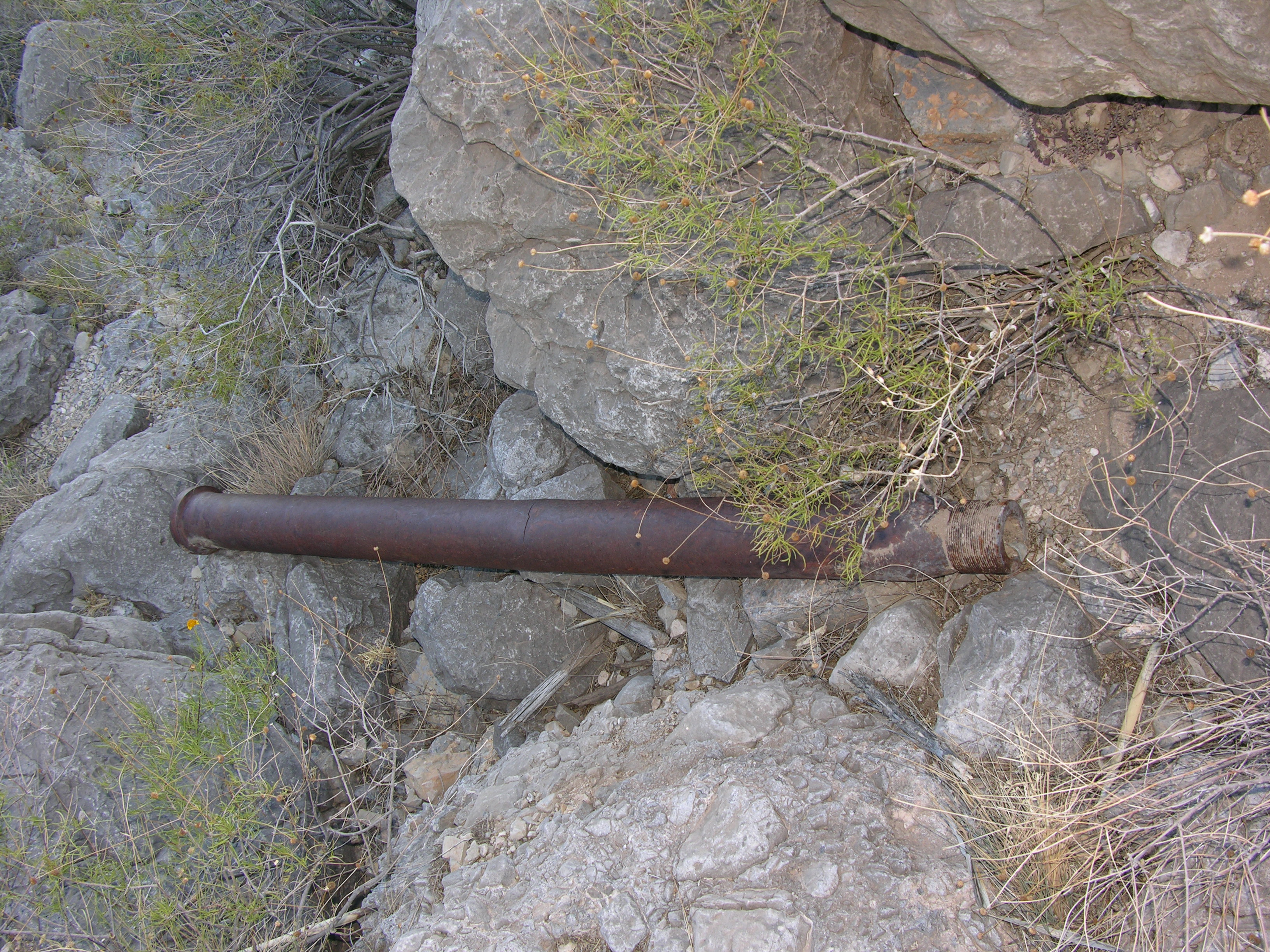
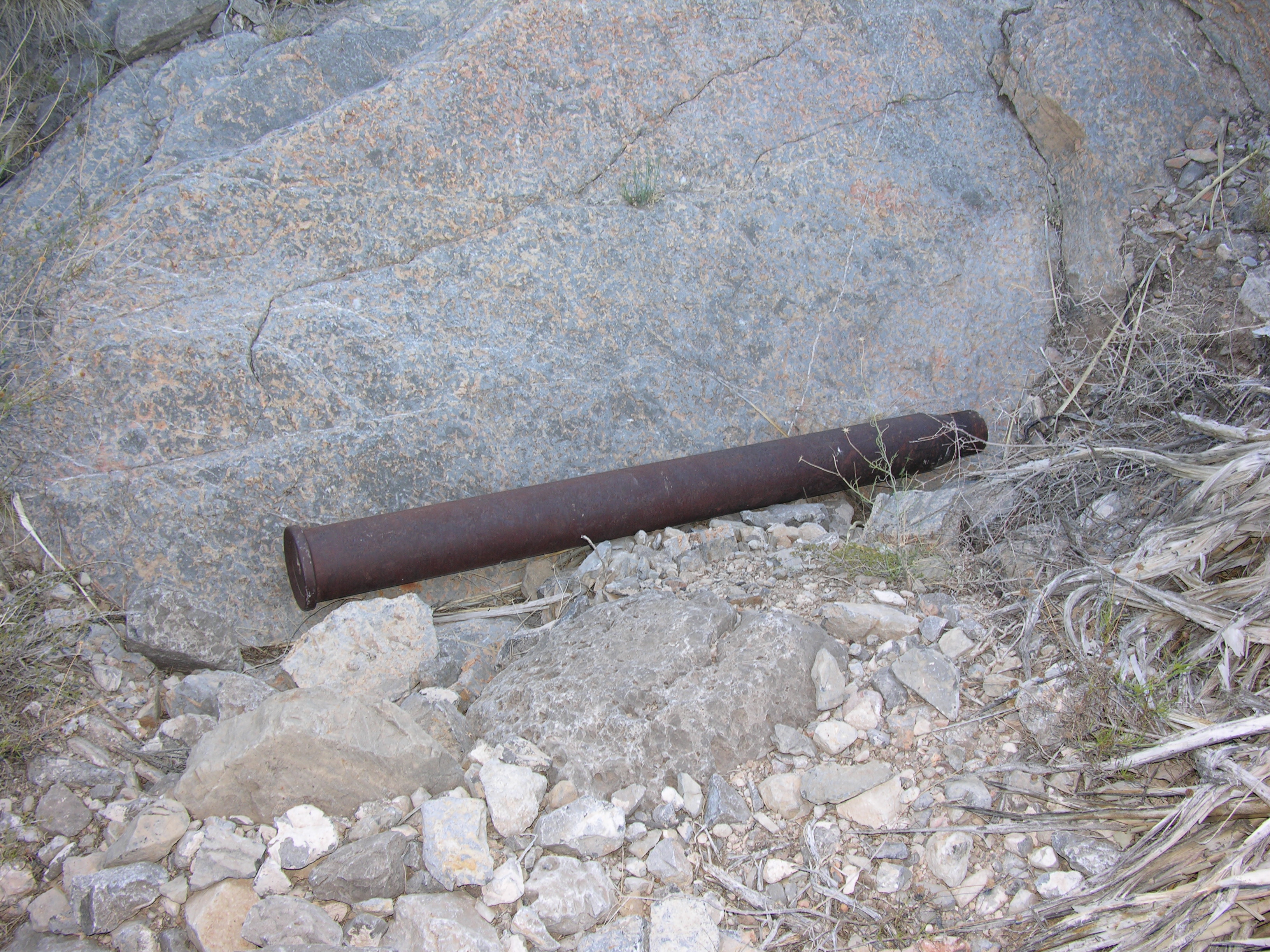
A couple of unidentified parts are these
splined shafts. Both are cracked attesting to some
pretty strong forces.
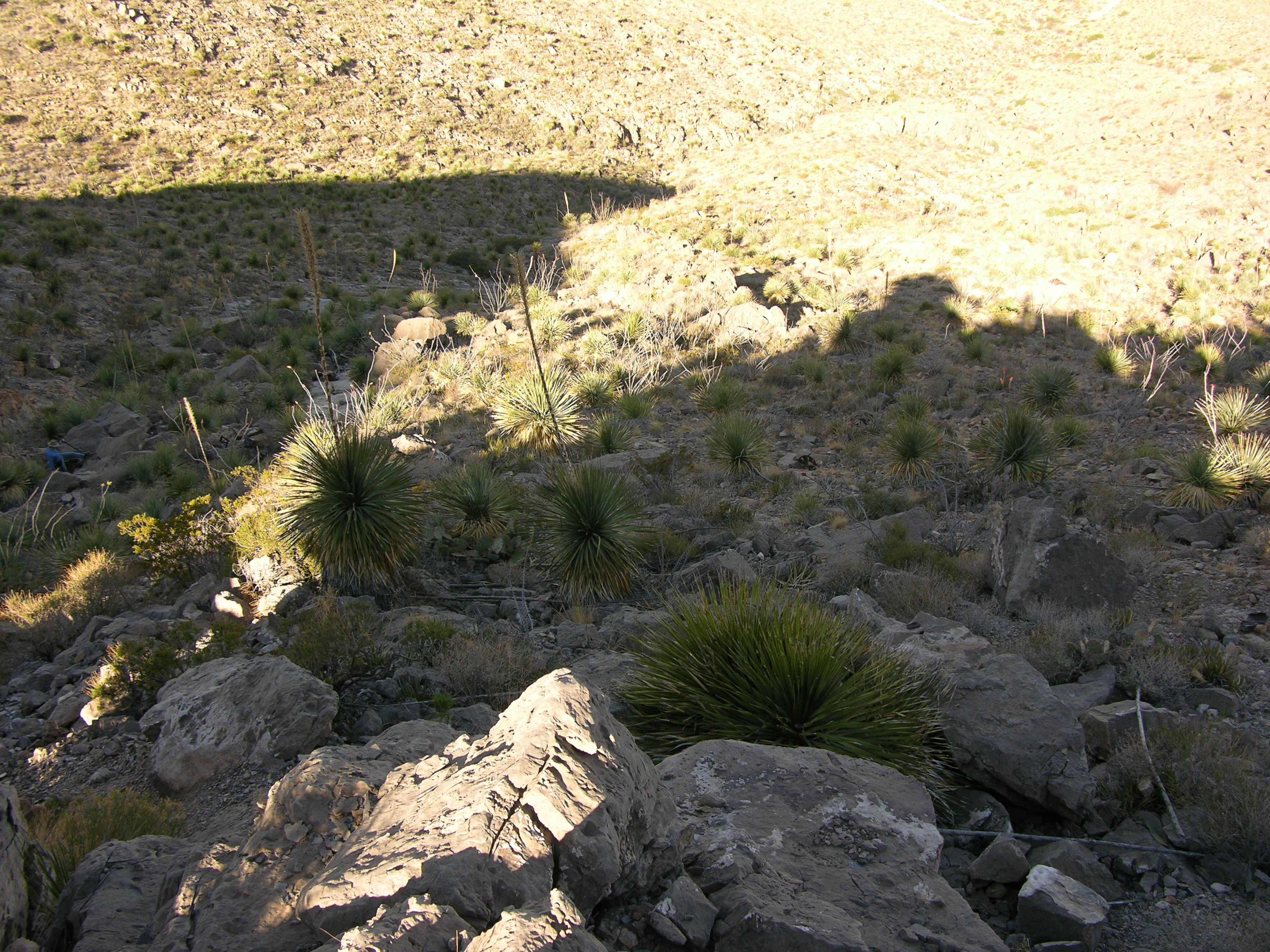
This photo (hopefully) gives some
impression of the ruggedness of the area.
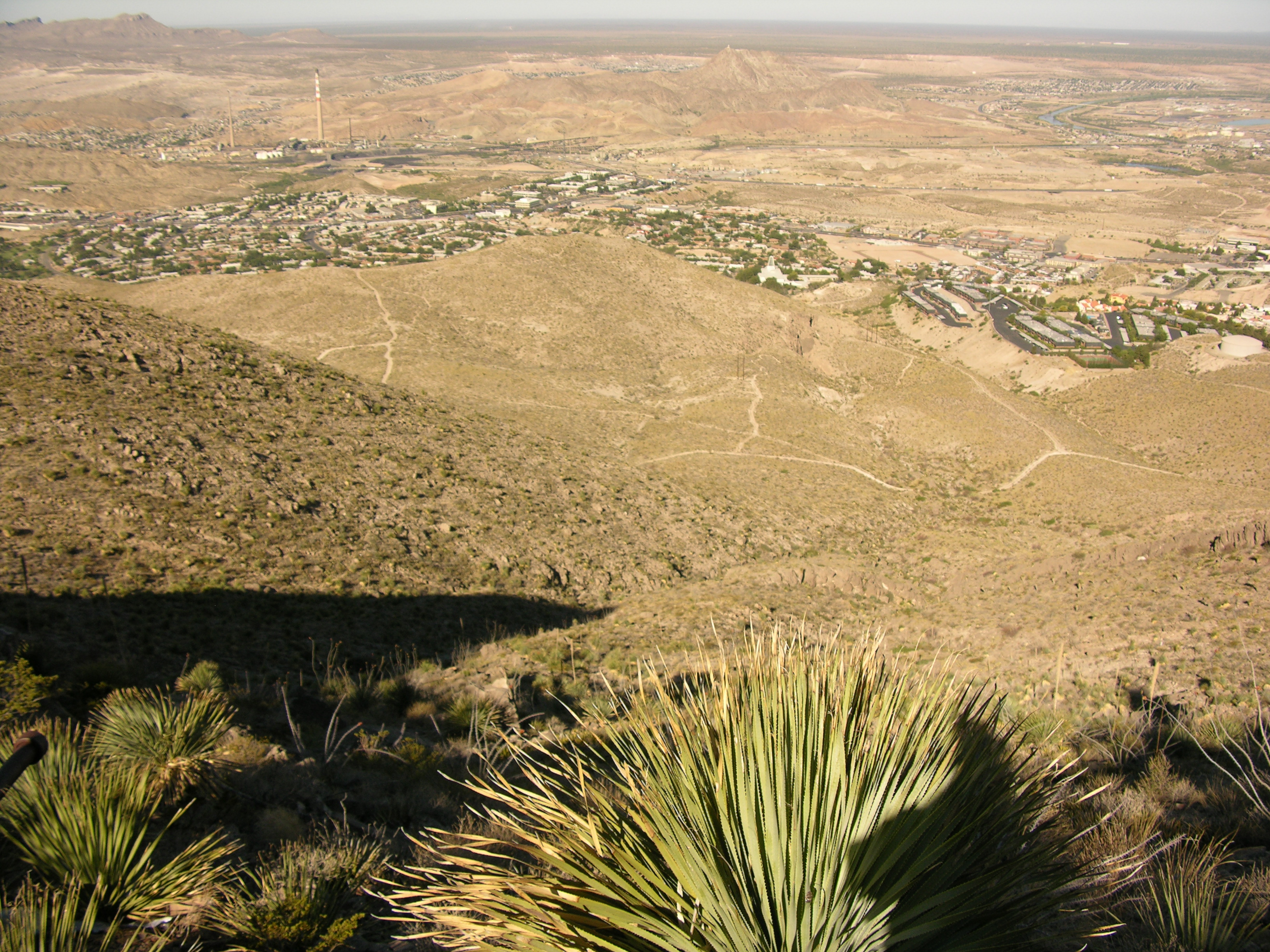
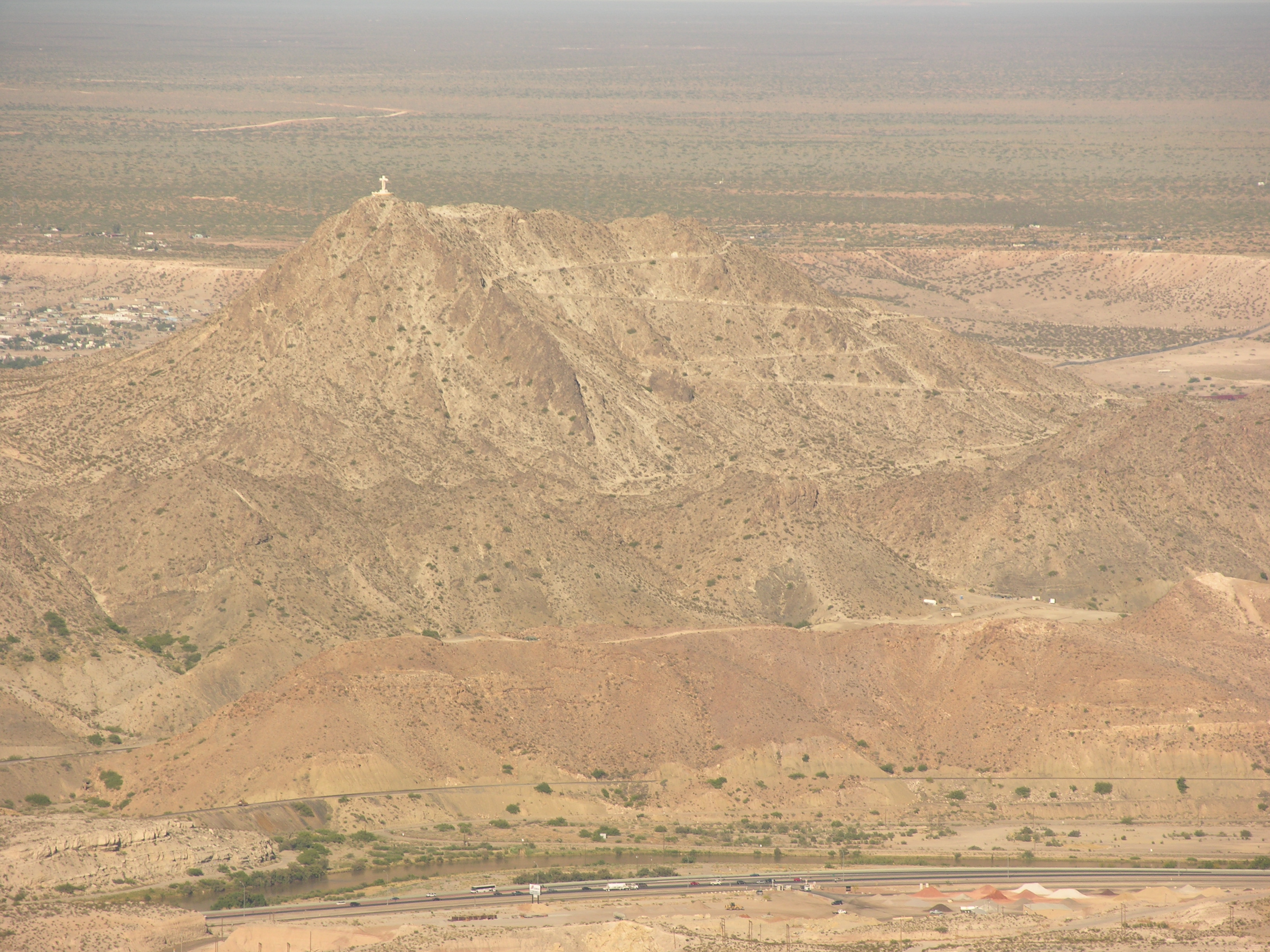
The view is a good one from this
area. The first photo shows the dirt road that we
followed to the gully leading to the crash. The area
we parked at is behind the white water tank to the
right. In the background is the Rio Grande and New
Mexico beyond. The two smokestacks visible in the upper left
background belonged to ASARCO (American Smelting and
Refining Company), they were demolished in 2013. The
second photo is of Mt. Christo Rey about 2 1/2 miles ESE of
the crash.
To return to...
For comments and
suggestions:

My guest book is on the
main page.
Created 05-28-08
Updated 01-03-2025
Clifford Bossie