B-36 Peacemaker
This page is
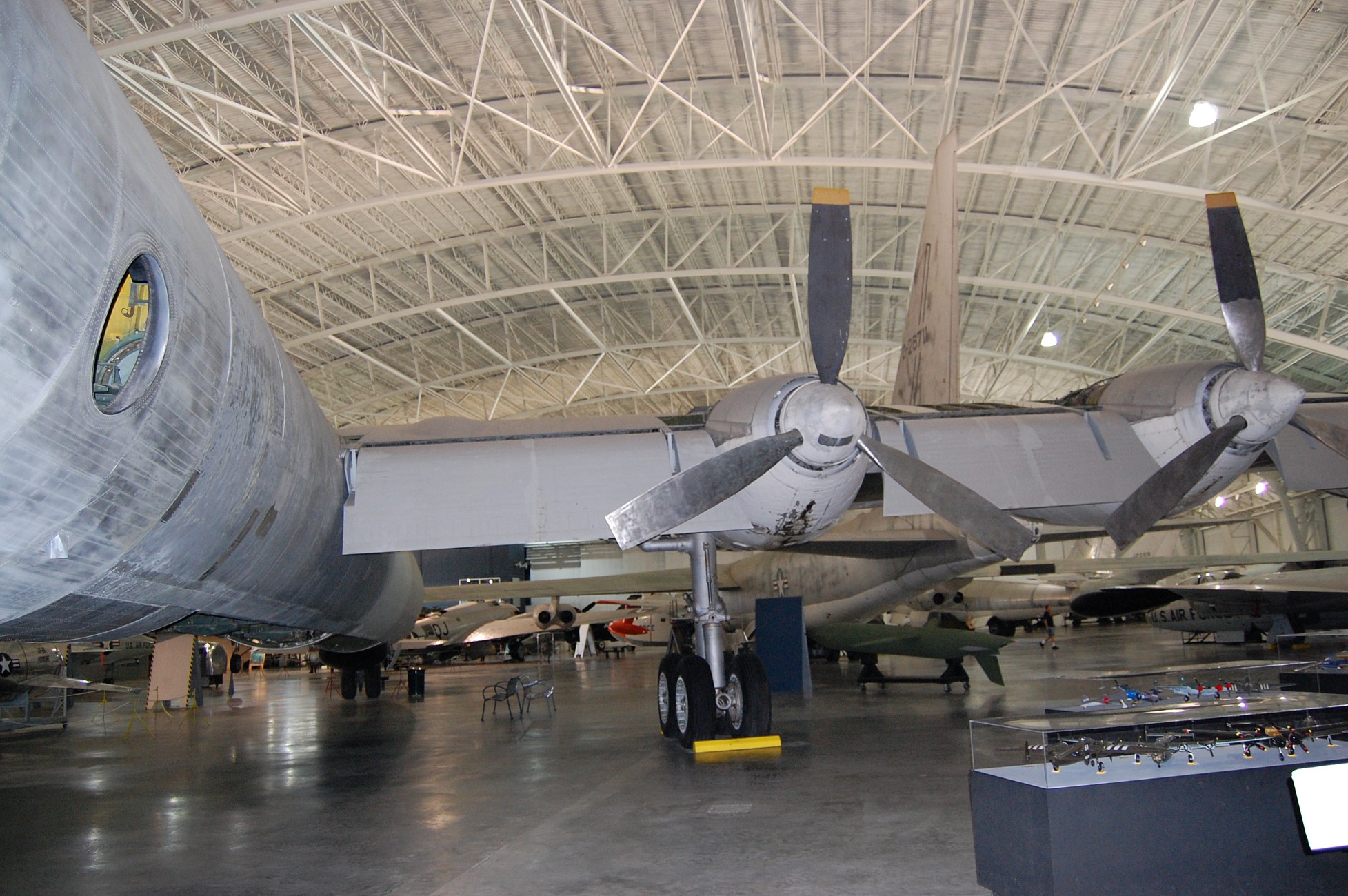
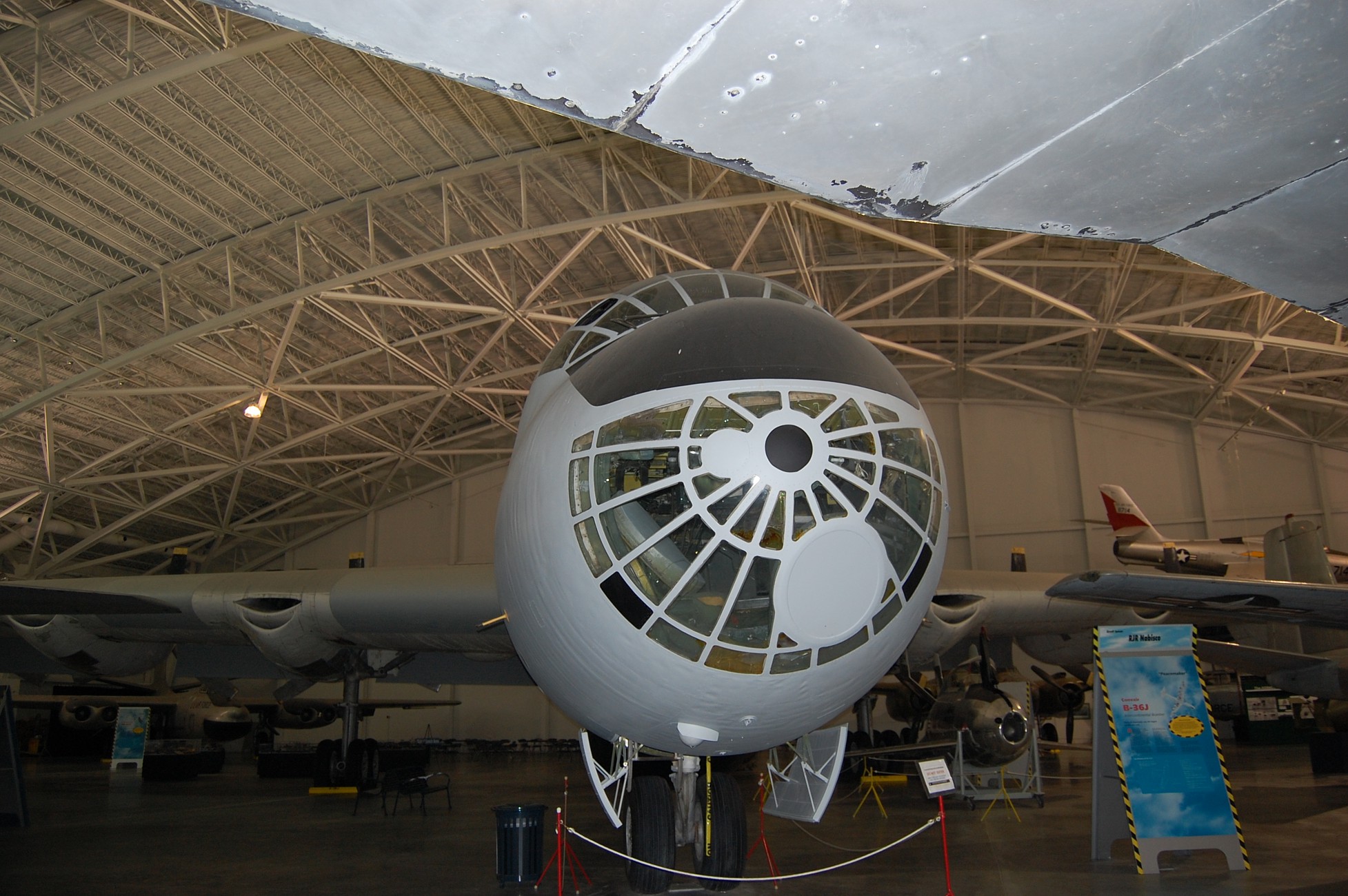
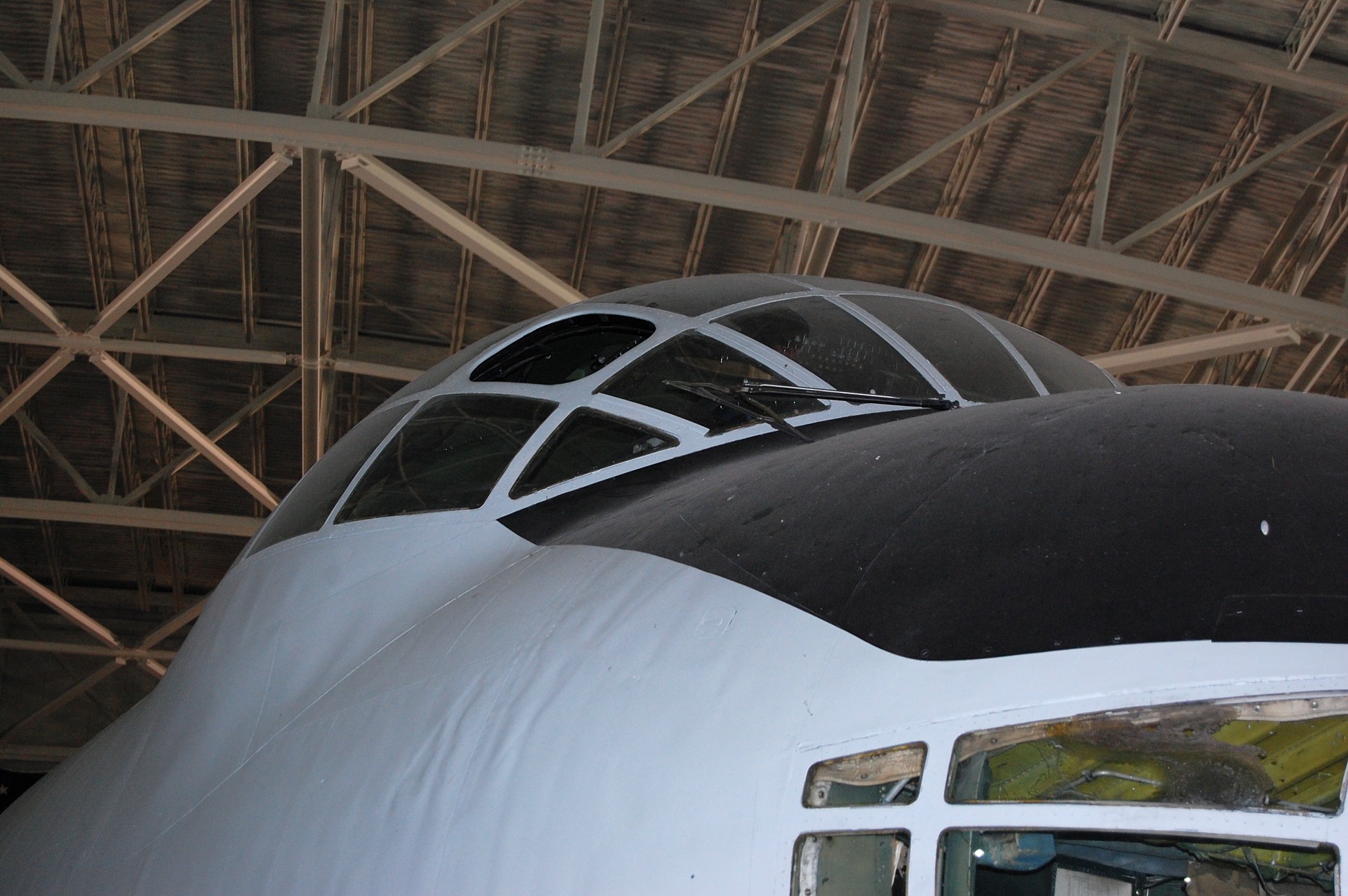
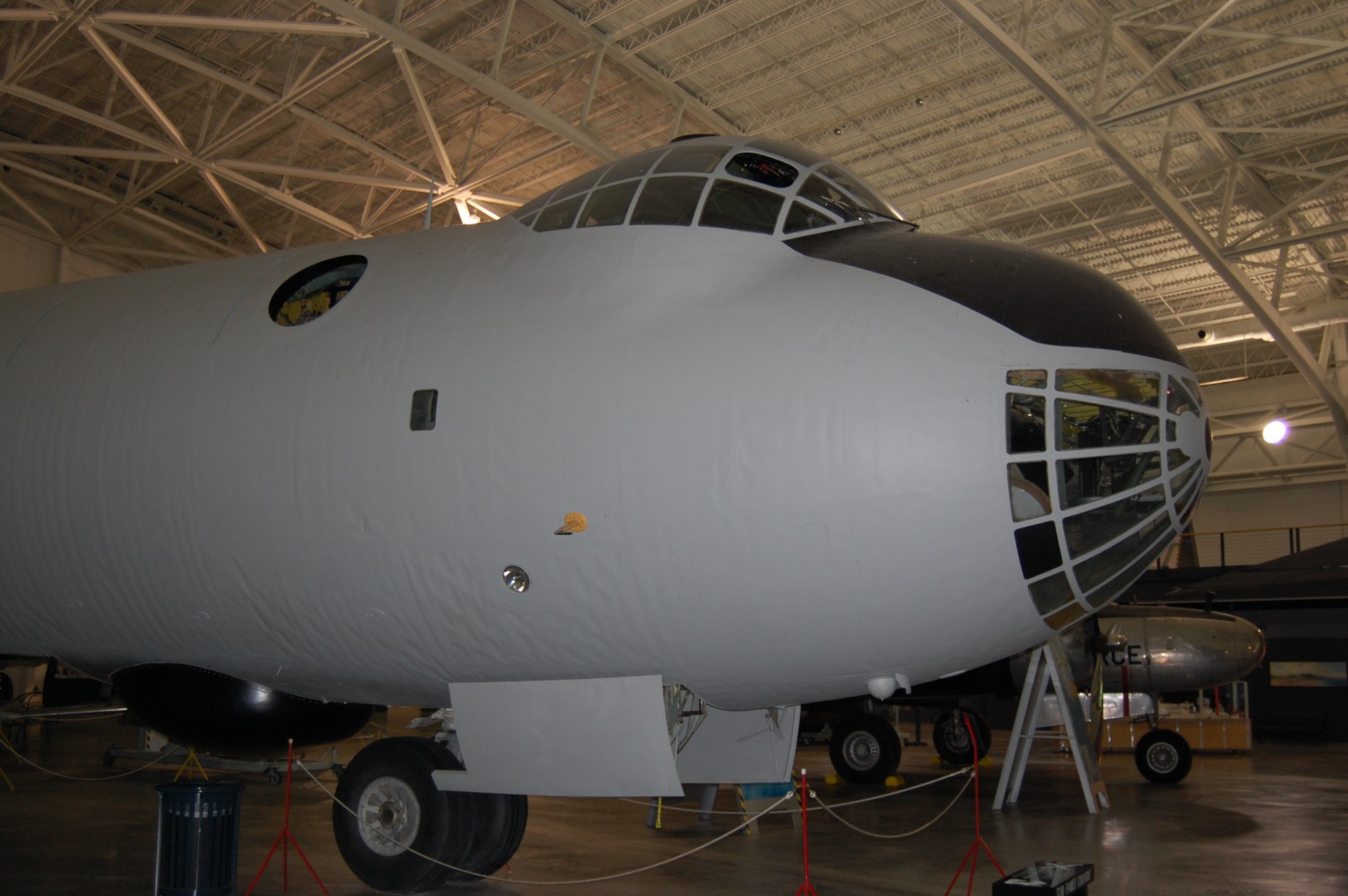
dedicated to the restoration of B-36J 52-2827 at the Pima Air
& Space Museum. It will also include details of the B-36 in
general.
When 52-2827
rolled off the assembly line in 1954 she was the last of 383 B-36s
built. One of the final 14 B-36Js she left the factory as a Featherweight III aircraft. In that configuration
the aircraft carried only tail guns, the nose and retractable turrets
being dispensed with. The purpose was to lighten the airframe
providing for
better performance, both in speed and altitude. Upon acceptance
by the Air Force 2827 was assigned to the 92nd Bombardment Wing at
Fairchild AFB, Washington. In 1957 she was transferred to the
95th BW at Biggs AFB, Texas before retirement in 1959. In
February, 1959 the 95th BW finished conversion to B-52B aircraft and
2827 was retired to the Greater Southwest International Airport (also
known as Amon Carter).
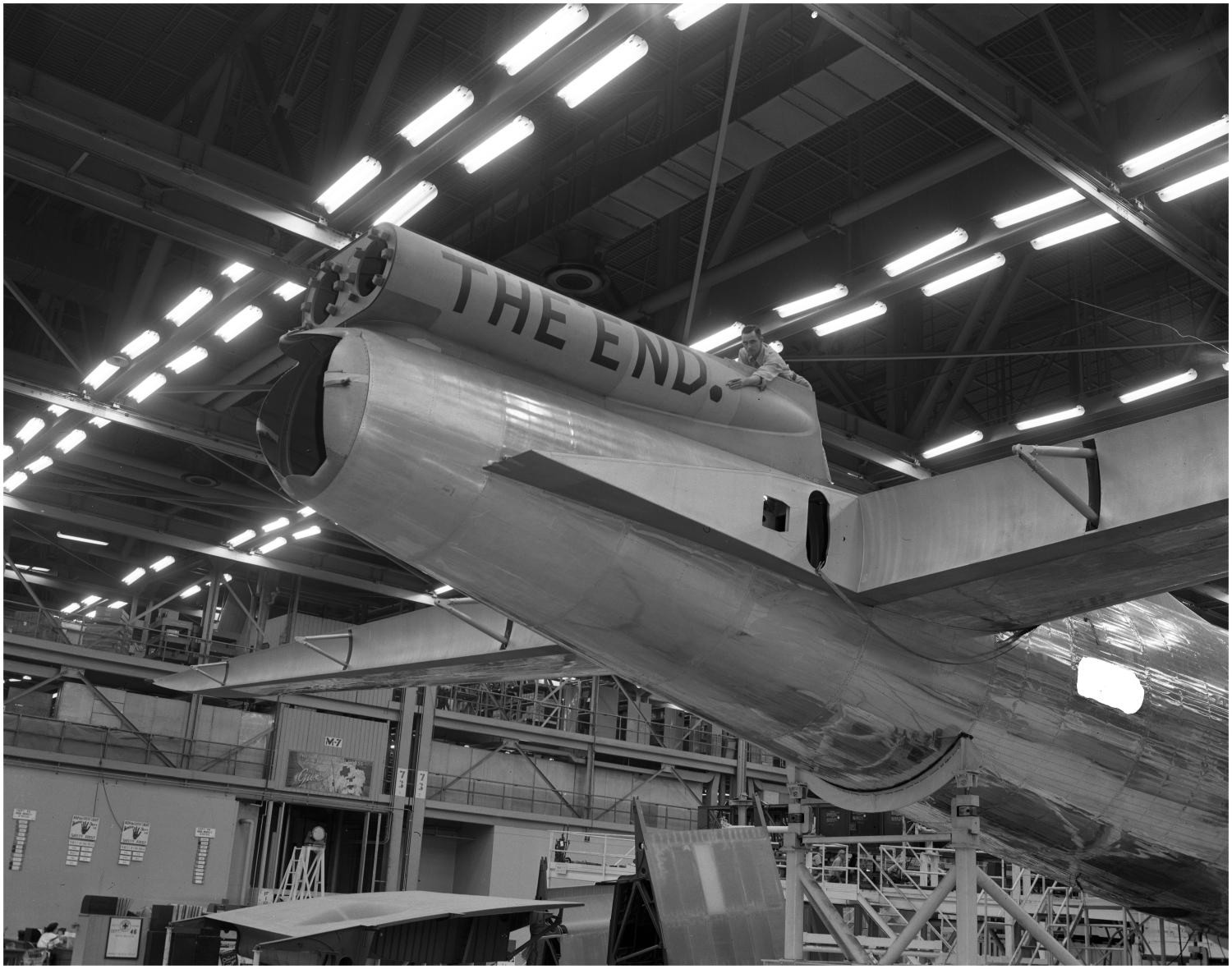
On the
assembly line prior to completion at the Convair plant in Fort
Worth. Being the last of a major program brought out a lot of
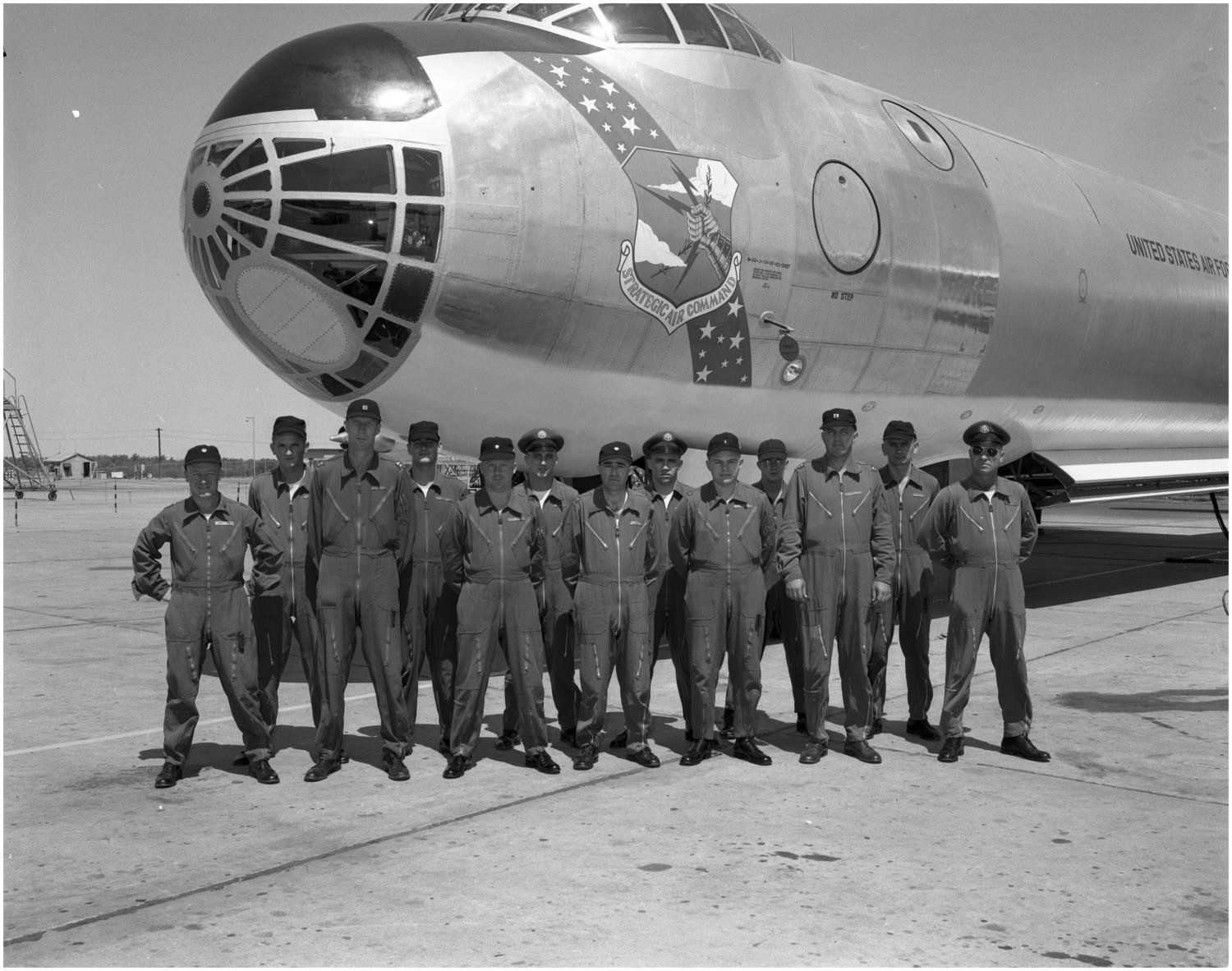
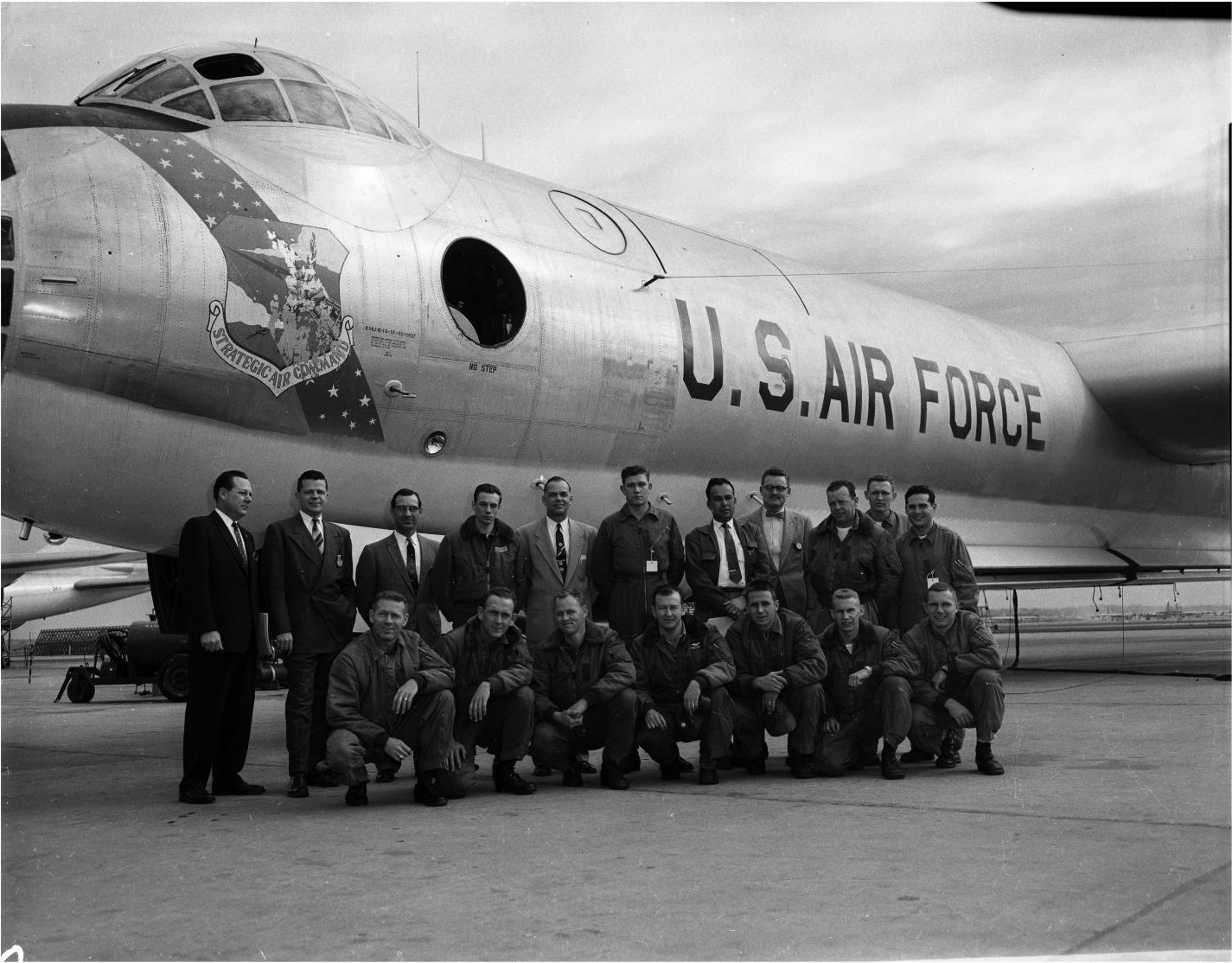
sentiment as the aircraft neared completion. The third photo
shows the aircraft upon delivery to the USAF. The small "UNITED
STATES AIR FORCE" lettering would soon disappear to be replaced by the
larger "U.S. AIR FORCE". The final photo probably shows 2827 when
she transferred to the 95th BW (University of North Texas)
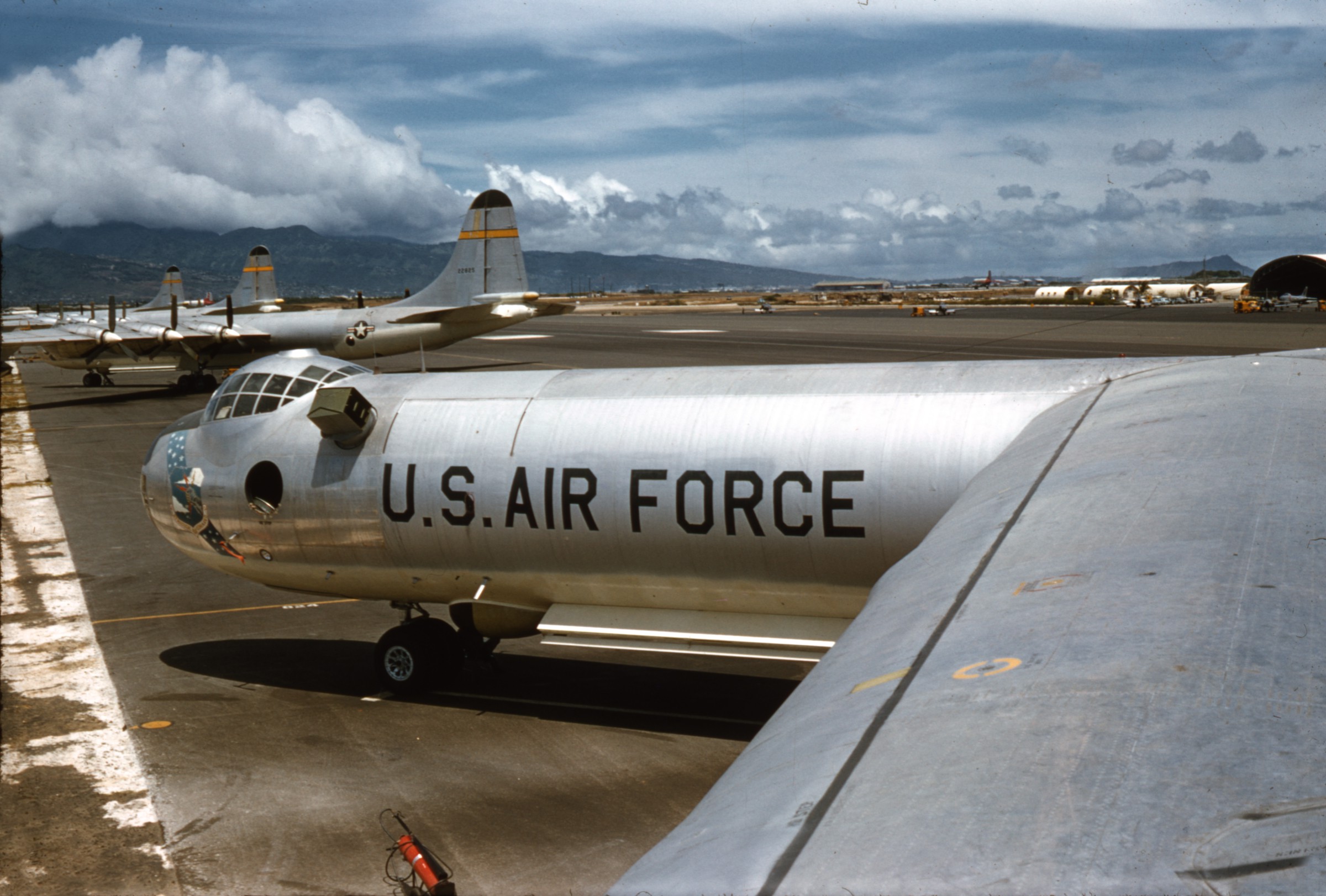
A line up of
B-36Js in Hawaii during the Spring of 1956. In the
foreground is 52-2824 and in the background are 2825, 2826 and
2827. The box contraption on 2824 is a sampler to collect traces
of fallout from the upper atmosphere during reconnaissance
missions. (courtesy of Wayne Reece)
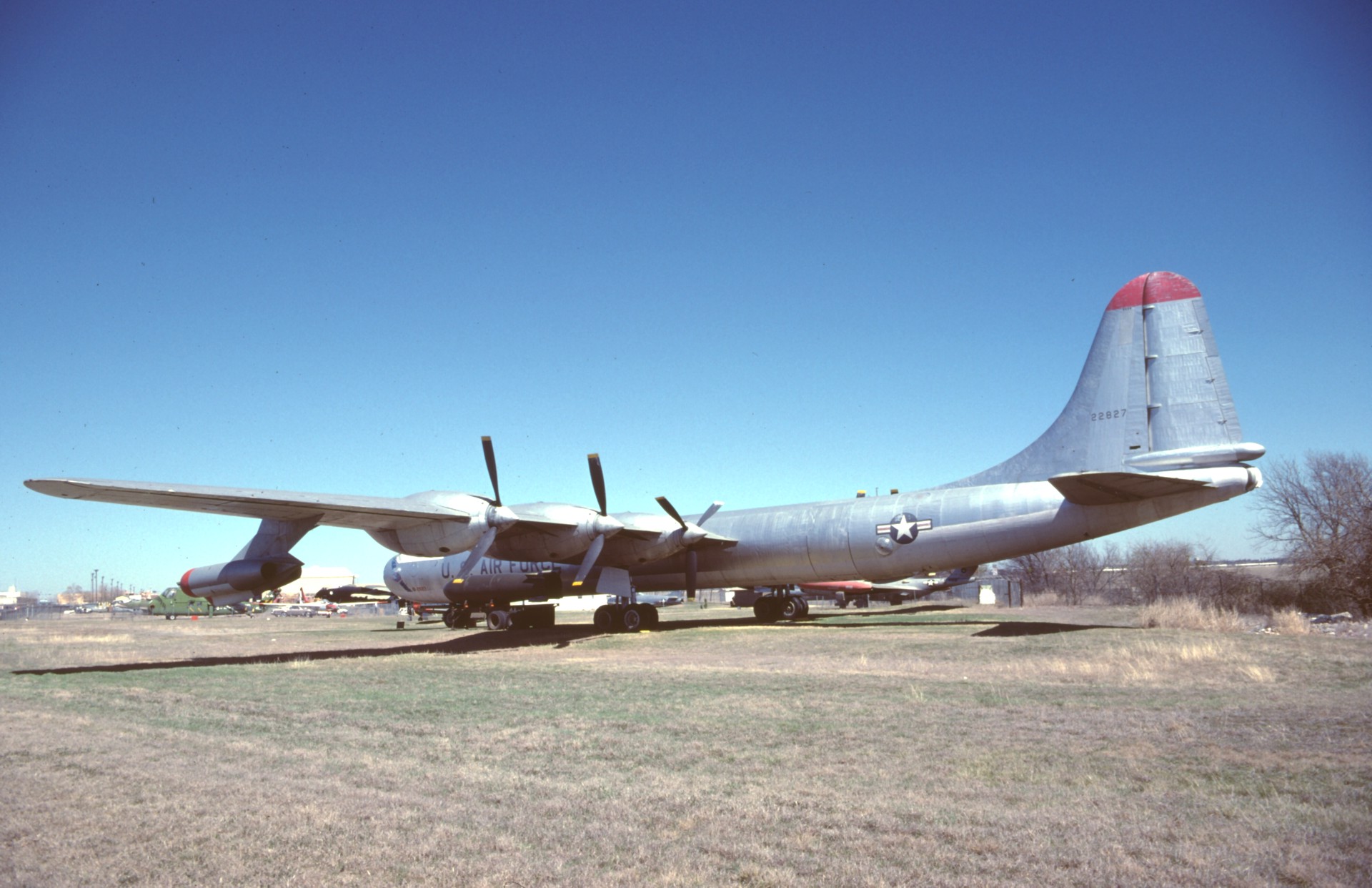
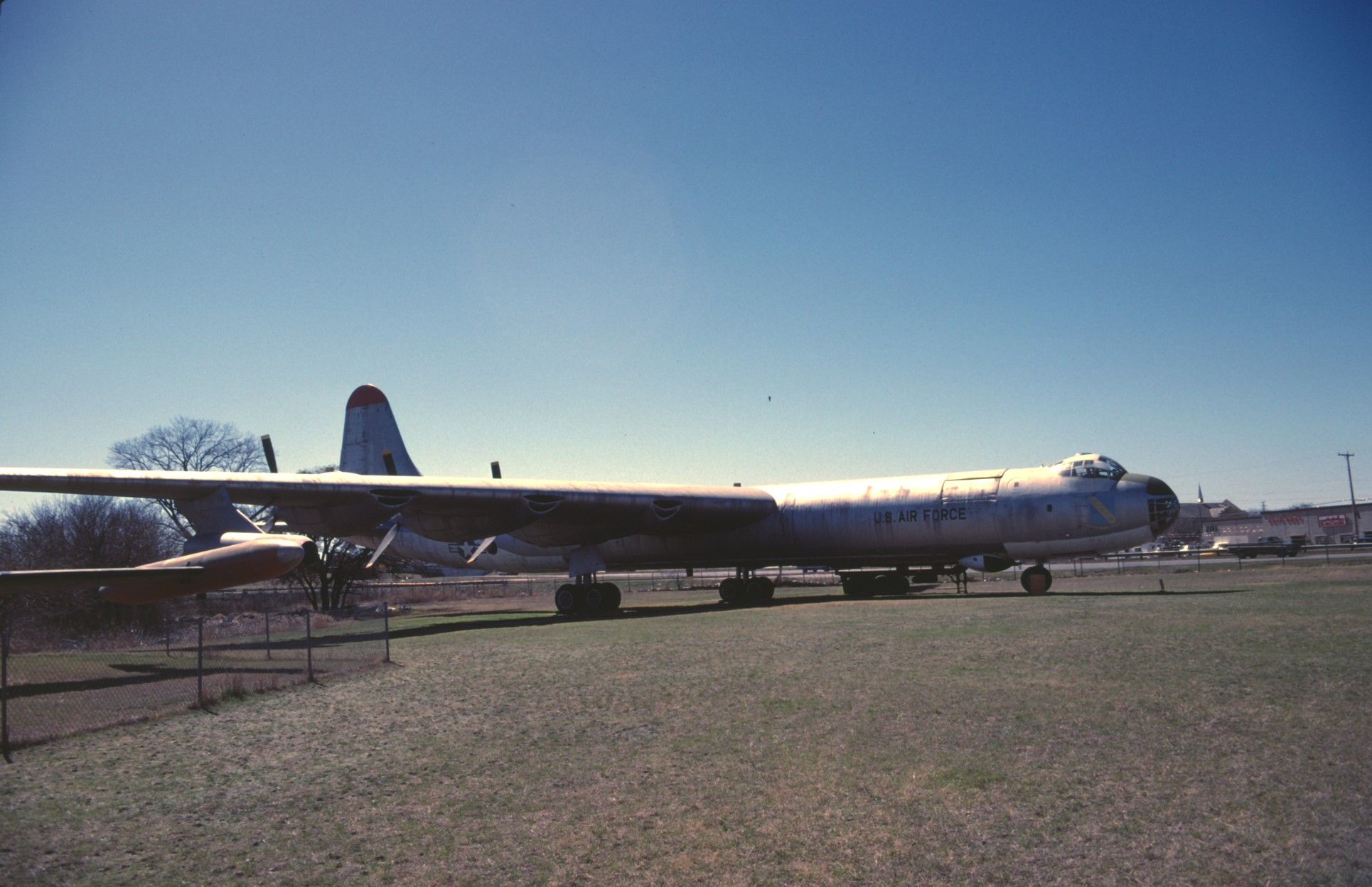
Carrying
spurious 11th BW markings, 2827 is on display at the Southwest
Aerospace Museum in March, 1988. This museum was located outside
Carswell AFB. By this time the aircraft had been disassembled for
the move from the Greater Southwest Airport and reassembled at the new
location. This museum closed in the early 1990s leaving 2827
homeless. For several years volunteers worked on restoring her at
the General Dynamics plant in Fort Worth. The GD plant had been
Convair, this was to change again when Lockheed-Martin bought GD.
In 2004 the
USAF decided that the best course of action to preserve 52-2827 was to
loan the aircraft to the Pima Air & Space Museum. In July,
2005 the aircraft was moved to Pima
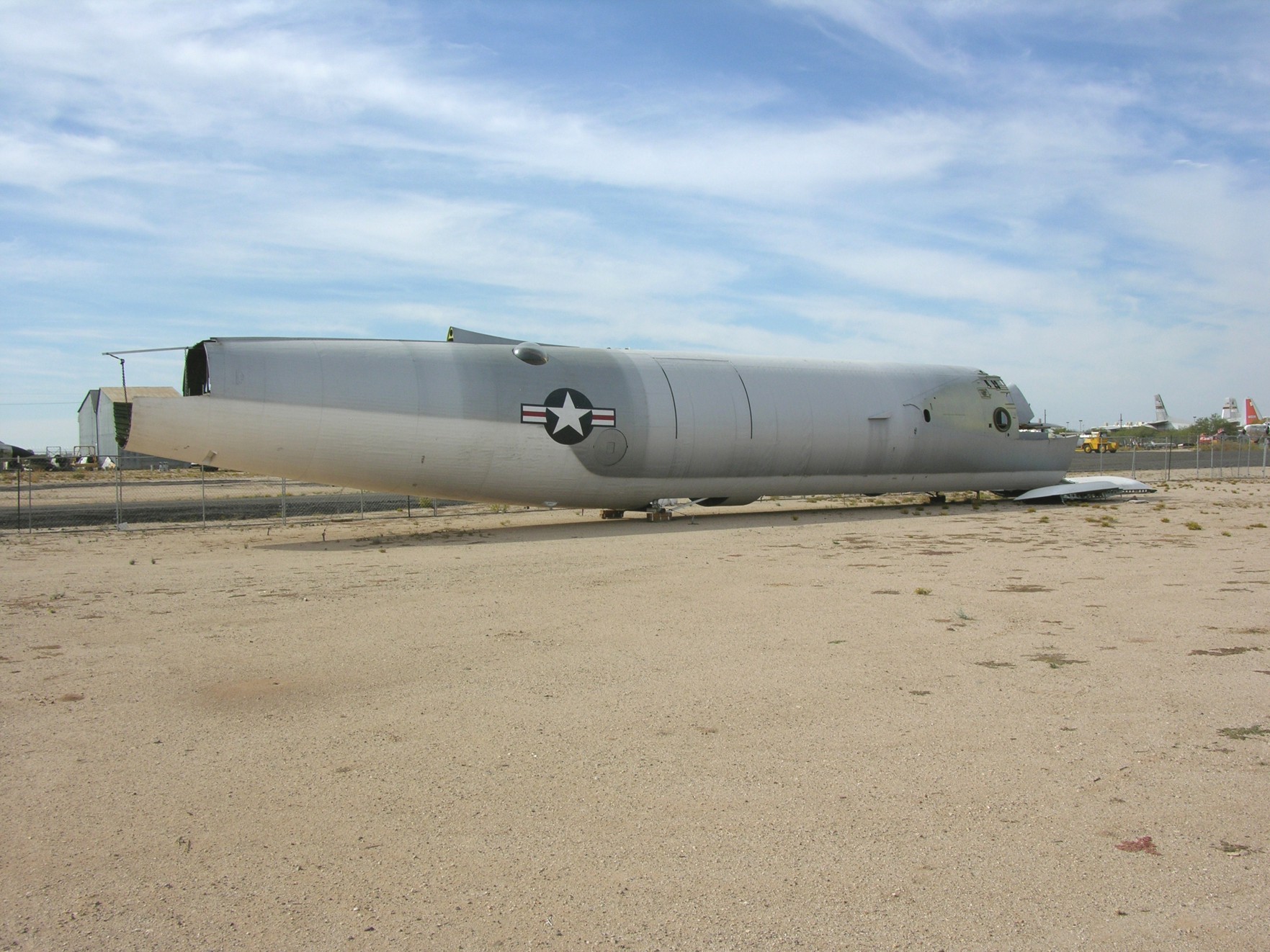
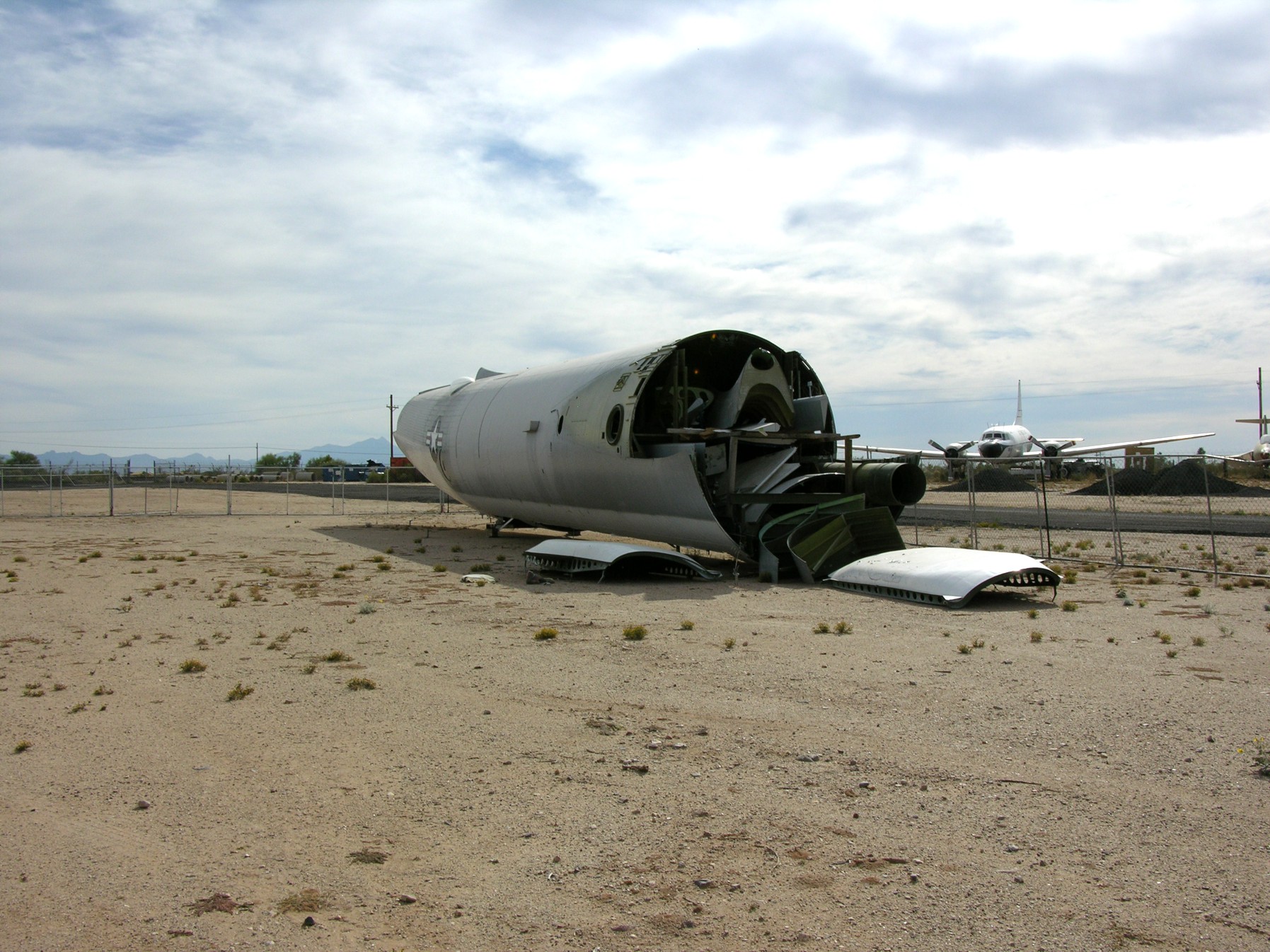
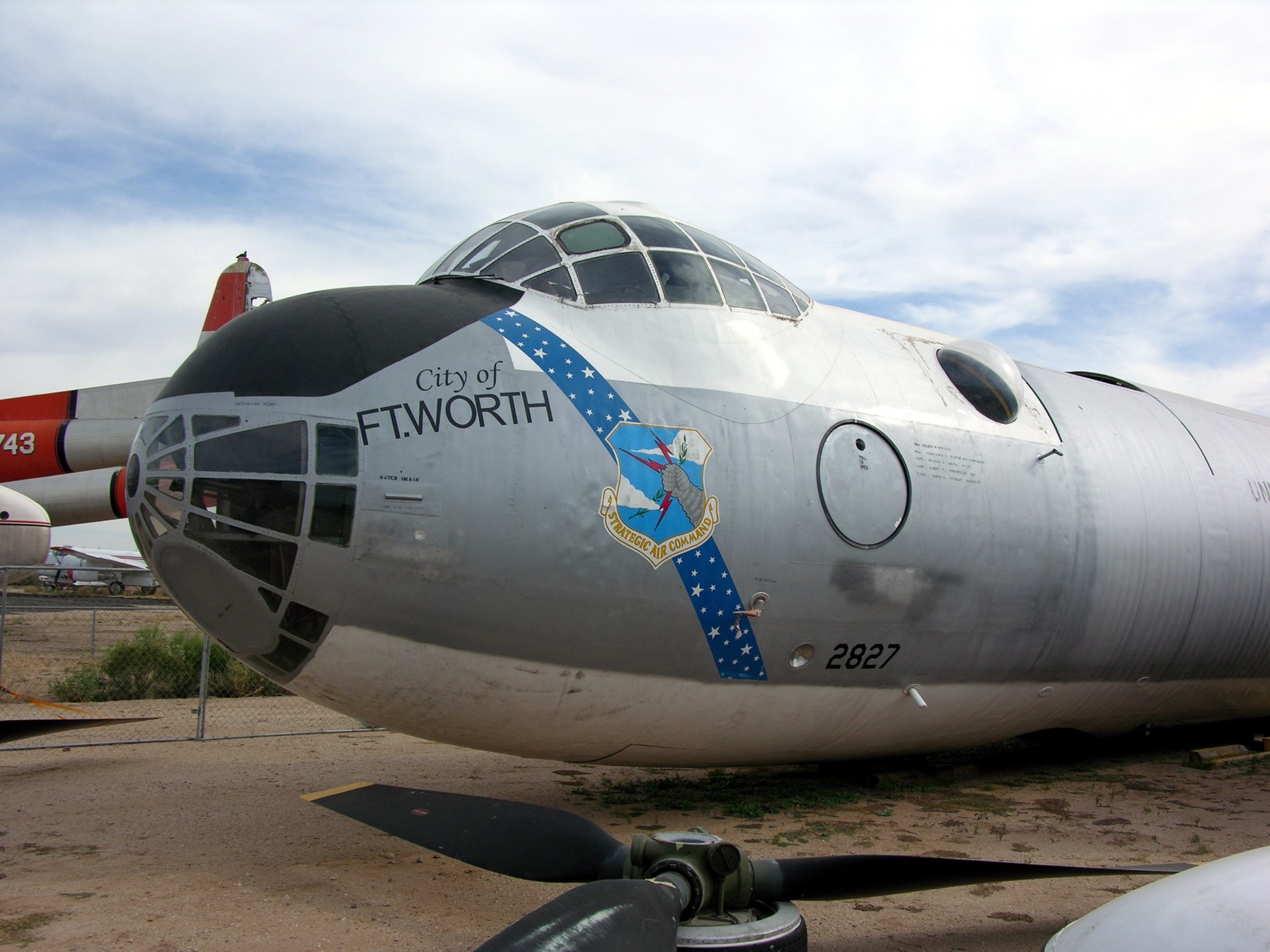
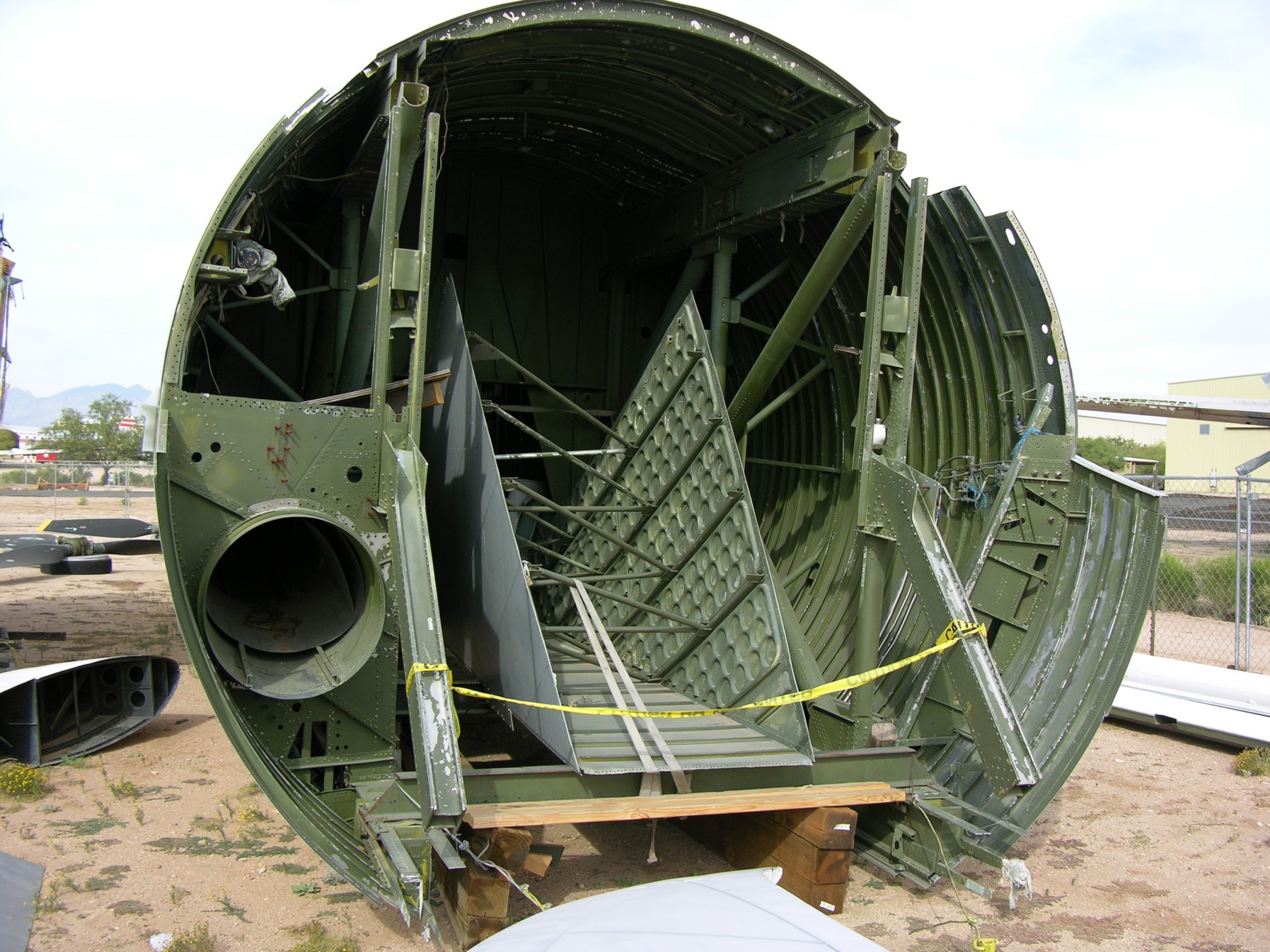
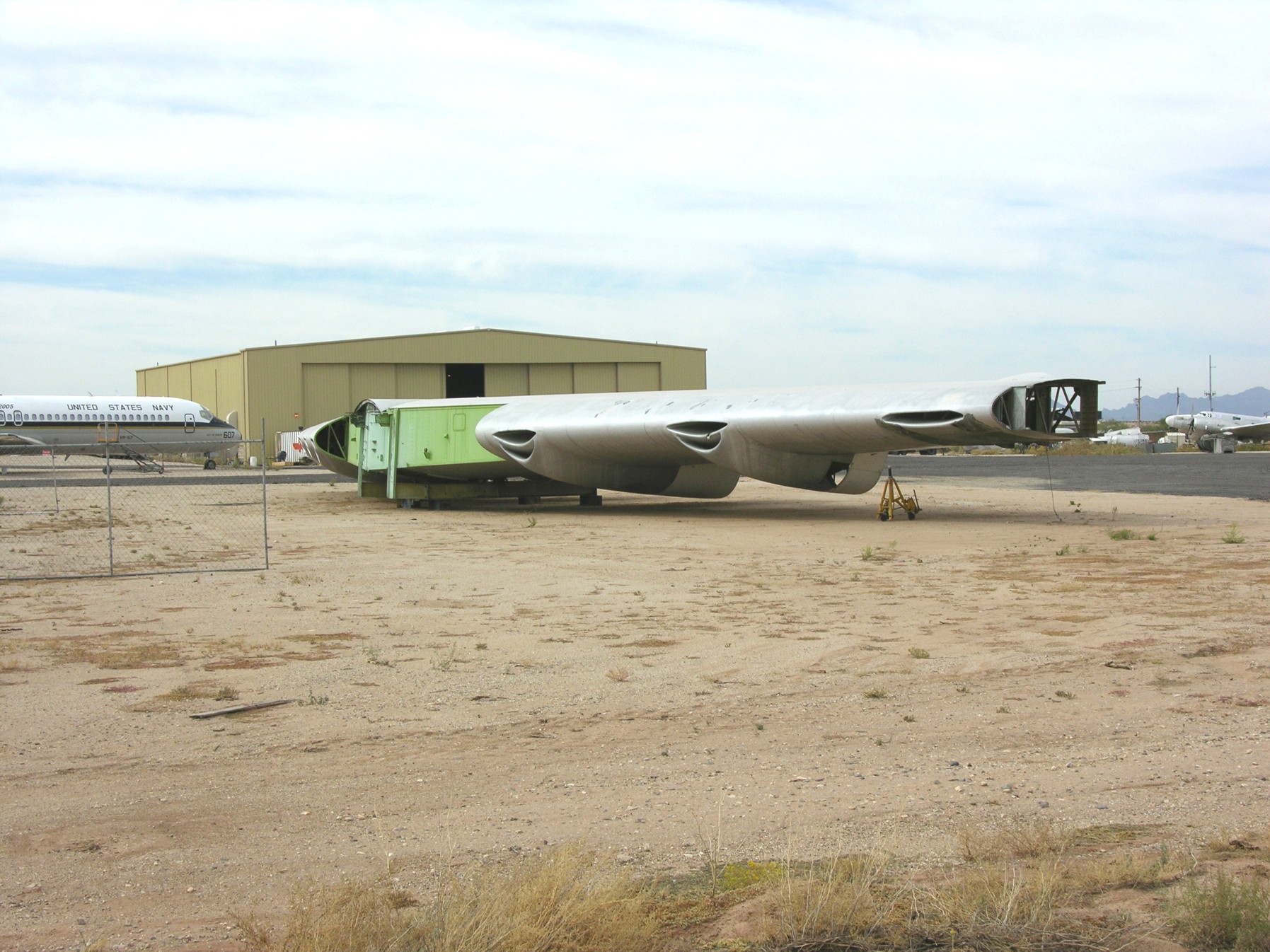
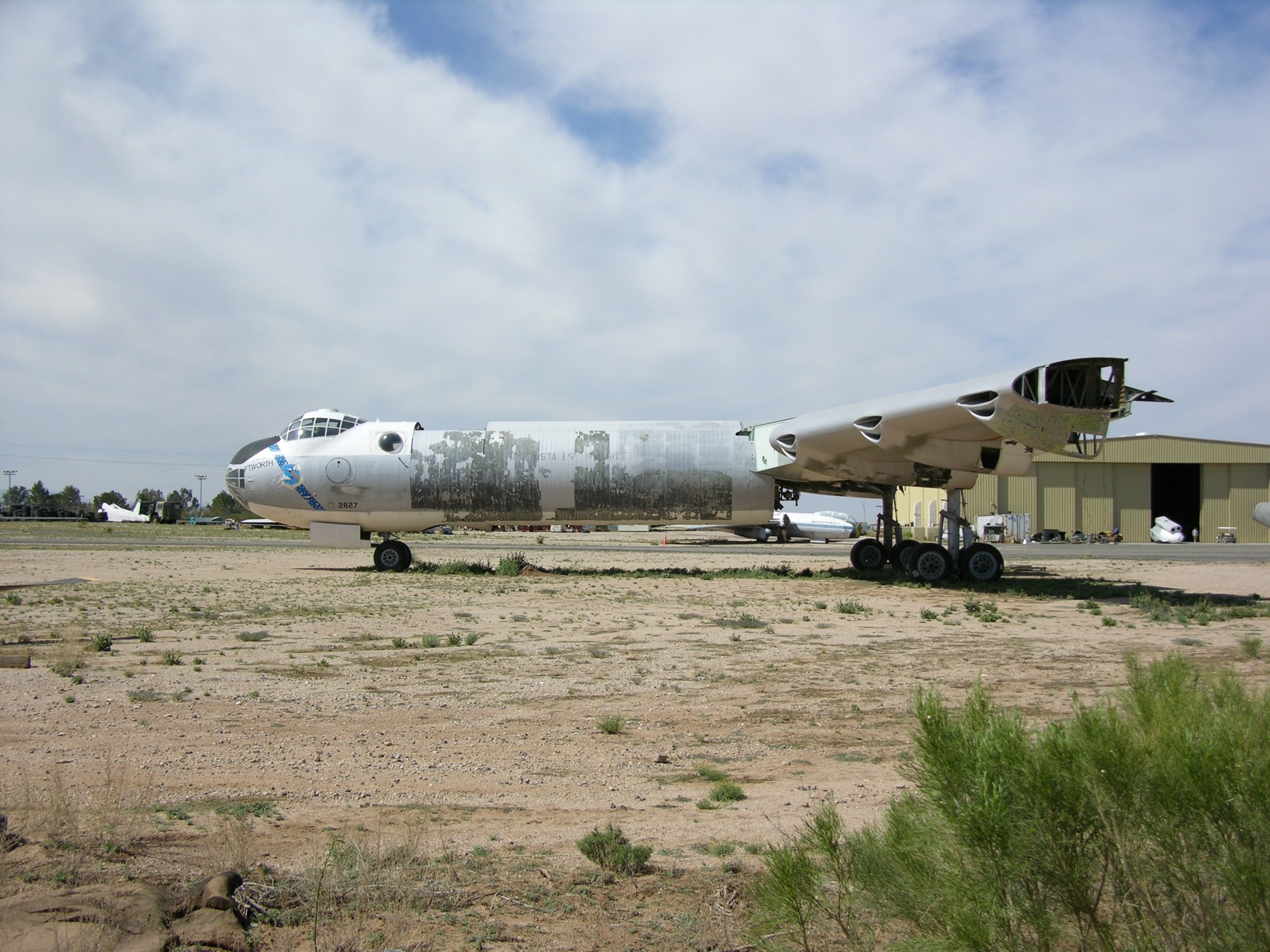
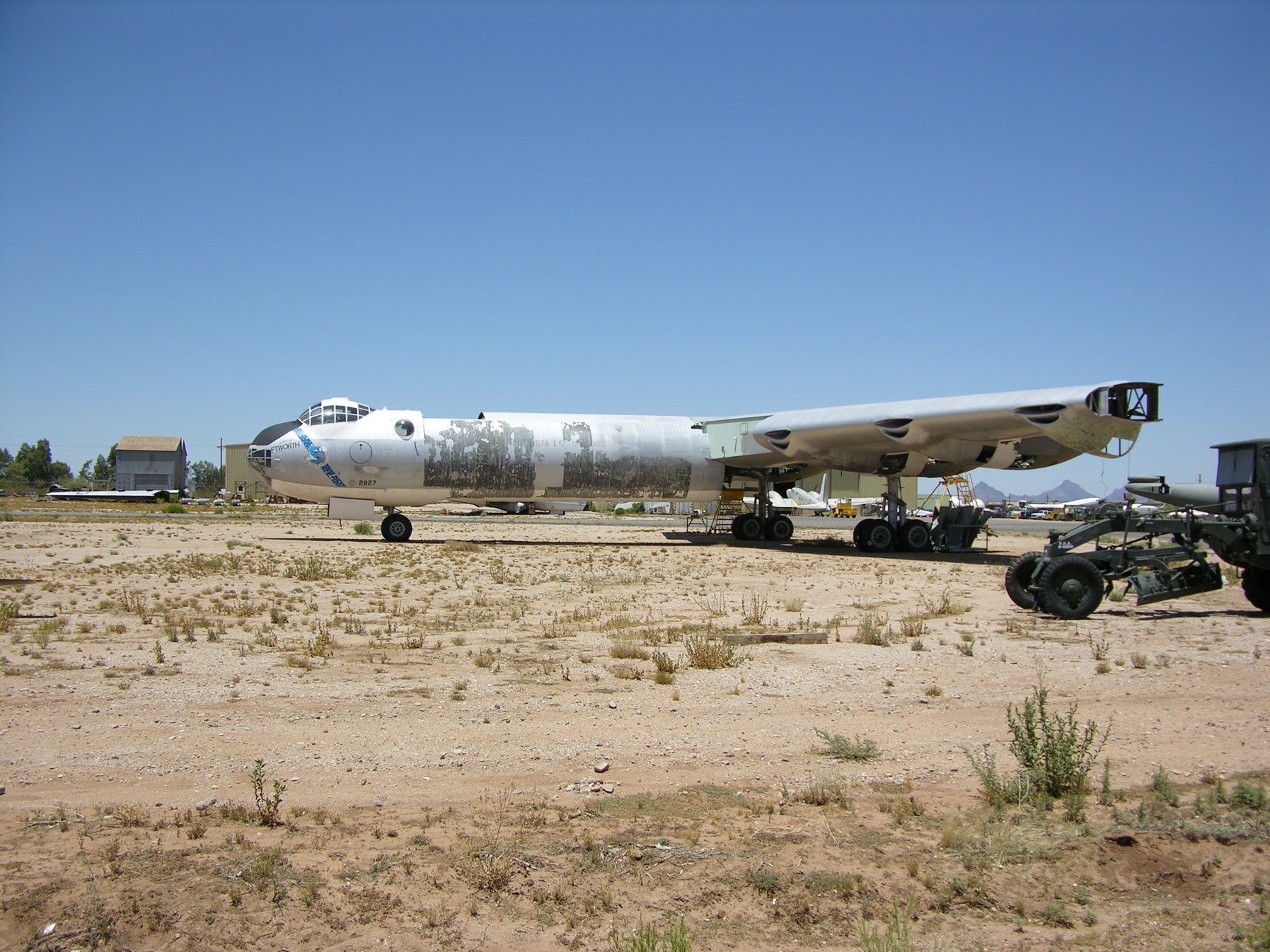
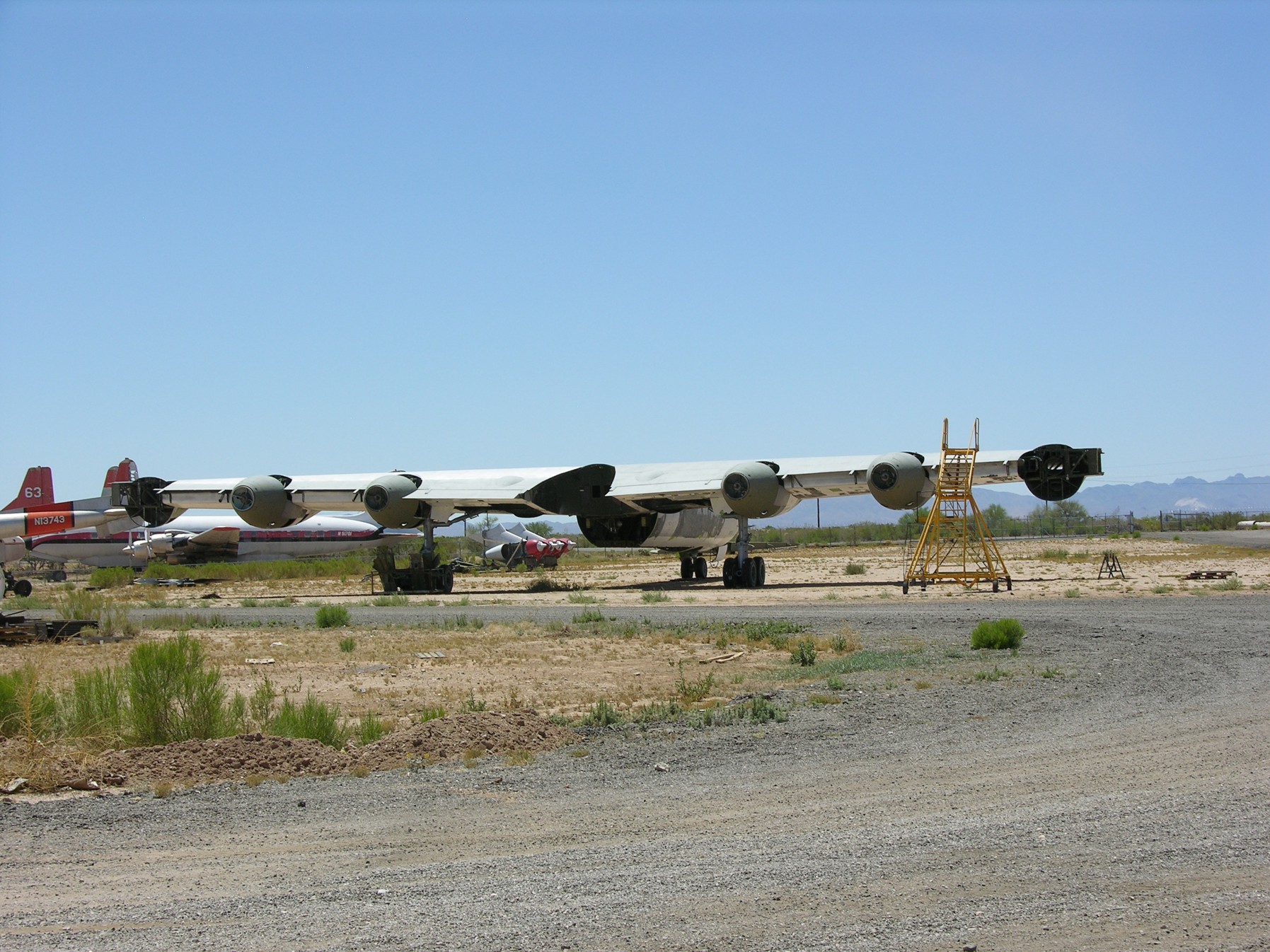
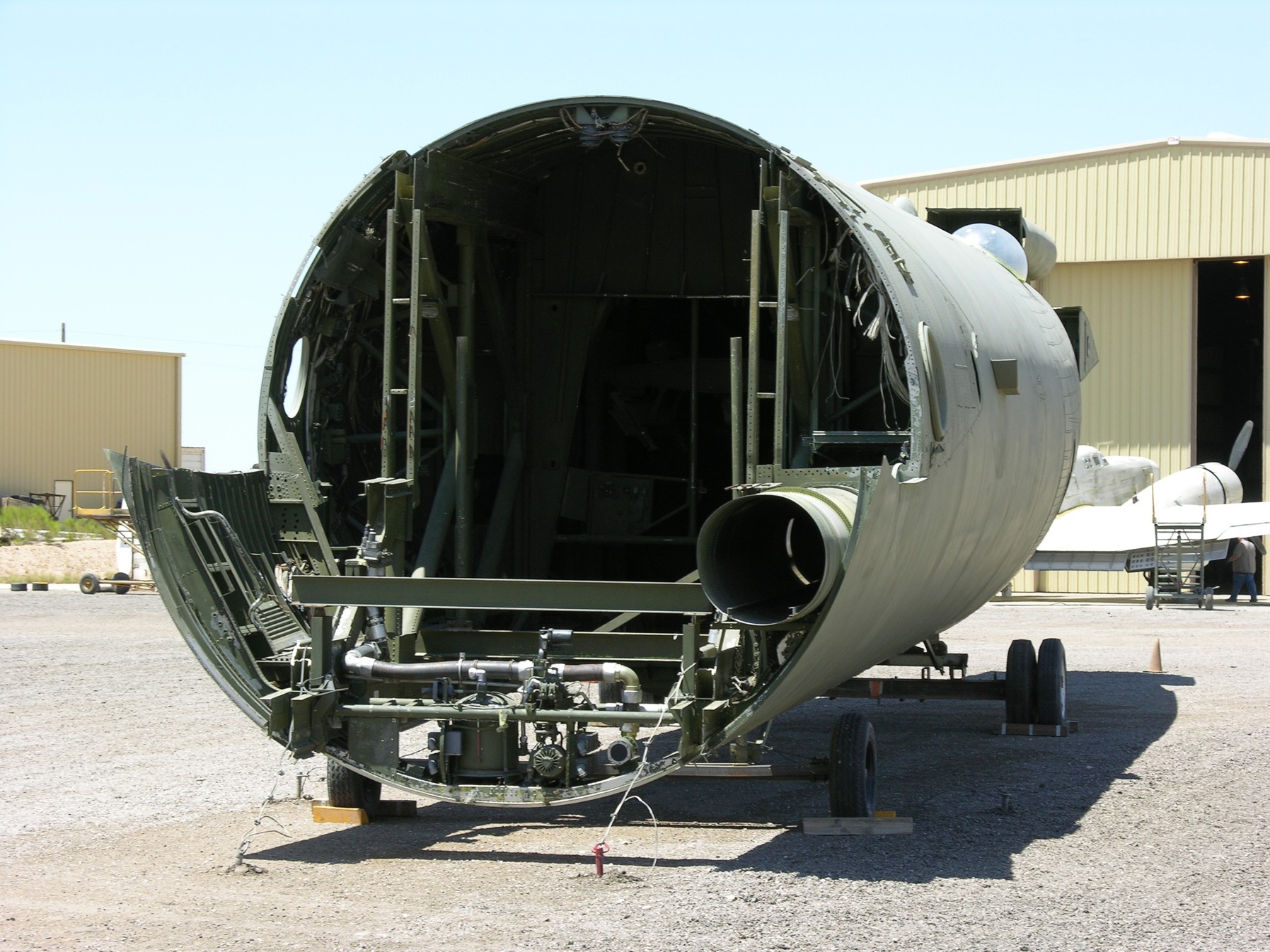
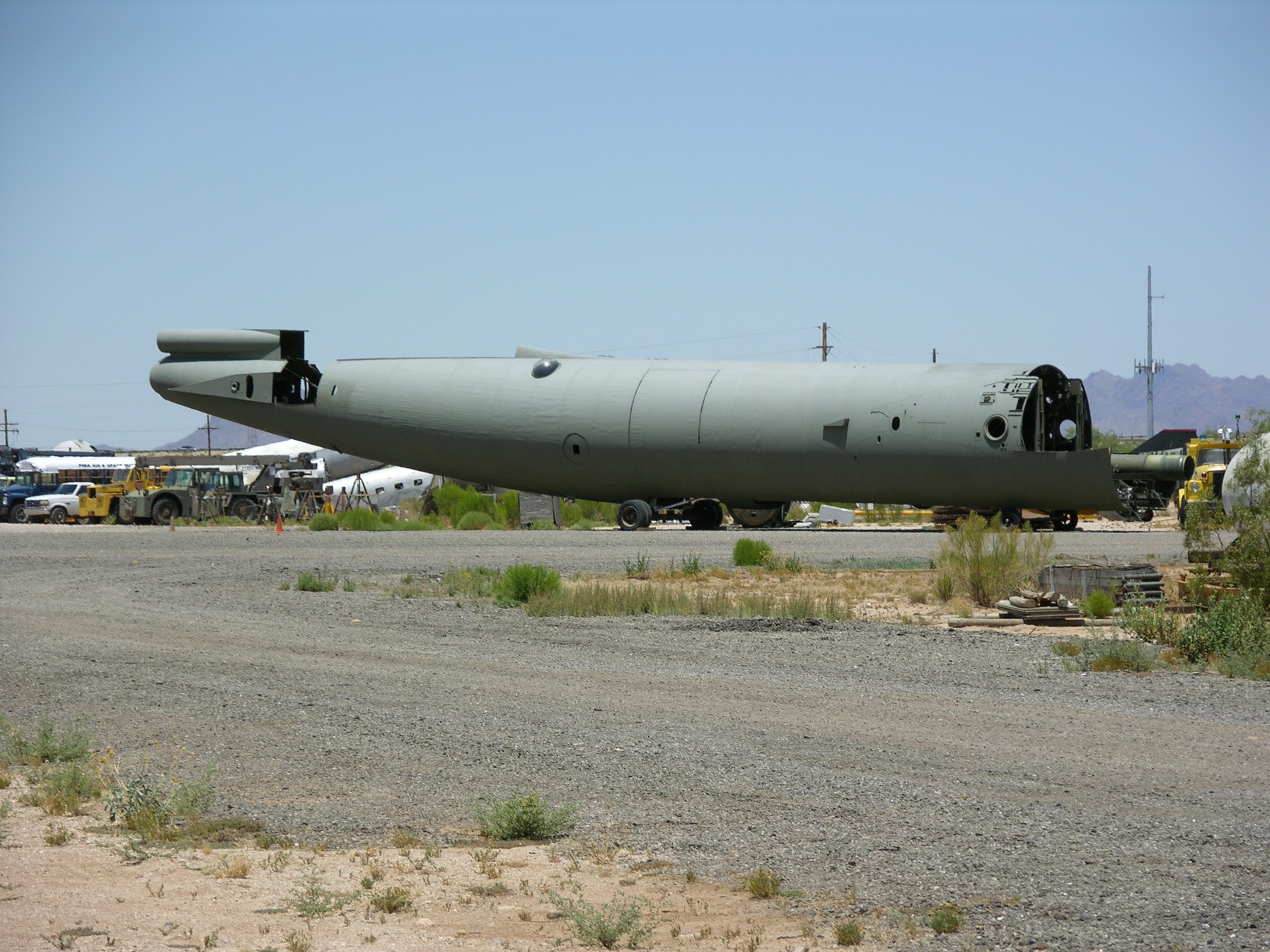
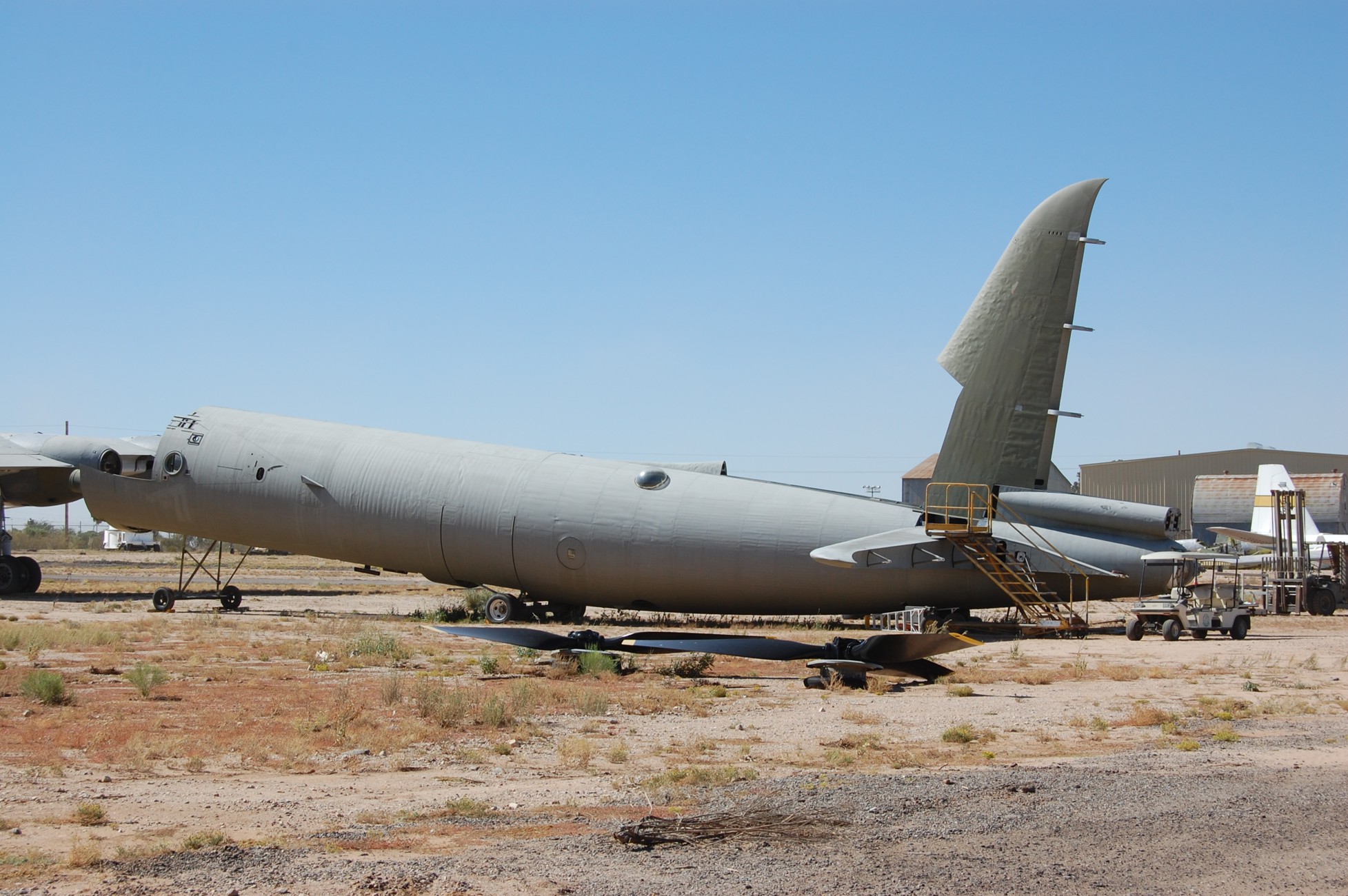
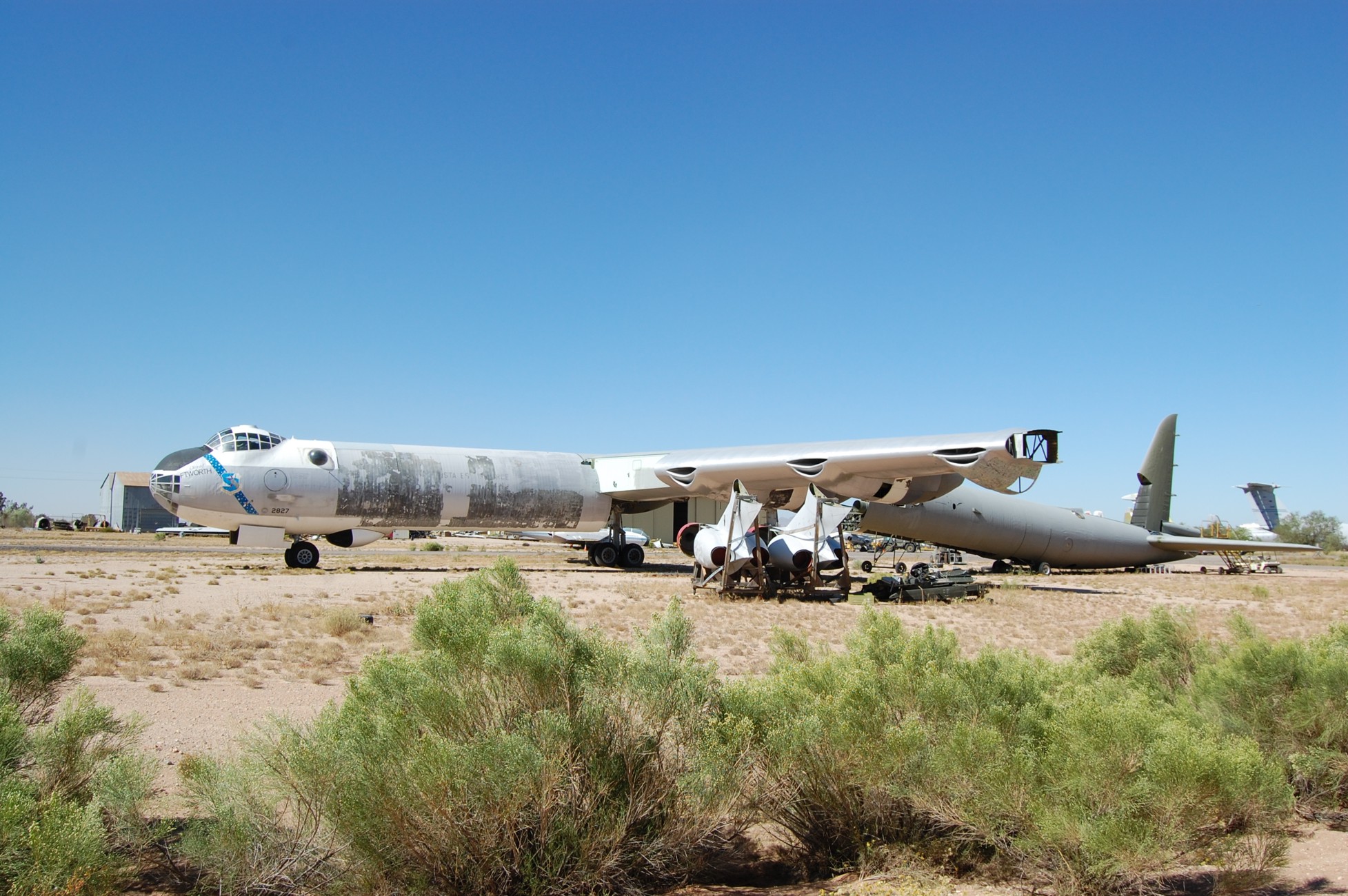
After arrival
at Pima it took several months of planning and surveying the condition
of the airframe prior to reassembly. The above photos were taken
in November, 2005.
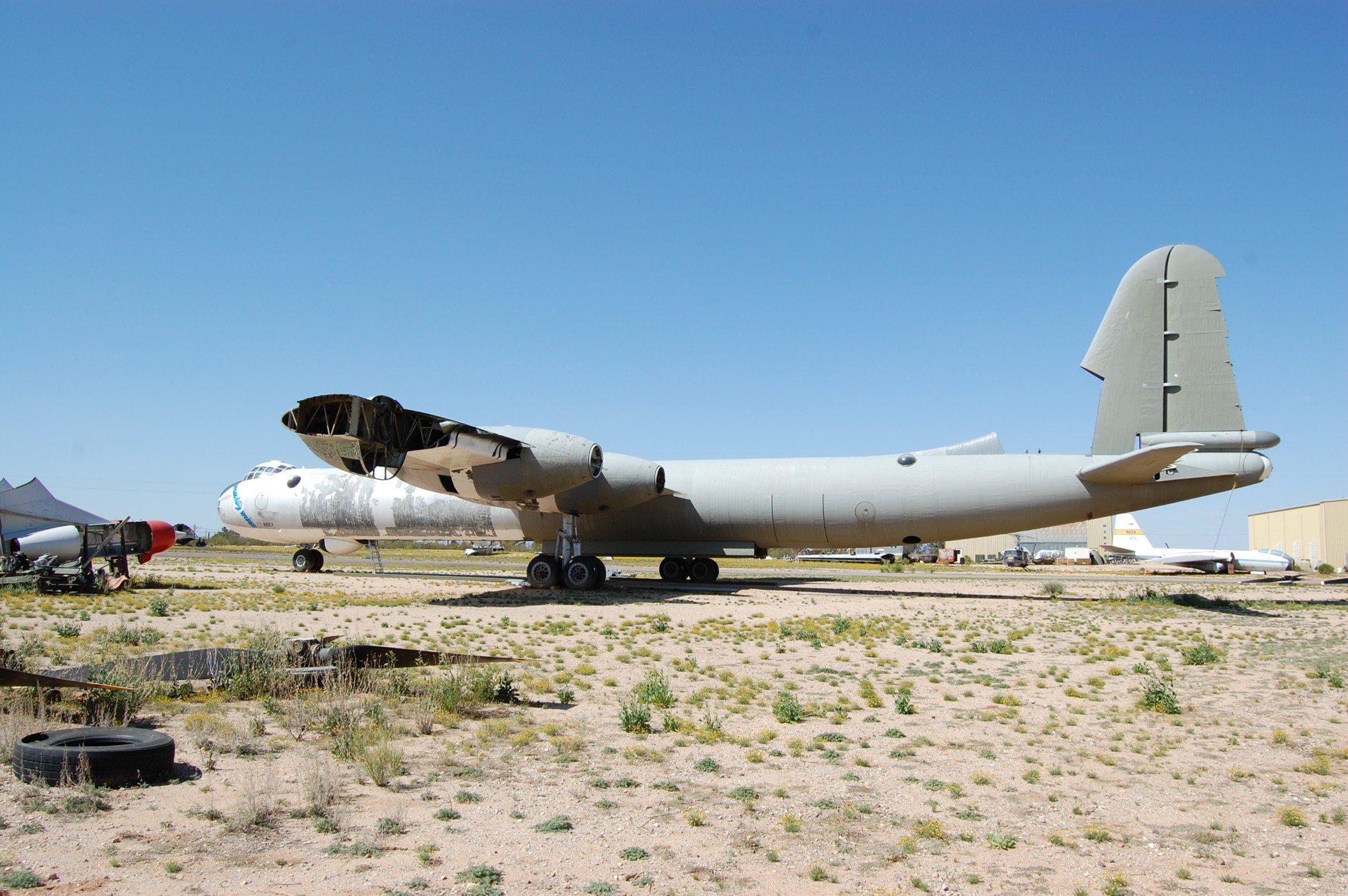
Reassembly started in late 2005, but progressed
slowly due to corrosion in the airframe that had to be dealt
with. Though a great amount of work had been put into preserving
the aircraft while still in Fort Worth the Texas climate had been hard
on the airframe. Photos date from March, 2007.
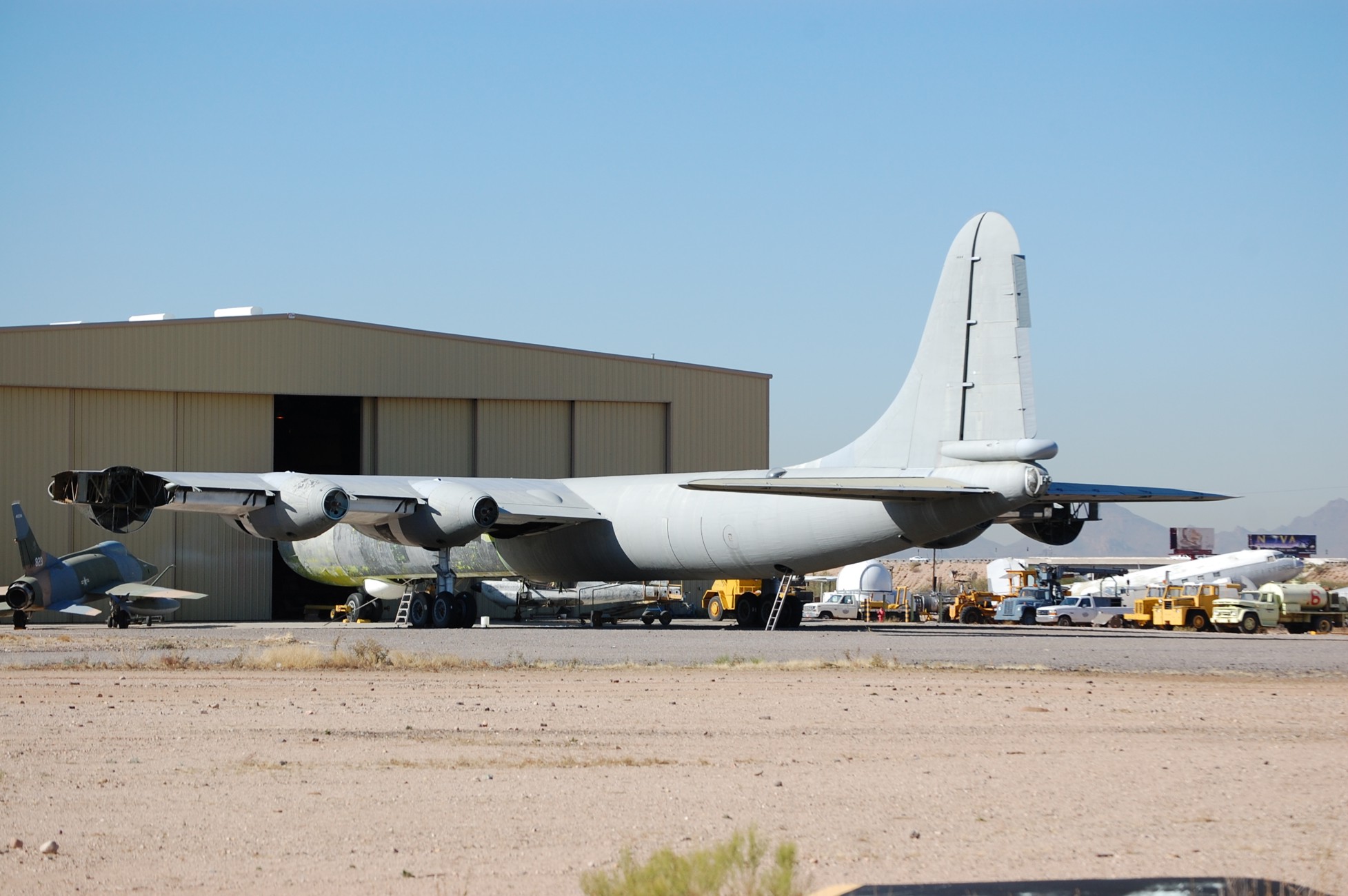
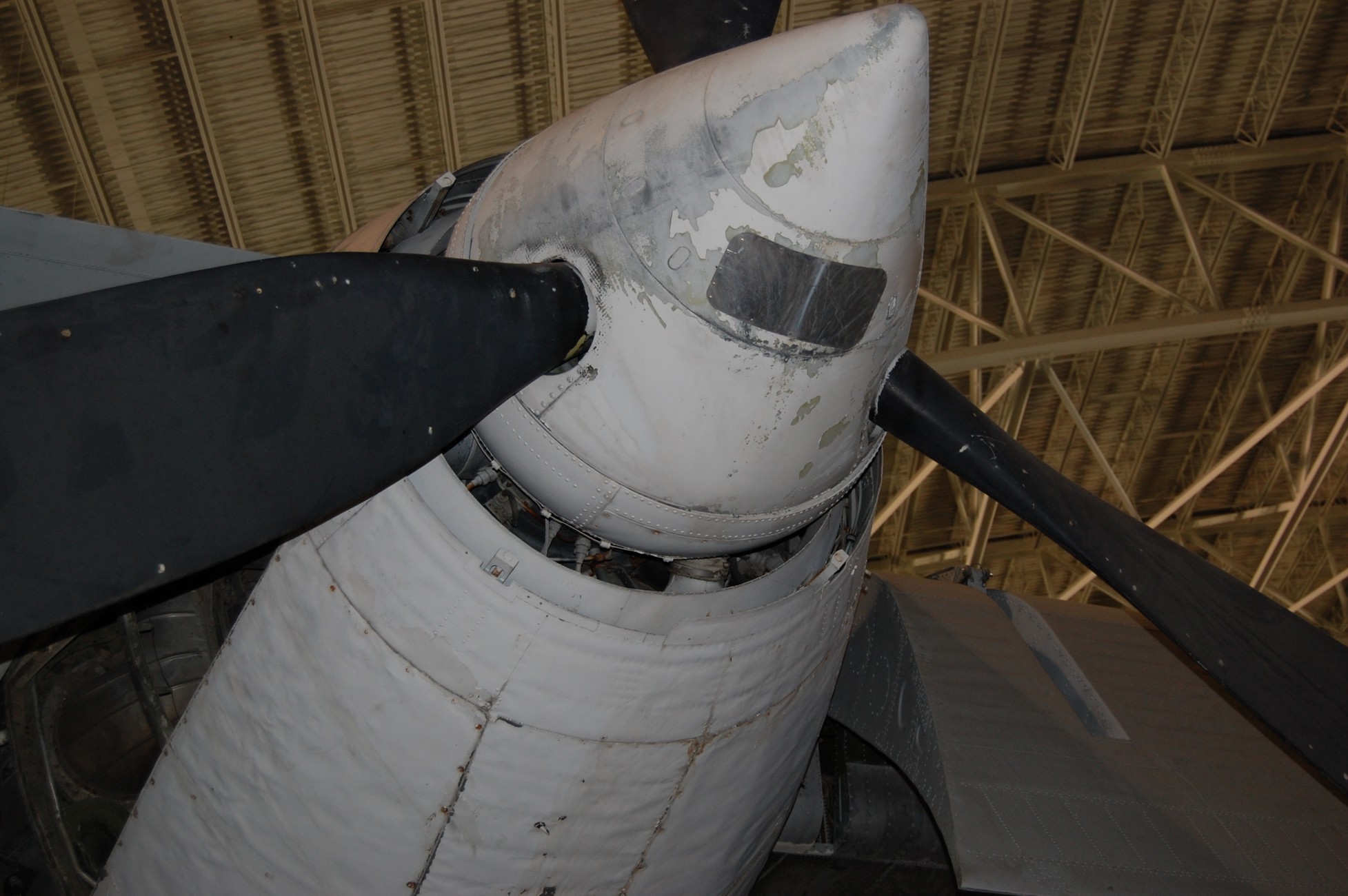
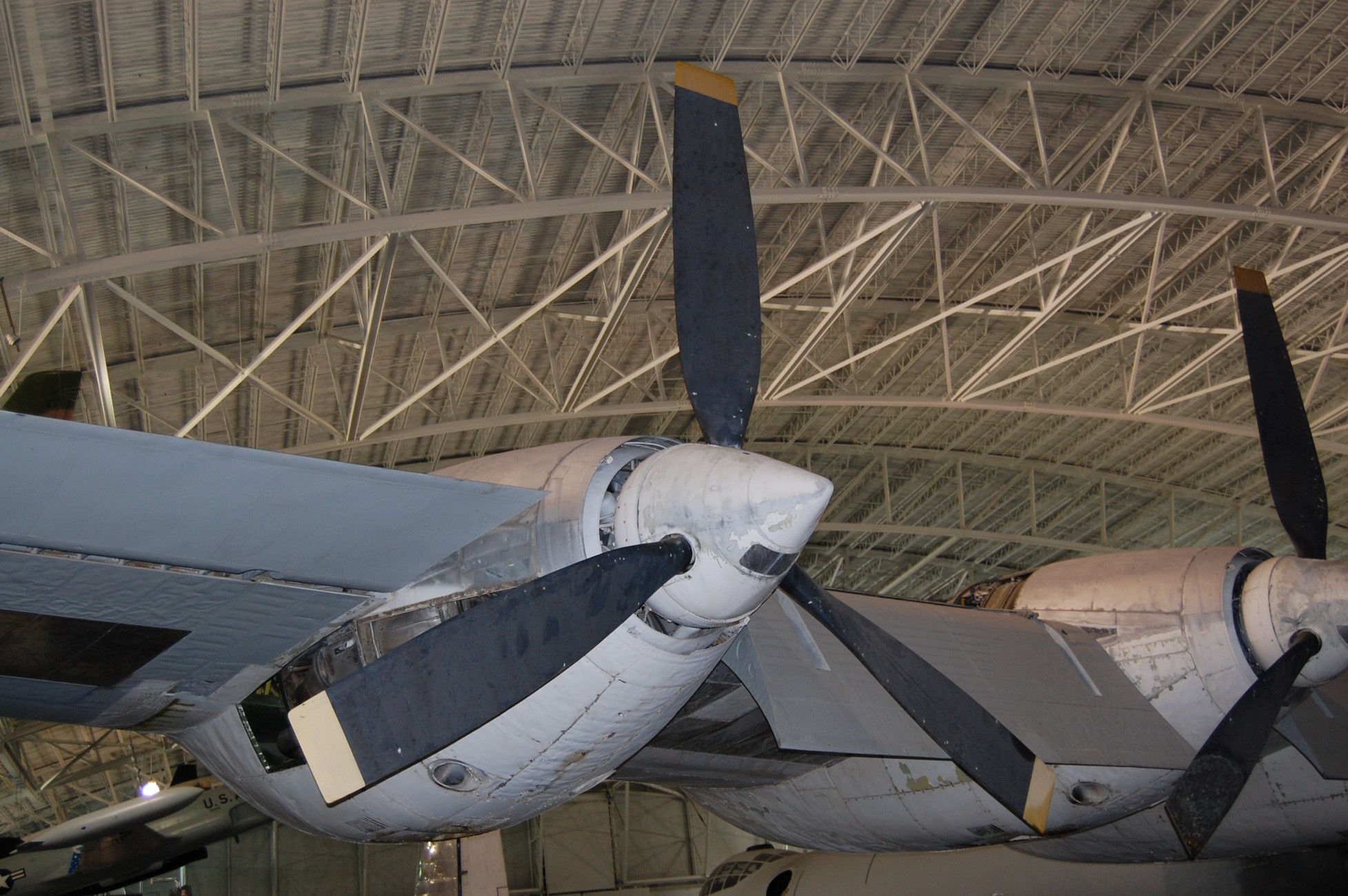
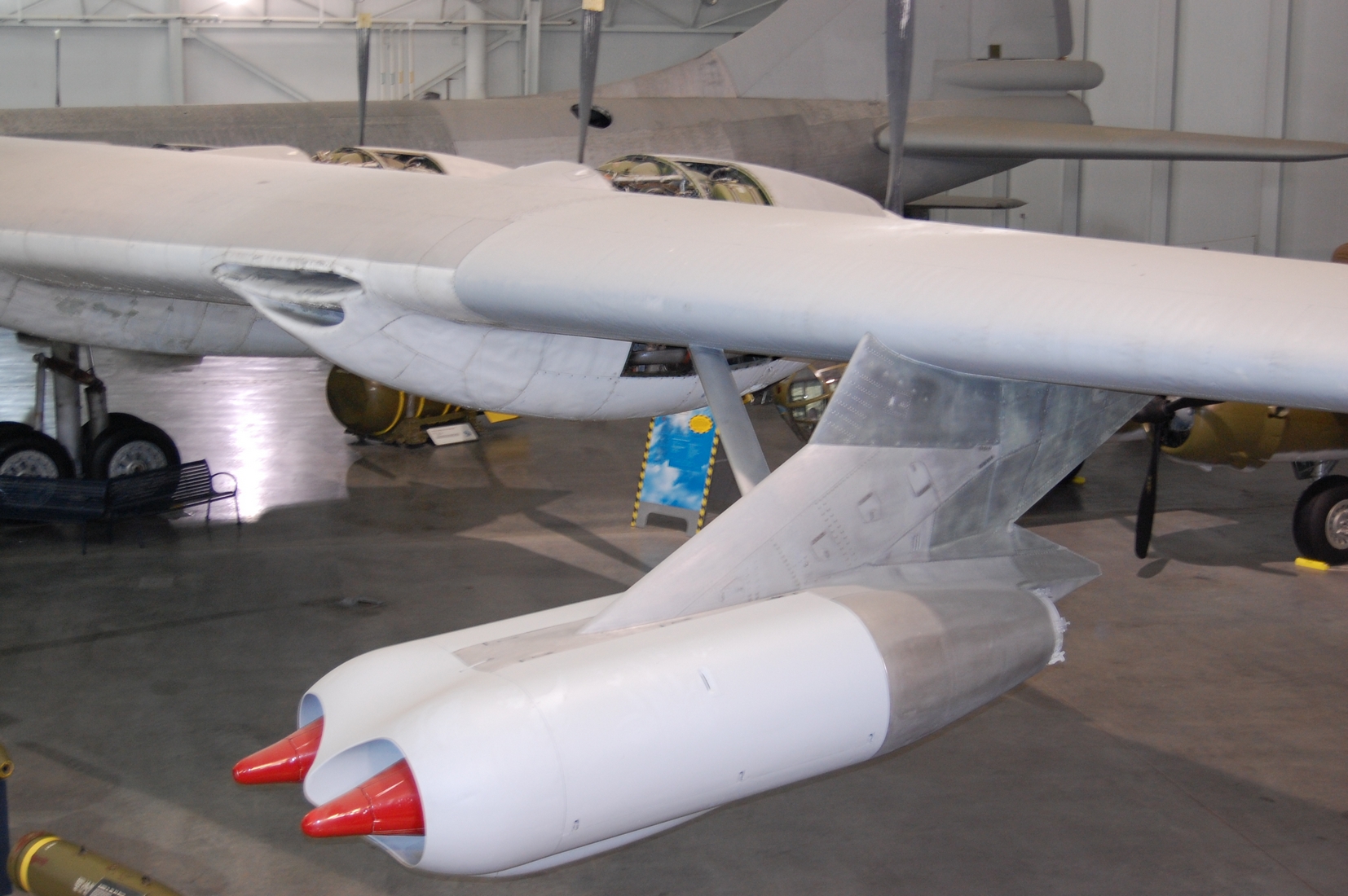
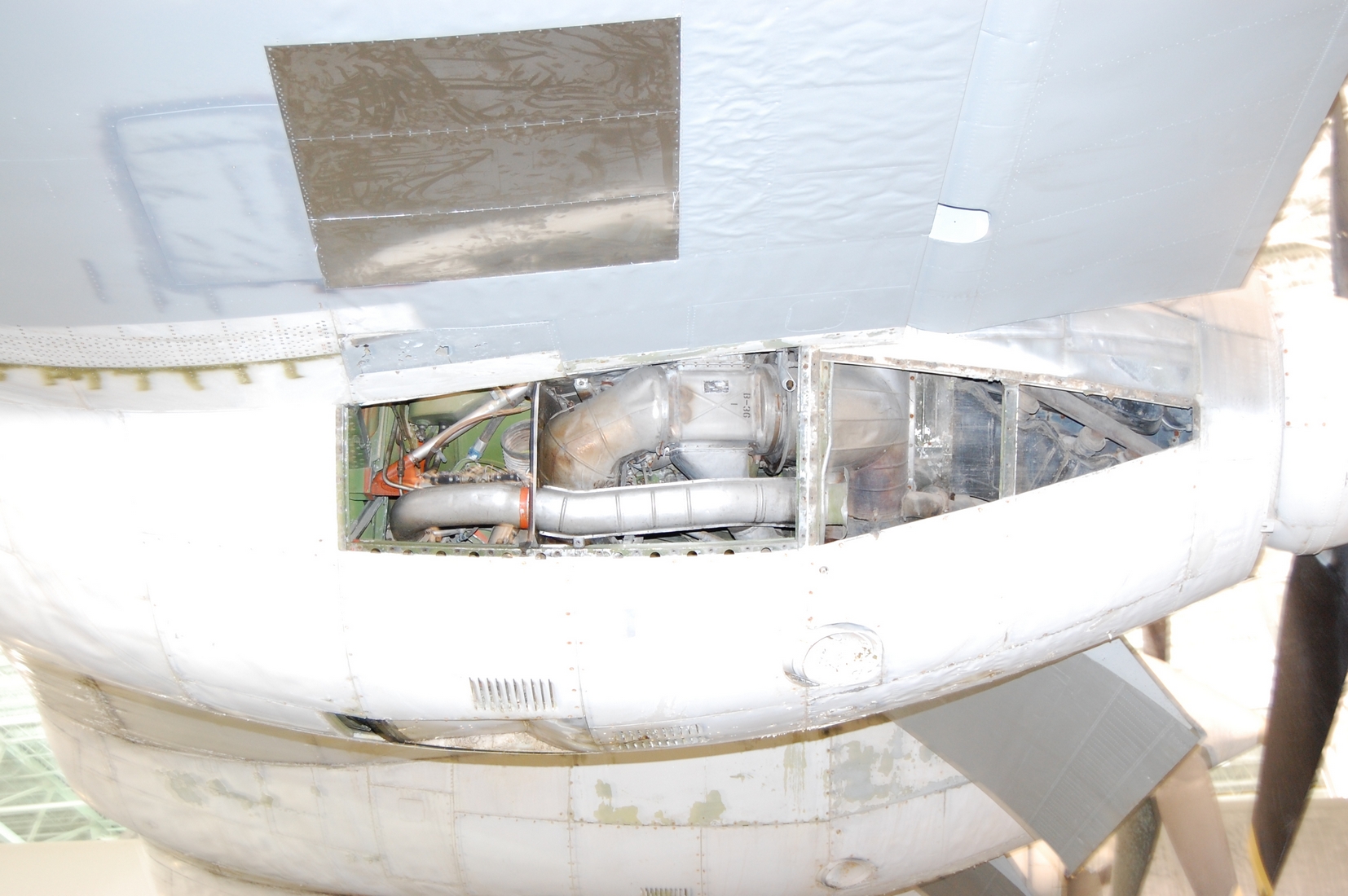
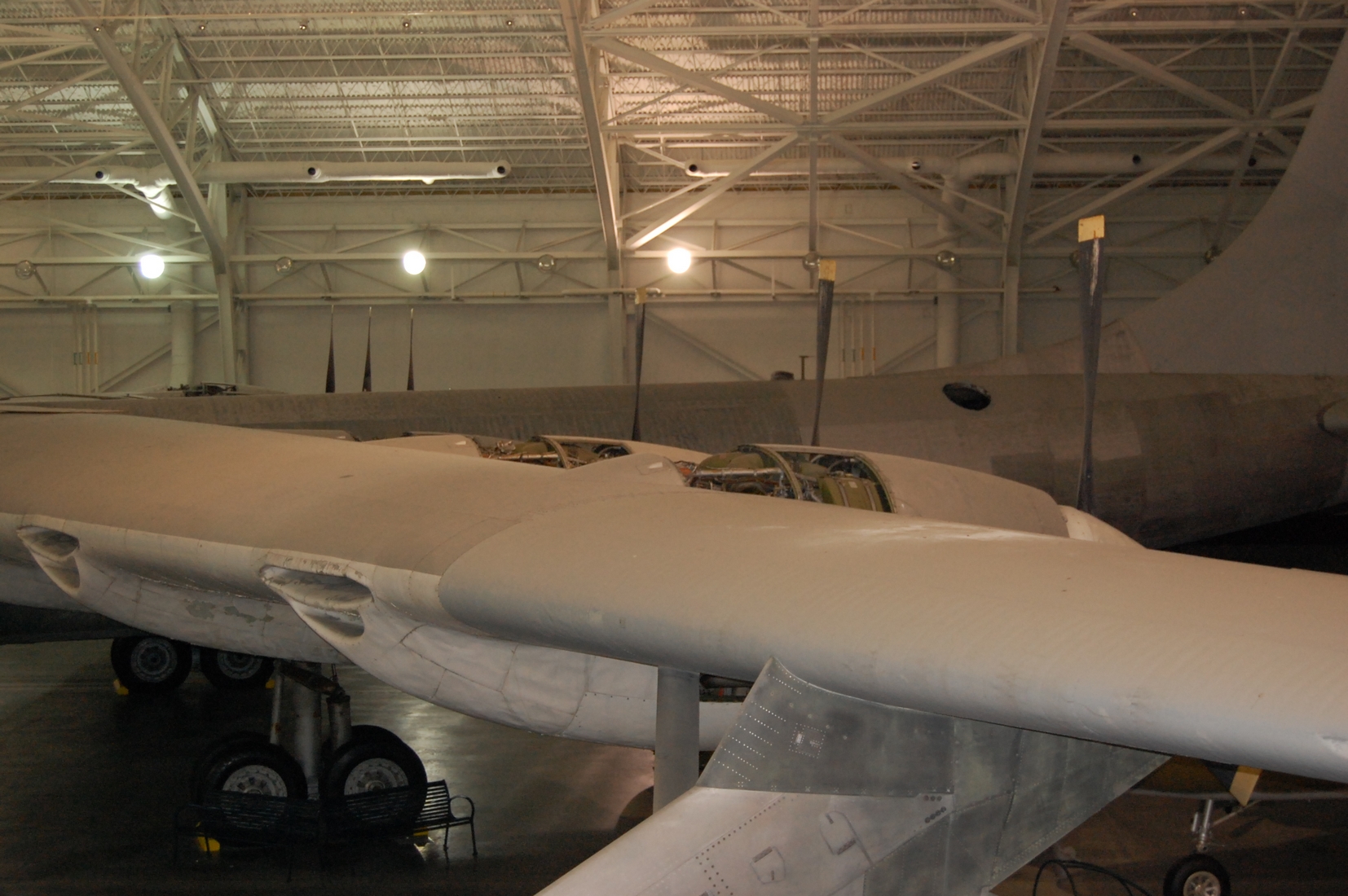
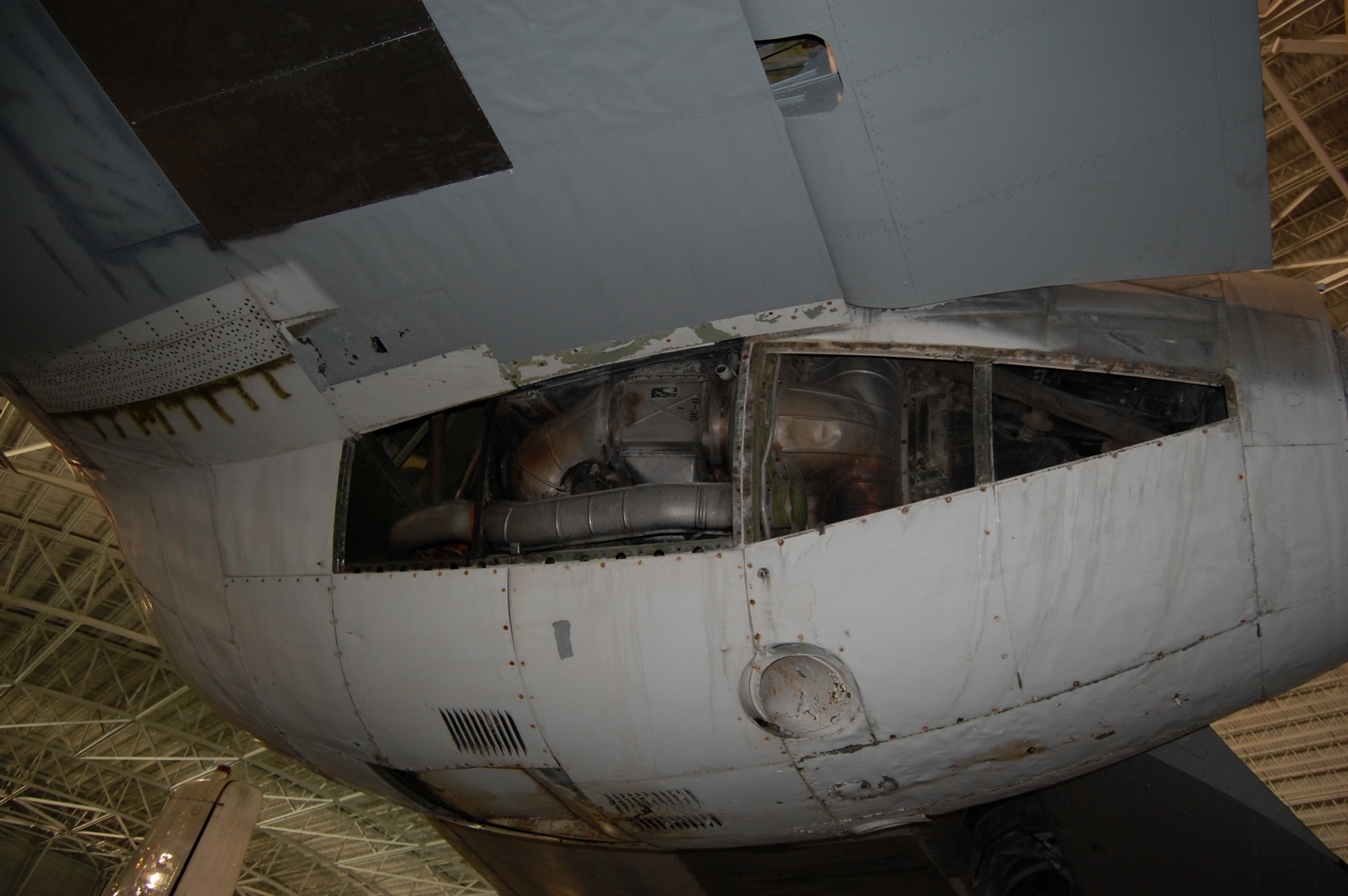
Progress in
June, 2007 consists of attaching the nacelles and work to the aft
fuselage.
In October, 2007 work was well under way in
preparation of attaching the aft fuselage to the forward section.
This was accomplished late that year.
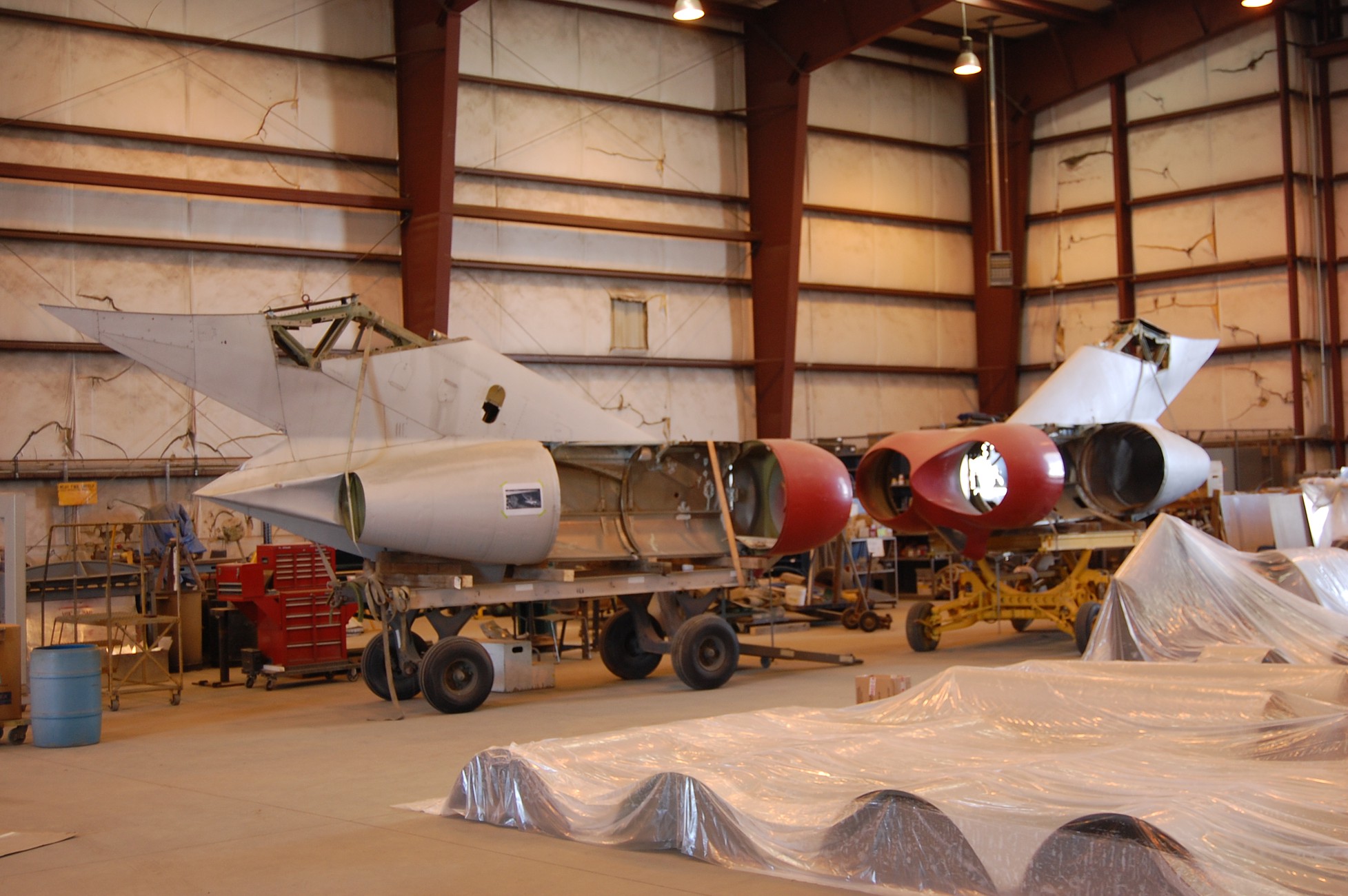
By the time these photos were taken in April, 2008
the aft section was attached and many of the smaller components were
under restoration inside the hangar. Note the transit damage to
the nacelle in the background of the first photo.
By December 0f 2008 the major portions of the
airframe were assembled and painting was set to begin. The Hun to
the left was being prepared for repainting, which would be completed in
a few weeks.
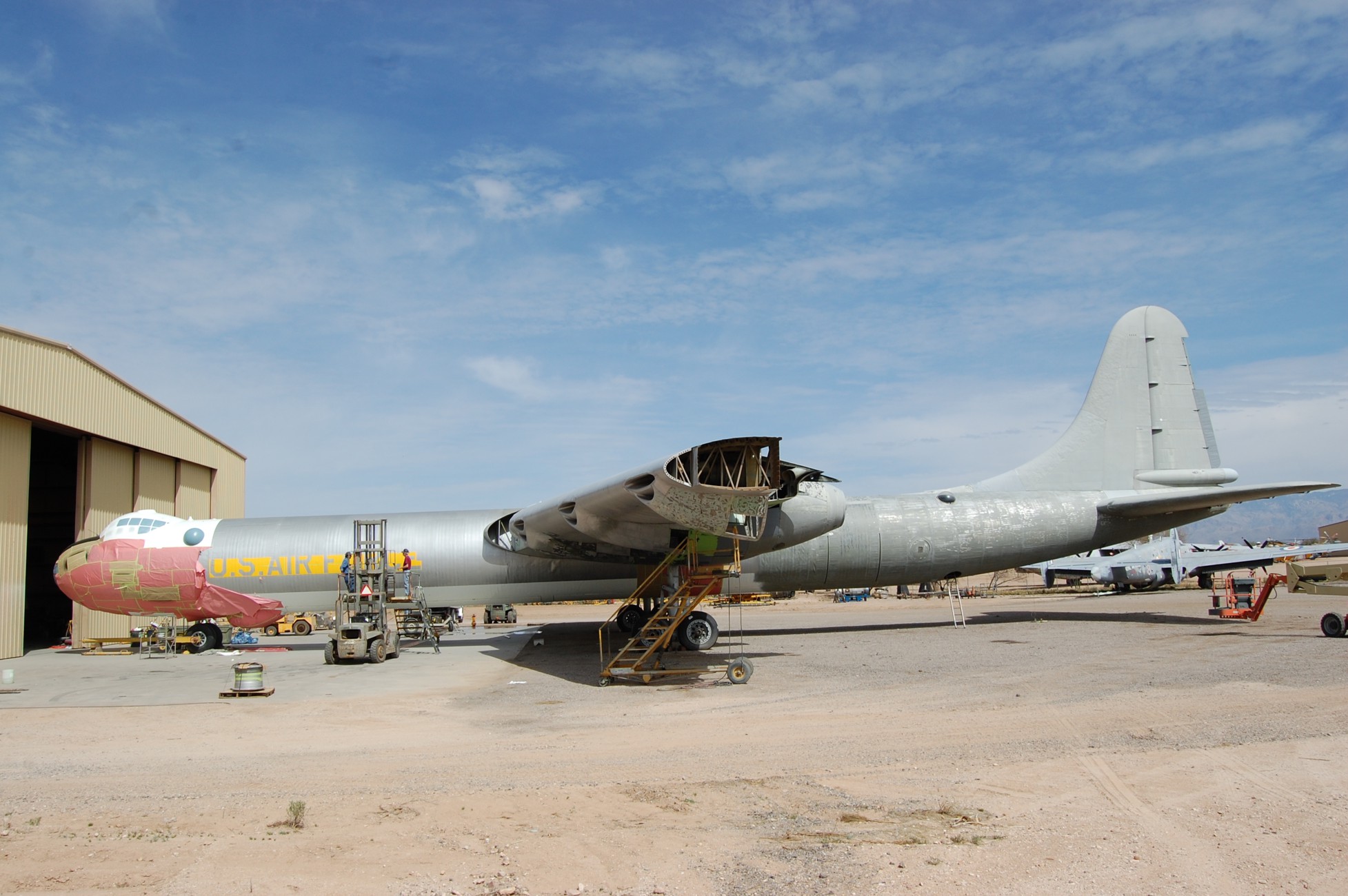
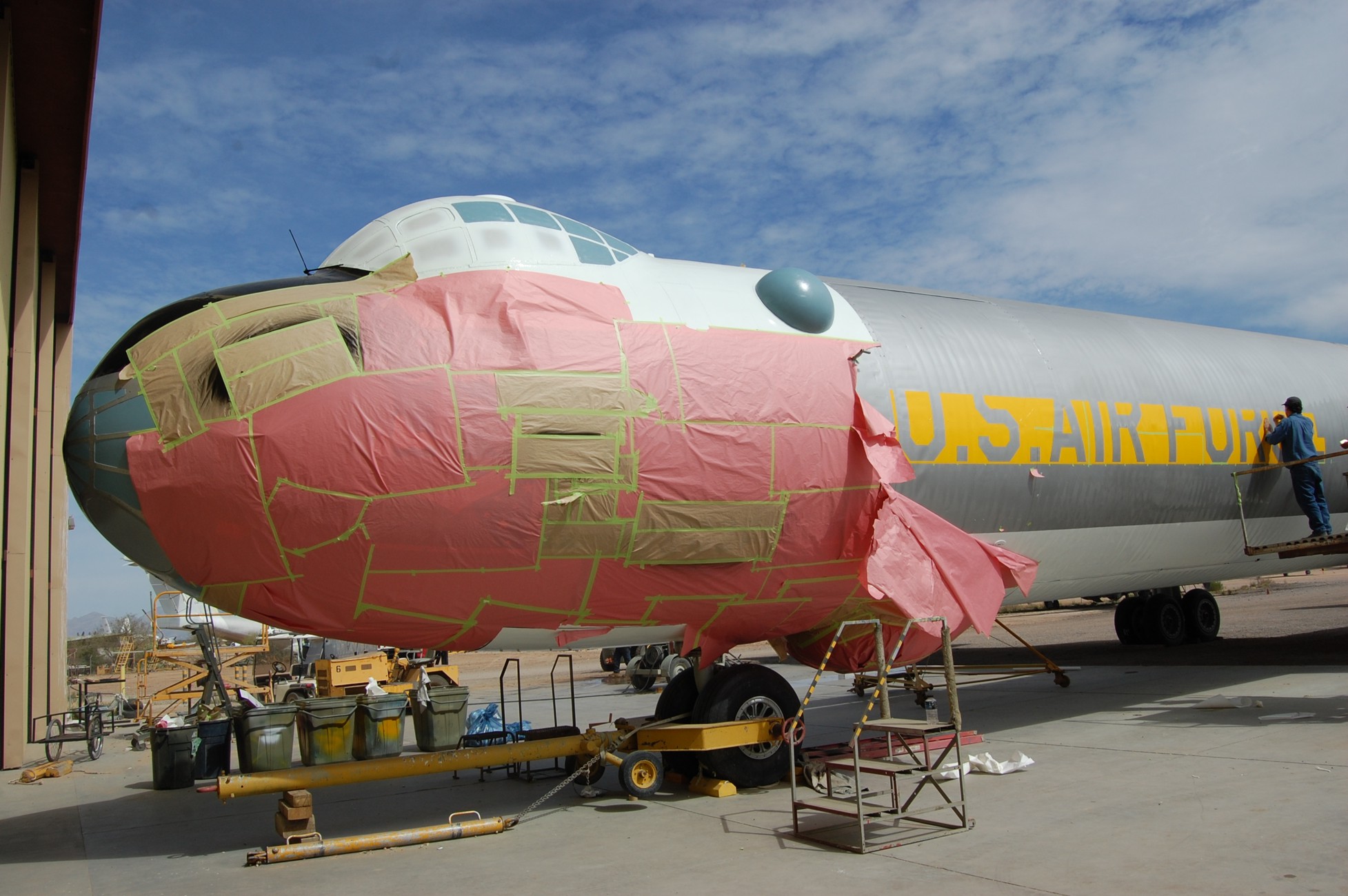
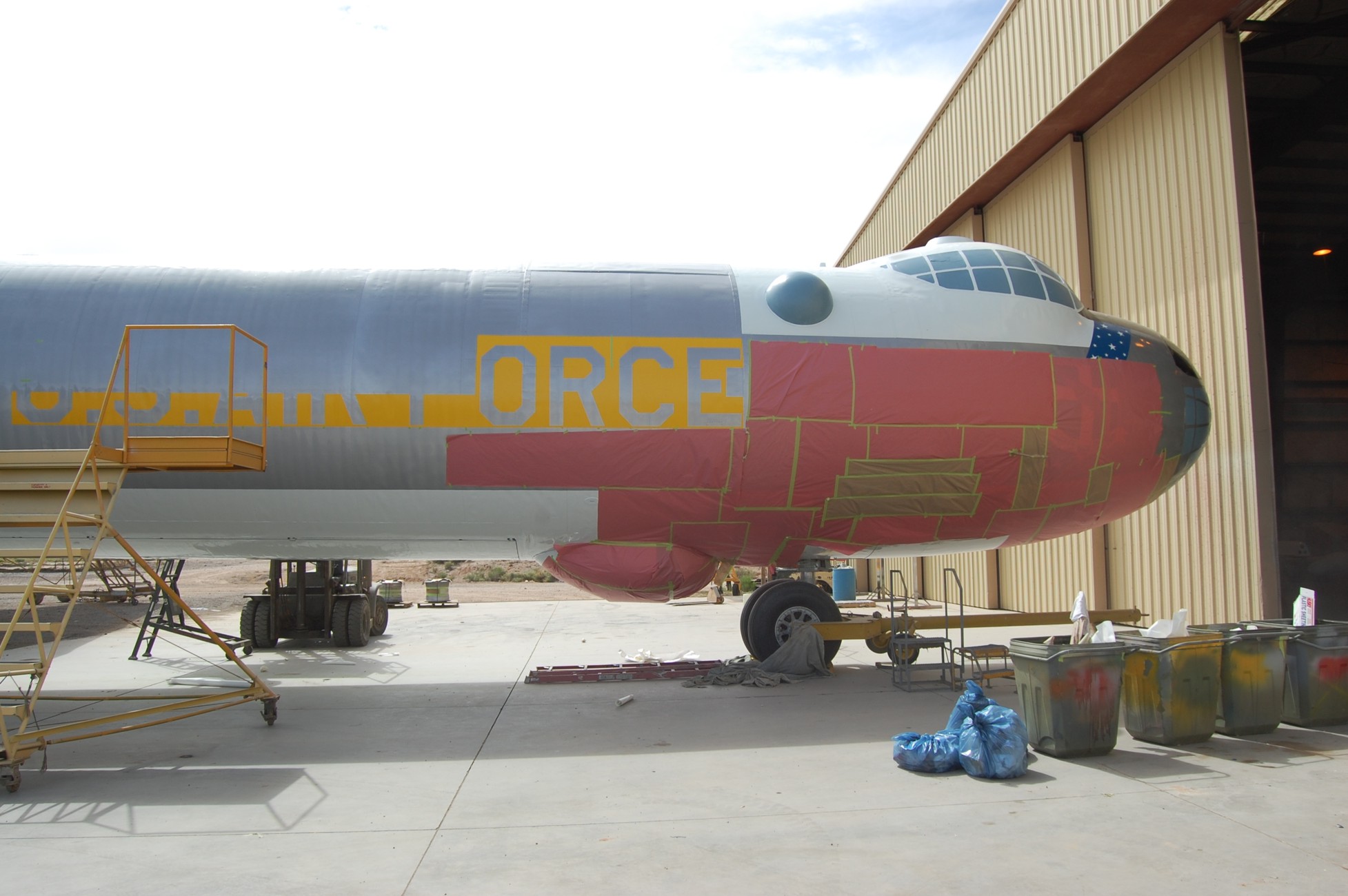
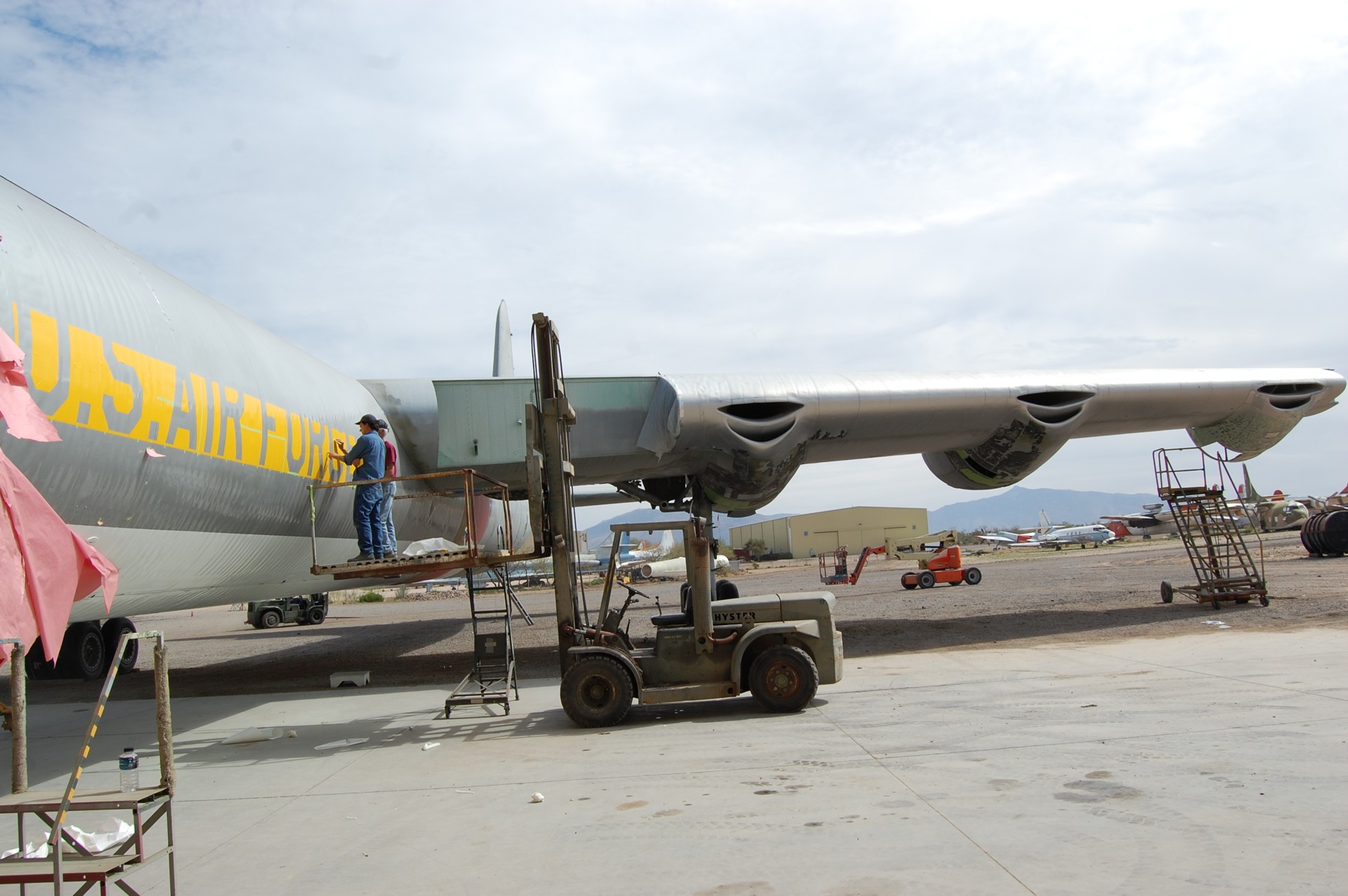
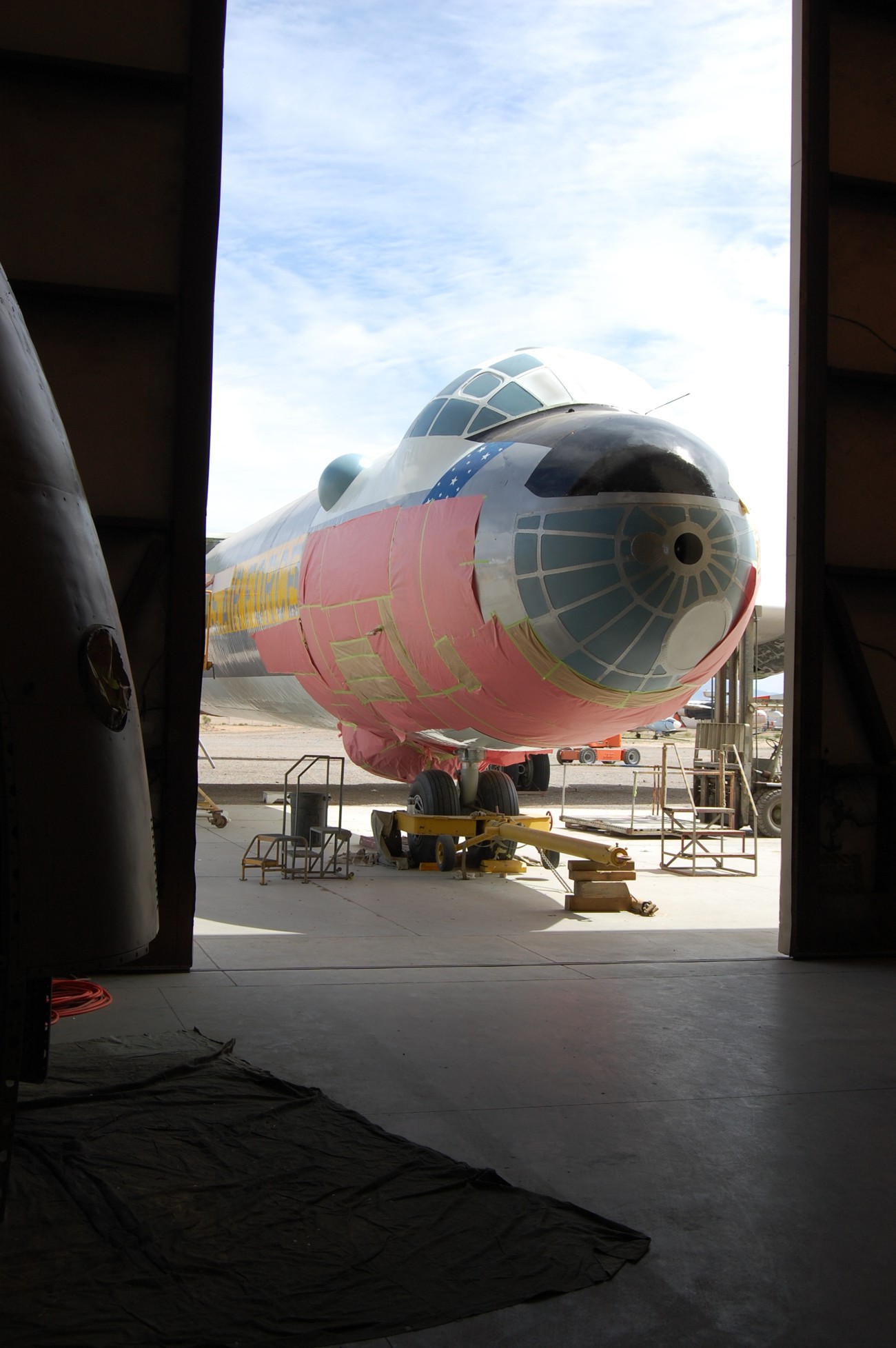
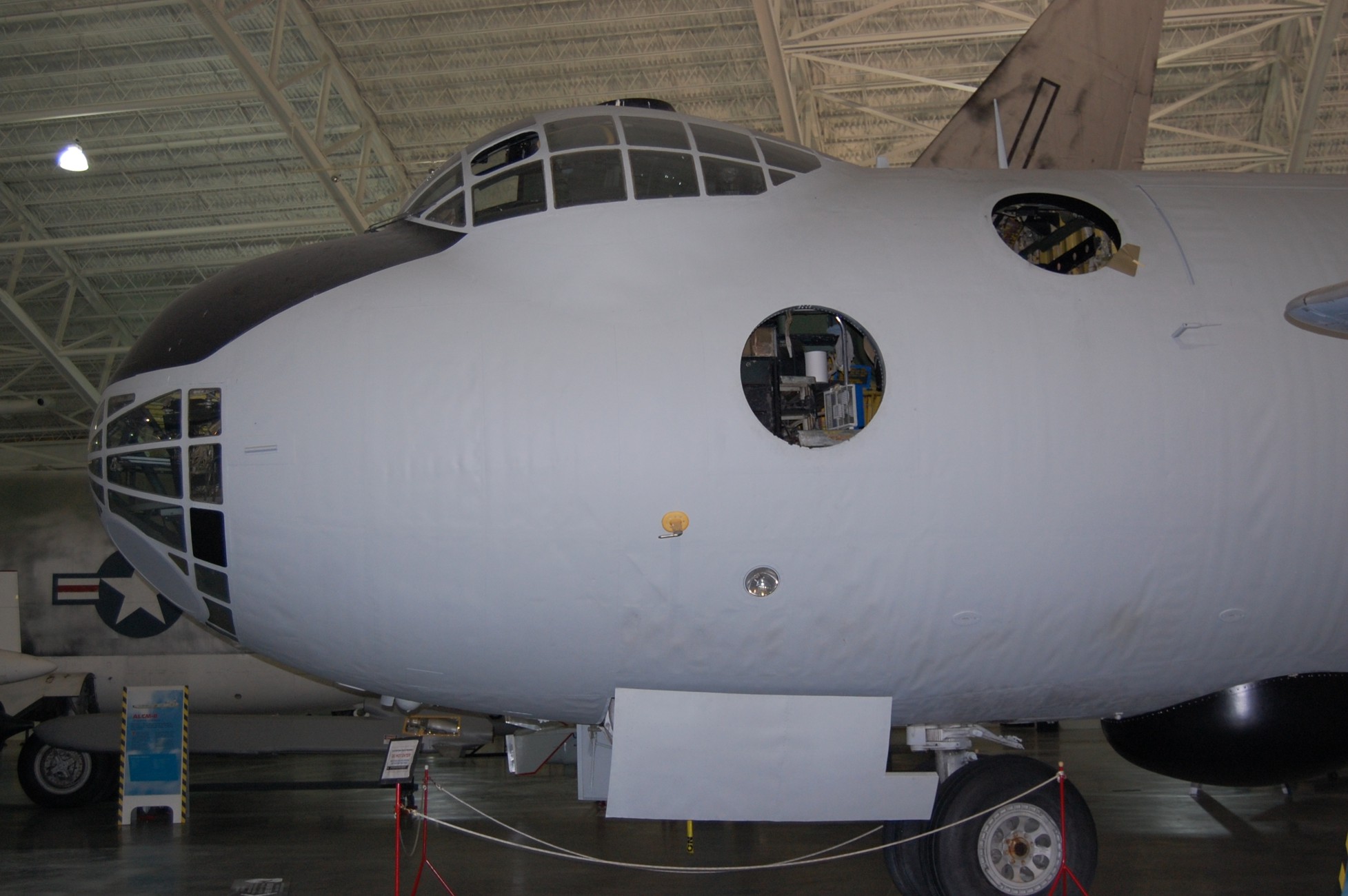
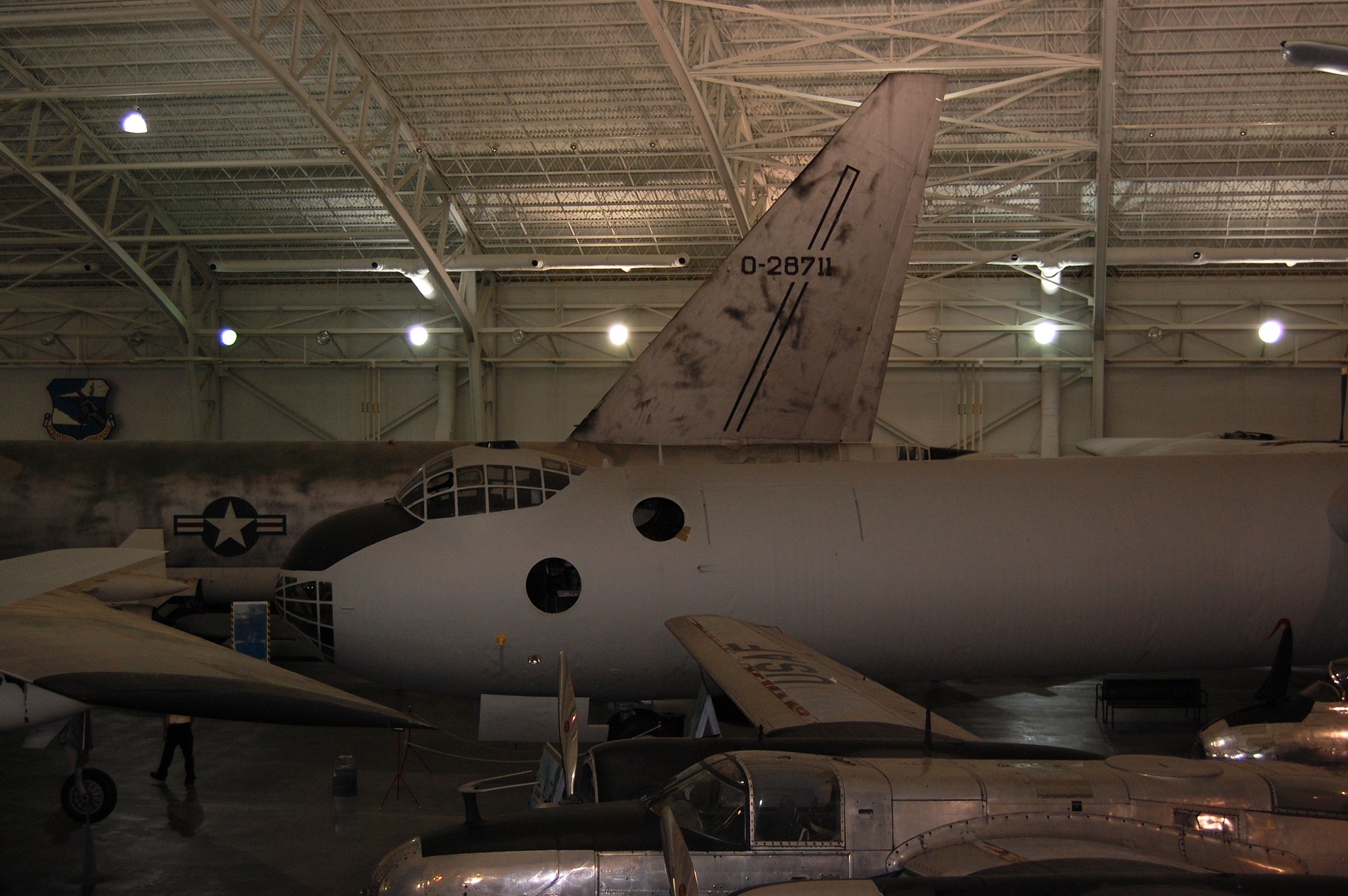
By March, 2009 a great deal of work had been
accomplished. The aircraft will be displayed in the markings of
the 95th Bomb Wing which it last served with prior to retirement.
The 6th and 95th Bomb Wings were unique in having the area above the
crew cabin painted white on most of their airplanes. This was due
to the extreme heat during the summer at Walker and Biggs.
These photos were taken on Friday March 20,
2009. Over the weekend the protective paper was removed revealing
the SAC badge and the 95th emblem.
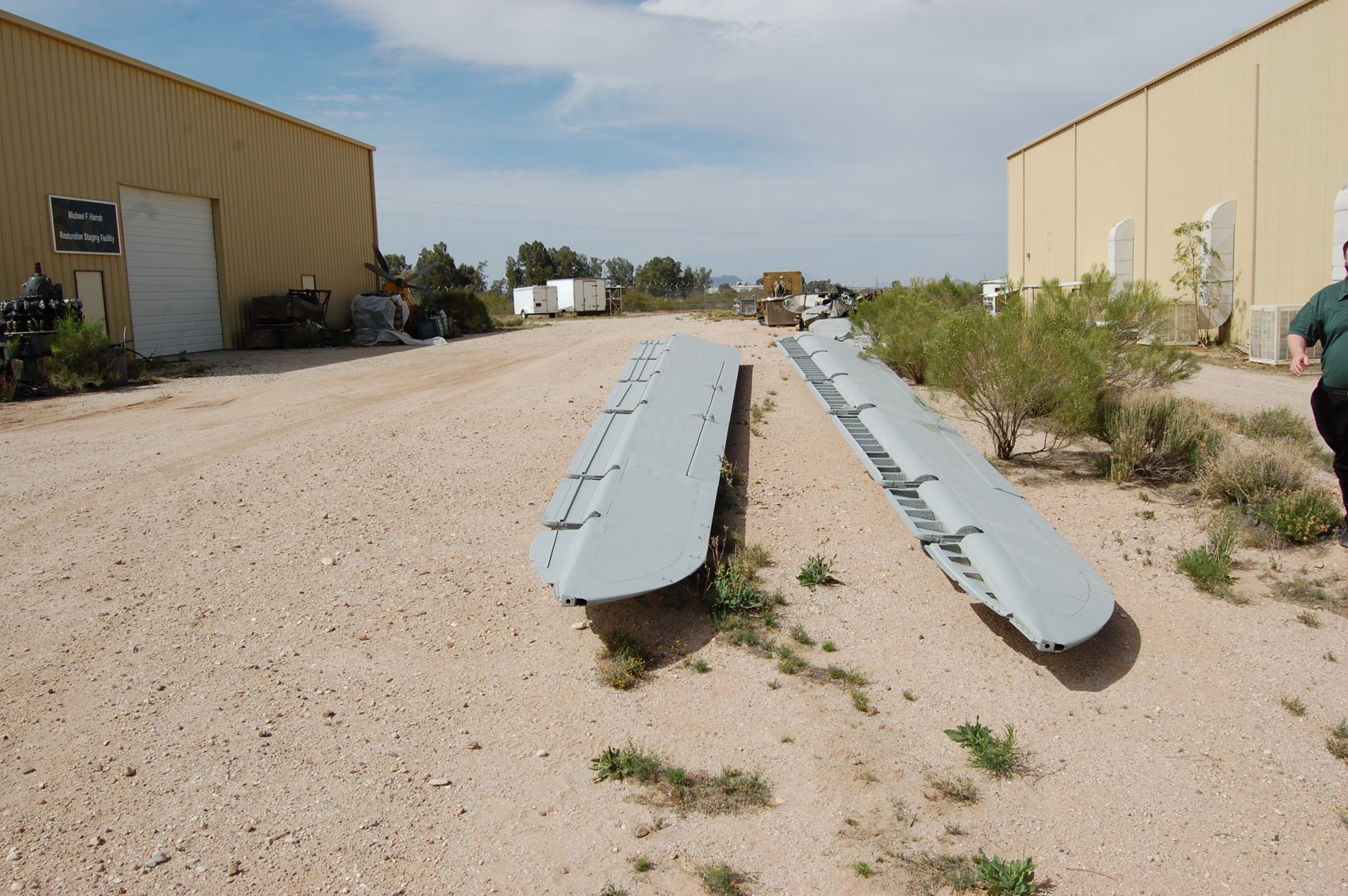
As of May 9, 2009 the outer wing panels were in the
process of being attached. I should have updated photos within a
few weeks. It is quite possible the airplane will be ready for
display by Memorial Day.
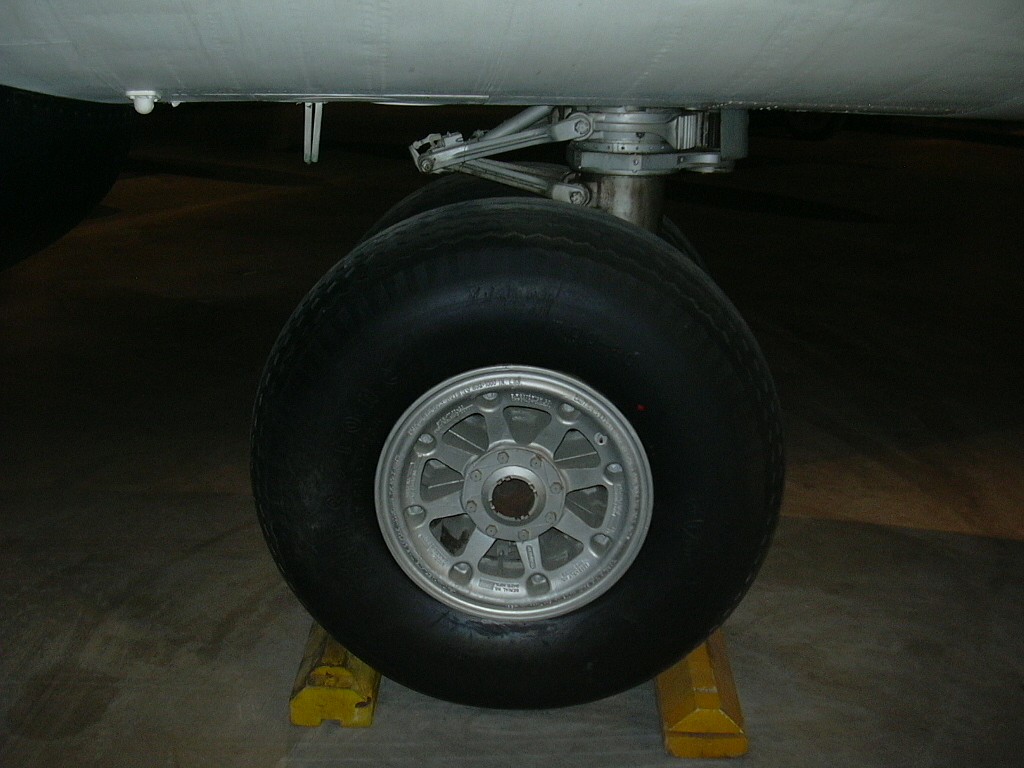
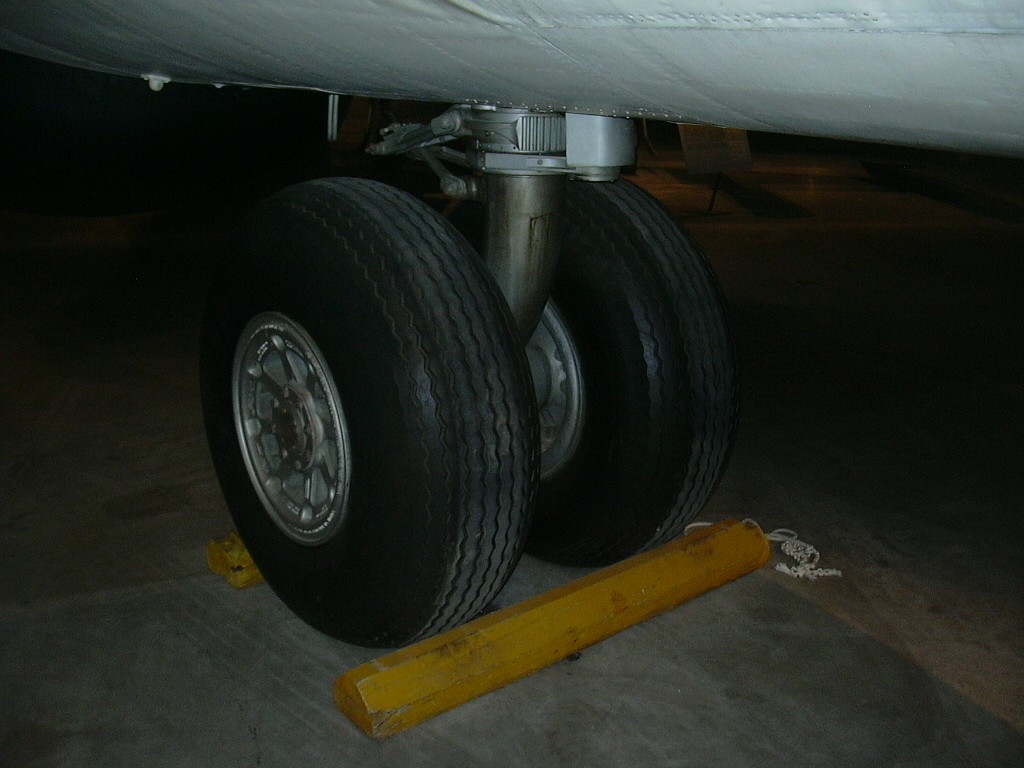
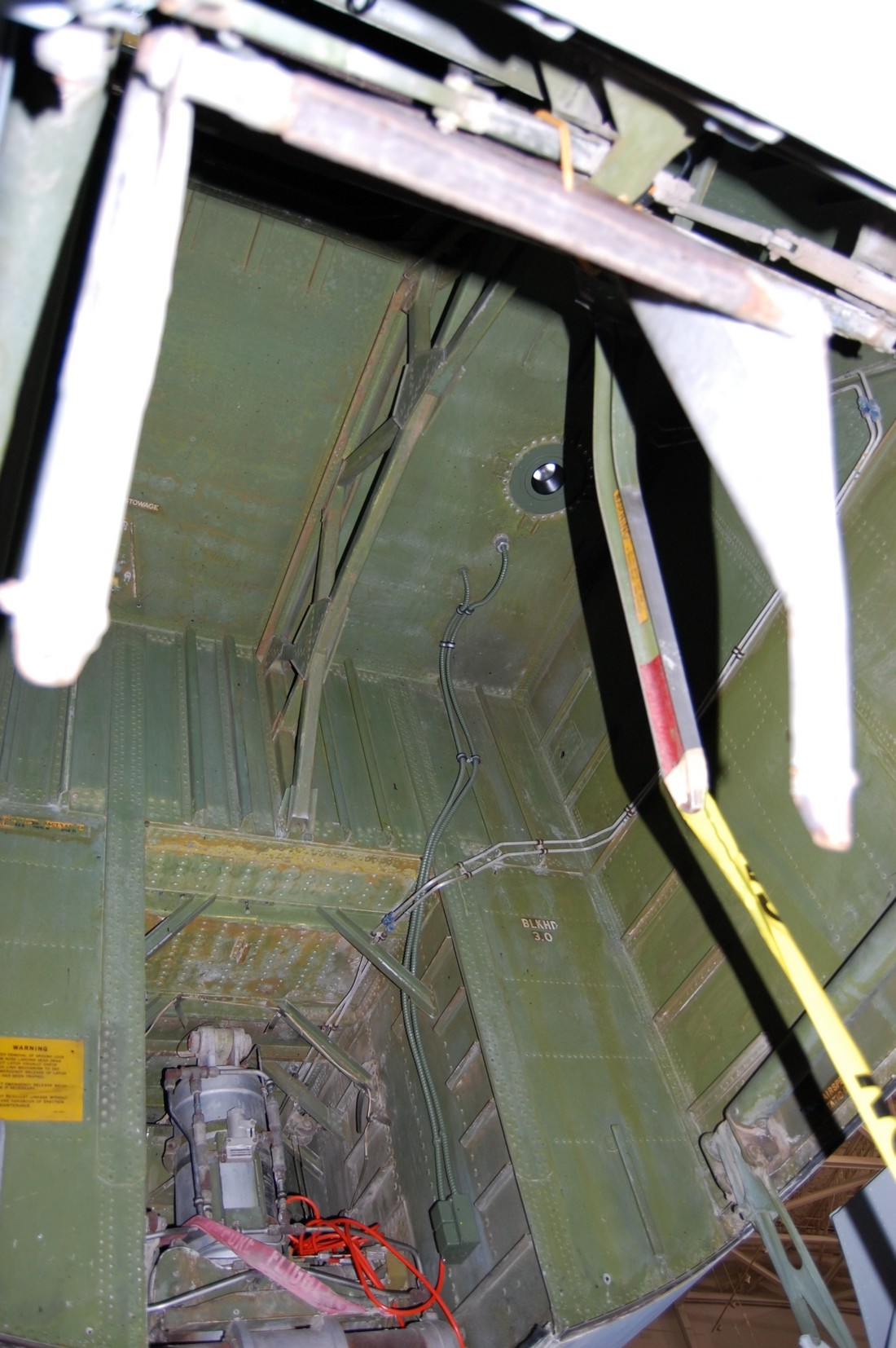
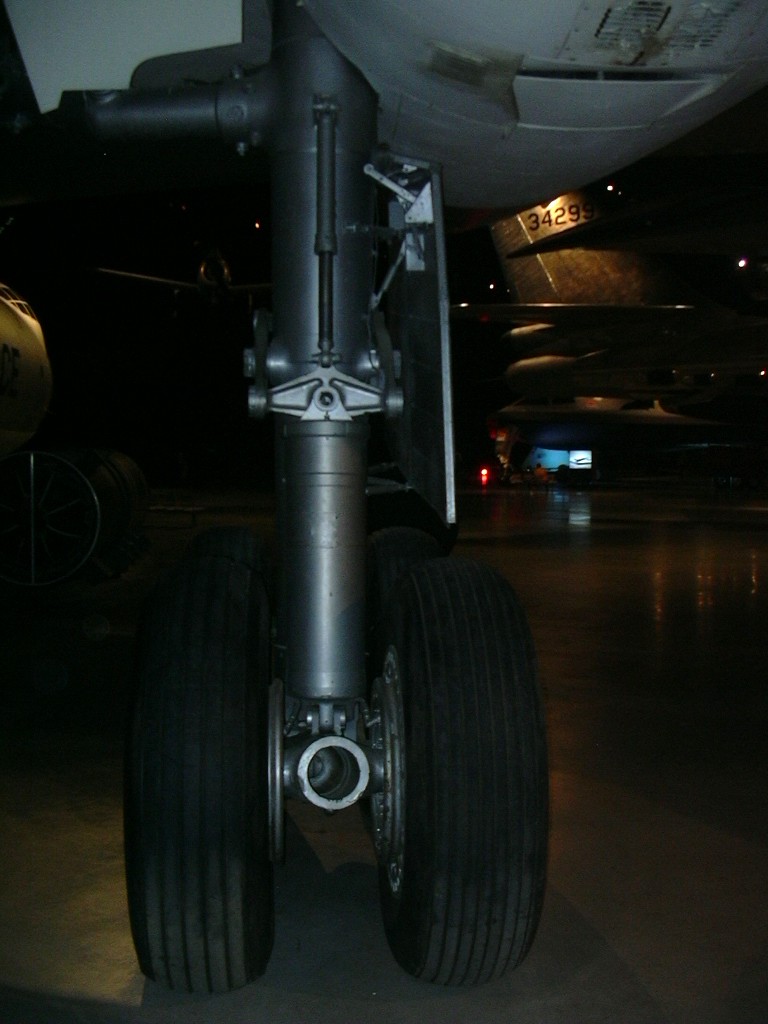
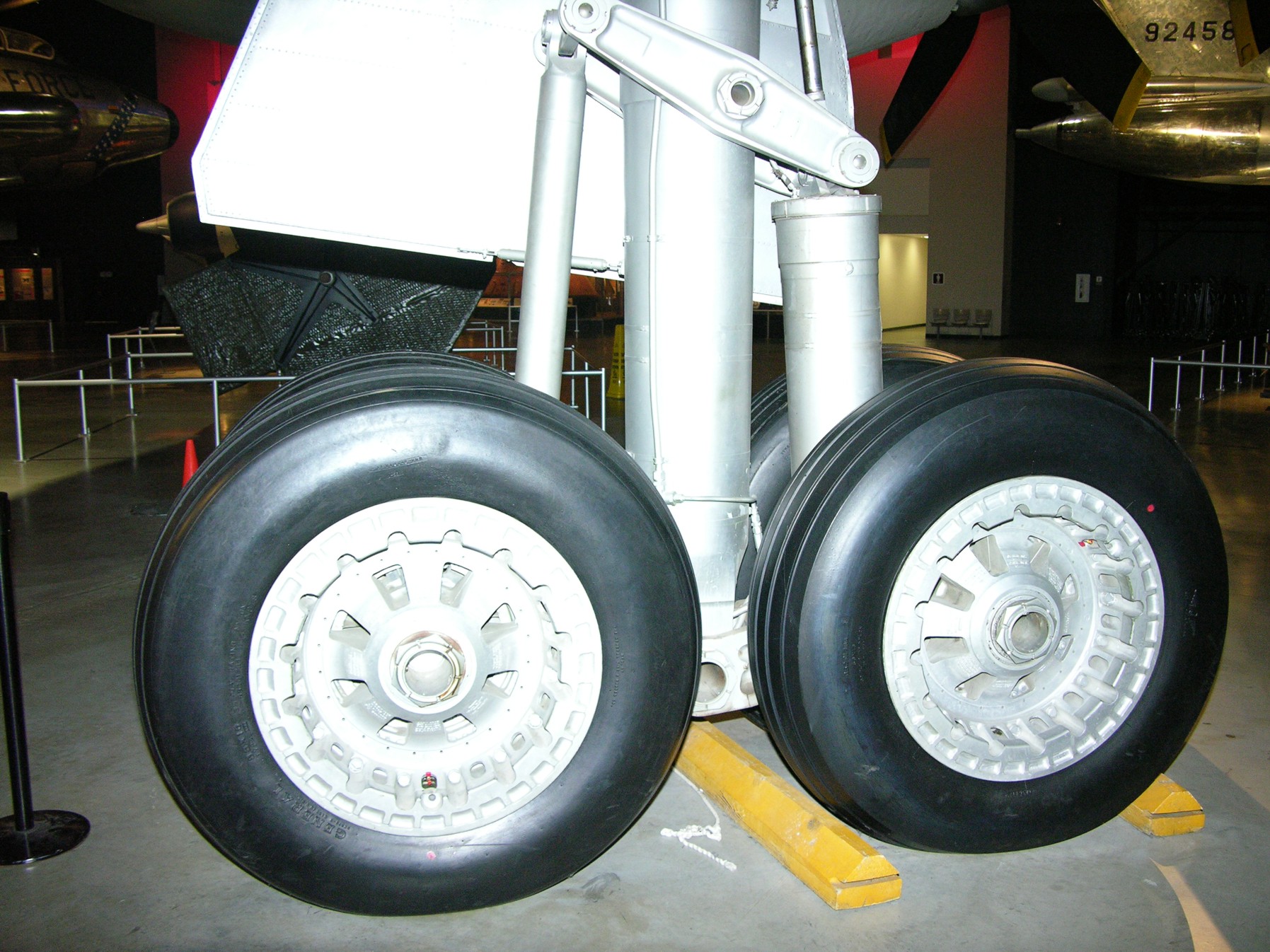
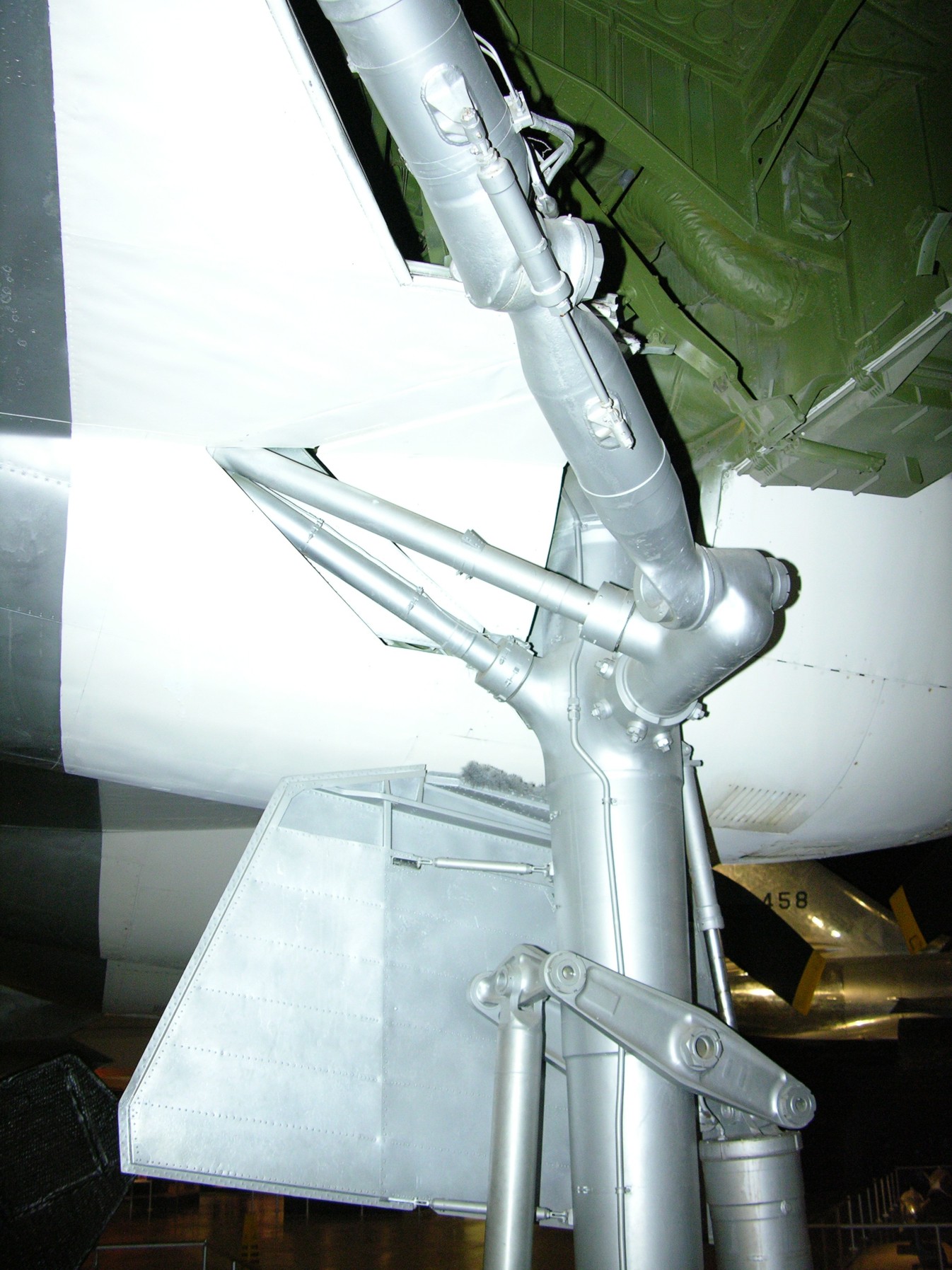
A few
details:
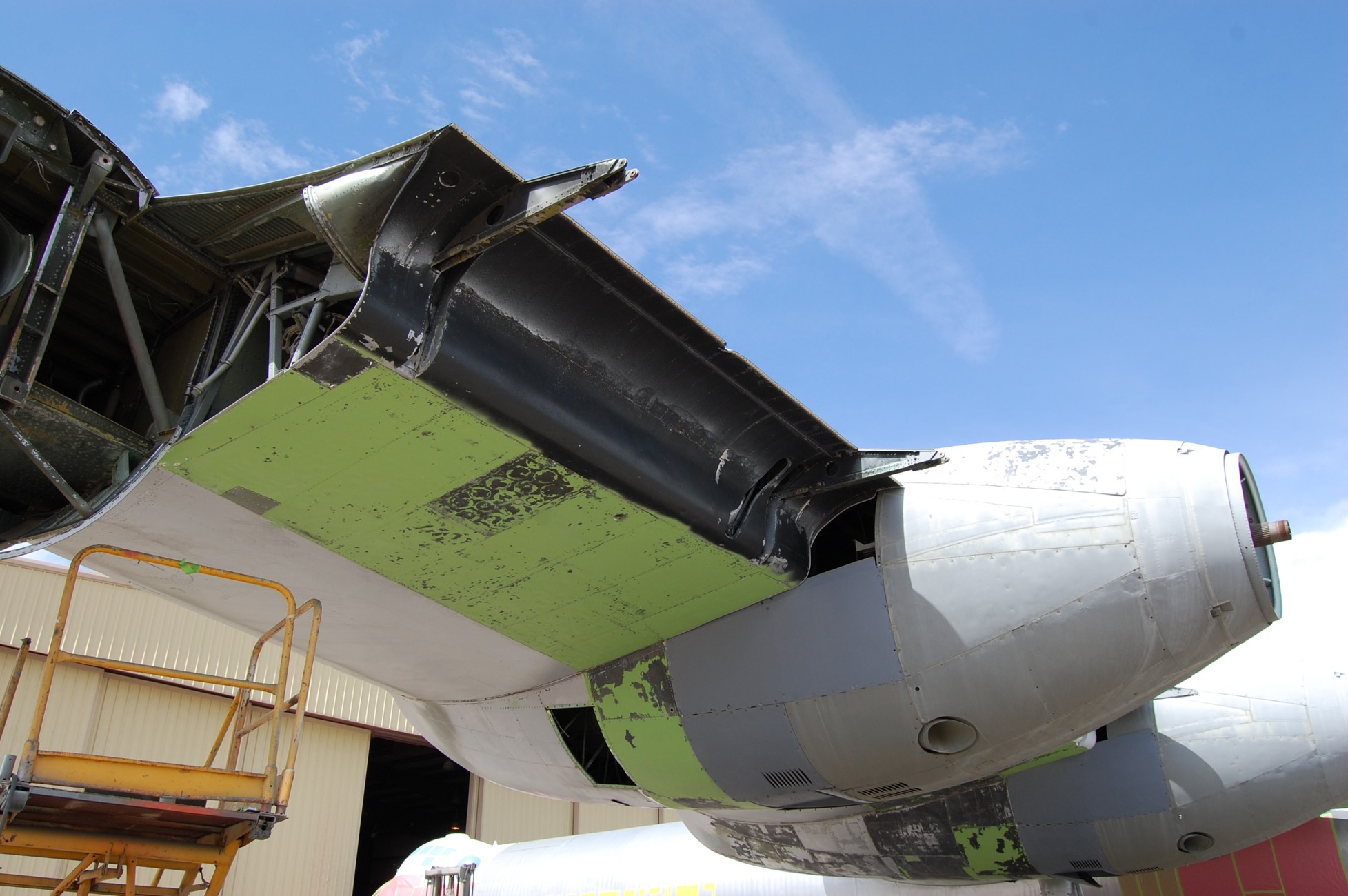
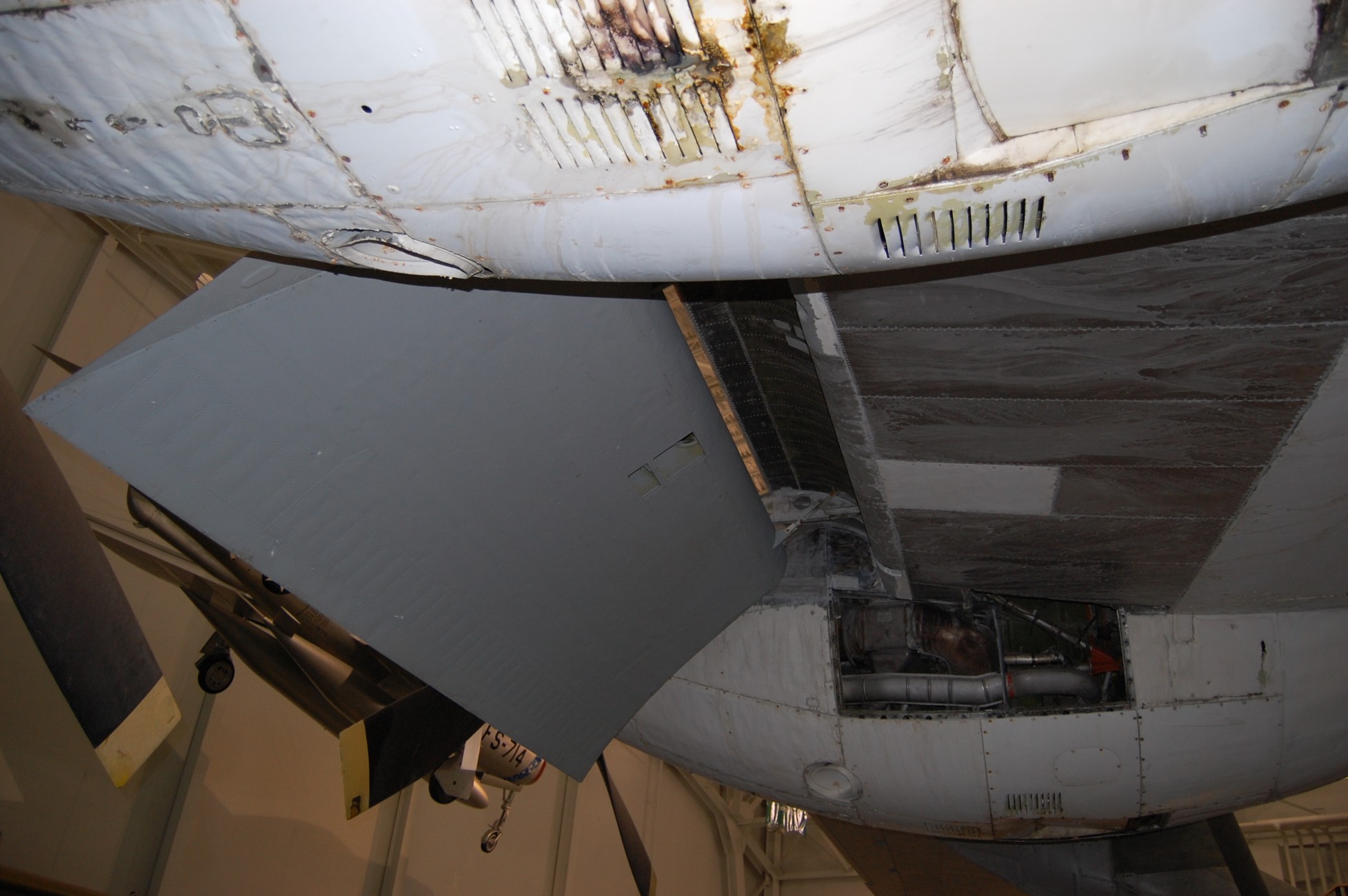
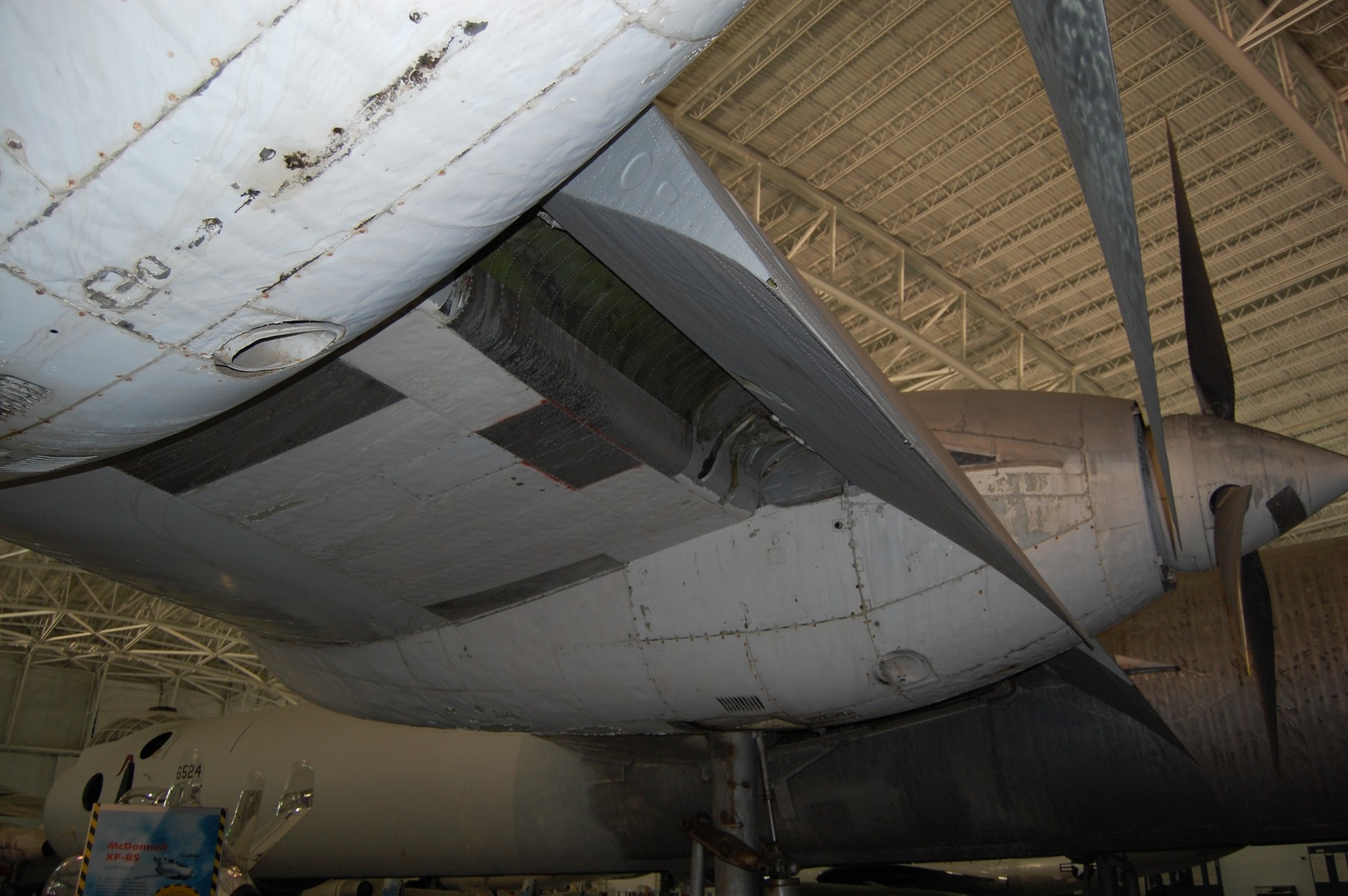
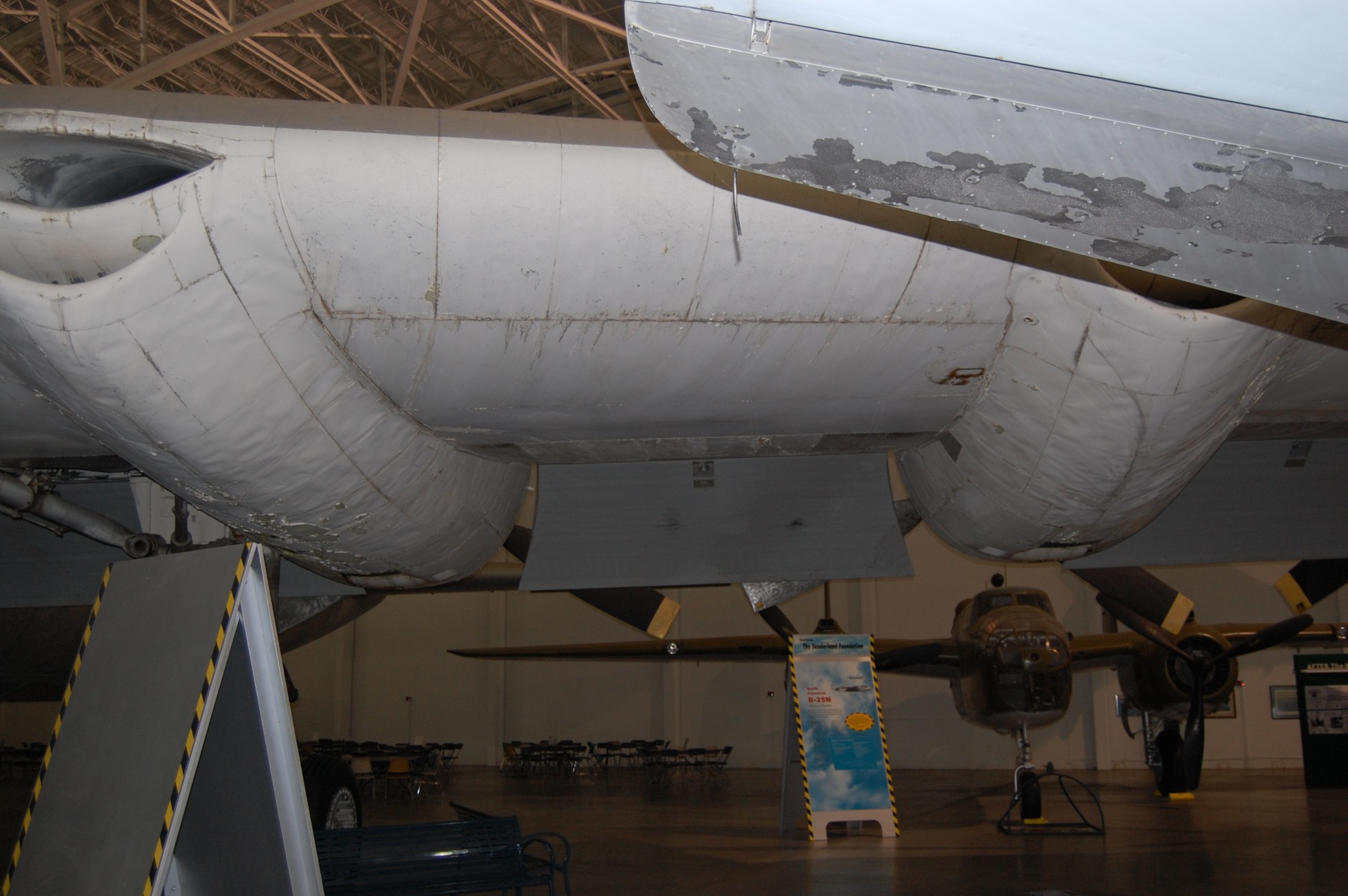
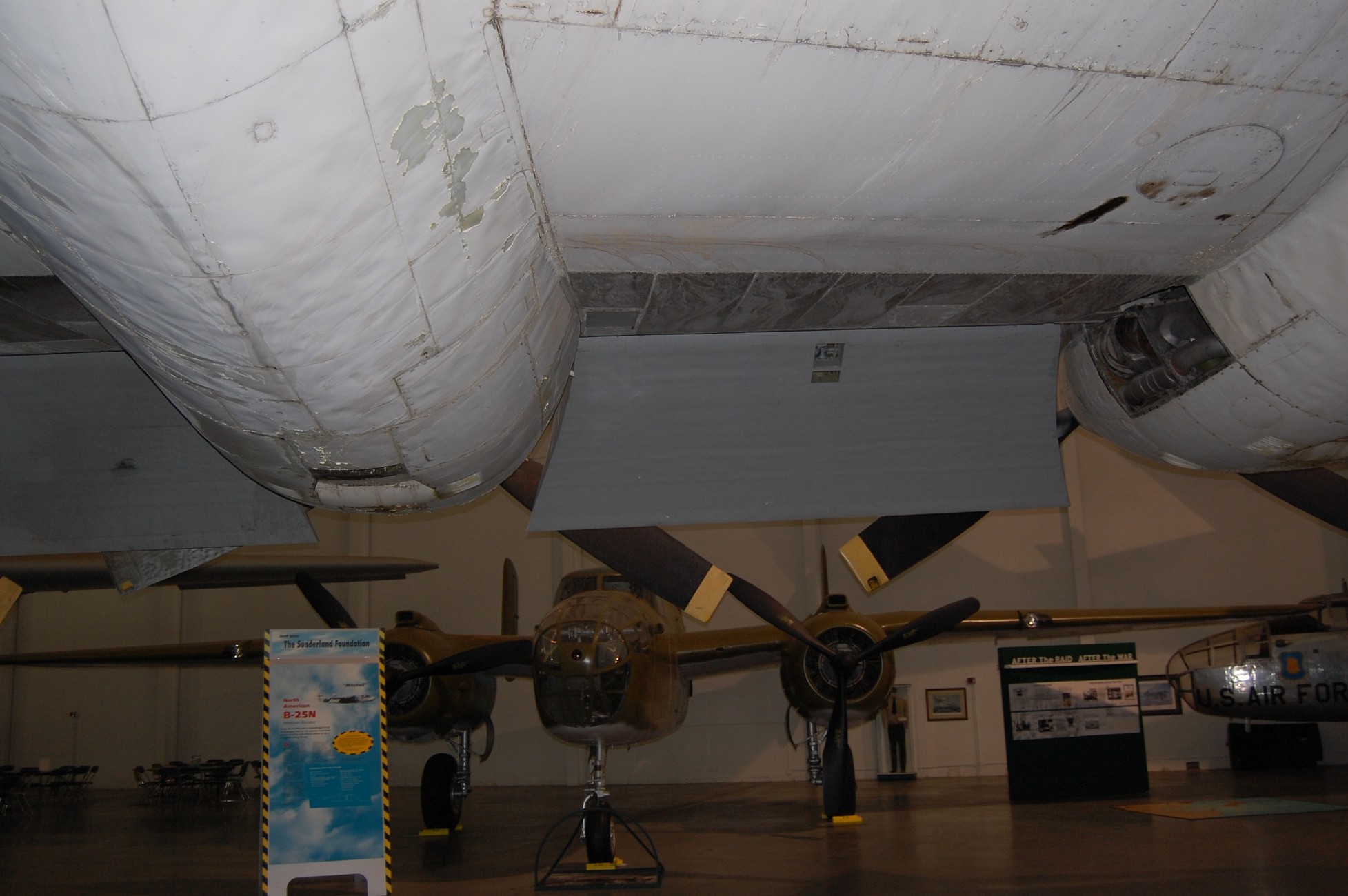
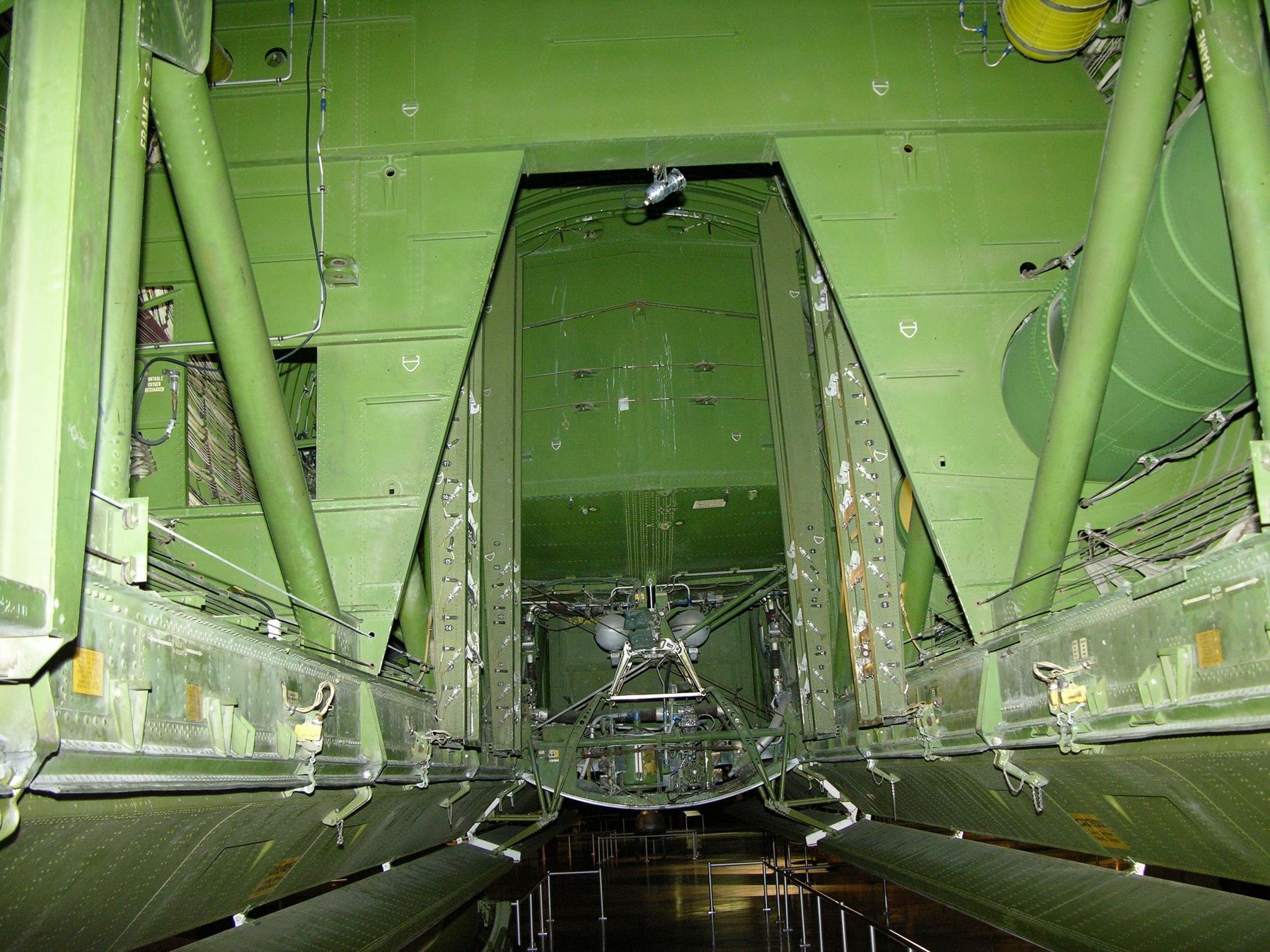
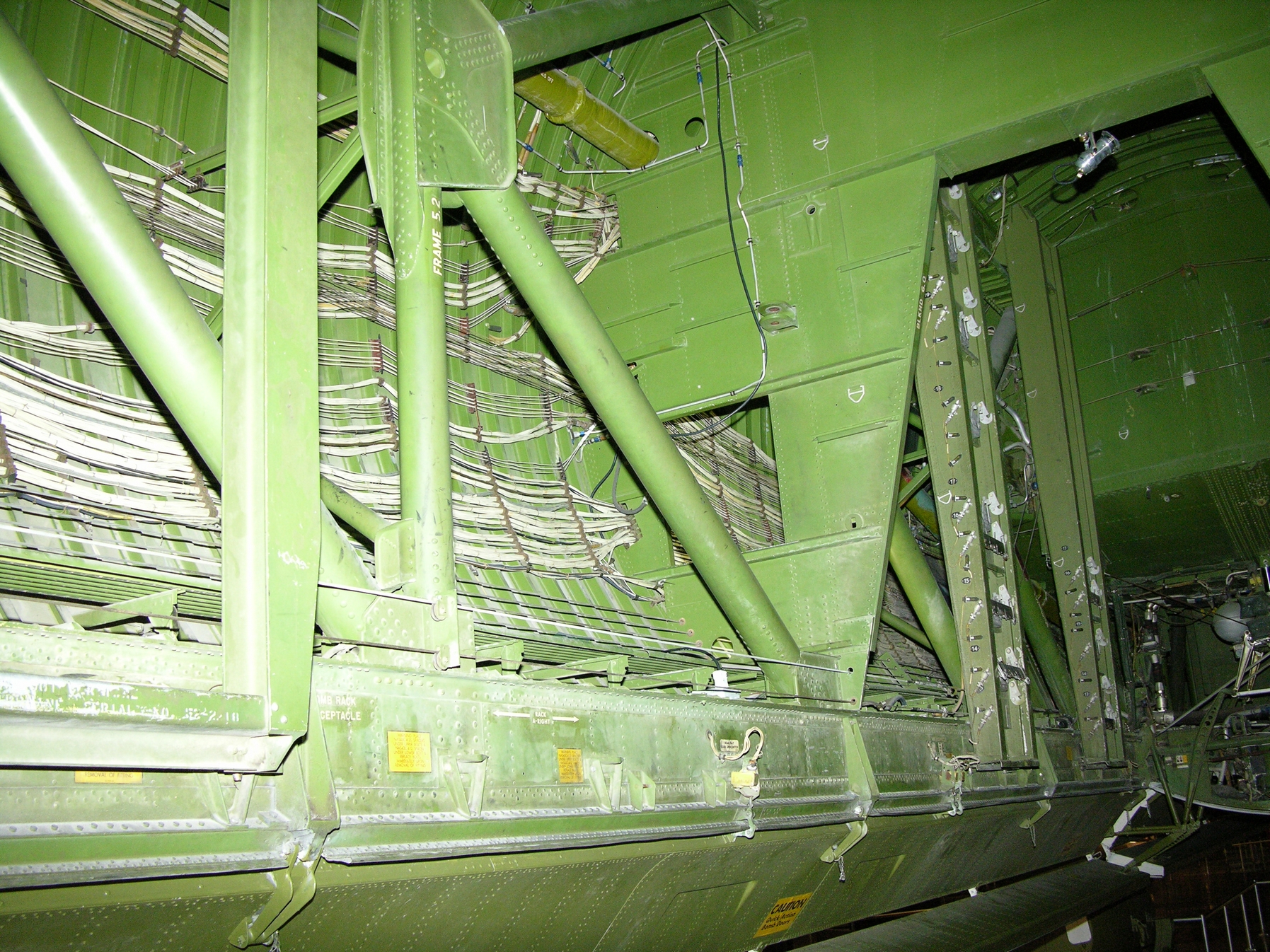
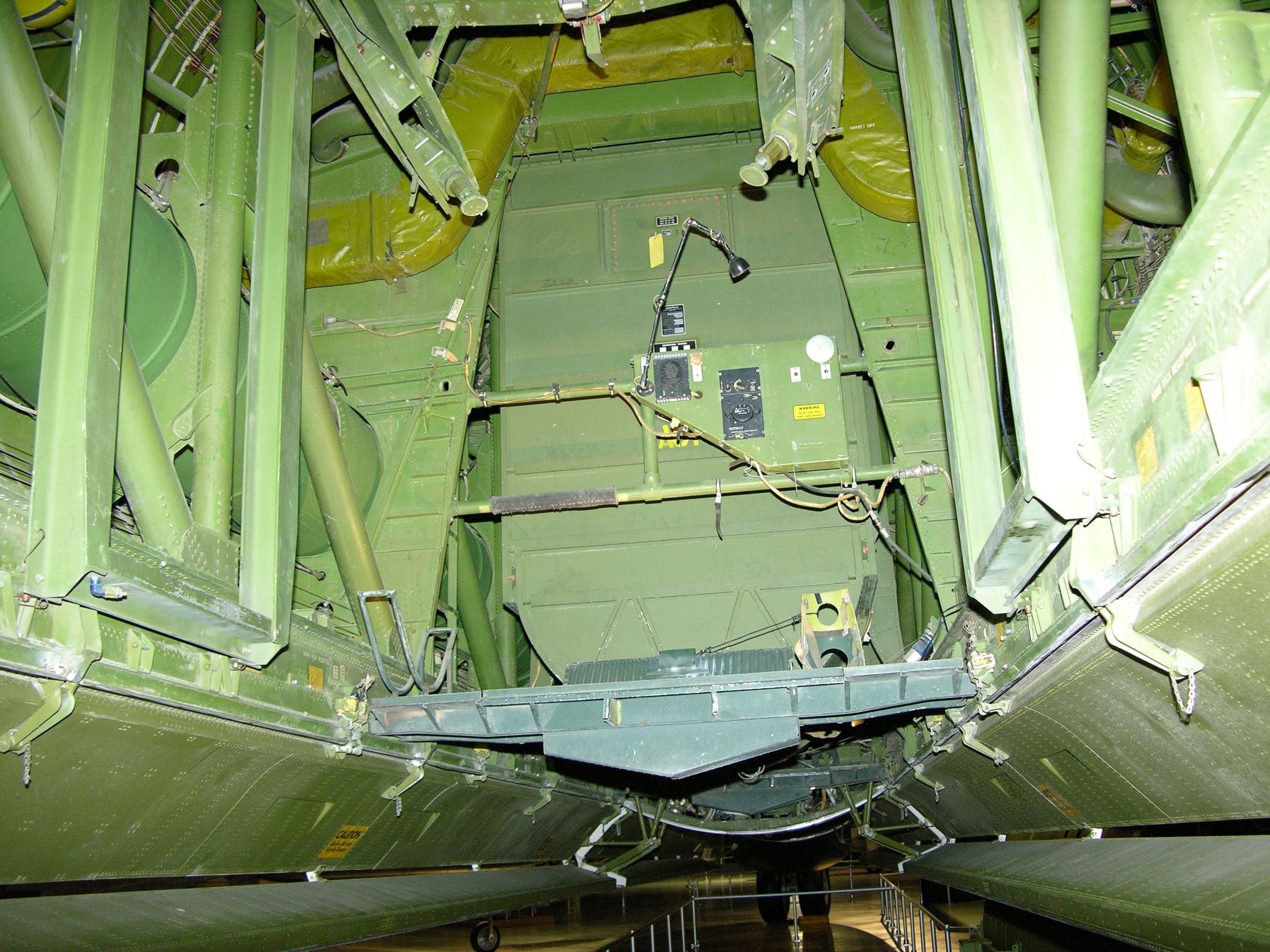
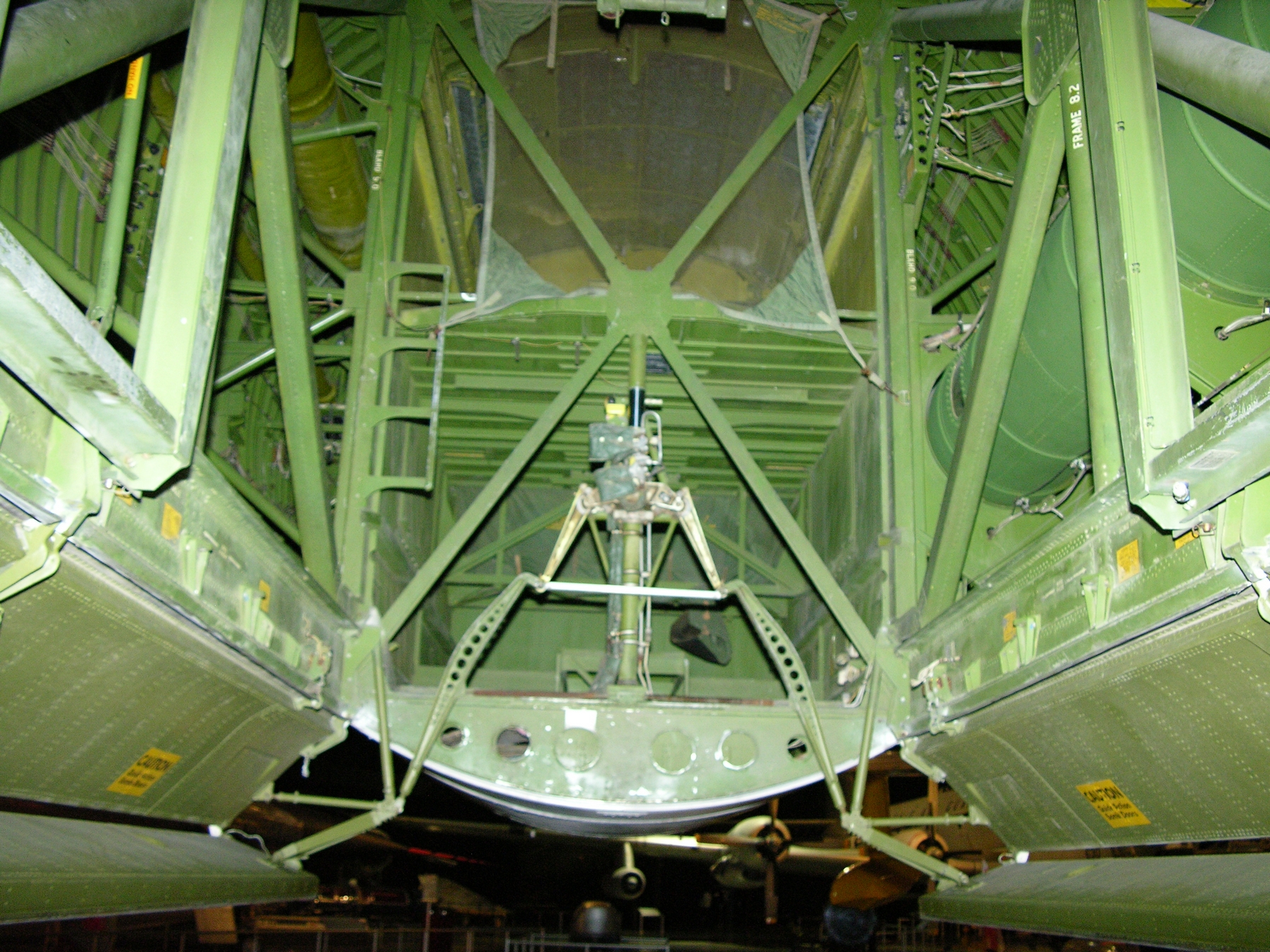
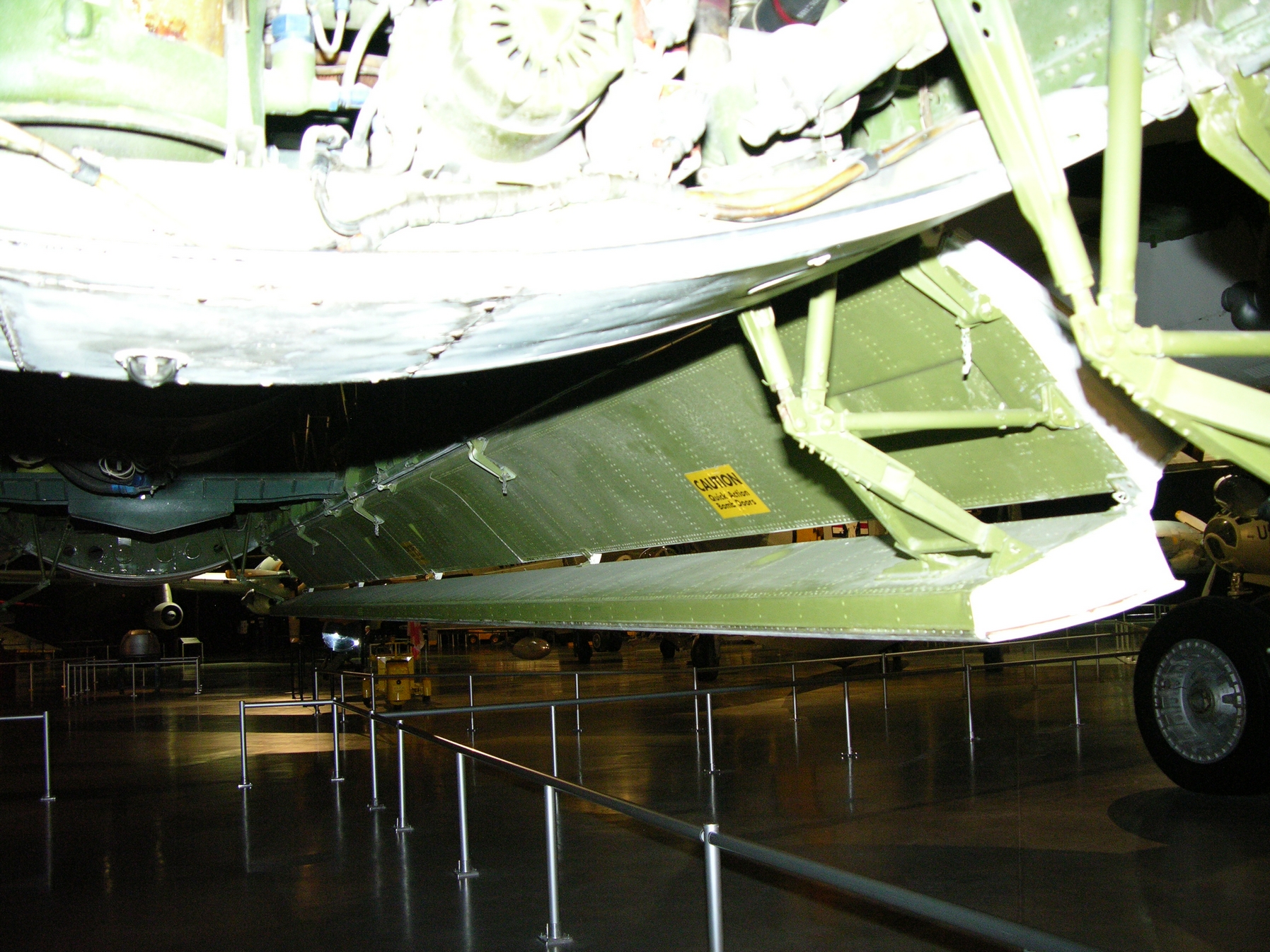
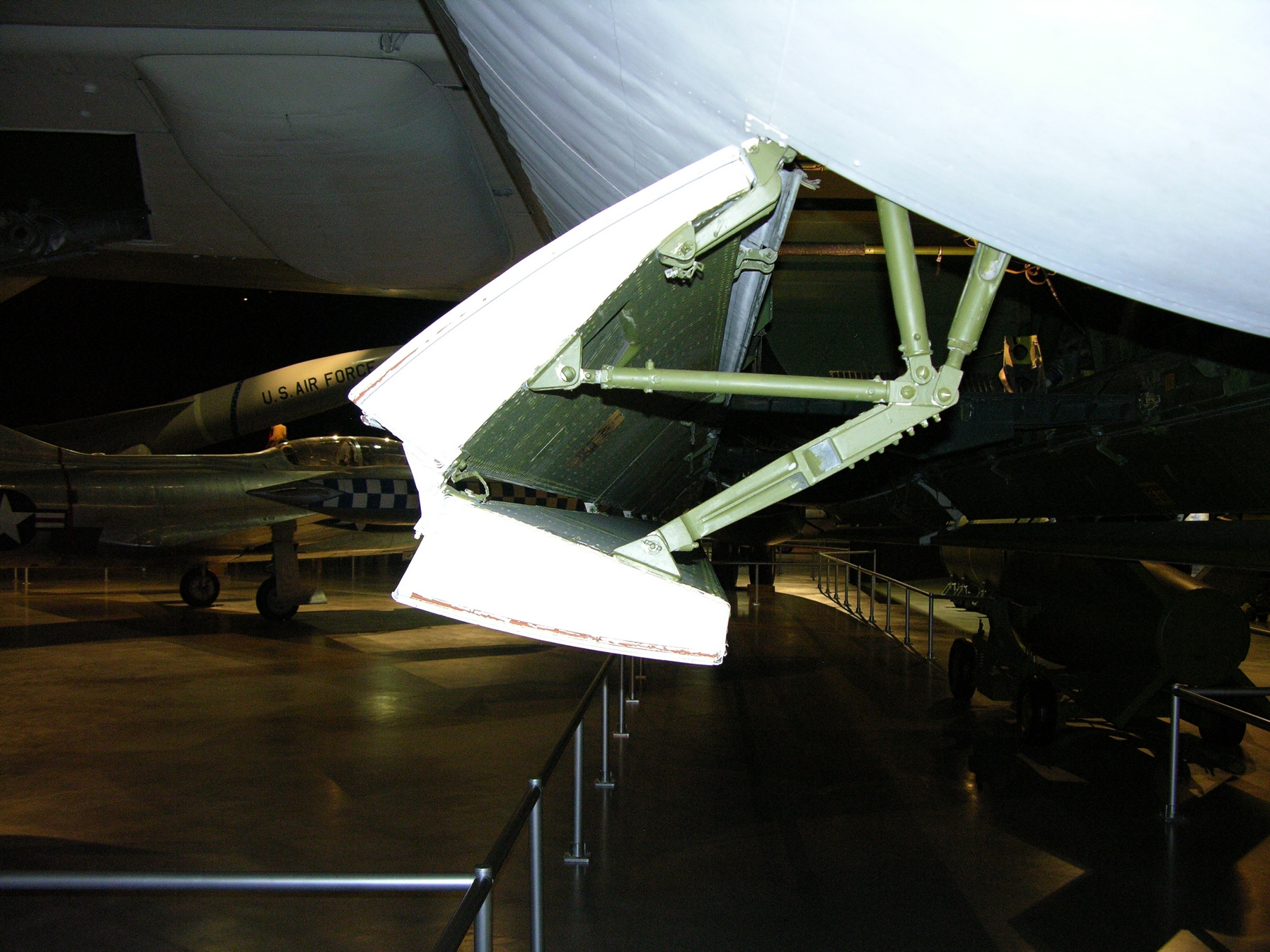
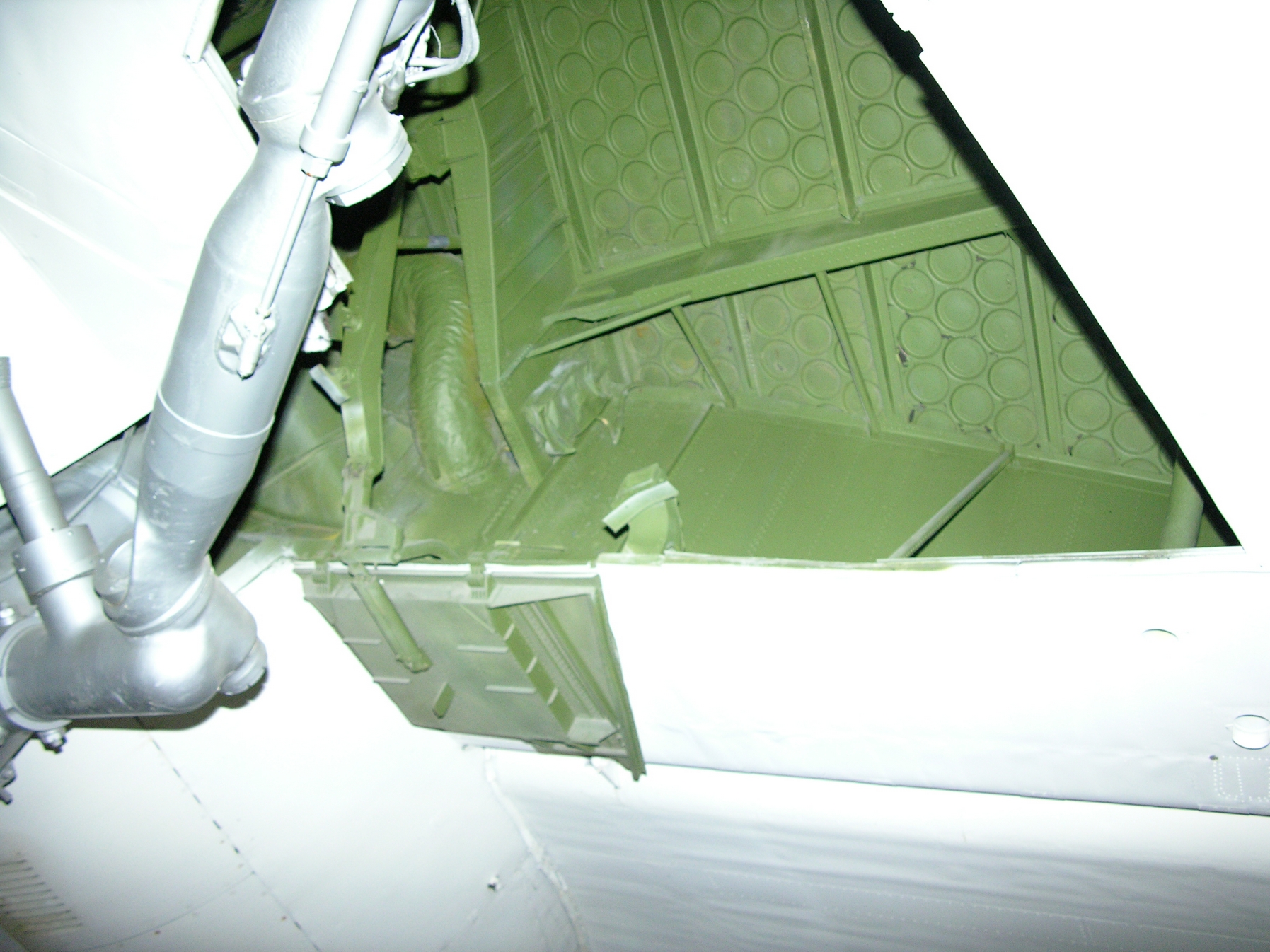
The B-36 had
three flaps perwing and these are shown starting from the inboard
out. The view looks toward the fuselage and the second looks
outboard. Each set of photos is arranged in the same
manner. The final two photos show the flaps from the front.
This view
looking forward gives a good idea of the size of the B-36's large flaps.
Weapons
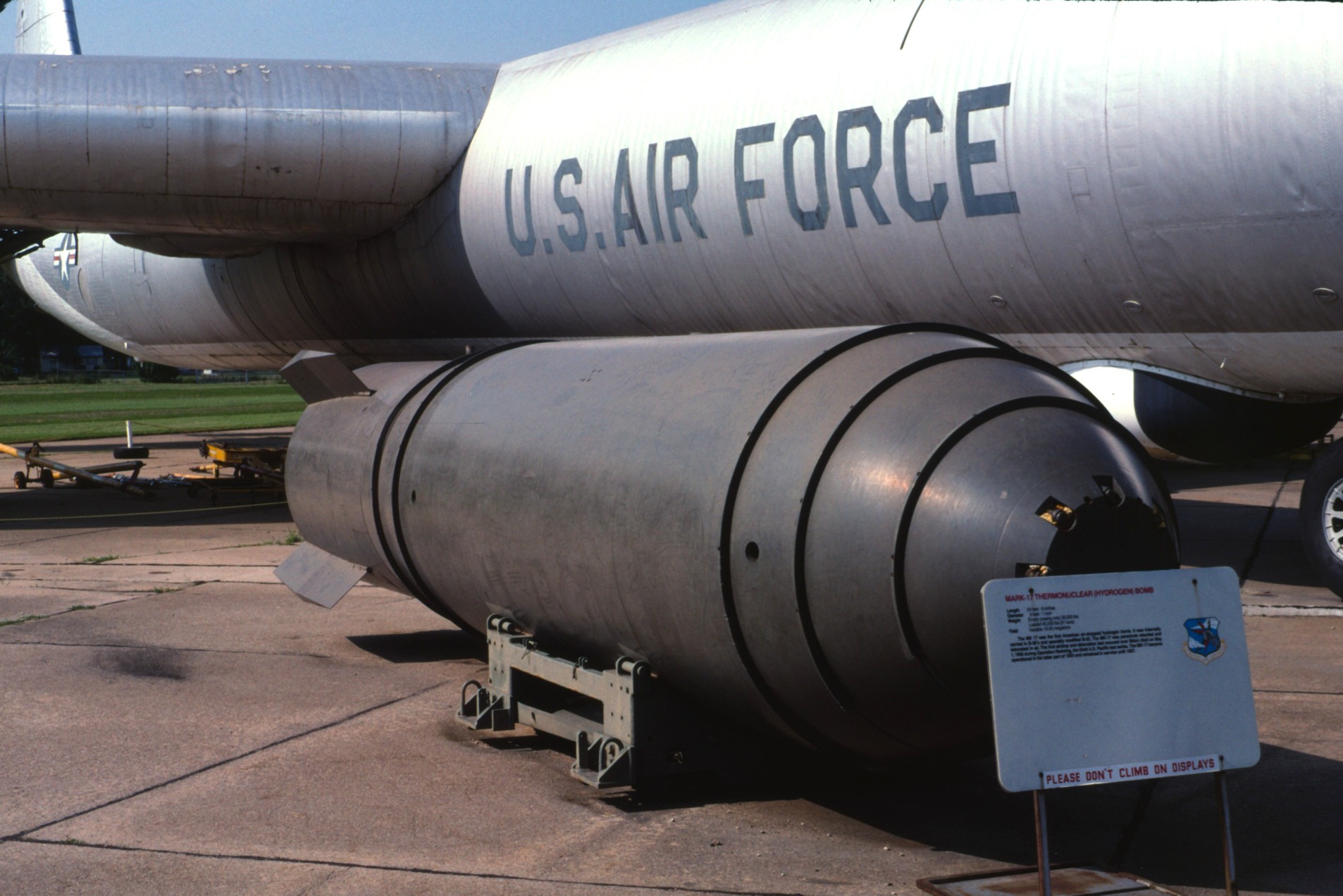
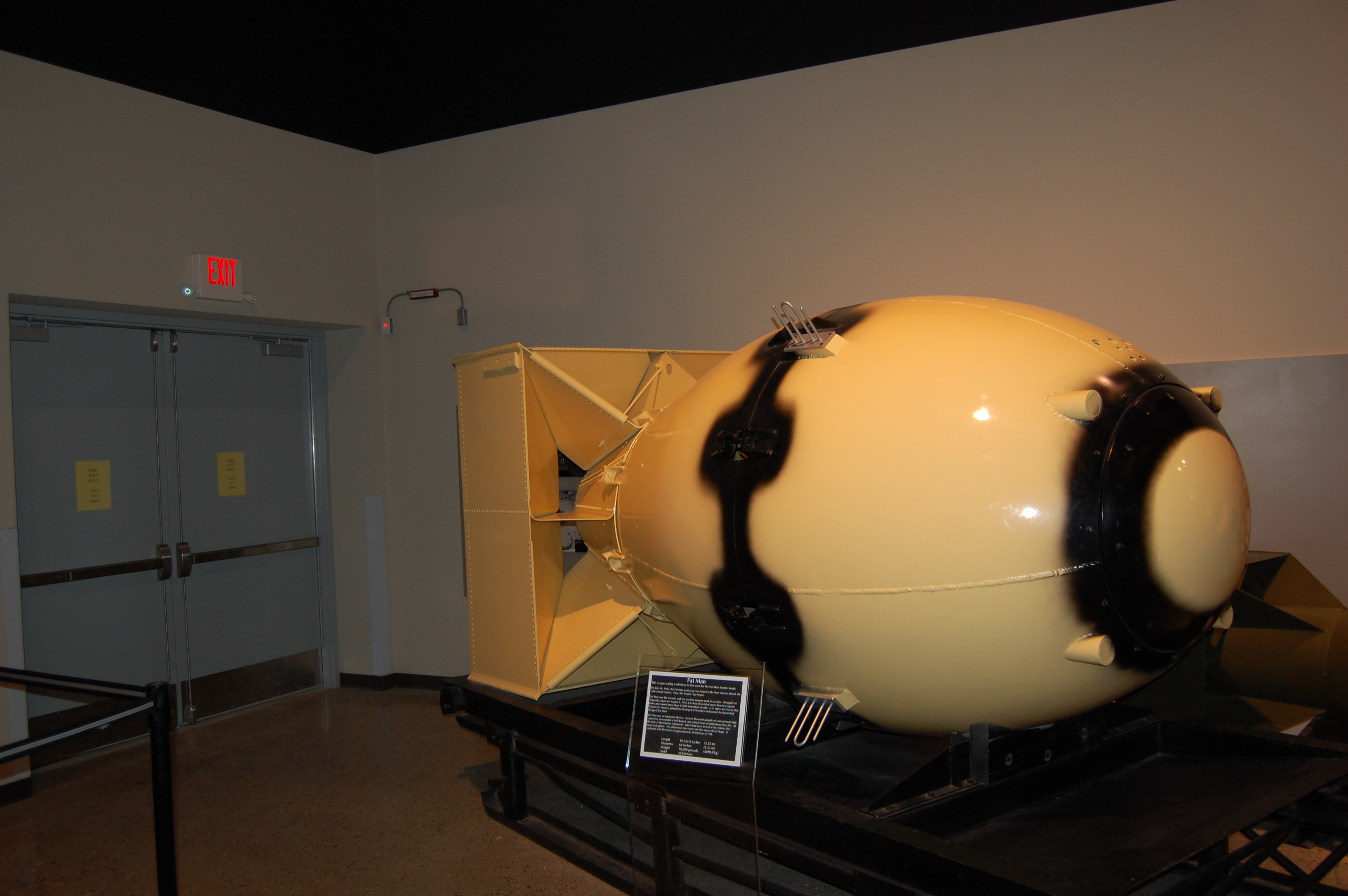
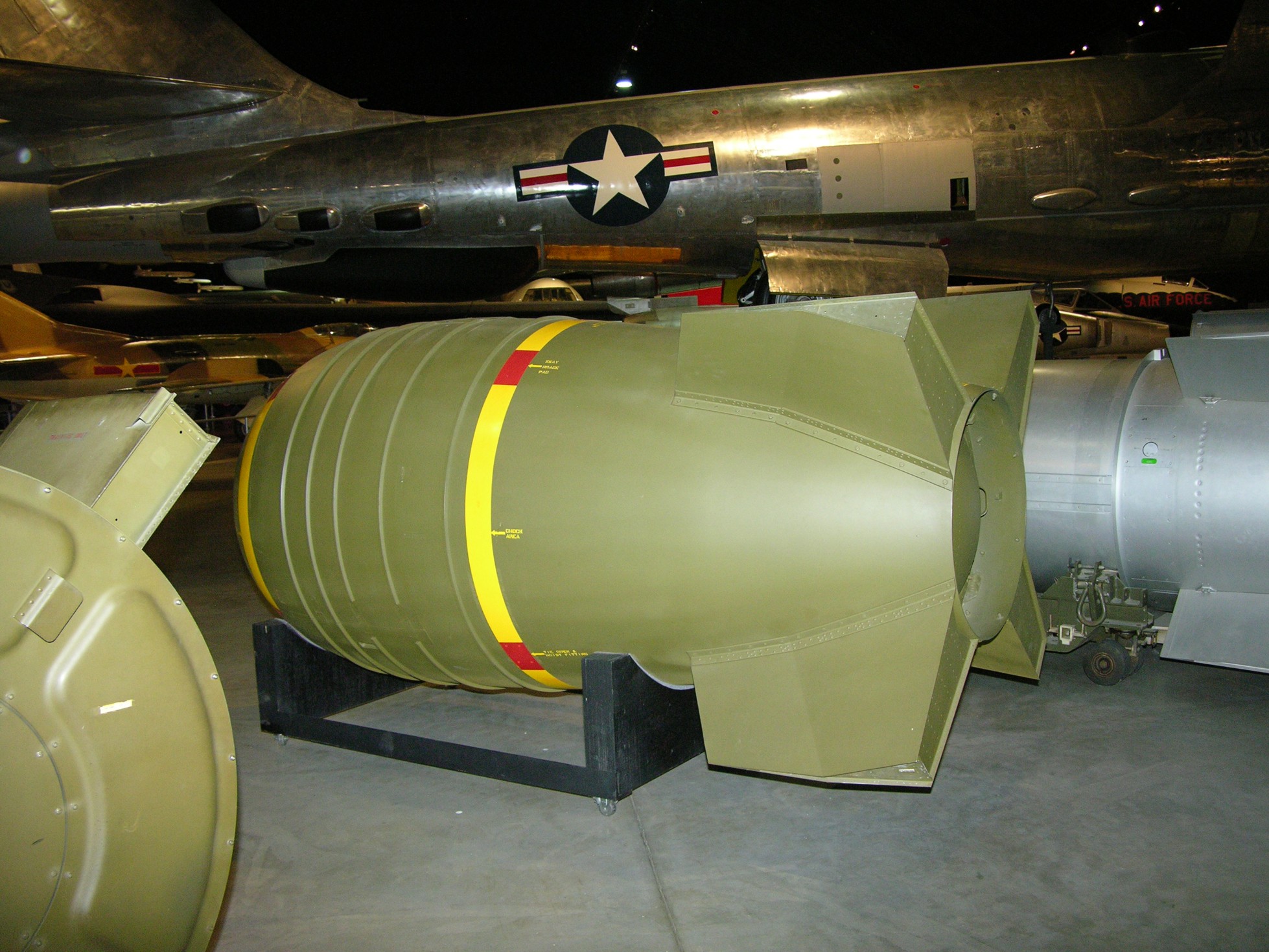
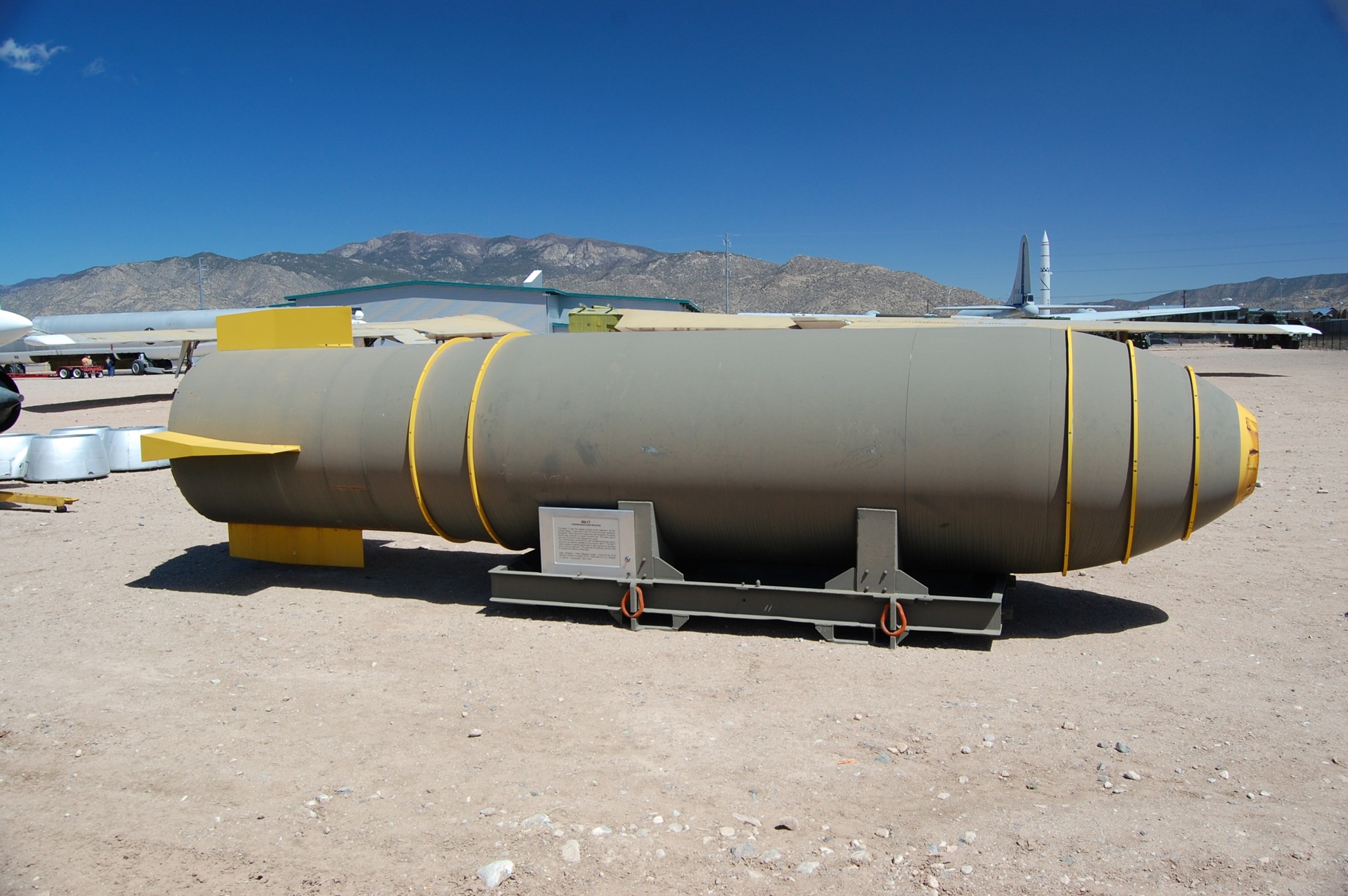
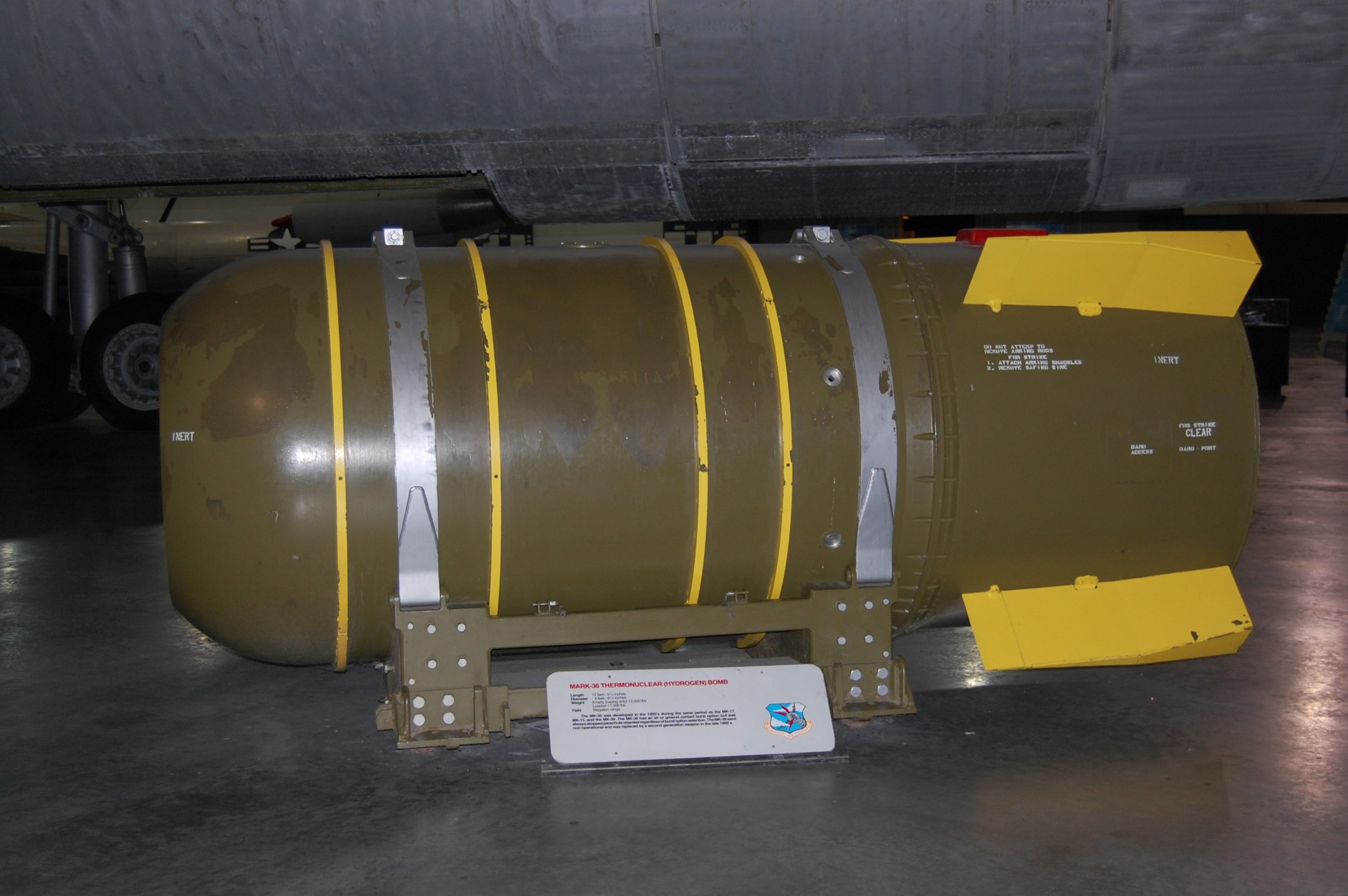
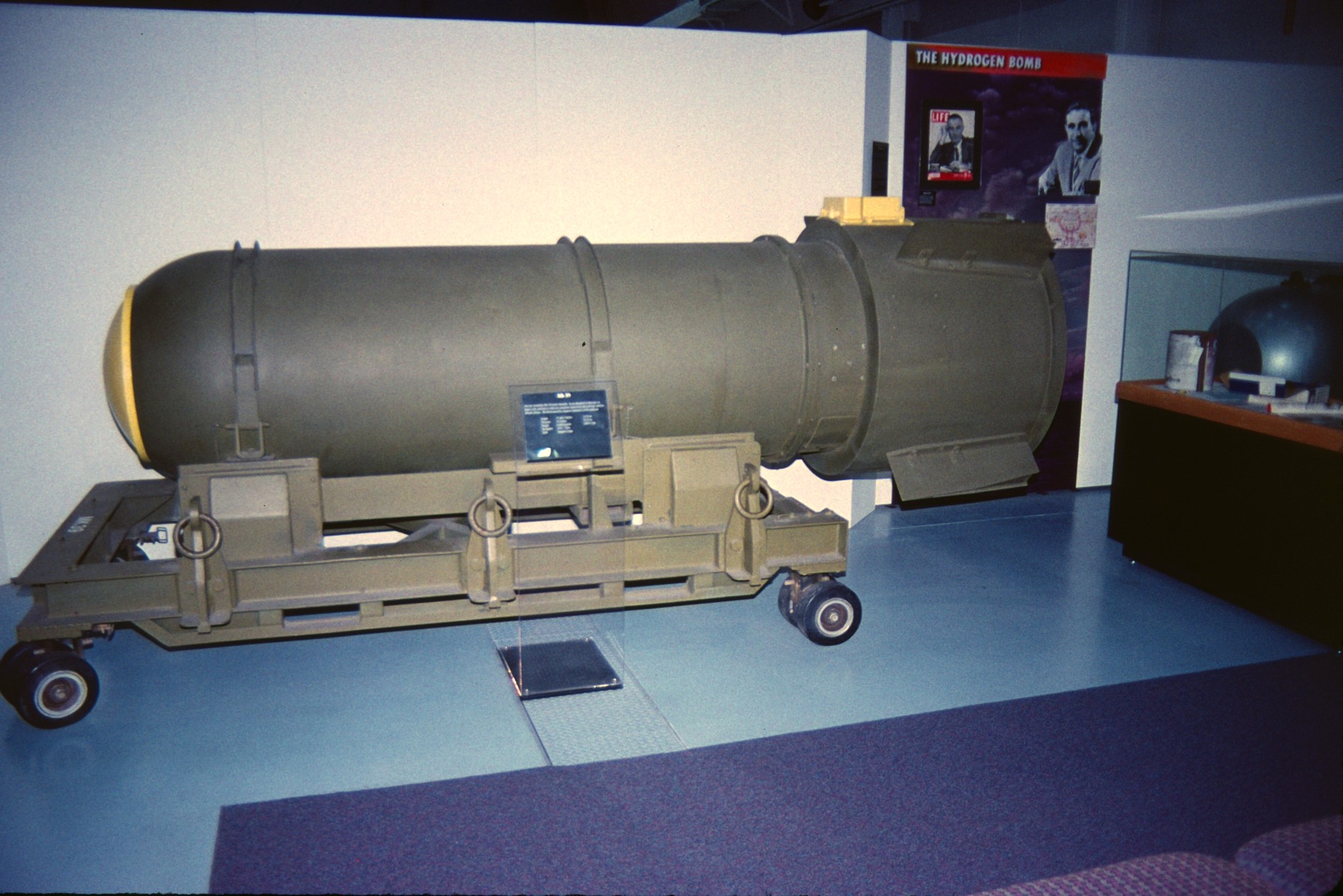
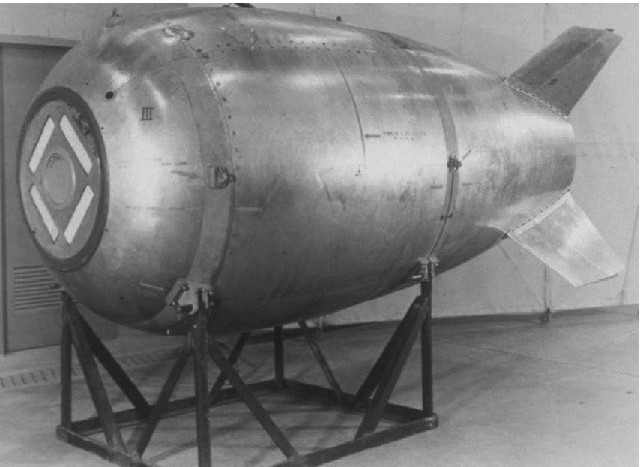
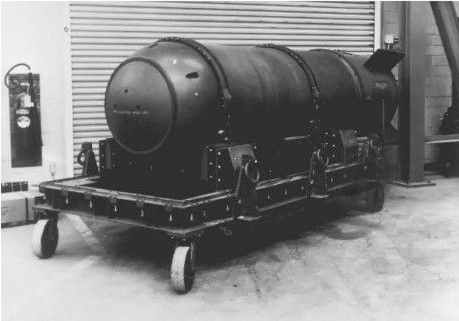
The Mark 17
thermonuclear bomb was the largest bomb ever produced by the United
States. The only airplane that could realistically carry it was
the B-36. The above photo shows a Mk 17 displayed next to a B-36
at the old SAC Museum.
 |
 |
 |
 |
Mk
3 "Fat Man"
|
Mk
4
|
Mk
5
|
Mk
6
|
 |
 |
 |
 |
Mk
15
|
Mk
17
|
Mk
36
|
Mk
39
|
(Mk 4 and 15 photos USAF)
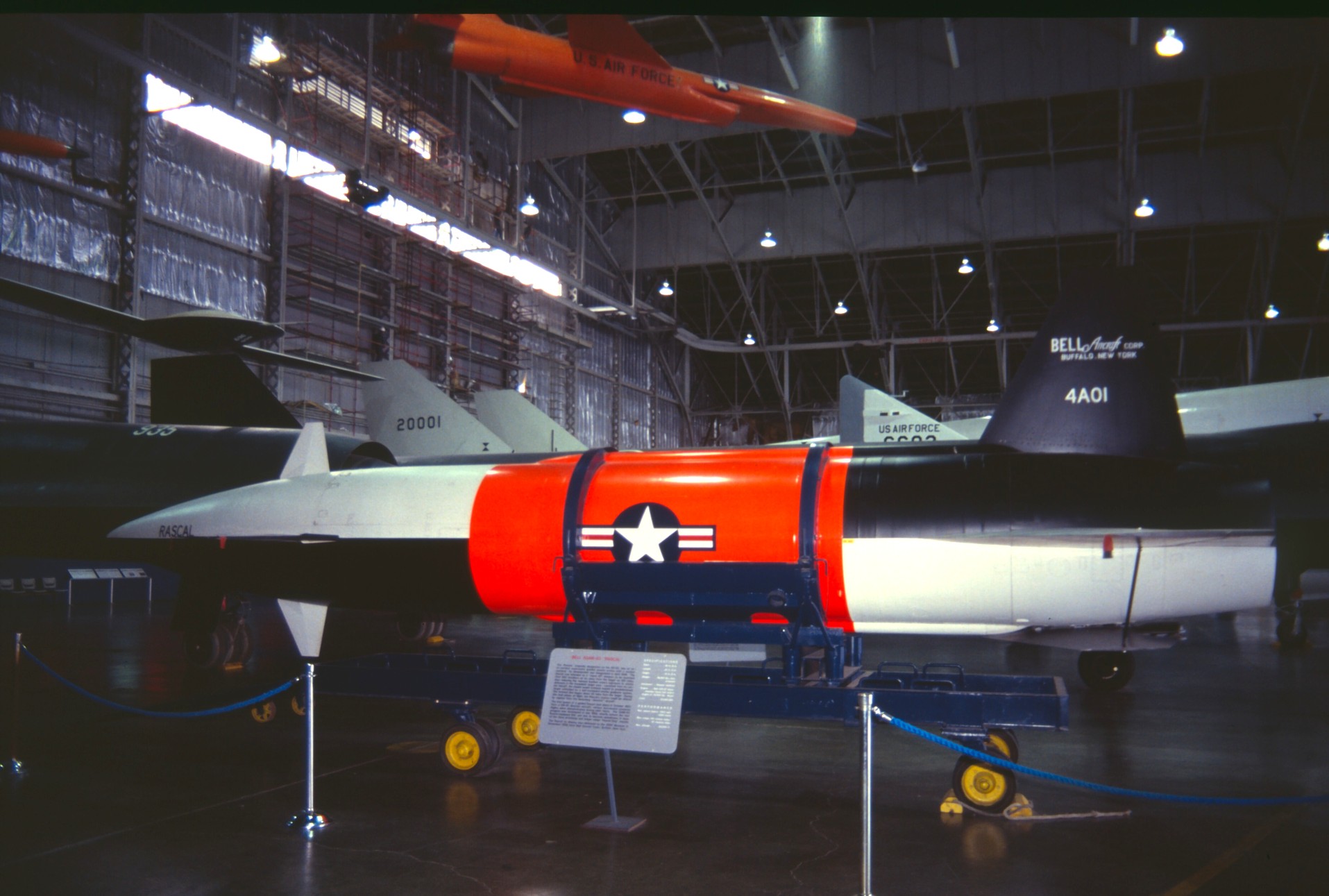
Though plans
were made to equip B-36s with RASCAL missiles they never fielded
operationally
Parasite Aircraft
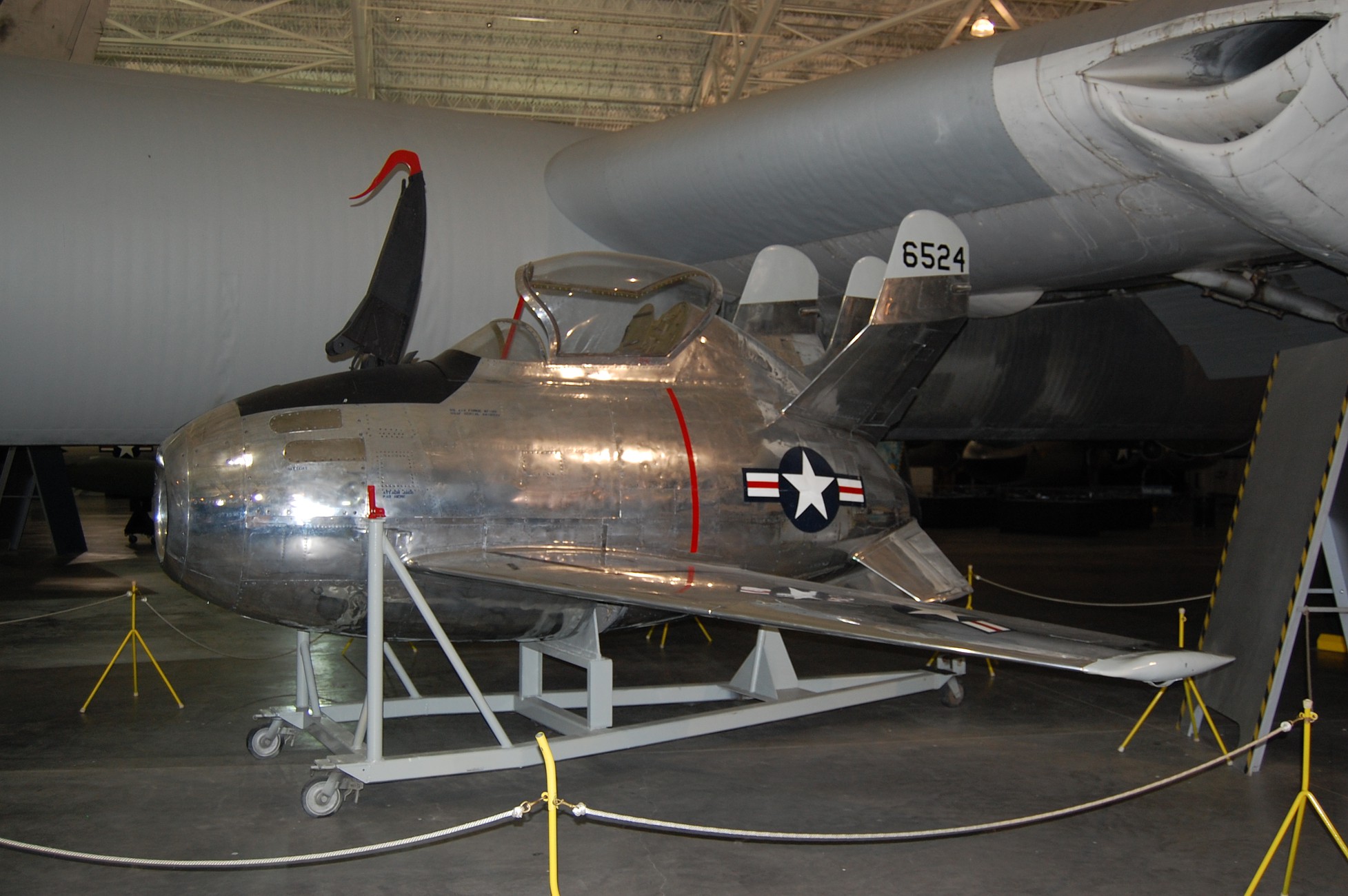
One odd program was the F-85 Goblin which
was designed to be carried in the belly of a B-36. The idea was
to provide fighter protection on long missions, but due to many reasons
the program was not a success.
Another parasite program was FICON where a B-36
would carry a recon
plane to the target. 25 RF-84Ks were special built for the
project. They later served with the 91st Recconnaisance Squadron.
This well worn example is under restoration at the Wings
Over the Rockies Air Museum.
.
All photos are mine unless otherwise
credited.
To
return to:
For corrections, information and
suggestions:

Page
created: 05-09-09
Modified:
05-14-09
Clifford Bossie