


Transcript
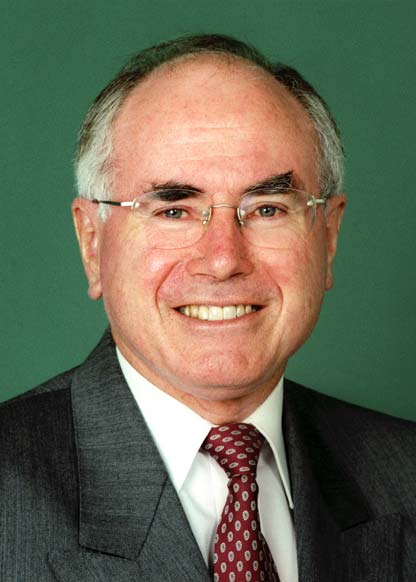
Of the Prime Minister, the Honourable John Howard MP - ADDRESS TO CORROBOREE
2000 - 'TOWARDS RECONCILIATION', 27 May 2000.
First may I acknowledge
that I speak to you on the traditional lands of the Eora people. I pay my respects
to them and thank them for the warmth of their welcome. To the many distinguished
guests here today, Your Excellencies, State Premiers, Chief Ministers, the Deputy
Prime Minister, the Leader of the Australian Labor Party, the Leader of the
Australian Democrats, to Evelyn Scott and Geoff Clarke.
I think all of us, whatever perspective we bring to this very special and moving
occasion, I think all of us recognise the debt we owe to the tremendously hard
work of the Council for Aboriginal Reconciliation over the last ten years. And
may I specially pay a personal, and I am sure a representative tribute to you
Evelyn for the grace and the dignity and the leadership and the strength of
character that you have brought to this very important position.
It has been a long journey and I know it has been difficult and I know there
have been areas of disagreement and it is naïve of any of us to pretend
that some do not remain. But let all of us try this weekend, and for my part
I pledge that I will in what I say, is to focus on those things that unite us
and bind us together as Australians in the cause of healing the wounds and the
divisions of the past and of moving forward in a united and harmonious fashion.
It is quite impossible for anybody to attend a gathering such as this without
being captured and moved by its symbolism and the speciality of the occasion.
I think it is an expression of a desire of all Australians to go forward, not
to forget or ignore or fail to express sorrow or regret for the pain of the
past. It is impossible to understand the difficulty and the reality of today
and to move forward effectively without understanding and acknowledging the
pain that was inflicted by the injustices of the past. And it is not possible,
it is not possible for any of us, for any of us to reflect upon the desirability
of moving forward without acknowledging the impact that European civilisation
had on the indigenous people of this country and the cultures of the indigenous
people.
This weekend is an occasion for all Australians to honour the contribution of
the indigenous people of Australia to the life of this country. It is an occasion
to honour the special character of their cultures. It is an occasion to thank
them for the generosity of their spirit and it is an occasion to recognise the
richness that their cultures bring to modern Australian life.
As the Council's declaration says, we are a nation of many origins. We are a
nation of many cultures and the 60,000 years of human habitation which has produced
the cultures of the indigenous people has so much to offer to all of us. And
we can together respect the speciality of those cultures and also draw tremendous
inspiration from what we have built together. To recognise and acknowledge and
express regret for the pain of the mistakes and the injustices of the past,
but also hopefully my friends to draw some inspiration from what we have achieved
together.
And so much of what, so much of what the Council has endeavoured to do has been
to focus on those things that do keep us together, those things that we can
draw inspiration in common. So my fellow Australians, this is an occasion, it
is a weekend to frankly acknowledge the tragedies and the sadness and the pain
and the hurt and the cruelty of the past. To accept the ongoing trauma of that.
But it is also my friends, it is also my friends an occasion to celebrate and
rejoice in those things that we have achieved together.
And very importantly it is an occasion for all of us to resolve to continue
the process of reconciliation. As the Council so rightly said in its document,
there are many paths to reconciliation, ultimately they reach the one destination.
And each of us brings our own perspective to the process of reconciliation and
the one requirement that we should bring to that is the sincerity of the view
that we hold on how reconciliation might be achieved.
Reconciliation will mean different things to different people. There is a spiritual
component to reconciliation just as there is a practical component to it. And
you cannot achieve reconciliation without acknowledging as I do and the Government
I lead does, the self-evident fact that the indigenous people of Australia are
the most profoundly disadvantaged within our communities. And part of the process
of reconciliation is to adopt practical measures to address that disadvantage.
I want to say in response to both Geoff Clarke and to Evelyn Scott that I have
appreciated on a personal basis, and I know I speak for my ministerial colleagues,
the integrity and commitment that both of them bring to their responsibilities
within the indigenous community. The Government does remain firmly committed
to the ongoing process of reconciliation. We may have differences as to how
that may be achieved, we may have points of departure, but the common goal of
achieving reconciliation is very sincerely held by all members of the Government.
And it will be our desire and our wish to support and help and assist any ongoing
reconciliation trust that emerges independent of government and is an expression
of the desire of all of the Australian people to continue the process of reconciliation.
Evelyn Scott has quite correctly said that reconciliation is a people's movement.
And in the end how people feel in their hearts about reconciliation and relations
between the different groups of the Australian people will determine the success
or otherwise of reconciliation. I thank all of those associated with this remarkable
event in the life of our nation, I compliment Evelyn and the members of the
Reconciliation Council and I wish out of this weekend that all the participants
will draw strength, will draw inspiration and will be renewed in their resolve
to continue the process of reconciliation amongst all of the Australian people.
Thank you.
Source: www.pm.gov.au.
