Limits on Population
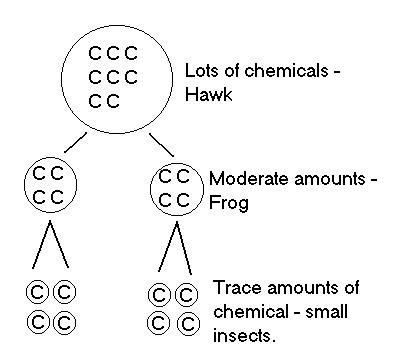
Biotic potential: is the maximum number of offspring that a species could produce, if resources were unlimited. Factors that limit biotic potential: 1. Birth potential – max number of offspring per birth ex. 1 / 2 bear cubs per birth 2. Capacity for survival – number offspring that reach reproductive age, sexual maturity. 3. Procreation – number of times animal reproduces a year. Mice 6 weeks. 4. Length of reproductive life: age of sexual maturity and number of years animal can still reproduce. African elephants mature at 15, can give birth until 90. Limiting factor: any resource that is in short supply is a limiting factor on population. Abiotic: 1. light 2. temperature 3. chemical environment – pollution Biotic: 1. food 2. predators 3. diseases and parasites 4. ability to compete for resources Note: Communities tend towards stability, equilibrium. This occurs when none of the populations exceed the carrying capacity of the ecosystem. Carrying Capacity: is the maximum number of individuals of a species that can be supported indefinitely by an ecosystem. The carrying capacity is limited by availability of resources, such as food and water. Limits of tolerance: Note: the survival and reproduction of a species depends on the presence of nutrients, and the ability of the organism to withstand abiotic factors in the environment. Law of minimum: the nutrient in least supply is the one that limits growth. Law of tolerance: an organism can survive (tolerate) a certain range of an abiotic factor; above and below the limit it cannot survive. The greater the range of tolerance, the greater the organism’s ability to survive. Density-independant factors: affect members of a population regardless of population density. Density-dependant factors: affect a population BECAUSE of the density of the population. It affects the population regardless of size. Ex: if a tree becomes infected with a fungus, it will spread more quickly in a denser population. Density-independent: more things that can’t control like flood, fire, drought, spraying pesticides. Density-dependant: food shortage, disease, increase predation, competition for water etc.Pesticides Science Questions – Pesticides 1. Pesticides: are chemicals designed to kill pests. Pest: is an organism that people consider harmful or inconvenient, such as weeds, insects, fungi, and rodents. 2. Bio-amplification:
Nitrogen Cycle Nitrogen in Ecosystems - Biotic compounds must reproduce - Abiotic compounds must be recycled. - Water cycle - Carbon cycle - Nitrogen cycle Note: Nitrogen gas is N2. This is a covalent bond, called a triple bond. N has 5 valence electrons.
“The Nitrogen Cycle Serves Two Purposes” 1. Helps keep environment clean by breaking down dead organic material. 2. Replenishes supply of nitrogen available in the ecosystem “Why do we need nitrogen?” 1. It is a necessary component of all proteins 2. It is necessary for the formation of nucleic acid. - Our atmosphere is around 80% nitrogen gas. N2. - We cannot break the N2 bond! - Atmospheric nitrogen has a stronger covalent bond that takes a lot of energy to break - Only lightning + volcanic activity + BACTERIA can break the bond. - The majority of nitrogen that is used by living things is made by bacteria. - Nitrogen can only be used after this strong, covalent bond is broken. Nitrogen is Recycled in 6 Steps: 1. Nitrogen Fixation This is a process where some soil bacteria can reduce atmospheric nitrogen to ammonia (NH3). Found: in the soil, inside the roots of some legumes. Ex. Peas and beans. “Nitrogen Fixing Bacteria in Roots” Legumes; peas, beans, alfalfa, clover, peanuts have many of these bacteria living in root nodules. Both the bacteria and the plants benefit from this relationship. This is called symbiosis, or a symbiotic relationship. 2. Decomposition The process by which bacteria and fungi break down dead organic material into it’s component molecules. - Dead organic material such as: shit, fallen leaves, dead plants + animals. 3. Ammonification The process by which bacteria + fungi turn the nitrogenous end products of decomposition into ammonia. Note: Both Nitrogen Fixation and Ammonification take in nitrogen gas and change it to ammonia. They are basically the same process. 4. Nitrification - Is the process by which certain bacteria are able to oxidize ammonia to nitrite (NO2) and then nitrate (NO3). - In this way, the bacteria gain the necessary energy they need, and give off nitrate as a waste product. 5. Assimilation Has TWO Parts 1. Plant roots absorb ammonia and nitrate and use them to build amino acids, proteins, and nucleic acids. 2. Animals eat plants and assimilate their nitrogen into more organic molecules. ~ Plant and animal tissues are the only source of nitrogen for animals. ~ 6. Denitrification - This step completes the cycle - Some bacteria obtain their oxygen from nitrate and release nitrogen gas and nitrous oxide (N2O) into the atmosphere as waste products. The Nitrogen Cycle Also Goes On Under Water! Nitrogen that is fixed under water doesn’t come from the atmosphere. - It is dissolved into the water by pollution, fertilisers, shit, and acid rain. Note: Adding pure nitrates onto crops can disrupt ecosystems. It’s better to use green fertilisers such as manure and ground up plant material and let the nitrogen cycle occur at it’s natural rate. Too Much Nitrogen Can Be Bad!!? When we put pure ammonia and nitrates onto a field, a lot of it is carried away from runoff. This excess nitrogen ends up in Lakes, Rivers, and Ground Water. High levels of nitrogen in drinking water can cause anaemia and death, especially in children. Eutrophication: occurs in water. When cyanobacteria “fix” nitrogen. Single-celled algae flourish in what’s known as an “algal bloom”. This algal bloom reduces the available oxygen until there’s not enough oxygen to support any other life. When this occurs, this is called a Dead Lake. There is no oxygen!! Lake Erie is an example. This is also known as “Eutrophied.”
Science Questions - Carbon Cycle
1. The carbon cycle is the flow of carbon through the ecosystem. The carbon cycle is the matter cycle in which, through the process of photosynthesis, digestion, cellular respiration, decomposition, and combustion, carbon atoms move from an inorganic form in the air, water, or soil to an organic form in living things. 2. Plants get carbon from the atmosphere through photosynthesis. The inorganic carbon, carbon dioxide, is converted into an organic compound, i.e. glucose + carbohydrates. 3. Carbohydrates are made of Hydrogen, Carbon, Oxygen 4. Photosynthesis and cellular respiration are complimentary processes because the reactants of the one are the products of the other. 5. In the northern hemisphere, as far as the north pole, there are very few living things like treees and animals therefore there is not much carbon to be recycled as fast as in the tropics where there are huge amounts of vegetation in the rain forests.. the rain also keeps the enviroment really moist making the conditions favorable for plants and trees to grow so there is a good supply of carbon around. This is hard to find on frozen mountain peaks and lakes in the north. 6. Animals get carbon from plants by eating them. 7. Animals get carbon from other animals by eating them 8. Animals give up carbon by getting eaten, crapping, and cellular respiration 9. Reduce the carbon dioxide levels by reducing carbon emissions from cars. Planting trees. No more forest fires. Cut down less rainforests.