|

Before one can truly begin to
explore the world of Norse Mythology, or any mythology for that
matter, they must have a true idea of what the word mythology means.
Some people will tell you that mythology is a bunch of stories that
were made up a long time ago, which is
not the whole truth. Mythology is the study of a collection of stories. These stories are
usually created to teach and explain the unexplainable. Humans
have always wanted to know everything; from why the sun rises, to
where do we go when we die, to why do boys voices change. Myths are a
way for people to explain the things they do not known or
understand.
These stories were usually passed down by what is
known as the oral tradition.
The stories would travel from one generation  to another in this way. This is especially true in Norse Mythology.
Norse myths were handed down from one generation to another by word
of mouths for hundreds of years. The first known recording of any
Norse myths is in The Poetic Edda. The Poetic Edda is a
collection of 34 Icelandic poems. The poems date from the 9th
century to the 12th century CE (Current Era).
All of these poems deal directly with Norse mythology.
Following the Poetic Edda was the Prose Edda.
This is a
collection of work by an Icelandic poet and historian Snorri Sturluson (1179-1241 CE). It is believed that this
is a handbook
for novice poets who wished to progress in their arts. It contains
not only stories and poems but also analysis of ancient poets and
rules governing the structure of life.
to another in this way. This is especially true in Norse Mythology.
Norse myths were handed down from one generation to another by word
of mouths for hundreds of years. The first known recording of any
Norse myths is in The Poetic Edda. The Poetic Edda is a
collection of 34 Icelandic poems. The poems date from the 9th
century to the 12th century CE (Current Era).
All of these poems deal directly with Norse mythology.
Following the Poetic Edda was the Prose Edda.
This is a
collection of work by an Icelandic poet and historian Snorri Sturluson (1179-1241 CE). It is believed that this
is a handbook
for novice poets who wished to progress in their arts. It contains
not only stories and poems but also analysis of ancient poets and
rules governing the structure of life.
Norse
Mythology, also known as Scandinavian Mythology, covers most of what is now
know as northern Europe. It
is called Norse mythology after the Norsemen who lived in Scandinavia
during the middle ages. Norse mythology was practiced in northern
Europe and Scandinavia, by the Scandinavian people, from about 200 to 500 CE. After 700 CE they began to migrate into new
lands settling
in the British Isles, Iceland, Greenland and even east into Russia.
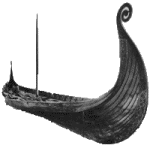
It is at this time that they became known as Vikings.
When you look at any mythology you cannot help but see things that
we get from them, like 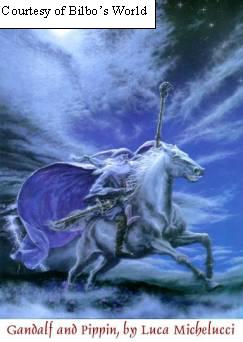 how we
got the names of most of the plants
from Roman gods. This is the same with Norse mythology. We get the
names of four days of the modern week from the Norse gods; from Odin
we get Wednesday, from Frigga we get Friday, from
Thor we get Thursday, from Tyr we get Tuesday. The Author J.R.R.
Tolkien makes many references to Norse mythology in his books,
The Lord of The Rings. One of
these references is the setting of the books, middle earth. Middle earth known
as the middle world in Norse Mythology, is the level of the universe
were humans, dwarfs and giants live. Another reference to Norse
mythology in his books is the fact that the name Gandalf is found in
The Poetic Edda. how we
got the names of most of the plants
from Roman gods. This is the same with Norse mythology. We get the
names of four days of the modern week from the Norse gods; from Odin
we get Wednesday, from Frigga we get Friday, from
Thor we get Thursday, from Tyr we get Tuesday. The Author J.R.R.
Tolkien makes many references to Norse mythology in his books,
The Lord of The Rings. One of
these references is the setting of the books, middle earth. Middle earth known
as the middle world in Norse Mythology, is the level of the universe
were humans, dwarfs and giants live. Another reference to Norse
mythology in his books is the fact that the name Gandalf is found in
The Poetic Edda.
Norse mythology is a very fascinating mythology that at its height was
whispered by thousands of people throughout northern Europe.
It was the foundation of a great and prosperous civilization.
This page will show you a small glimpse into the in depth world of
Norse mythology.
|