
WHAT IS A NETWORK?
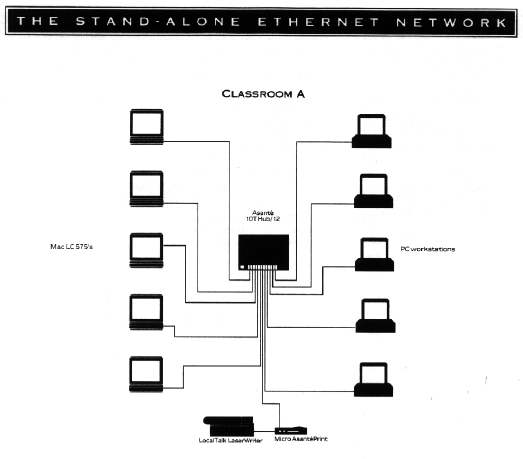
At it's most basic level, a network consists of two computers connected to each other by a cable so that they can share data. Each and every network stems from this simple sytem. Computers on a network can share data, messages, graphics, printers, fax machines, modems and other hardware resoures. If a network is located within a limited area, it is known as a local area network (LAN), but if the network has expanded to cover a geographical scope, then it is known as a wide area network (WAN). There are also two main network types: Peer to Peer and Server Based.
HOW DOES A NETWORK WORK?
Data tends to be very large files and networks cannot operate if computers put all this information on the cable at one time. First, because it ties up the network and secondly in case there is an error in transmission. What actually happens, is the computer breaks down the data into small manageble chunks of data called packets or frames. These packets or frames are the basic units of network communications. When the data is sent from the sending computer, the data is broken down into packets and then sent to the receiving computer. When it reaches the designated computer, the data is then reassembled in it's proper order and then checked for errors.
The future of networks will keep on growing throughout the years. Many big corperations are already on networks, and it is almost time when every computer will be hooked up to a network and each network will be hooked up to a bigger network. Having such a big network, it allows every one to share resources and files. Since the population is growing the demand of networks will increase because every business or each person will need to share files or data and that is where the network will come in.
Even today, people can go shopping "online" and then have the goods delivered to their door. Some people even stay at home and work from the family computer which is connected to their office. At this point in time, with so much information in the world, networks will continue to grow and expand, making life easier and easier.
Peer to Peer
Server Based
THE FUTURE OF NETWORKS
THE IMPORTANCE OF NETWORKS
There are many advantages of having networks whether it be in an office or at home. Networks offer an ease to any computer operated system. For instance in a classroom a network can be used to let students log-on to a network where they can save information and also access information. Networks also provide an easy form of data transportation. Instead of saving work on a disk and going to another computer to transfer the data, a network allows you to tranfer the data with just a few clicks. Networks can also be linked to the internet so you can link up with other networks and send information easily across the world.
2.What kind of things are shared on a network?
3. What are the advantages of having a network at school?
4.) What do you call a network within a desiginataed area?
5.) What do you call a network that is spread in a geographical scope?
