Animallike Protists- Protozoa
Protozoa means "first animals." This term persists to refer to protists that live by ingesting food, an animal like mode of nutrition. These heterotrophs seek and consume bacteria, other protists, and detritus (dead organic matter). There are also symbiotic protozoa, including some parasites that cause human diseases. The protozoa are divided into phyla depending on how they feed and move. We willexamine six of the protozoan phyla:
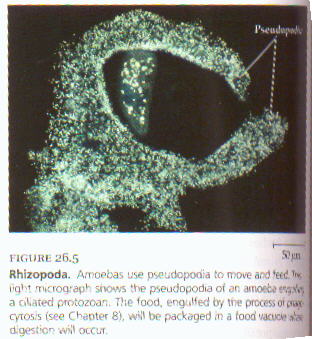
- Rhizopoda: (amoebas) All unicellular, never flagellated. They are naked and shelled, with broad pseudopodia for motility and feeding. Meiosis and sex not known to this phylum. They reproduce asexually by various mechanisms of cell division. They inhabit both freshwater and marine environments, but are also abundant in soils.
Click here to view image of Rhizopoda
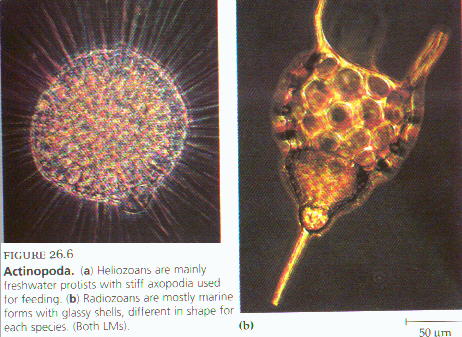
- Actinopodia: (heliozoans and radiozoans) Occupy planktonic habitats: usually spherically symmetrical: feed with axopodia, slender, radiating pseudopodia supported by internal microtubules: radiozoans possess internal siliceous skeletons, while heliozoans do not. Most heliozoans live in freshwater, radiozoans are marine.
Click here to view image of actinopoda
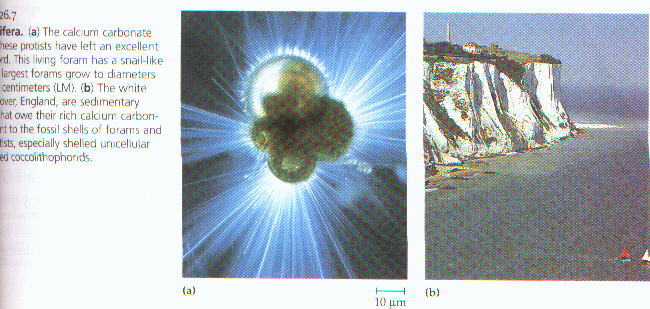
- Foraminifera: (forams) feed and move with slender, interconnected pseudopodia exuding from spirally arranged calcareous compartments. Forams are exclusively marine, many live in sand or rocks and algae. Strands of cytoplasm extend through pores, functioning in swimming, shell formation and feeding.
Click here to view image of Foraminifera
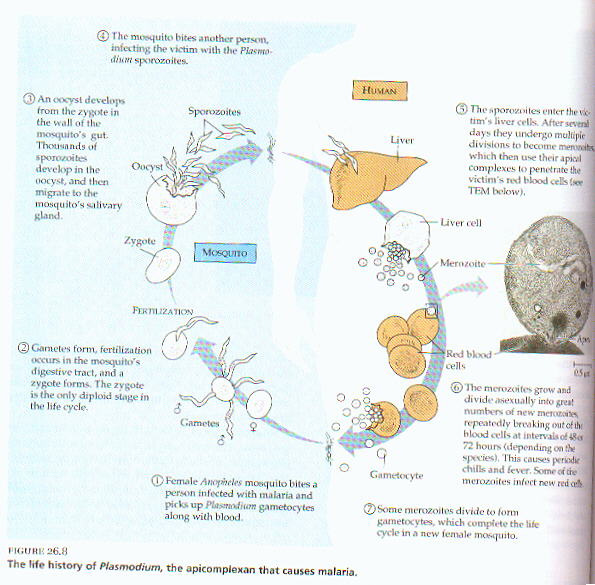
- Apicomplexa: Formerly called sporozoans: parasitic with complex life cycles in animal hosts. Most have intricate life cycles with sexual and asexual stages and require two or more host species for completion.
Life history of plasmodium
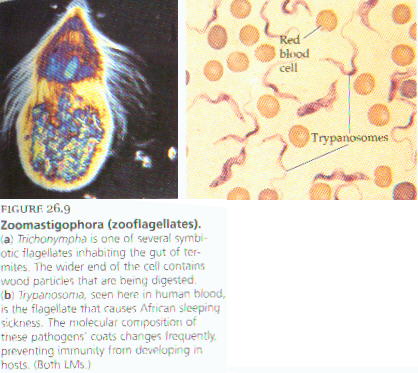
- Zoomastigophora: (zooflagellates) Use flagella for motility and feeding: mostly unicellular, but some colonial. Absorb organic material or engulf prey by phagocytosis. Both freeliving and symbionts.
Click here to view image of Zoomastigophora
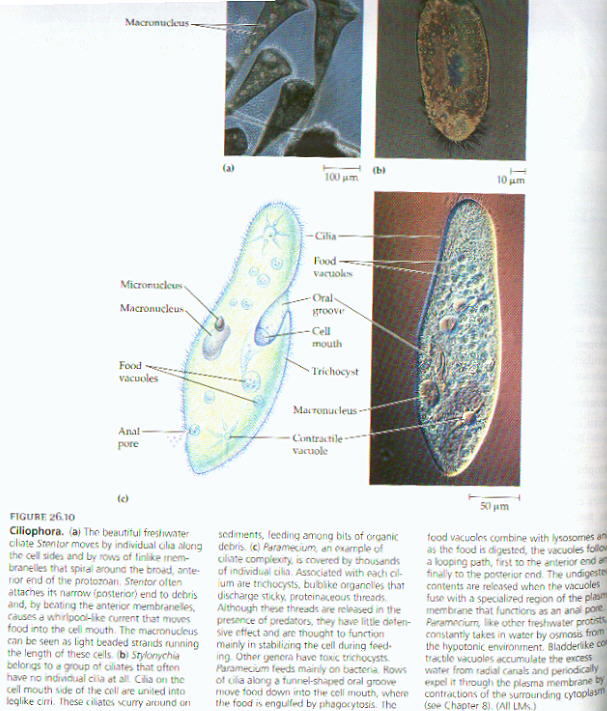
- Ciliophora: (cilliates) cilia used for motility and feeding, mostly unicellular with a few sessile, colonial species. Most live in fresh water
Click here to view Ciliophora
||Back to the Main Page!||